Nov 04, 2026
Author:Lisa Martinez
A dog water fountain can make daily hydration more convenient by keeping water circulating and readily accessible. But when your fountain starts buzzing, rattling, humming, or making unusual splashing sounds, it can quickly become a distraction.
If your dog water fountain is making noise, the cause may be something simple, such as a low water level, trapped air, or a loose component. In other cases, debris buildup, pump vibration, or worn parts may be responsible.
Not every sound indicates a problem. Many water fountains produce a gentle hum or flowing-water sound during normal operation. The important thing is recognizing when the noise changes and understanding what that change might mean.
This guide explains eight common causes of dog water fountain noise, how to identify different sounds, and practical steps to make your fountain quieter.
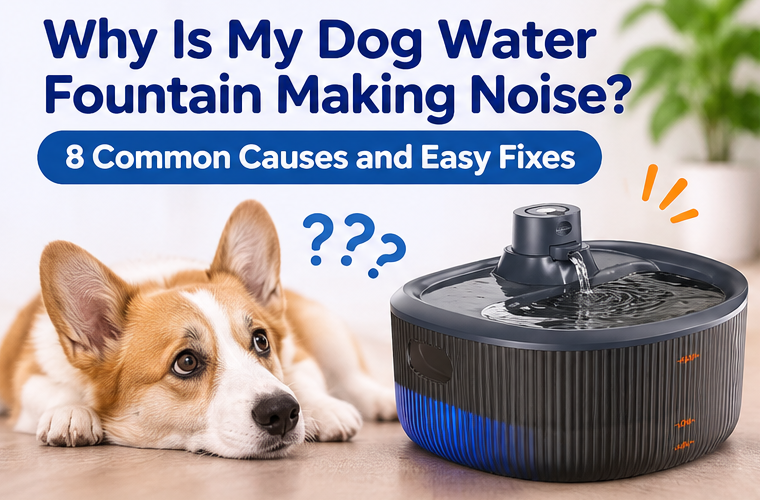
A noisy dog water fountain is often caused by one or more of the following:
Low water level: The circulation system may draw in air, causing gurgling or buzzing.
Dirty pump components: Hair, sediment, or mineral deposits can create vibration or unusual sounds.
Clogged water filter: Restricted circulation may cause irregular water movement.
Trapped air: Air bubbles can produce gurgling or intermittent humming.
Loose components: Misaligned covers, trays, or pump housings may rattle.
Uneven placement: A hard or unstable surface can amplify vibration.
Water splashing: Water falling into the reservoir can create noticeable splashing sounds.
Worn or damaged parts: Aging circulation components may become louder over time.
Start with three simple checks: Confirm the water level, inspect the fountain for loose parts, and check whether the sound changes after cleaning.
If you hear grinding, notice overheating, or detect a burning smell, turn off and disconnect the fountain immediately.
Low water levels are among the most common reasons a dog water fountain becomes louder than usual.
Many traditional fountains rely on a pump that must remain properly submerged. When the water level drops too low, the pump may draw air instead of water.
This can create buzzing, gurgling, or irregular humming sounds.
A lower water level can also increase the distance between the water outlet and the surface of the reservoir, making splashing more noticeable.
Check the reservoir's minimum and maximum water-level markings.
Refill with clean drinking water to the recommended level.
Confirm that the water intake is positioned correctly.
Restart the fountain according to its instructions.
Listen for changes in the noise.
If the sound disappears after refilling, insufficient water was likely contributing to the problem.
Helpful tip: Check your dog water fountain at least once a day. Large dogs and multi-pet households may require more frequent refilling.
A dirty pump can produce humming, buzzing, rattling, or grinding noises.
Over time, dog hair, food particles, sediment, and mineral deposits may collect around the pump intake or internal components.
In traditional pumps, debris can interfere with the impeller, causing irregular movement or increased vibration.
You may notice:
The fountain is louder than it was when new.
A buzzing or rattling noise occurs during operation.
Water circulation becomes weaker.
The pump makes an irregular humming sound.
Noise continues even after refilling the reservoir.
For a conventional fountain with a serviceable pump:
Turn off and unplug the fountain.
Remove the pump according to the manufacturer's instructions.
Open the pump housing only if it is designed to be opened.
Remove accessible hair, debris, or mineral deposits.
Clean removable components with a soft brush.
Rinse thoroughly.
Reassemble the pump and test the fountain.
Avoid using sharp objects or forcing internal components apart.
Important: Some modern pet water fountains use magnetic-drive or other circulation designs instead of conventional removable-impeller pumps. Always follow the cleaning instructions for your specific model.
A clogged filter can affect water circulation and sometimes contribute to unusual fountain sounds.
Dog water fountain filters help capture hair, debris, and other particles. As contaminants accumulate, water may have more difficulty passing through the filter.
Restricted water movement can contribute to irregular circulation, splashing, or changes in the sound of the circulation system.
Look for these signs:
Water flow is noticeably weaker.
The filter contains visible hair or dirt.
Water circulation is uneven.
The fountain makes more noise than usual.
Water collects around the filter compartment.
Disconnect the fountain and remove the filter.
Inspect the filter for accumulated debris and check the surrounding filter compartment.
Rinse reusable components as instructed by the manufacturer. Replace disposable filters when they reach the recommended service interval or become restricted.
Do not wash disposable filter media with soap unless the manufacturer specifically permits it.
After installing the filter correctly, refill the fountain and check whether the noise improves.
Trapped air is another possible cause of unusual fountain noises.
Air can enter the circulation system after cleaning, refilling, moving the fountain, or allowing the water level to fall too low.
When air interrupts normal water movement, the fountain may produce gurgling, bubbling, or inconsistent humming sounds.
Gurgling immediately after refilling.
Irregular bubbling near the outlet.
Water flow that starts and stops.
A humming sound without normal circulation.
Noise that appears after cleaning and reassembly.
Turn off the fountain.
Fill the reservoir to the recommended level.
Check that the water intake is correctly positioned.
Follow the manufacturer's priming or restart instructions.
Restart the fountain and observe its operation.
For some conventional pumps, the manufacturer's procedure may involve repositioning the pump to release trapped air.
Do not shake, open, or manipulate sealed electrical components.
If gurgling continues along with poor water flow, inspect the intake and water channels for restrictions.
A dog water fountain may produce rattling or buzzing sounds when its components are not securely installed.
Removable parts such as covers, trays, filter holders, and pump housings can vibrate during operation.
Even a small gap between components may produce noticeable noise, particularly when the fountain sits on a hard surface.
A cover is not fully seated.
The filter holder is misaligned.
A removable water tray is loose.
The pump housing is incorrectly positioned.
A silicone seal is missing or misplaced.
Components were reassembled incorrectly after cleaning.
Turn off the fountain and inspect each removable component.
Compare the assembly with the product manual.
Reinstall the components carefully, making sure they fit securely without forcing them into place.
Once everything is correctly positioned, restart the fountain.
If the rattling disappears, the noise was likely caused by vibration between loose components.
Sometimes the fountain itself is operating normally, but its placement makes the noise more noticeable.
Hard surfaces such as tile, glass, or wooden floors can transmit and amplify vibration.
If the fountain is unstable or touches nearby objects, it may produce additional rattling sounds.
Place the fountain on a stable, level surface.
Keep it away from objects that may vibrate against it.
Make sure all support feet contact the floor evenly.
Consider a waterproof, non-slip mat suitable for pet feeding areas.
Avoid placing the fountain directly against walls or furniture if contact causes rattling.
A mat may reduce vibration transmitted to the floor, although it will not fix an internally damaged pump.
Choose a mat that is easy to clean and does not block ventilation or other functional parts.
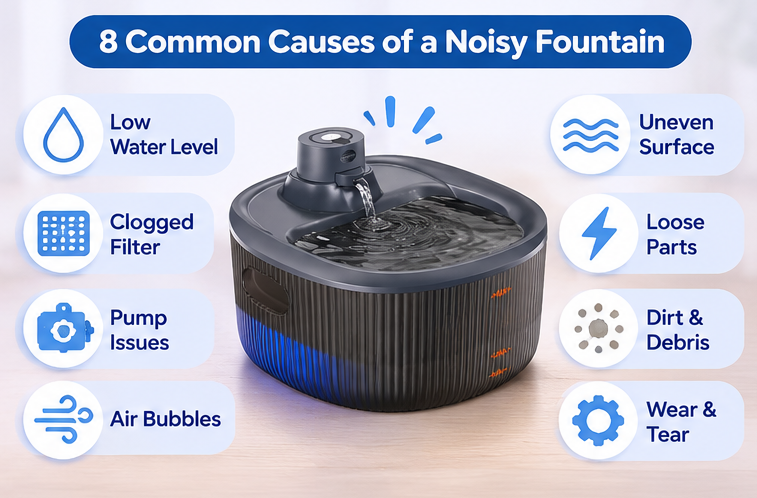
Not all fountain noise comes from the pump.
Water flowing from an outlet into a reservoir can create splashing, trickling, or bubbling sounds.
These sounds may become louder when the reservoir level drops or the water stream falls from a greater height.
Several factors may contribute:
The water level is below its recommended range.
The fountain has an adjustable flow setting that is too high.
The outlet is misaligned.
Water is striking the side of the reservoir.
The fountain is positioned unevenly.
First, refill the reservoir to the recommended level.
Check that the outlet is installed correctly and that water flows into its intended collection area.
If your fountain has an adjustable flow setting, try a lower setting that still provides proper circulation.
Do not modify the outlet or block the water path to reduce noise.
A gentle water sound is normal for many fountains. The goal is to reduce excessive splashing without interfering with operation.
If your dog water fountain has become progressively louder despite regular cleaning, some internal components may be worn or damaged.
Traditional pumps contain moving parts that can wear over time. Other circulation systems may also develop faults in their motors, drive mechanisms, or supporting components.
Grinding or scraping sounds.
Persistent rattling after cleaning.
Increasing vibration.
Intermittent circulation.
Unusual heat.
A sudden change in operating noise.
Water flow that remains weak despite troubleshooting.
Stop using the fountain if you notice grinding, overheating, a burning smell, or damaged electrical components.
Check the product warranty and whether compatible replacement parts are available.
Contact the manufacturer for model-specific troubleshooting or replacement guidance.
Never continue operating a fountain with suspected electrical damage.
Different sounds can provide clues about what may be happening inside your fountain.
| Noise Type | Possible Cause | Recommended Fix |
|---|---|---|
| Buzzing | Vibration, low water level, or obstruction | Refill and inspect circulation components |
| Humming | Normal motor operation or developing pump issue | Compare with normal operating sound |
| Rattling | Loose components or pump vibration | Check assembly and placement |
| Gurgling | Trapped air or low water level | Refill and follow priming instructions |
| Splashing | Water falling into the reservoir | Check water level and outlet alignment |
| Grinding | Debris or damaged moving components | Stop operation and inspect safely |
| Clicking | Operating-mode switching or mechanical issue | Check the manual and whether the sound is normal |
| Intermittent buzzing | Irregular circulation or power issue | Inspect water flow and power connections |
A sound alone cannot confirm a diagnosis. Consider when the noise occurs, whether water is circulating normally, and whether the fountain has recently been cleaned or moved.
A sudden increase in noise usually indicates that something has changed in the fountain's operating conditions.
For example, the reservoir may have become too empty, a filter may have accumulated debris, or a component may have shifted out of place.
If the fountain became noisy immediately after cleaning, incorrect assembly or trapped air may be responsible.
If the noise developed gradually over several weeks, mineral buildup or component wear may be more likely.
Step 1: Check the water level.
Refill the reservoir if necessary.
Step 2: Identify the sound.
Determine whether you hear buzzing, rattling, gurgling, splashing, or grinding.
Step 3: Inspect the filter.
Look for visible debris or restrictions.
Step 4: Clean the circulation system.
Follow the manufacturer's instructions for accessible components.
Step 5: Check assembly and placement.
Make sure the fountain is stable and properly assembled.
Step 6: Test the fountain.
Observe water circulation and listen for changes.
Step 7: Contact support if the problem continues.
Persistent abnormal noise may require professional guidance or replacement parts.
If the fountain is unsafe to operate, keep it disconnected and provide your dog with a separate bowl of fresh water.
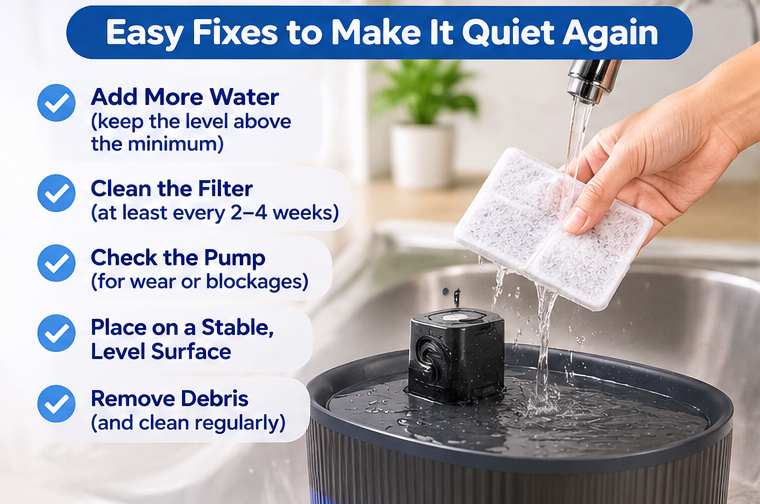
Preventing noise is often easier than fixing it after a problem develops.
A consistent maintenance routine can help keep the fountain operating as intended.
Check the reservoir daily and refill it before the water drops below the recommended level.
Inspect and clean the fountain at least weekly as a practical starting point, or more often when needed.
Follow the manufacturer's instructions for the specific model.
Use compatible replacement filters and follow the recommended replacement interval.
Replace filters sooner if they become clogged or restrict water flow.
Pet hair can collect around the water intake and other circulation components.
Remove visible debris during routine cleaning.
Place the fountain on a level surface where it will not contact furniture or other objects.
Become familiar with the fountain's normal operating sound.
If the noise suddenly changes, inspect the fountain before the issue becomes more serious.
A noisy fountain does not automatically need a new pump.
Many noise problems can be resolved by refilling the reservoir, cleaning accessible components, or correcting assembly.
However, replacement may be necessary if the circulation system continues making abnormal sounds after appropriate troubleshooting.
Consider contacting the manufacturer when:
Grinding or scraping continues after cleaning.
The pump repeatedly stops working.
Water circulation remains weak.
The motor overheats.
Internal components are visibly damaged.
The fountain becomes progressively louder.
The service life of a fountain pump varies depending on design, water quality, maintenance, and operating conditions.
There is no universal replacement interval that applies to every model.
If compatible replacement parts are available, repairing the fountain may be more economical than replacing the entire unit.
If you're considering a new dog water fountain, noise level should be one of several factors in your decision.
A fountain that operates quietly can be especially useful in apartments, bedrooms, home offices, and shared living spaces.
However, quiet operation should not come at the expense of adequate water circulation or easy maintenance.
Different fountains use different circulation technologies.
Traditional submerged pumps and magnetic-drive systems may have different operating characteristics and maintenance requirements.
Look for clear information about the circulation design and how to maintain it.
A fountain with adequate capacity for your household may require less frequent refilling.
This can help reduce the chance of low-water operation.
Easy access to filters, water channels, and other serviceable parts makes routine maintenance more convenient.
A stable base and correctly fitted components can help reduce unwanted vibration.
If the manufacturer provides verified operating-noise measurements, compare them under similar testing conditions.
Keep in mind that noise can vary depending on placement, water level, and operating mode.
WOPET offers pet water fountain options designed for different pets and household needs.
Models in the WOPET W600 series are worth considering when comparing dog water fountains, while the WOPET A08 is designed for dogs and multi-cat households.
When choosing between WOPET W600, W600 Pro, and A08, compare their actual specifications, circulation systems, reservoir capacities, filtration requirements, and cleaning procedures.
A well-maintained fountain that suits your dog's drinking habits and your home's layout can make daily hydration more convenient.
Explore available options at WOPET.
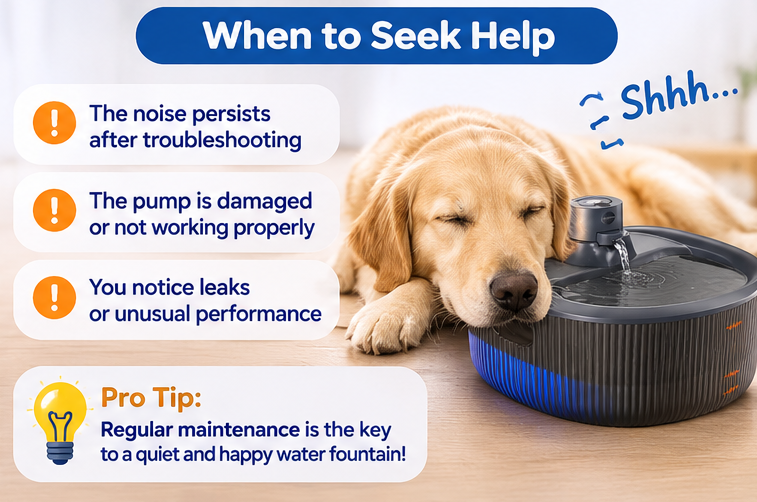
Yes. Many dog water fountains produce a gentle humming or flowing-water sound during normal operation.
However, loud grinding, persistent rattling, or sudden changes in noise may indicate a problem.
Buzzing can be caused by vibration, a low water level, debris around the circulation system, or loose components.
Start by checking the reservoir level and whether the fountain is correctly assembled.
Gurgling often occurs when air enters the circulation system or the water level becomes too low.
Refill the reservoir and follow the manufacturer's priming instructions.
A component may not have been reinstalled correctly.
Check the cover, filter holder, pump housing, and other removable parts.
Yes. A clogged filter can restrict water circulation and contribute to irregular water movement or changes in operating sound.
Inspect and replace the filter when necessary.
Keep the reservoir properly filled, clean the circulation components, check for loose parts, and place the fountain on a stable surface.
If the model offers adjustable flow, use a manufacturer-approved setting that provides adequate circulation.
Grinding may indicate debris interfering with moving parts or worn internal components.
Turn off the fountain and inspect it according to the manufacturer's instructions.
Do not continue running a fountain that makes persistent grinding noises.
Not necessarily.
Noise depends on circulation design, component quality, water flow, installation, and maintenance.
Wireless power does not automatically mean quieter operation.
If the sound is unusually loud, involves grinding, or is accompanied by overheating or electrical problems, turn off and disconnect the fountain.
For minor changes in normal water sounds, inspect the water level and other basic conditions.
Always provide another source of drinking water while troubleshooting.
A dog water fountain making noise is not always a sign of serious damage.
Low water levels, clogged filters, trapped air, loose components, and unstable placement are common causes that may be easy to correct.
The most useful first step is identifying the type of sound and checking whether the fountain is circulating water normally.
Regular cleaning, proper filter maintenance, and daily water-level checks can help prevent many noise-related problems.
If unusual grinding, overheating, or persistent mechanical noise continues after troubleshooting, contact the manufacturer for assistance.
Ultimately, a good dog water fountain should provide convenient access to drinking water while fitting comfortably into your home and daily pet-care routine.
Read more:
Label:
Popular Post
The Ultimate Guide to Tabby Cats: Patterns, Personalities, and More
Mar 27, 2025

Top 8 Reasons Why Does My Cat Sleep Between My Legs?
Mar 03, 2025

What to Do If My Dog's Poop Is Black But Not Tarry
Feb 04, 2023

Superfecundation Cats: When Kittens in One Litter Have Different Fathers
Jul 11, 2025
Can Cats Have Orange Eyes? Genetics, Breeds, and Care Guide
May 20, 2025
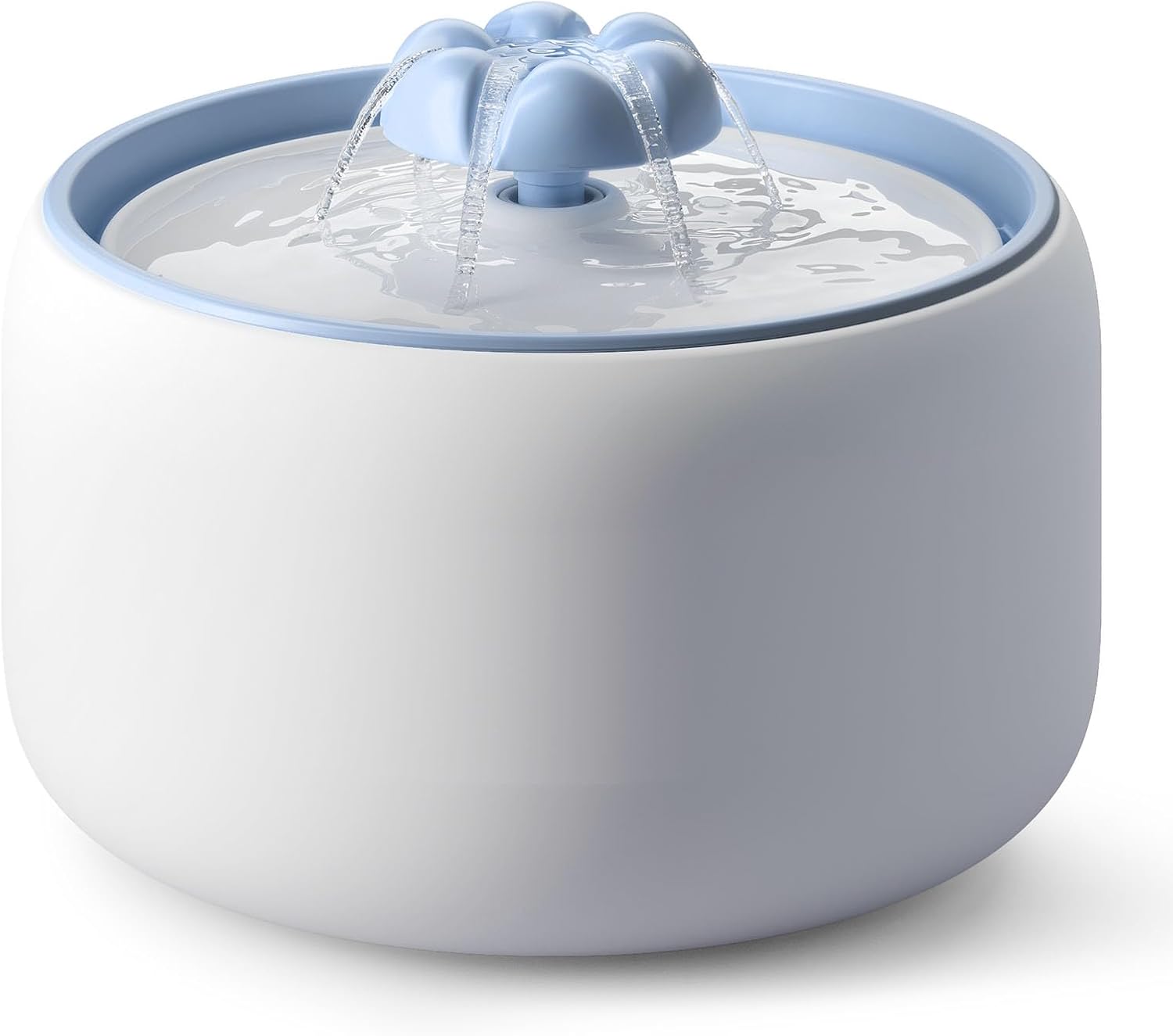
[Blue] W03L 3L Premium Ceramic Cat Water Fountain
Model: W03 LITE
$59.99
$69.99
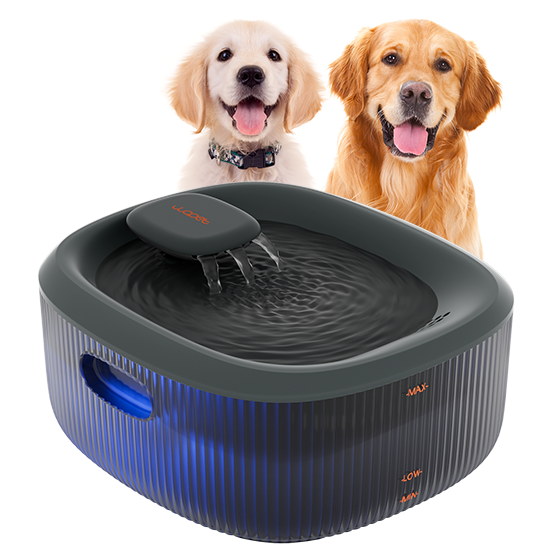
Basin Pet Water Fountain-W600
Model: W600
$43.99
$69.99
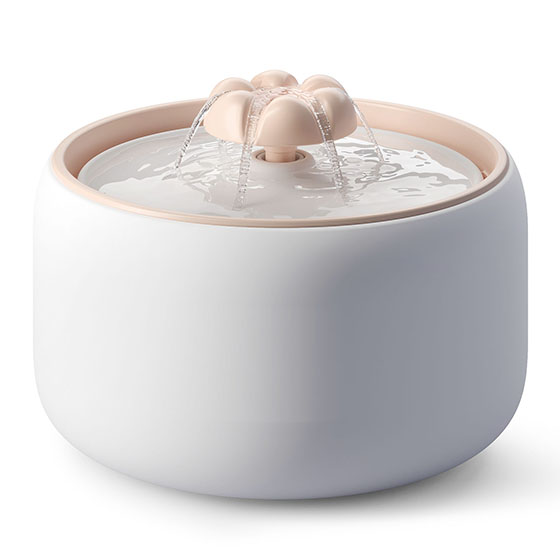
[Basic] Ceramic Pet Water Fountain with Power Cable
Model: W03L
$59.99
$99.00
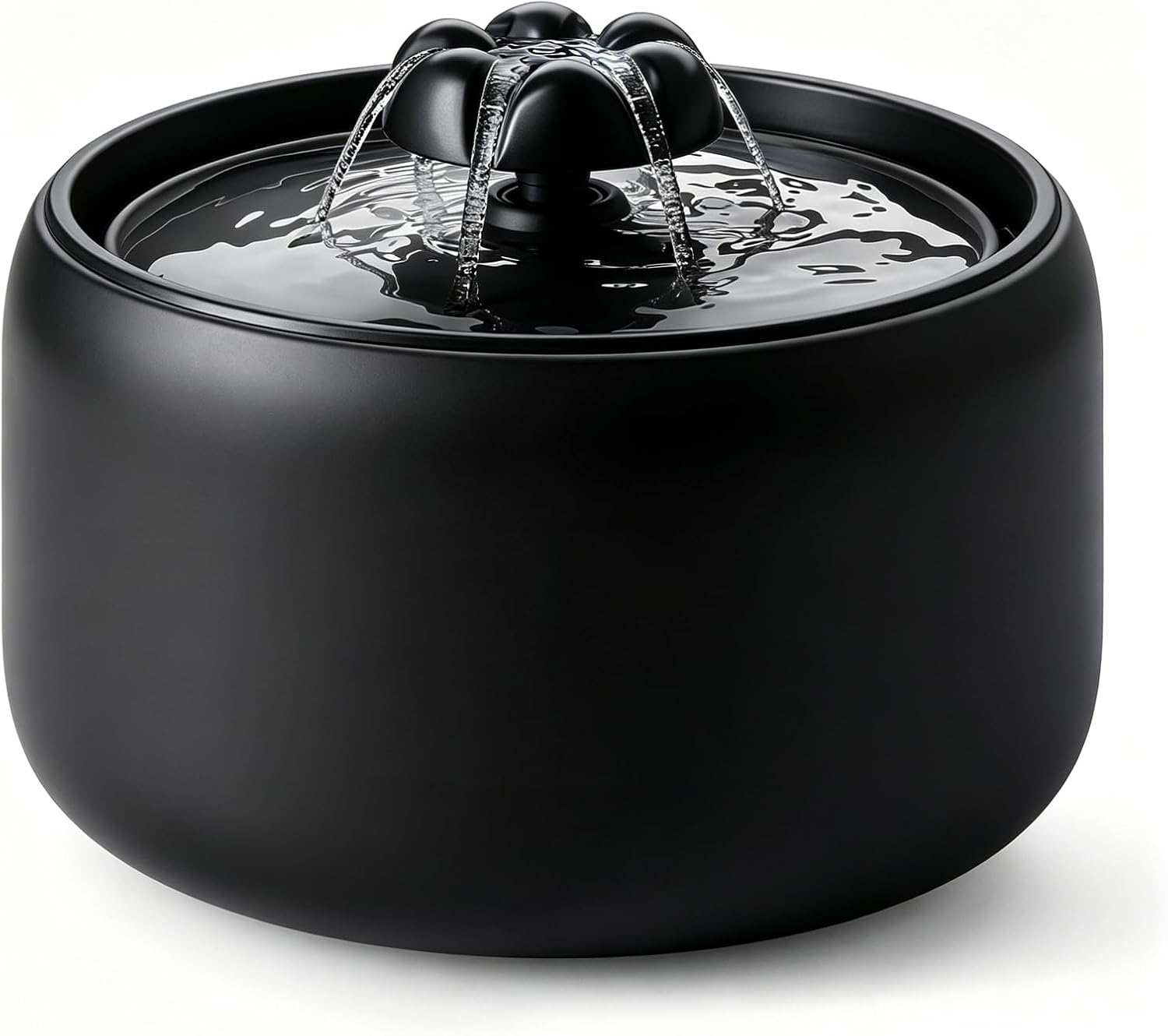
[Black] W03L 3L Premium Ceramic Cat Water Fountain
Model: W03L Black
$59.99
$69.99
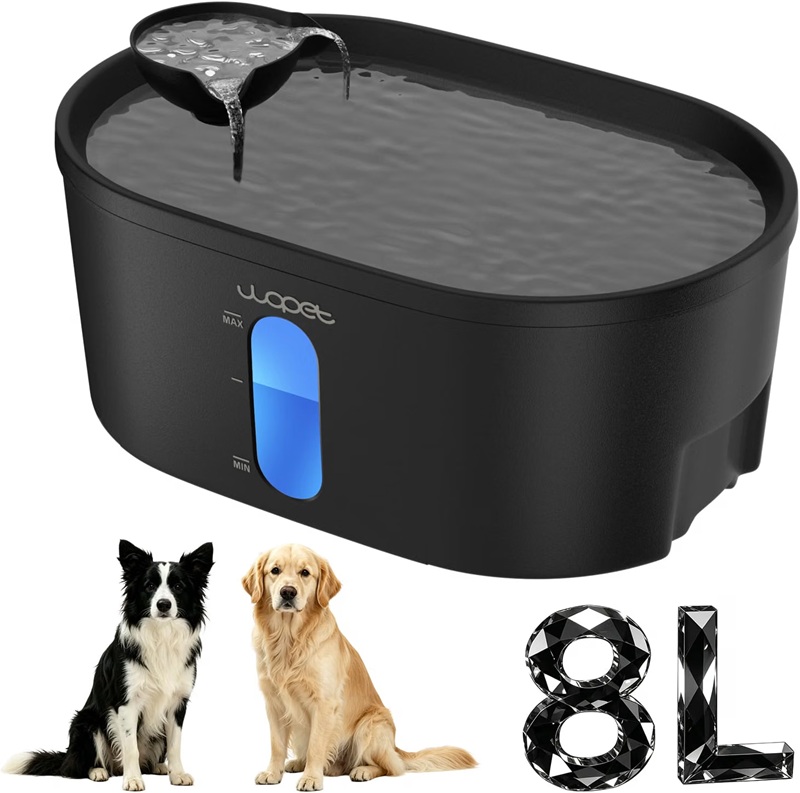
WOPET 8L Pet Water Fountain For Multiple Cats or Large Dogs A08
Model: A08
$49.99
$59.99
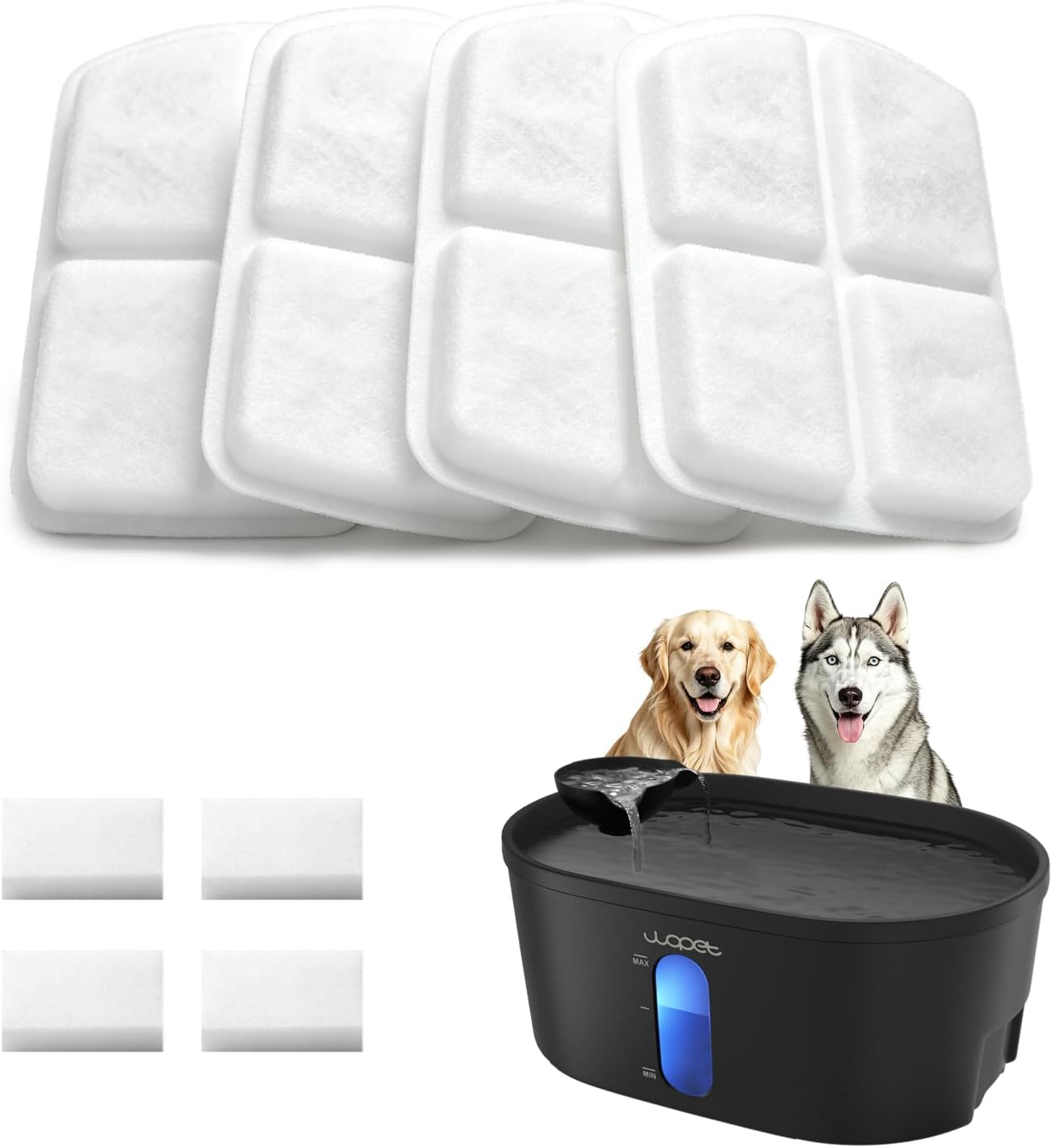
WOPET A08 Dog Water Fountain Filters
Model: A08 Filter
$19.99
$29.99

DOWNLOAD APP

WOpet life




Copyright © 2026 WOPET. All Rights Reserved.