Nov 03, 2026
Author:Jackson Watson
A dog water fountain can make fresh drinking water convenient to access, but keeping the fountain clean is just as important as keeping it filled.
Over time, pet hair, saliva, food particles, mineral deposits, and slippery residue can collect inside the reservoir, around the drinking basin, and within the water circulation system.
If these areas are not cleaned regularly, they may affect water quality, create unpleasant odors, or interfere with normal fountain operation.
Fortunately, learning how to clean a dog water fountain doesn't have to be complicated.
With the right cleaning routine, you can maintain a more hygienic drinking station, reduce buildup, and help your fountain operate as intended.
This guide explains how to clean a dog water fountain in eight practical steps, how often different components need attention, and how to handle common problems such as slime, mineral deposits, and reduced water flow.
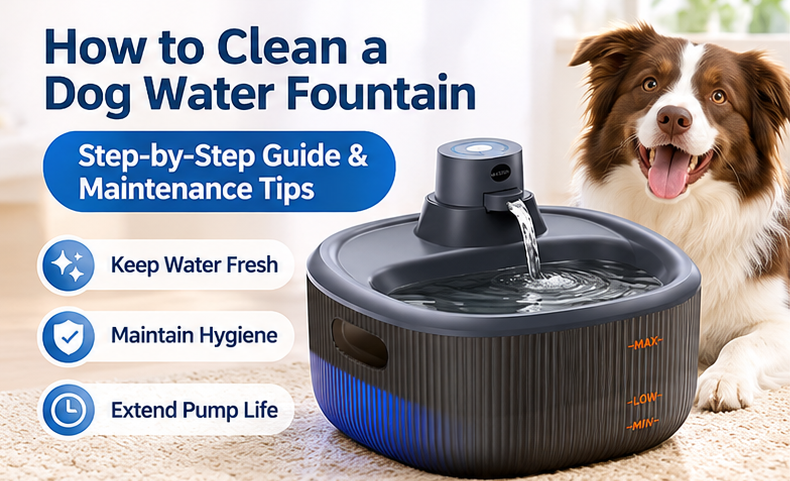
A pet water fountain continuously or periodically circulates water through its reservoir and drinking area.
Although circulation can provide a convenient drinking experience, it does not prevent contamination.
Dogs naturally introduce saliva, hair, dirt, and sometimes food particles into their drinking water.
These materials can accumulate on surfaces and inside accessible circulation components.
Regular washing removes visible debris and residue from the fountain.
It also helps reduce the accumulation of microorganisms on accessible surfaces.
However, cleaning does not sterilize the fountain or make unsafe source water suitable for drinking.
Always use water from a safe drinking-water source.
A slippery coating can develop on wet surfaces over time.
This coating may be biofilm, a community of microorganisms embedded in a protective layer.
Biofilm can form in traditional water bowls as well as circulating fountains.
Physical cleaning is important because simply replacing the water may leave the coating behind.
Hair, debris, and mineral deposits may interfere with water movement.
Depending on the fountain's design, buildup may collect around inlets, outlets, or other circulation components.
Cleaning these areas can help restore normal operation when the problem is caused by accessible debris.
Stagnant residue and dirty surfaces can contribute to unwanted odors.
Regular cleaning helps keep the drinking station more pleasant.
Cleaning provides an opportunity to inspect the fountain for:
Damaged or scratched surfaces
Worn seals
Loose components
Filter deterioration
Blocked water passages
Signs of leakage
Problems with electrical connections
Replace damaged parts according to the manufacturer's instructions.
Cleaning frequency depends on the fountain design, number of pets, environment, and amount of debris entering the water.
A fountain used by several dogs may need more frequent cleaning than one used by a single small dog.
The following schedule is a practical starting point, not a universal manufacturer requirement.
| Maintenance Task | Suggested Frequency |
|---|---|
| Check water level | Daily |
| Replace drinking water | Daily |
| Remove visible hair and debris | Daily or as needed |
| Wash reservoir and drinking basin | Every 1–3 days |
| Deep clean accessible components | About once a week |
| Inspect filter | During regular cleaning |
| Replace filter | Follow manufacturer instructions |
| Inspect circulation components | During routine maintenance |
| Remove mineral deposits | When buildup appears, using an approved method |
Consider cleaning more often if:
Multiple pets share the fountain.
Your dog sheds heavily.
Food particles frequently enter the water.
The fountain is located in a dusty area.
You notice a slippery film.
Water develops an unusual odor.
The circulation becomes weaker.
The manufacturer recommends a shorter cleaning interval.
Important: If the water becomes visibly dirty or develops slime, clean the fountain immediately rather than waiting for the next scheduled cleaning.
Prepare your cleaning supplies before disassembling the fountain.
Warm water
Mild dish soap appropriate for food-contact surfaces
Soft sponge or microfiber cloth
Small soft cleaning brush
Clean towels
Safe drinking water for refilling
Replacement filter, if needed
The fountain's user manual
A small brush can be particularly helpful for cleaning narrow channels and accessible corners.
Unless the manufacturer specifically approves them, avoid:
Abrasive scouring pads
Strong chemical cleaners
Harsh solvents
Undiluted bleach
Unapproved descaling chemicals
Highly abrasive brushes
These products may damage surfaces, seals, or other components.
Never mix bleach with vinegar, acids, or other cleaning chemicals.
Not all dog water fountains use the same circulation system.
Some have conventional removable submersible pumps.
Others use magnetic-drive or other circulation mechanisms.
The cleaning method for one system may not be suitable for another.
Always follow the instructions for your specific model.
The following steps provide a general cleaning process for most household pet water fountains.
Adapt each step to the manufacturer's instructions.
Before cleaning, turn off the fountain.
If the fountain uses a power adapter, unplug it from the outlet.
If it is rechargeable or wireless, switch it off and follow the manufacturer's instructions for separating washable components from electronic parts.
Never immerse a charging base, power adapter, charging contacts, or other non-waterproof electronic components.
Allow the fountain to stop operating completely before disassembly.
Cleaning tip: Keep electrical connections away from sinks and wet countertops.
Remove the reservoir or drinking basin according to the fountain's design.
Pour out the remaining water.
Inspect the water for:
Floating hair
Food particles
Sediment
Cloudiness
Unusual odor
Slippery residue
If you notice heavy debris, pay extra attention to the areas where water enters and exits the circulation system.
Do not simply refill dirty water.
Carefully remove the parts intended for routine cleaning.
Depending on the model, these may include:
Drinking tray
Reservoir
Lid
Filter holder
Filter
Water outlet
Removable circulation components
Place the components on a clean surface.
Take note of how they fit together so reassembly is easier.
Do not force parts apart.
Some components are sealed or designed to remain assembled.
Important: Never open sealed electronic housings or attempt to disassemble components that the manufacturer identifies as non-serviceable.
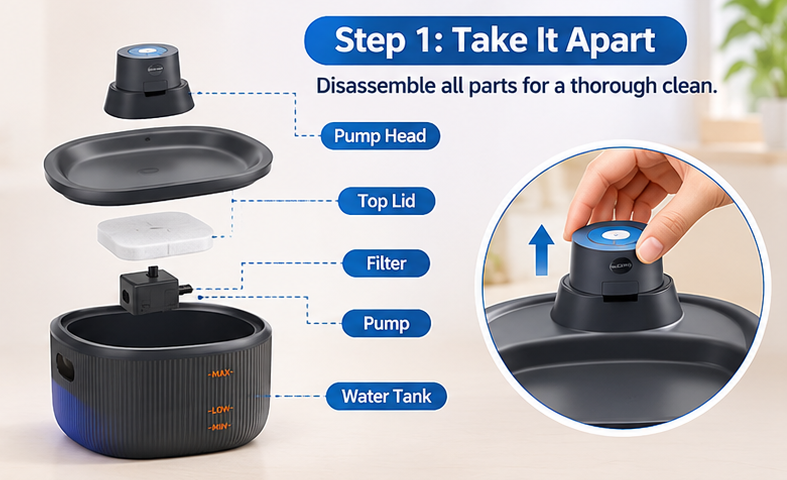
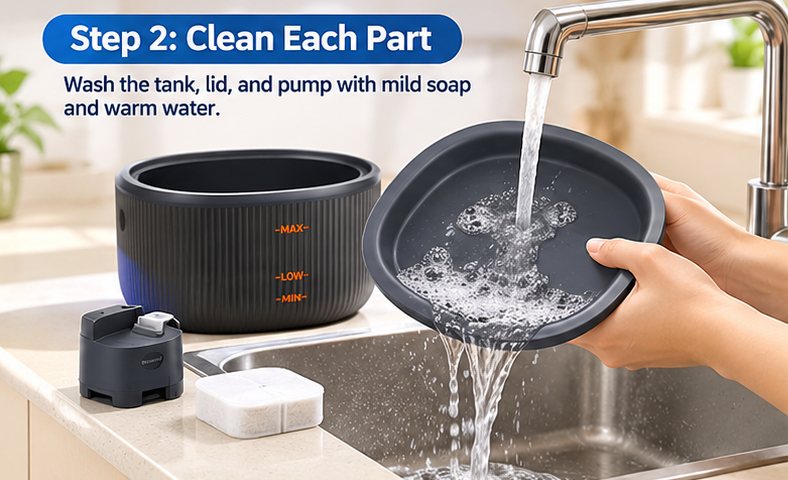
Use warm water and a small amount of mild dish soap.
Gently scrub the reservoir and drinking basin with a soft sponge.
Pay particular attention to:
Corners
Seams
Water outlets
Areas around the filter holder
Narrow channels
Edges where residue collects
If the fountain is made of plastic, avoid abrasive tools that may scratch the surface.
Scratches can make some surfaces more difficult to clean.
Rinse thoroughly to remove soap residue.
The circulation system requires special attention because debris can collect in areas that are less visible.
However, the correct cleaning procedure depends on the fountain's mechanism.
If the manufacturer permits pump disassembly:
Remove the pump according to the manual.
Open only the serviceable covers.
Remove visible hair and debris.
Clean accessible passages with a soft brush.
Rinse approved washable parts.
Reassemble the pump as instructed.
Do not pull on electrical cables or force the impeller housing open.
Some fountains use a magnetic-drive arrangement rather than a conventional removable submersible pump.
For these models:
Identify the washable water-contact components.
Remove only the parts specified in the manual.
Clean accessible water passages.
Keep sealed electronics and charging components dry.
Reassemble the circulation system according to the instructions.
Do not assume that every magnetic-drive component is waterproof or user-serviceable.
Maintenance tip: If water flow remains weak after cleaning, inspect the filter, water level, and component alignment before assuming the circulation mechanism has failed.
Many dog water fountains use filters to capture debris or help improve certain aspects of water quality.
Filters require regular attention.
Remove the filter according to the manufacturer's instructions.
Check for:
Visible hair
Accumulated debris
Discoloration
Unusual odor
Physical damage
Reduced water flow
Some filters require rinsing before first use.
Others should be replaced rather than washed and reused.
Follow the instructions for your particular filter.
Do not assume that rinsing an old filter restores its original performance.
Replace disposable filters according to the manufacturer's recommended schedule or sooner when necessary.
After washing, rinse all approved washable components thoroughly with clean water.
Make sure no cleaning solution remains.
Allow components to drain and dry as appropriate before reassembly.
Use a clean towel for surfaces that can be safely dried.
Do not reconnect power while electrical contacts are wet.
If the manufacturer requires certain components to remain dry, ensure they are completely dry before use.
Once the components are clean, reinstall them according to the user manual.
Check that:
The reservoir is properly seated.
The filter is installed correctly.
The drinking tray is aligned.
Circulation components are positioned properly.
Seals and covers are secure.
Electrical connections are dry.
Fill the reservoir with safe drinking water.
Maintain the water level specified by the manufacturer.
Turn on the fountain and observe its operation.
Before allowing your dog to use the fountain, confirm that:
The water is clear.
There is no visible debris.
There is no unusual odor.
Water circulates normally.
The fountain does not leak.
There is no unusual vibration or noise.
All components are securely installed.
If the fountain does not operate normally, switch it off and consult the troubleshooting instructions.
A slippery layer inside a fountain is a common maintenance concern.
It may appear clear, cloudy, or slightly discolored.
Slime can develop when microorganisms grow on wet surfaces.
Pet saliva, food particles, and environmental contamination may contribute to buildup.
Circulating water does not eliminate this risk.
Turn off and disconnect the fountain.
Empty the water.
Remove washable components.
Scrub affected surfaces with mild dish soap and a soft brush.
Pay attention to seams and corners.
Rinse thoroughly.
Reassemble and refill with fresh water.
If residue remains in an inaccessible area, consult the manufacturer for the correct cleaning method.
Refresh water regularly.
Wash the reservoir and drinking basin frequently.
Clean accessible circulation passages.
Replace filters as directed.
Remove food particles and hair promptly.
Avoid leaving dirty water in the fountain.
A filter alone cannot prevent biofilm formation.
If you notice white, chalky deposits inside your fountain, the cause may be minerals left behind by water.
Hard water contains dissolved minerals, including calcium and magnesium.
As water evaporates or circulates, deposits can accumulate on surfaces.
| Characteristic | Mineral Buildup | Biofilm |
|---|---|---|
| Appearance | Often white or chalky | Often slippery or slimy |
| Texture | Rough or crusty | Smooth or sticky |
| Common locations | Waterline, outlets, surfaces | Wet surfaces, seams, channels |
| Main concern | Deposits and possible flow restriction | Microbial surface buildup |
| Cleaning approach | Manufacturer-approved descaling | Physical washing and scrubbing |
Start with warm water, mild dish soap, and gentle scrubbing.
For stubborn deposits, check whether the manufacturer approves a specific descaling method.
Some materials tolerate certain diluted acidic cleaners, while others may be damaged by them.
Do not automatically use vinegar or commercial descalers on every fountain.
Avoid exposing electronic components, seals, or unapproved materials to descaling solutions.
After any approved treatment, rinse thoroughly before returning the fountain to service.
The fountain's material can influence how it should be cleaned.
Plastic fountains are common because they are lightweight and can be molded into different designs.
Cleaning recommendations:
Use a soft sponge.
Avoid abrasive pads.
Inspect for deep scratches.
Clean seams and corners carefully.
Replace damaged components when necessary.
Stainless steel surfaces are often relatively easy to wipe and wash.
Cleaning recommendations:
Use mild dish soap.
Rinse thoroughly.
Avoid steel wool and harsh abrasives.
Follow the manufacturer's guidance for removing mineral deposits.
Ceramic fountains can have smooth glazed surfaces.
Cleaning recommendations:
Use a non-abrasive sponge.
Inspect for chips or cracks.
Avoid sudden temperature changes when the manufacturer warns against them.
Replace damaged ceramic components.
Regardless of material, cleanliness depends on regular maintenance.
No material eliminates the need for washing.
Topping up the reservoir does not remove residue already present.
Empty and clean the fountain regularly.
Hair and debris may collect in areas that are not immediately visible.
Clean accessible channels according to the manual.
A filter may lose effectiveness or become clogged over time.
Follow the recommended replacement schedule.
Unapproved chemicals may damage the fountain or leave unsafe residues.
Not every part of a fountain is waterproof.
Protect charging bases, power adapters, and sealed electronics.
Improper alignment may cause weak flow, leakage, or unusual noise.
Visible dirt or odor indicates that cleaning is already overdue.
Use a preventive cleaning routine.
Cleaning cannot be eliminated, but a few habits can make maintenance easier.
Avoid placing the fountain where excessive dust, food crumbs, or outdoor debris can easily enter the water.
If your dog regularly drops food into the fountain, try adjusting the distance between food and water stations.
Check the water surface for pet hair, especially during shedding seasons.
Start with water suitable for drinking.
Filtration inside a fountain is not a substitute for a safe source.
Low water levels may interfere with operation in some designs.
Maintain the manufacturer's recommended level.
Light residue is often easier to remove than accumulated deposits.
Set regular cleaning and filter-inspection routines.
Consistency is more useful than waiting for visible problems.
WOPET offers water fountain options for different dog sizes and household needs.
Although the general cleaning principles are similar, the exact procedure depends on the model.
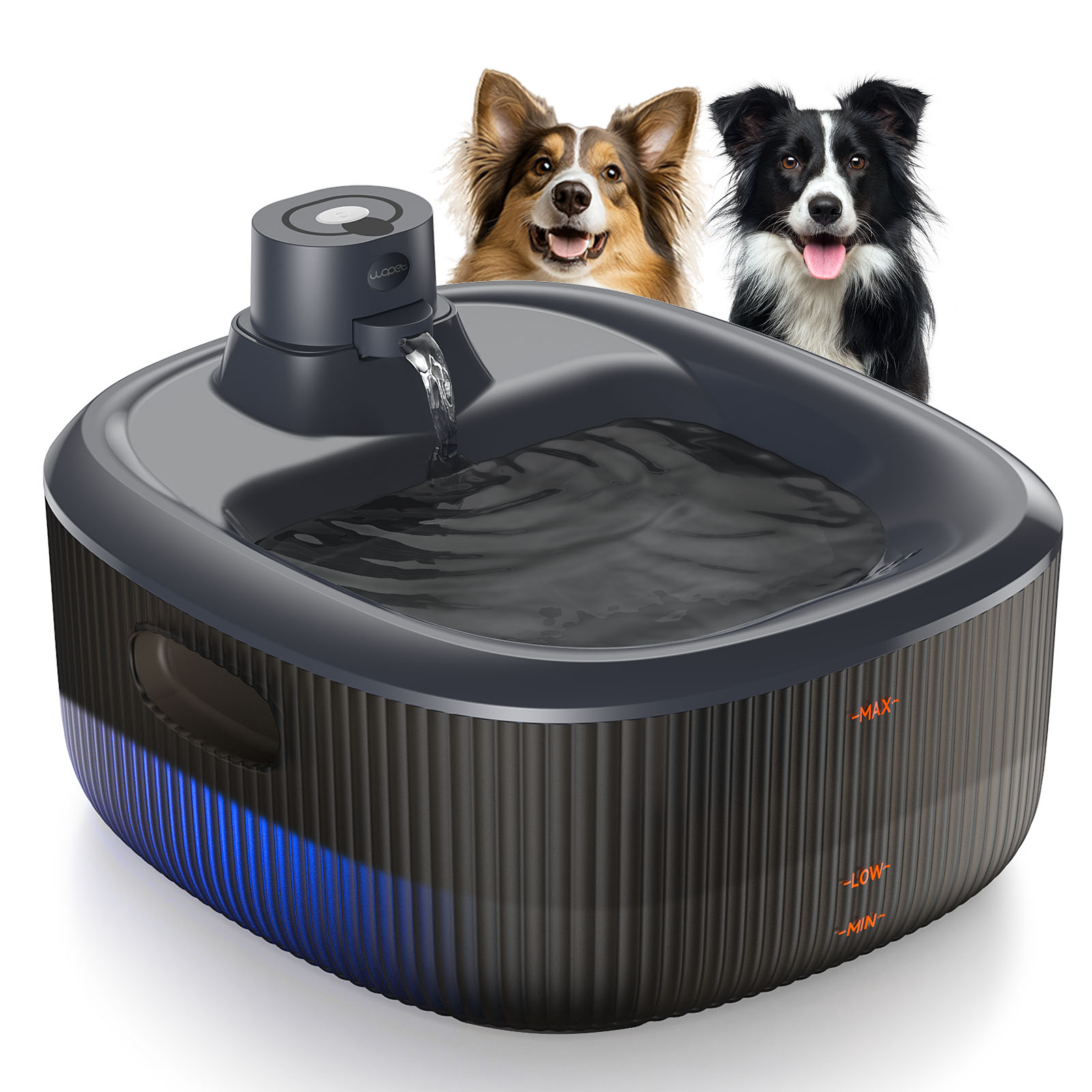
The WOPET W600 Pro is a wireless dog water fountain.
When cleaning a wireless fountain, pay particular attention to the separation between washable water-contact components and electronic components.
Recommended precautions include:
Switch off the fountain before cleaning.
Follow the model-specific disassembly instructions.
Keep charging connections dry.
Clean approved washable components.
Inspect accessible circulation passages.
Replace filters as directed.
Reassemble the fountain carefully.
Do not assume the entire fountain can be immersed in water.
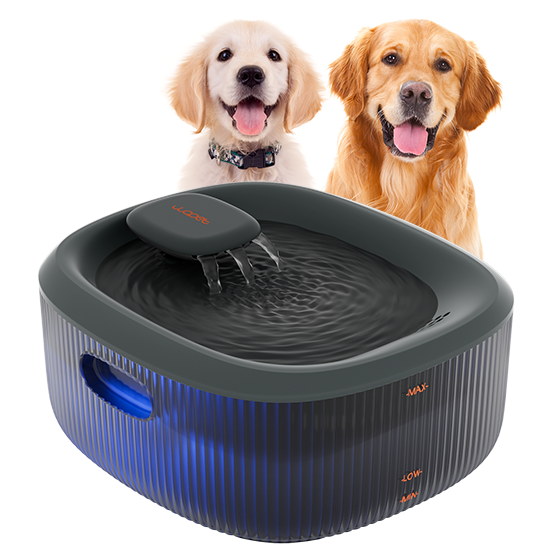
For the WOPET W600, focus on maintaining a clean drinking surface, reservoir, and accessible water circulation areas.
Check for pet hair, residue, and reduced water flow during routine cleaning.
Use the official product instructions to identify removable components and the appropriate filter maintenance procedure.

The WOPET A08 is designed for dogs and multi-cat households.
When multiple pets share a fountain, additional saliva, hair, and debris may enter the water.
A multi-pet household may therefore need more frequent cleaning.
Pay attention to:
Drinking surface cleanliness
Hair accumulation
Reservoir condition
Filter inspection
Water freshness
Accessibility for each pet
Providing additional drinking stations can also help meet the needs of pets with different drinking preferences.
Note: These are general maintenance recommendations. Always use the instructions supplied with your specific WOPET model for disassembly, cleaning compatibility, and filter replacement.
Sometimes a fountain does not operate as expected after reassembly.
Possible causes include:
Low water level
Incorrect filter placement
Blocked water passages
Improper component alignment
Circulation system problems
Check the user manual and inspect accessible parts.
Possible causes include:
Low water level
Loose components
Vibration against the supporting surface
Debris in accessible circulation areas
Turn off the fountain before inspecting it.
Check whether the reservoir, covers, and seals are installed correctly.
Do not continue operating a leaking fountain near electrical components.
Check the power supply or battery status, depending on the model.
Make sure all required components are correctly installed.
Do not attempt unauthorized repairs to sealed electronic components.
If the problem continues, contact the manufacturer.
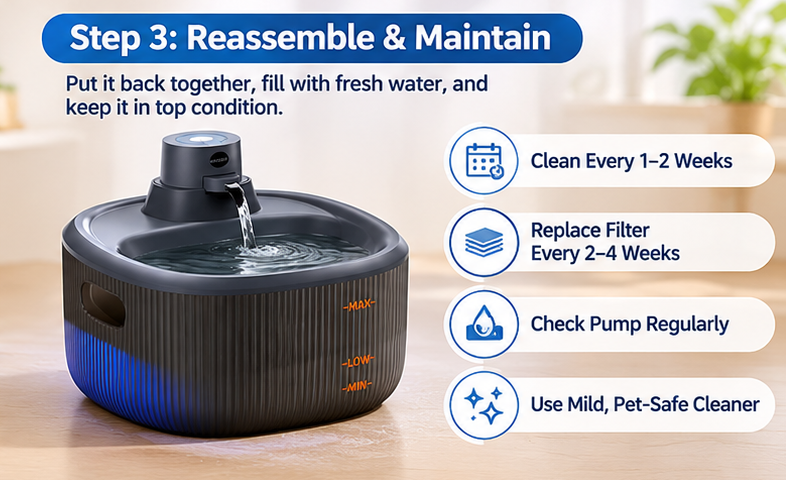
As a practical starting point, refresh water daily, wash the reservoir and drinking basin every one to three days, and deep clean accessible components about weekly. Clean more often when needed and follow the manufacturer's instructions.
Mild dish soap may be suitable for many washable food-contact components. Follow the manufacturer's instructions and rinse thoroughly.
Only if the manufacturer approves it for your specific fountain and components. Vinegar is not suitable for every material or electronic assembly.
It may be biofilm, which can develop on wet surfaces. Clean affected areas thoroughly using an approved method.
Follow the model's instructions. Some conventional pumps have serviceable components, while other circulation systems should not be disassembled.
It depends on the filter. Some require rinsing, while others must be replaced. Follow the manufacturer's directions.
Replacement intervals vary by model and filter type. Follow the manufacturer's schedule and inspect the filter regularly.
Only if the manufacturer explicitly identifies the specific components as dishwasher-safe. Never place electronic components in a dishwasher.
Pet saliva, food particles, environmental contamination, and microbial growth can contribute to residue. More frequent cleaning may be necessary.
Low water levels, loose parts, vibration, or circulation problems may contribute to noise. Check the model's troubleshooting instructions.
Yes. A filter does not eliminate the need to replace drinking water and clean the fountain.
Contaminated drinking water or dirty surfaces can create hygiene risks. If your dog becomes ill, contact your veterinarian rather than assuming the fountain is the cause.
Learning how to clean a dog water fountain is an important part of responsible pet care.
A good cleaning routine helps remove debris, reduce residue, maintain water circulation, and keep the drinking station more pleasant for your dog.
The most useful habits are simple:
Replace drinking water regularly.
Wash the reservoir and drinking basin.
Clean accessible circulation components.
Inspect and replace filters as directed.
Remove slime and mineral deposits safely.
Protect electrical components during cleaning.
Follow the instructions for your specific model.
Whether you use a traditional water bowl or a WOPET dog water fountain, providing safe drinking water and maintaining clean equipment should always be priorities.
A clean fountain isn't just about appearance. It's about creating a comfortable, well-maintained drinking station your dog can use every day.
Label:
Popular Post

The Ultimate Guide to Tabby Cats: Patterns, Personalities, and More
Mar 27, 2025

Top 8 Reasons Why Does My Cat Sleep Between My Legs?
Mar 03, 2025

What to Do If My Dog's Poop Is Black But Not Tarry
Feb 04, 2023

Superfecundation Cats: When Kittens in One Litter Have Different Fathers
Jul 11, 2025
Can Cats Have Orange Eyes? Genetics, Breeds, and Care Guide
May 20, 2025
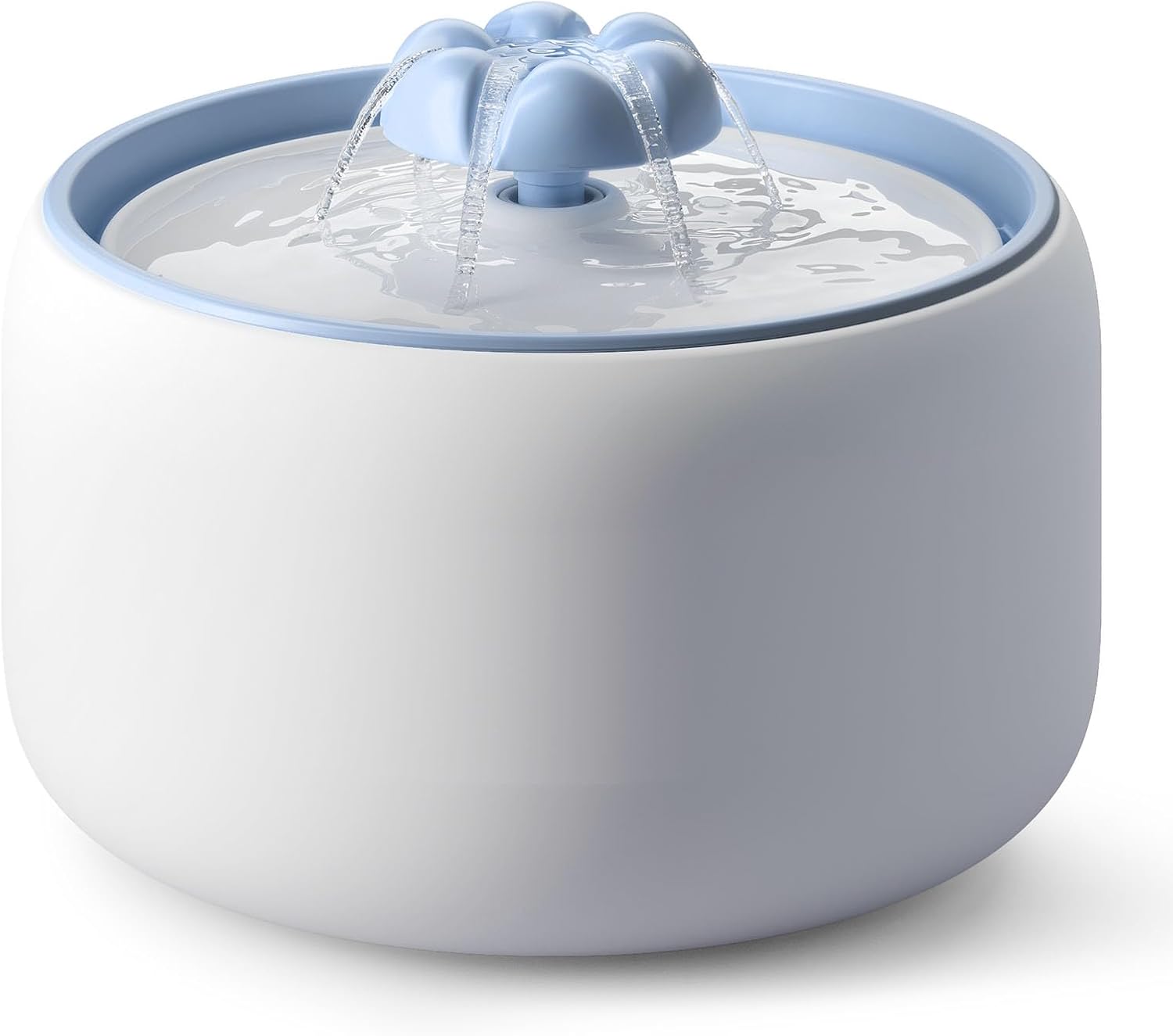
[Blue] W03L 3L Premium Ceramic Cat Water Fountain
Model: W03 LITE
$59.99
$69.99

Basin Pet Water Fountain-W600
Model: W600
$43.99
$69.99
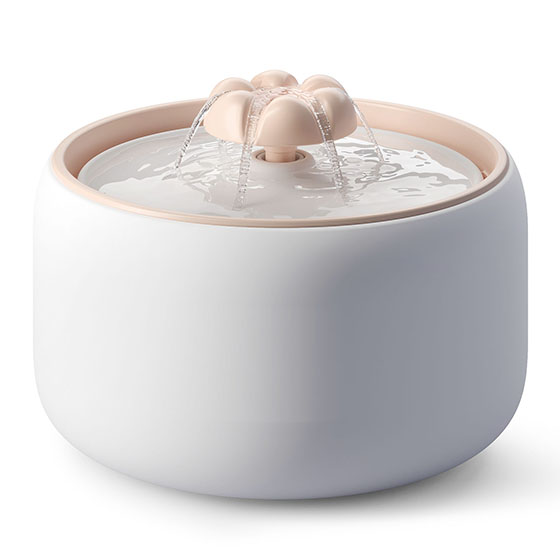
[Basic] Ceramic Pet Water Fountain with Power Cable
Model: W03L
$59.99
$99.00
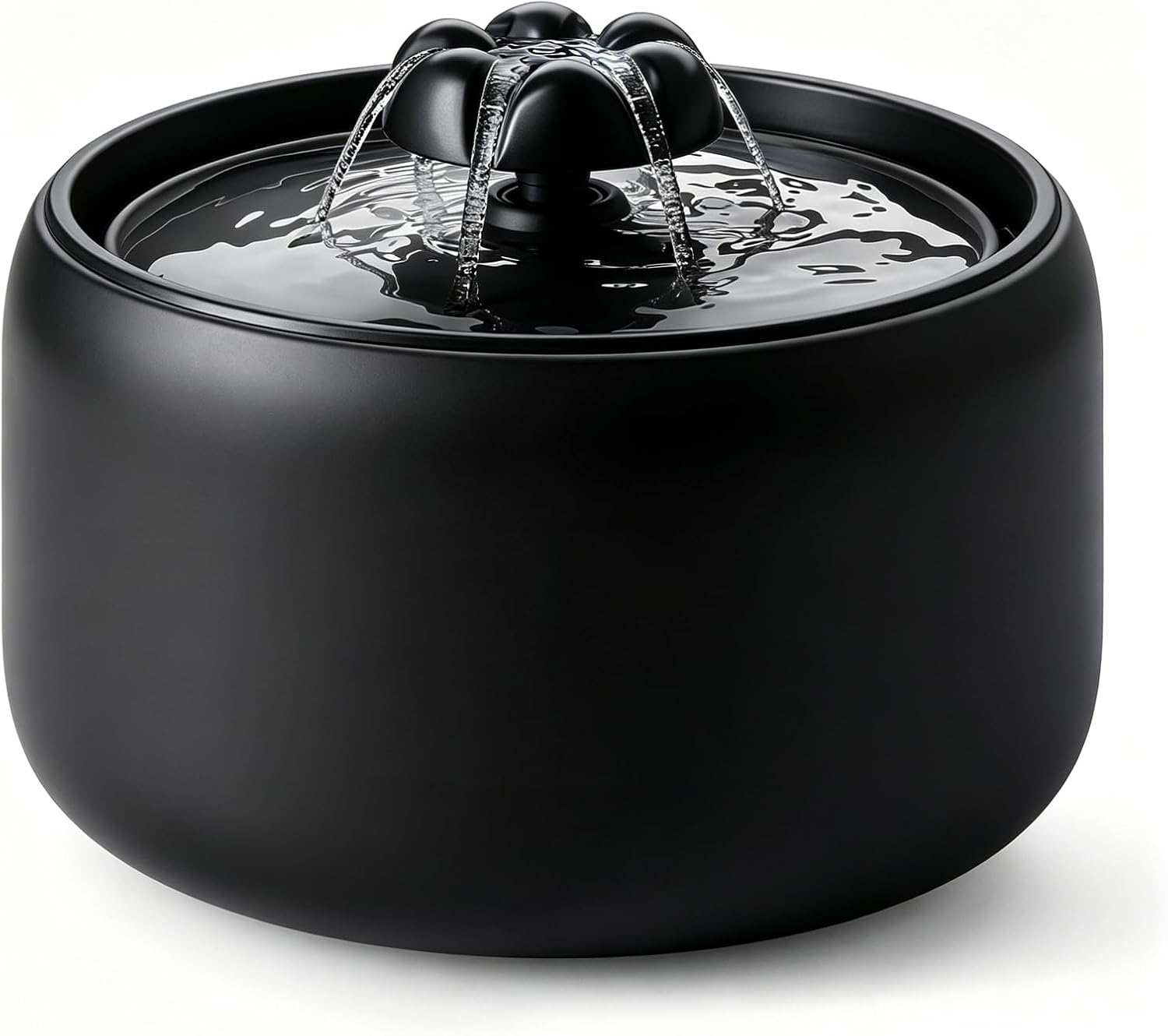
[Black] W03L 3L Premium Ceramic Cat Water Fountain
Model: W03L Black
$59.99
$69.99

WOPET 8L Pet Water Fountain For Multiple Cats or Large Dogs A08
Model: A08
$49.99
$59.99
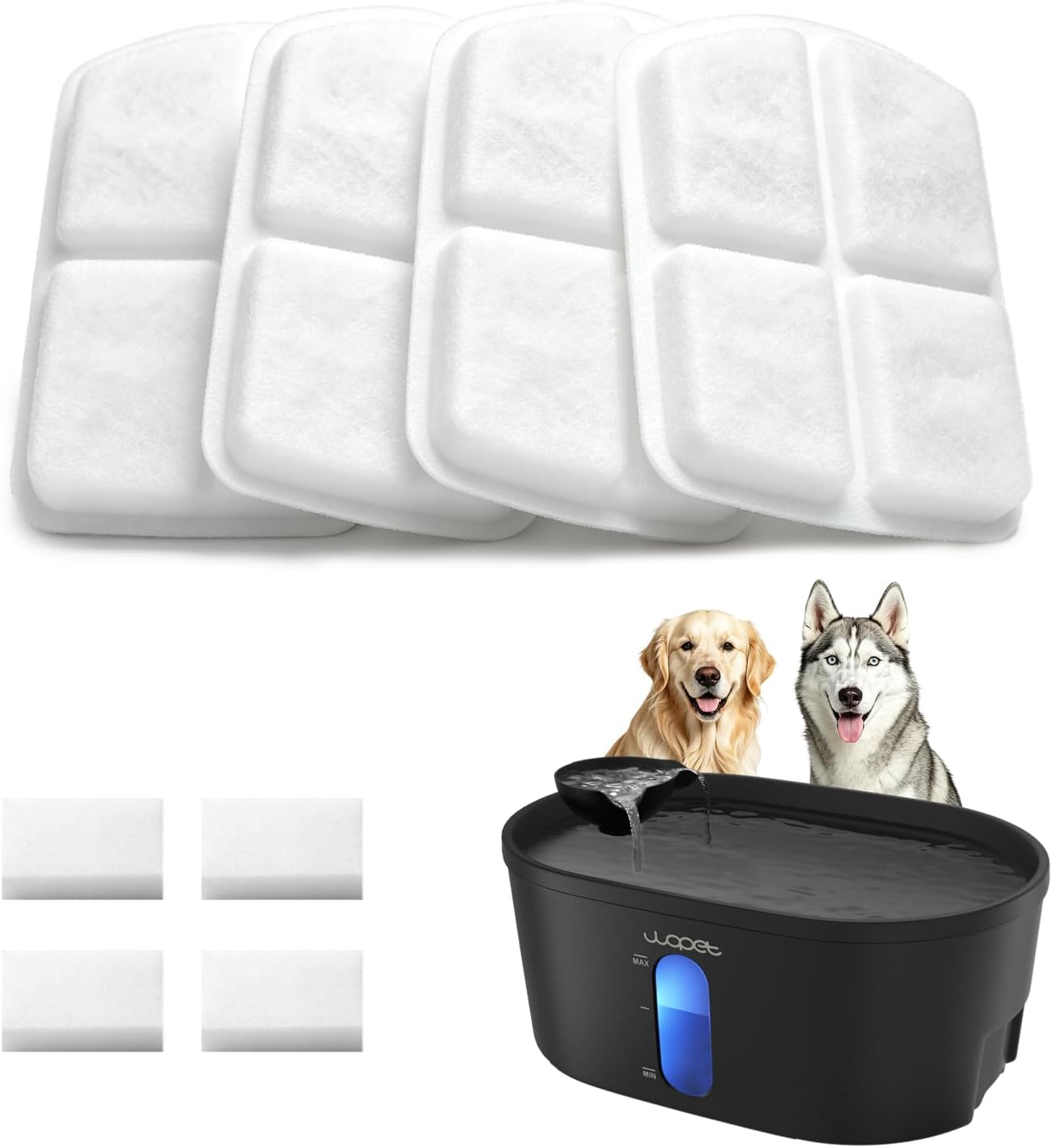
WOPET A08 Dog Water Fountain Filters
Model: A08 Filter
$19.99
$29.99

DOWNLOAD APP

WOpet life




Copyright © 2026 WOPET. All Rights Reserved.