Nov 03, 2026
Author:Jackson Watson
You fill your dog's water bowl in the morning, but hours later, the water level hasn't changed. Your dog may still be eating, playing, or acting normally, yet something feels different.
Why is your dog not drinking water?
Sometimes, reduced water intake has a simple explanation, such as cooler weather, a change in diet, or an unfamiliar drinking bowl. Other times, it may be an early sign of pain, nausea, illness, or dehydration.
The important thing is to understand what's changed and whether your dog needs veterinary attention.
Dogs depend on adequate hydration for normal body functions, including temperature regulation, circulation, digestion, and waste removal. A sudden refusal to drink deserves attention, particularly when accompanied by other symptoms.
In this guide, we'll explain 10 possible reasons dogs stop drinking water, how to recognize warning signs, and practical steps you can take to make drinking more comfortable.
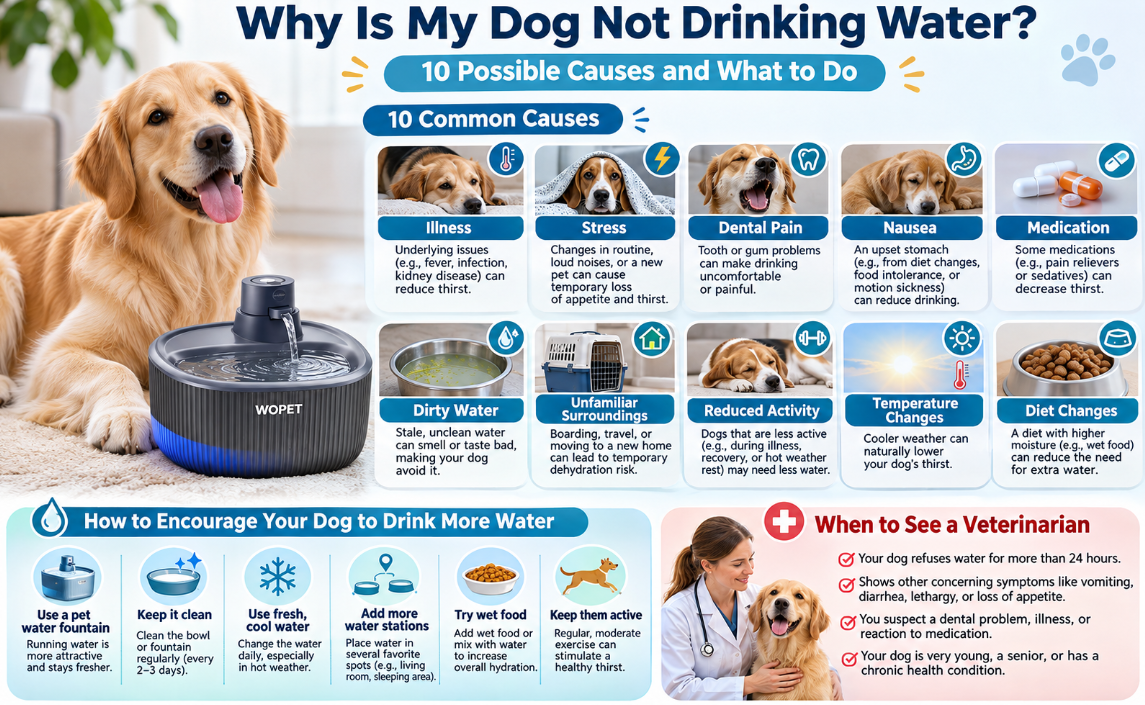
Not every change in drinking behavior is an emergency. Dogs naturally vary in how much water they consume depending on their food, activity, environment, and health.
However, a dog that suddenly refuses all water should be assessed promptly by a veterinarian, especially if the change is unusual for that dog.
Collapse, severe weakness, or difficulty standing
Difficulty breathing
Unresponsiveness or significant confusion
Signs of heatstroke, such as overheating with weakness or collapse
Repeated vomiting with inability to keep water down
Severe abdominal pain or a swollen abdomen
Pale, blue, or markedly abnormal gum color
These signs can indicate serious illness and should not be managed by trying a different water bowl or fountain.
Your dog suddenly refuses to drink
Water intake drops significantly without an obvious explanation
Your dog is lethargic, nauseated, or behaving unusually
Drinking appears painful or difficult
Your dog has vomiting or diarrhea
Urination becomes noticeably reduced
Your dog is a puppy, senior, or has an existing medical condition
There is no single safe waiting period that applies to every dog. Do not assume it is acceptable to wait 24 hours when a dog refuses water.
Sometimes, yes.
A dog may drink less directly from a bowl while still obtaining water from food.
For example, wet dog food contains considerably more moisture than dry kibble.
Similarly, a dog that has been resting indoors during cool weather may need less water than one exercising outdoors on a hot day.
A commonly used planning estimate is approximately 1 US fluid ounce per pound of body weight per day, or around 65 mL per kilogram.
| Dog Weight | Approximate Daily Water Intake |
|---|---|
| 10 lbs | 300 mL |
| 20 lbs | 600 mL |
| 30 lbs | 900 mL |
| 50 lbs | 1.5 L |
| 70 lbs | 2.1 L |
| 100 lbs | 3.0 L |
These figures are general estimates, not medical targets for every dog.
Actual water requirements vary, and some dogs obtain a substantial portion of their water from food.
If your veterinarian has recommended a specific fluid intake because of a medical condition, follow that guidance instead.
Dogs may drink less when temperatures are cooler or their activity level decreases.
A dog that spends most of the day resting indoors may not consume as much water as one that has been running or playing outside.
What to do: Compare your dog's drinking habits with recent activity and weather changes.
If your dog is otherwise healthy and comfortable, a modest decrease may be understandable.
However, do not automatically attribute a sudden complete refusal to drink to cooler weather.
Wet food provides moisture as part of the diet.
If you recently switched from dry kibble to canned food or another moisture-rich diet, your dog may drink less from the water bowl.
This doesn't necessarily mean total water intake has decreased.
What to do: Consider how much moisture your dog receives through food, while continuing to provide fresh drinking water.
Do not restrict access to water because your dog eats wet food.
Dogs can be sensitive to environmental changes.
A move, unfamiliar visitors, boarding, travel, a new pet, or changes in household routines may affect eating and drinking behavior.
Some dogs may hesitate to approach a water bowl placed in a busy or unfamiliar location.
What to do: Offer water in a calm, accessible area.
Maintain a predictable routine and avoid forcing your dog to approach the drinking station.
If reduced drinking continues or other symptoms appear, contact your veterinarian.
Dogs may notice changes in water taste or smell.
Possible triggers include:
A different water source
Residual cleaning-product odors
A newly purchased drinking bowl
Water that has been sitting for too long
Changes in the drinking environment
What to do: Wash and thoroughly rinse the bowl, then refill it with fresh water from a safe drinking source.
If you suspect the household water supply is unsafe, use an appropriate alternative source rather than relying on a pet fountain filter to purify it.
Water bowls and fountains can accumulate saliva, food particles, pet hair, and other debris.
Residue may also develop on surfaces and inside water channels.
Some dogs may avoid drinking from a dirty or unfamiliar-smelling container.
What to do: Empty and clean the drinking station regularly.
For water fountains, follow the manufacturer's instructions for cleaning the reservoir, filter compartment, and circulation components.
Remember that ordinary fountain filtration does not reliably disinfect water.
The size, height, material, and location of a drinking bowl can influence how comfortable it is to use.
For example, a large dog may find a narrow bowl awkward, while a small dog may struggle with a drinking surface that is too high.
Some dogs may also dislike the sound of a fountain or the movement of flowing water.
What to do: Offer a stable, appropriately sized bowl in an easy-to-reach location.
If your dog is hesitant around a fountain, provide a familiar bowl alongside it.
The goal is reliable water access, not forcing your dog to use a particular product.
Dental disease, oral injuries, inflammation, or other mouth problems can make drinking uncomfortable.
Possible signs include:
Drooling
Bad breath
Difficulty chewing
Pawing at the mouth
Dropping food
Reluctance to eat or drink
Sensitivity around the face
What to do: Contact your veterinarian for an oral examination.
Do not attempt to treat suspected dental pain by changing the fountain alone.
Dogs experiencing nausea may lose interest in both food and water.
Possible accompanying signs include:
Lip licking
Drooling
Vomiting
Reduced appetite
Restlessness
Unusual swallowing behavior
Vomiting and diarrhea can also increase fluid loss, making reduced drinking especially concerning.
What to do: Seek veterinary advice promptly, particularly if your dog cannot keep water down or appears weak.
Avoid forcing water into your dog's mouth.
Various illnesses can affect drinking behavior.
Pain, fever, infections, and other medical conditions may reduce a dog's willingness to drink.
Some medications can also affect appetite, nausea, thirst, or urination.
Importantly, certain illnesses cause increased drinking rather than decreased drinking, so any major unexplained change in water consumption deserves attention.
What to do: Contact your veterinarian if your dog's drinking behavior changes after starting medication or during an illness.
Do not stop prescribed medication without veterinary guidance.
Older dogs and dogs with injuries, arthritis, weakness, or neurological problems may have difficulty reaching or using a drinking station.
A dog may want water but struggle to bend down, walk to the bowl, or maintain a comfortable drinking position.
What to do: Make water easy to reach and consider a stable drinking station at a comfortable height.
If your dog seems unable to drink normally, seek veterinary assessment.
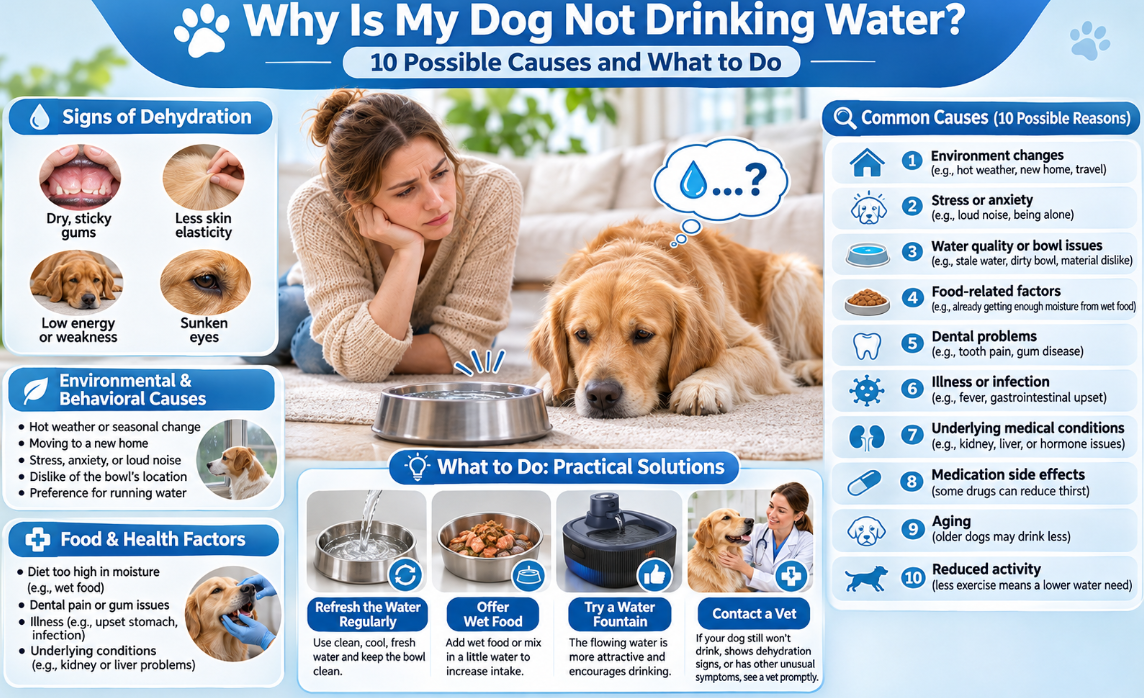
Dehydration occurs when the body loses more fluid than it takes in.
It can develop from insufficient drinking, excessive fluid loss, or a combination of both.
Dry or tacky gums
Reduced energy
Sunken-looking eyes
Reduced urination
Weakness
Changes in skin elasticity
Unusual behavior
These signs are not always reliable when used individually.
For example, skin elasticity can be affected by age and body condition.
A dog may also be dehydrated before obvious physical signs appear.
| Observation | What It May Mean | Recommended Action |
|---|---|---|
| Drinking slightly less, otherwise normal | Possible routine or dietary change | Monitor and provide fresh water |
| Suddenly refusing all water | Possible illness or discomfort | Contact a veterinarian promptly |
| Dry gums and reduced energy | Possible dehydration | Seek veterinary assessment promptly |
| Vomiting and unable to keep water down | Risk of dehydration and underlying illness | Urgent veterinary care |
| Collapse or severe weakness | Possible medical emergency | Emergency veterinary care immediately |
Important: Do not rely on a home dehydration test to decide that a sick dog is safe. A veterinarian can assess hydration status more accurately.
If your dog is , otherwise behaving normally, and not showing concerning symptoms, there are several low-risk steps you can try while monitoring the situation.
These measures should not delay veterinary care when drinking refusal is sudden, significant, or accompanied by illness.
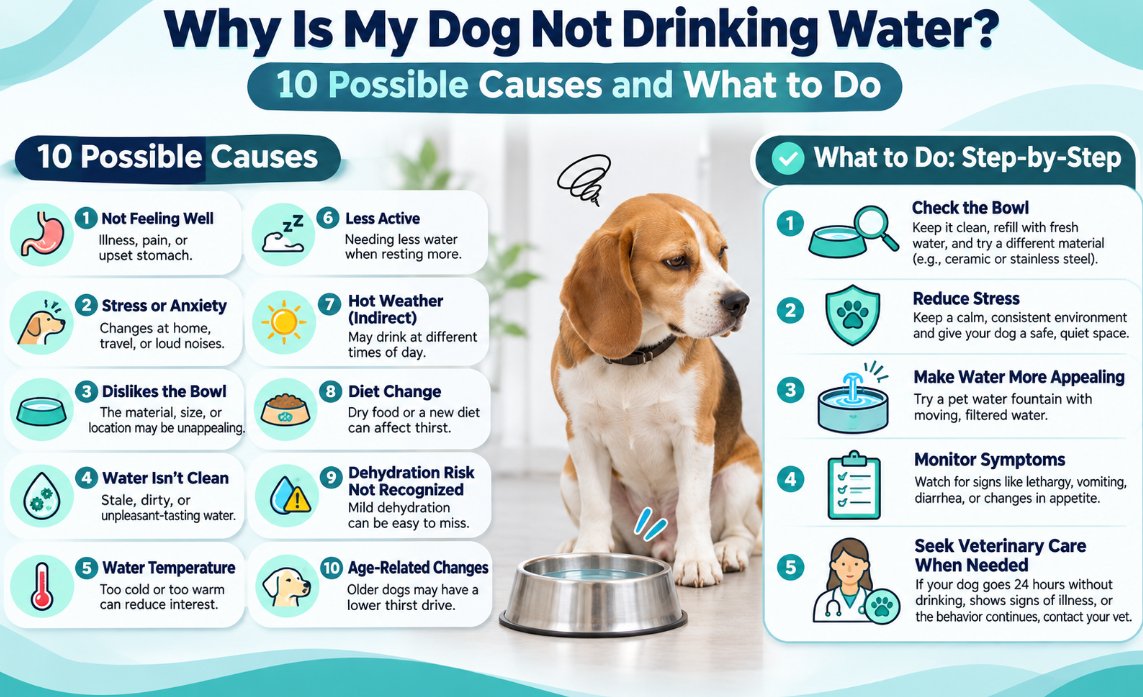
Empty the bowl and refill it with fresh drinking water.
Some dogs may prefer water that has been recently replaced.
Wash the bowl or fountain according to its care instructions.
Rinse thoroughly to remove cleaning-product residue.
Offer water in a clean, familiar bowl.
A wide, stable drinking surface may be more comfortable for some dogs.
Place the water bowl in a quiet, easily accessible area.
Avoid locations where other pets may block access.
If your home has several rooms or floors, consider providing water in more than one location.
This can be particularly useful for senior dogs or multi-pet households.
If your dog is eating normally, ask your veterinarian whether adding water to food or adjusting dietary moisture is appropriate.
This may help some dogs obtain additional fluids, but it does not replace uation of unexplained drinking refusal.
Pay attention to:
How often your dog urinates
Whether the amount appears normal
Energy level
Appetite
Vomiting or diarrhea
Signs of pain
These observations can help your veterinarian understand the situation.
If your dog continues refusing water, drinks much less than usual without explanation, or develops symptoms, seek veterinary advice promptly.
Never force water into a dog's mouth with a syringe unless a veterinarian has specifically instructed you to do so. Forced administration can lead to choking or aspiration.
Sometimes, a dog will drink from a traditional bowl but avoid a new fountain.
This may reflect a preference for the familiar drinking station rather than a general refusal to drink.
However, first confirm that your dog is drinking adequately from another source.
Some fountains produce humming, bubbling, or splashing sounds.
A noise-sensitive dog may hesitate to approach them.
Try: Positioning the fountain in a calm area and offering a familiar water bowl nearby.
Some dogs prefer still water.
A fountain with a raised stream or visible water movement may take time to get used to.
Try: Allowing your dog to explore the fountain without pressure.
Large dogs may find some compact fountain designs uncomfortable.
Try: Comparing the basin width and drinking height with your dog's physical size.
New components or cleaning residue may affect the drinking experience.
Try: Washing and rinsing the fountain according to the manufacturer's instructions.
A drinking station placed near a noisy appliance or busy walkway may be less appealing.
Try: Moving it to a quiet, accessible location.
Keep the dog's familiar water bowl available.
Place the new fountain nearby.
Allow your dog to investigate at its own pace.
Avoid forcing contact with the water.
Reward calm exploration if your dog responds well to positive reinforcement.
Continue monitoring actual water intake.
Never remove the familiar water bowl in an attempt to force your dog to use the fountain.
Some dogs may find moving water appealing, while others prefer still water.
A fountain can offer a different drinking experience, but it is not guaranteed to increase water intake.
Water circulation: Keeps water moving through the fountain's circulation path.
Filtration: May capture hair and certain debris, depending on the filter design.
Drinking accessibility: Some designs offer a comfortable drinking surface.
Placement flexibility: Wireless models can be positioned in locations that suit the household.
A fountain cannot:
Treat dehydration
Cure an underlying illness
Replace veterinary care
Guarantee increased drinking
Make unsafe water safe without appropriate treatment
For a dog that suddenly stops drinking, identifying the cause is more important than purchasing a new fountain.
If your dog is healthy but seems uncomfortable with its current drinking setup, you may want to consider a different bowl or fountain design.
WOPET offers drinking solutions for different household needs.
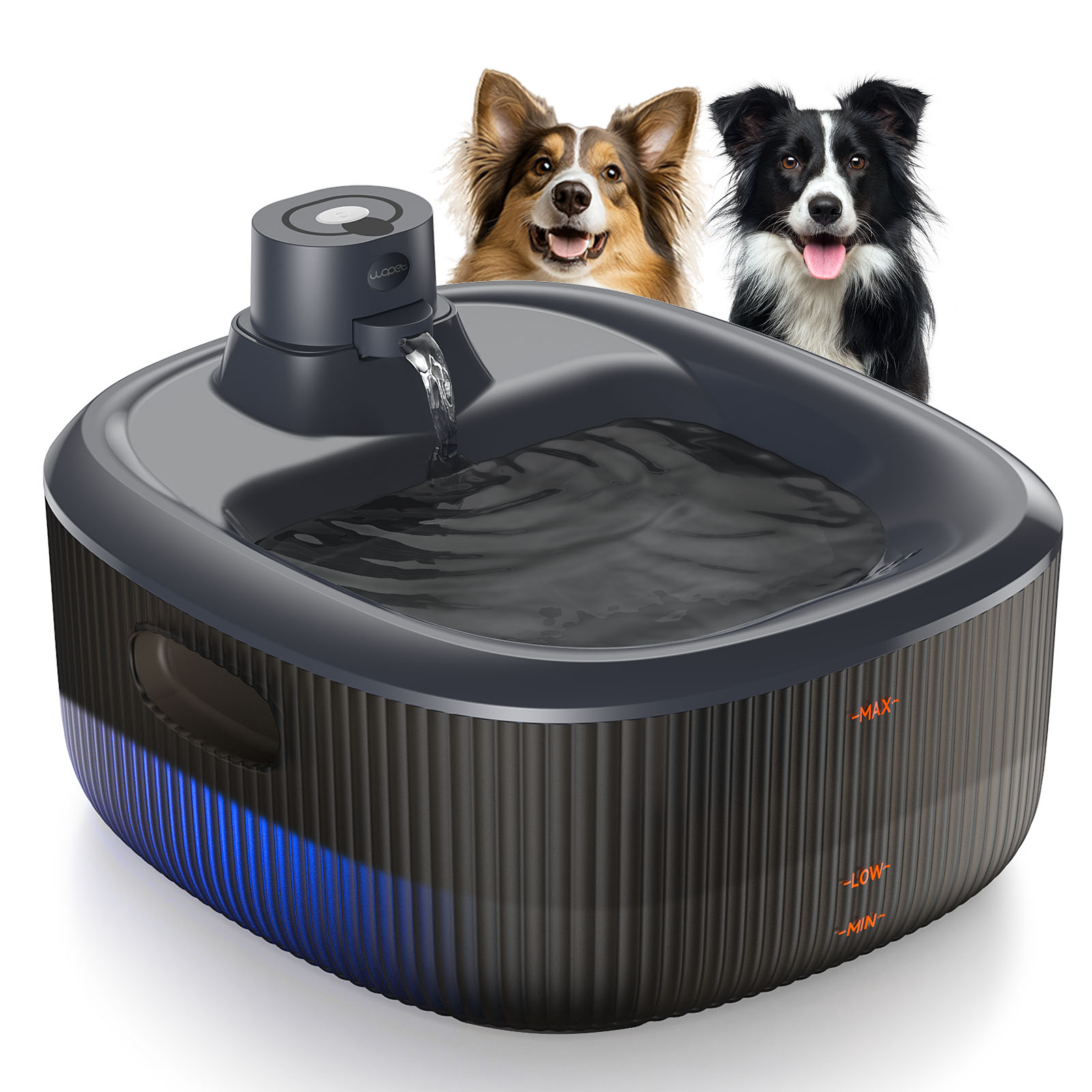
The WOPET W600 Pro is a wireless dog water fountain designed for flexible placement.
Its cordless design can make it easier to position the drinking station away from a permanent electrical outlet.
This may be helpful when finding a calm, accessible drinking location.
When comparing the W600 Pro with other fountains, consider:
Drinking basin dimensions
Water capacity
Circulation design
Cleaning requirements
Operating sounds
Battery maintenance
Best for: Dog owners seeking flexible placement and an alternative drinking station.
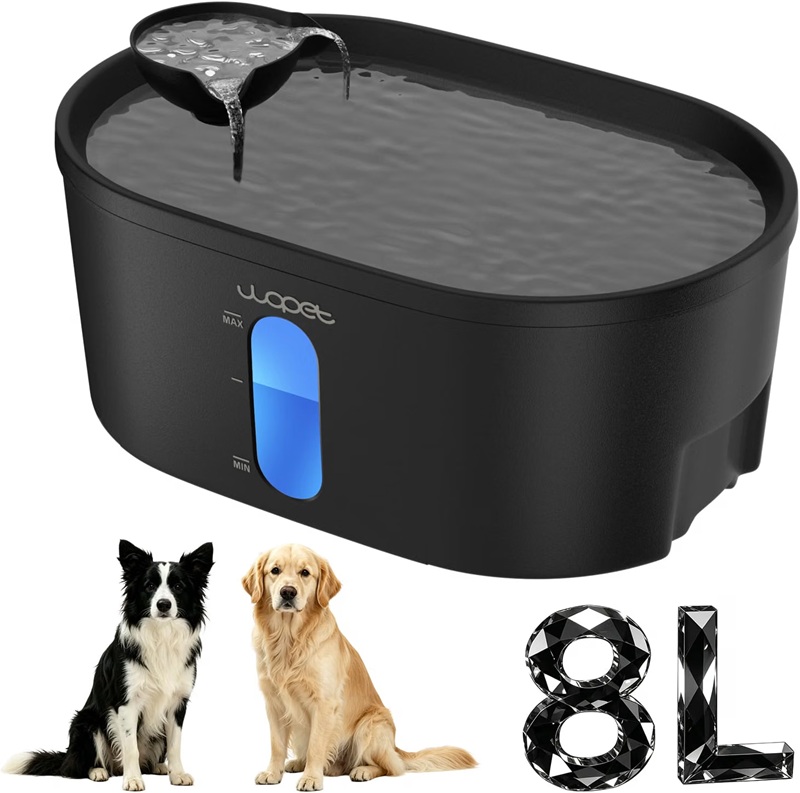
The WOPET A08 is designed for dogs and multi-cat households.
It may be worth considering when pets share a drinking area or when the current bowl does not suit their needs.
Important factors include:
Drinking surface accessibility
Reservoir capacity
Stable placement
Cleaning convenience
Filtration maintenance
Best for: Dog owners and multi-cat households uating a shared drinking station.
| Consideration | WOPET W600 Pro | WOPET A08 |
|---|---|---|
| Main positioning | Wireless placement convenience | Dogs and multi-cat households |
| Key benefit to uate | Flexible location | Shared drinking suitability |
| Important measurements | Basin size and capacity | Basin size and capacity |
| Maintenance | Regular cleaning required | Regular cleaning required |
| Medical treatment | No | No |
A water fountain should be viewed as a drinking-accessory choice, not a treatment for unexplained refusal to drink.
Preventing drinking-related problems begins with consistent access to clean water.
Provide fresh drinking water throughout the day.
Wash bowls and fountains to reduce accumulated residue and debris.
Consider your dog's size, mobility, and preferences.
Learn what is typical for your dog.
A noticeable change from that baseline can be more informative than comparing your dog with a generic water-intake chart.
This may help in larger homes or households with multiple pets.
Dogs may need additional water during exercise and warm conditions.
If your dog shows signs of overheating or heatstroke, seek emergency veterinary care.
Routine veterinary care can help identify health conditions that may affect drinking behavior.
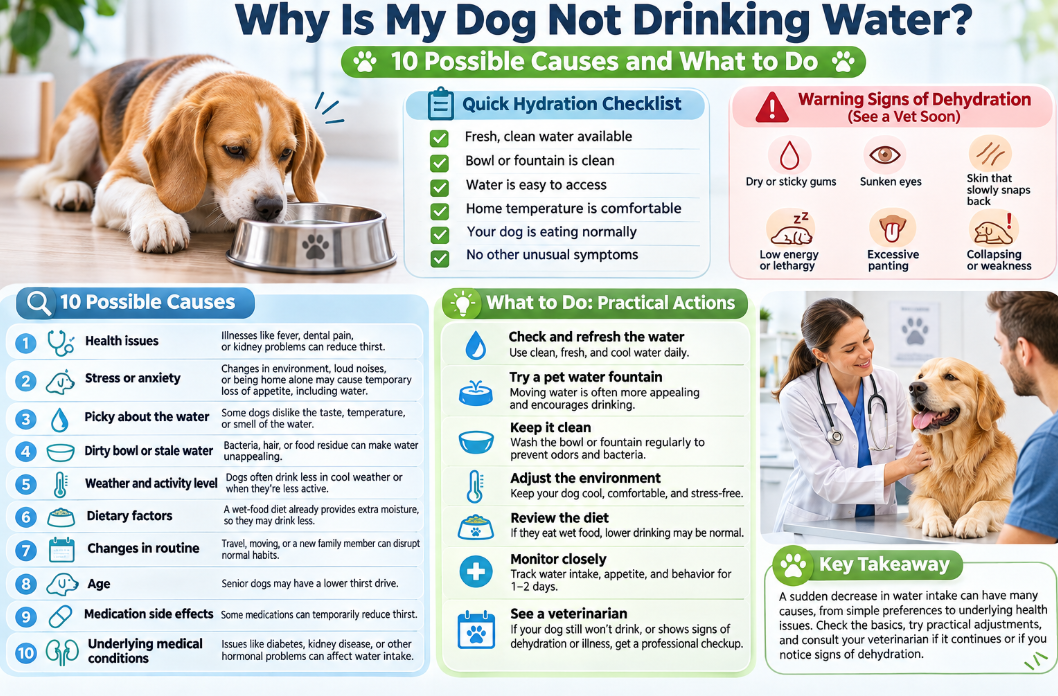
Possible explanations include increased moisture from food, changes in routine, or discomfort. However, eating normally does not rule out illness. Contact your veterinarian if your dog suddenly refuses water or the change persists.
Sudden refusal may be associated with pain, nausea, illness, stress, or a problem with the drinking setup. Contact your veterinarian promptly, particularly if your dog is also acting unusually.
There is no universally safe period to wait. Dehydration risk depends on the dog's age, health, environment, and fluid losses. Do not wait for a fixed number of hours if your dog is refusing water.
Yes. Wet food contains moisture, so dogs eating moisture-rich diets may drink less directly from a bowl.
Possible signs include tacky gums, weakness, sunken-looking eyes, and reduced urination. These signs are not definitive, and suspected dehydration should be assessed by a veterinarian.
No. Do not force water into your dog's mouth. This can create a choking or aspiration risk. Seek veterinary guidance if your dog refuses to drink.
Your dog may dislike the noise, water movement, basin design, smell, or location. Keep a familiar water bowl available while introducing the fountain gradually.
Some dogs prefer moving water, but others do not. A fountain may improve drinking convenience or appeal, but it does not guarantee increased intake.
Changes in drinking behavior should not automatically be attributed to aging. Mobility problems, dental pain, illness, and medication effects may contribute. Discuss significant changes with your veterinarian.
Contact your veterinarian promptly if your dog suddenly refuses water or drinks substantially less than usual. Seek emergency care for collapse, severe weakness, difficulty breathing, heatstroke signs, or repeated vomiting with inability to keep water down.
When a dog stops drinking water, the most important step is identifying whether the change is related to normal variation, the drinking environment, discomfort, or an underlying health problem.
Some dogs drink less because they are eating more wet food or have been less active.
Others may avoid a dirty bowl, an unfamiliar fountain, or an uncomfortable drinking area.
But sudden or persistent refusal to drink can also indicate illness and should not be ignored.
Start by checking your dog's behavior, offering fresh water, and making sure the drinking station is clean and accessible.
If your dog continues refusing water or shows concerning symptoms, contact a veterinarian promptly.
For healthy dogs that simply prefer a different drinking setup, a fountain such as the WOPET W600 or WOPET A08 may provide another option.
The goal isn't to make every dog drink from a fountain. It's to ensure that every dog has comfortable, reliable access to fresh water—and receives veterinary care when drinking behavior signals a possible health problem.
Label:
Popular Post
The Ultimate Guide to Tabby Cats: Patterns, Personalities, and More
Mar 27, 2025
Top 8 Reasons Why Does My Cat Sleep Between My Legs?
Mar 03, 2025

What to Do If My Dog's Poop Is Black But Not Tarry
Feb 04, 2023
Superfecundation Cats: When Kittens in One Litter Have Different Fathers
Jul 11, 2025

Can Cats Have Orange Eyes? Genetics, Breeds, and Care Guide
May 20, 2025
[Blue] W03L 3L Premium Ceramic Cat Water Fountain
Model: W03 LITE
$59.99
$69.99
Basin Pet Water Fountain-W600
Model: W600
$43.99
$69.99
[Basic] Ceramic Pet Water Fountain with Power Cable
Model: W03L
$59.99
$99.00
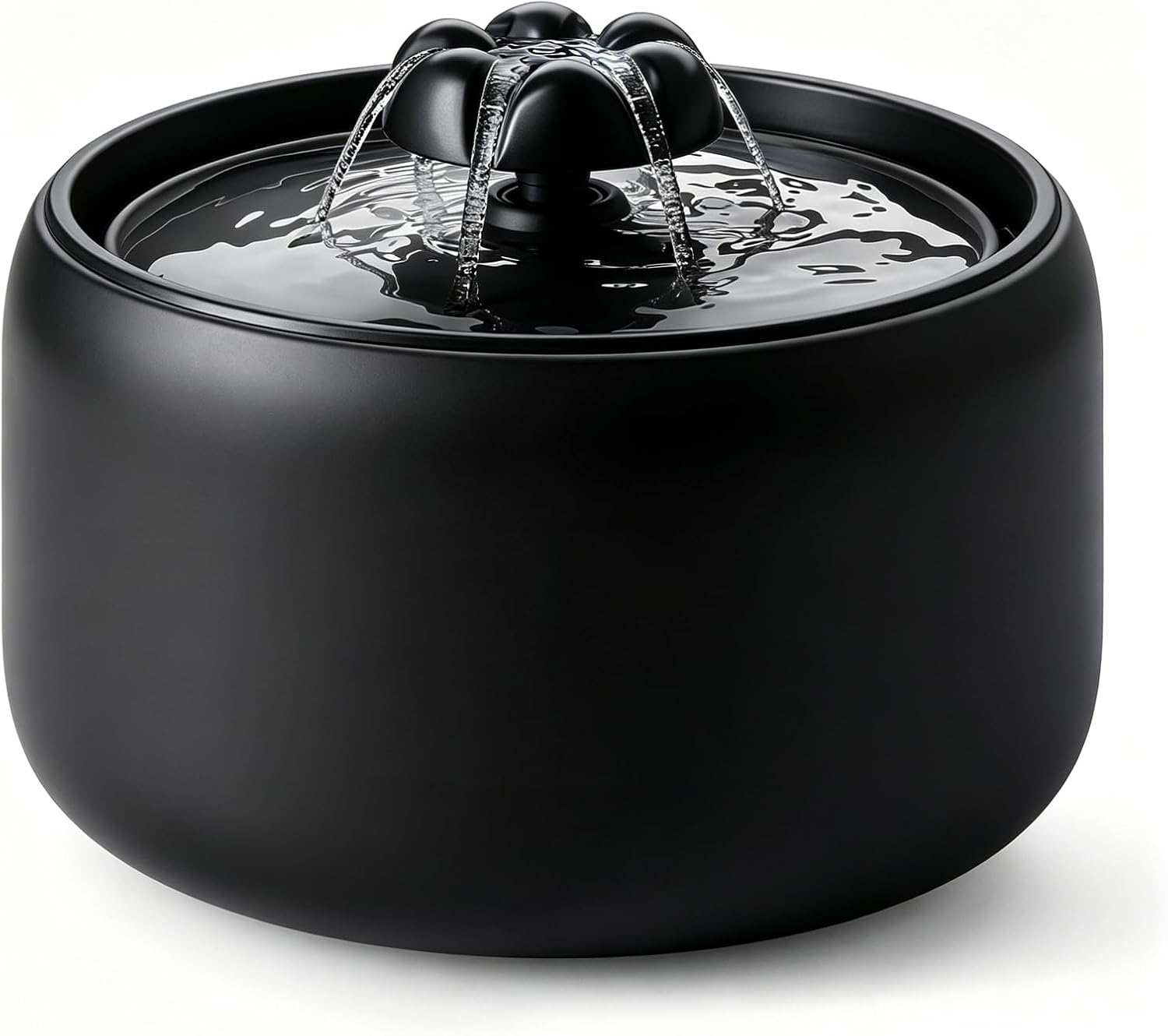
[Black] W03L 3L Premium Ceramic Cat Water Fountain
Model: W03L Black
$59.99
$69.99

WOPET 8L Pet Water Fountain For Multiple Cats or Large Dogs A08
Model: A08
$49.99
$59.99
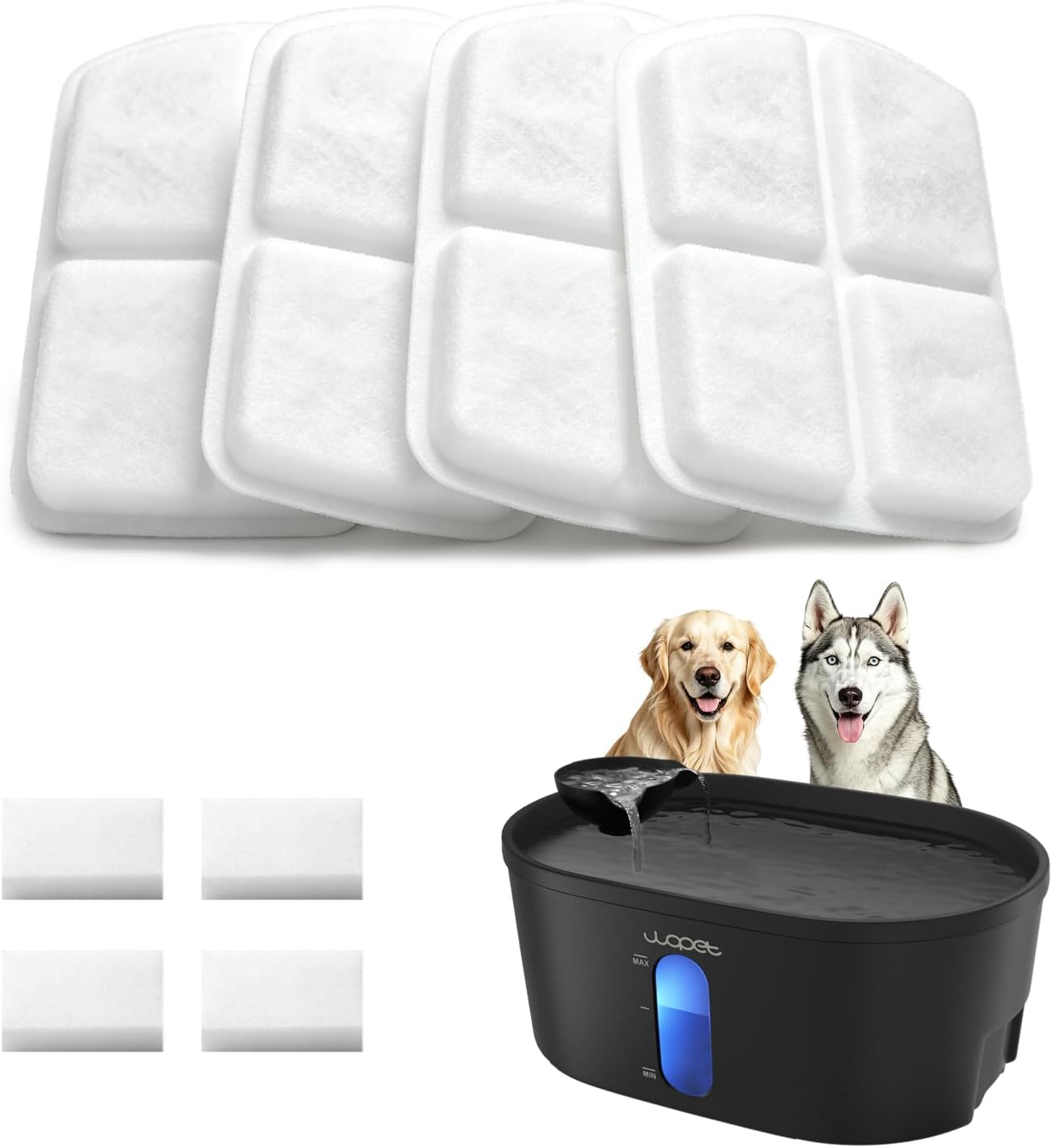
WOPET A08 Dog Water Fountain Filters
Model: A08 Filter
$19.99
$29.99

DOWNLOAD APP

WOpet life




Copyright © 2026 WOPET. All Rights Reserved.