Nov 03, 2026
Author:Lisa Martinez
Dogs need reliable access to fresh drinking water every day. But even when you fill a water bowl with clean water, it doesn't always stay that way.
Pet hair, saliva, food particles, dust, and other debris can enter the bowl as your dog drinks. In households with multiple pets, the water may become visibly dirty even faster.
A dog water fountain with filter offers a practical way to manage some of these everyday problems.
Unlike a traditional water bowl, a filtered fountain circulates water through a system designed to capture certain particles and, depending on the filter media, reduce substances that affect taste or odor.
But how does a dog water fountain filter actually work? Can it remove bacteria? Does activated carbon make drinking water safer? And how often should you replace the filter?
Understanding these details can help you choose a fountain that meets your dog's needs without expecting more from filtration than it can deliver.
This guide explains how dog water fountain filtration works, the differences between common filter materials, and how to maintain a filtered fountain properly.
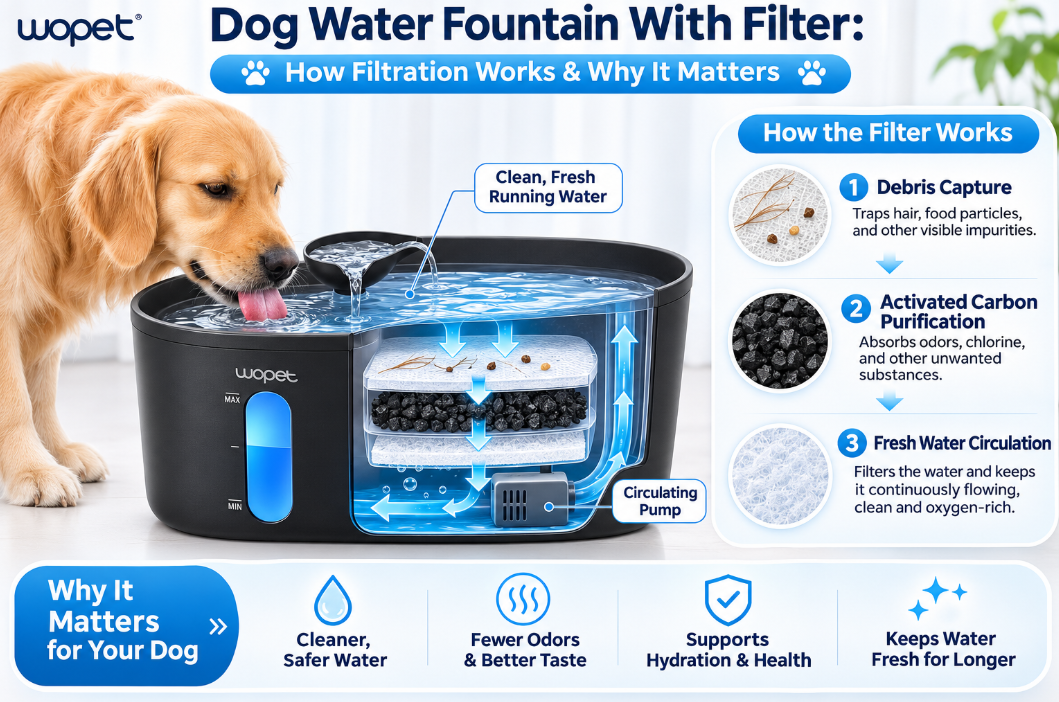
A dog water fountain with filter is an automatic drinking system that combines water circulation with one or more filtration components.
Most models contain several basic parts:
Water reservoir: Stores the water available to your dog.
Drinking basin: Provides an accessible area for drinking.
Circulation mechanism: Moves water through the fountain.
Filter assembly: Captures certain particles or treats specific water-quality characteristics.
Water channels: Direct water between the reservoir, filtration system, and drinking area.
Power system: Supplies electricity through a wall connection or battery.
Some fountains use a traditional submersible pump, while others use different circulation technologies, including magnetic-drive systems.
The exact arrangement varies between manufacturers.
A regular bowl holds water in one place until it is replaced.
A filtered fountain moves water through a circulation path, allowing it to pass through filtration media repeatedly.
This can help capture some of the debris that enters the water during everyday use.
However, circulation does not automatically disinfect water.
The main advantage of a filtered fountain is ongoing particle management and convenient water circulation—not guaranteed sterilization.
The filtration process depends on the fountain's design, but many systems follow a similar sequence.
Water is drawn or directed from the reservoir toward the filtration components.
Depending on the fountain, the filter may be positioned before the circulation mechanism, along the water channel, or in the return path.
As dogs drink, hair, dust, food particles, and other debris can enter the water.
The filtration system helps prevent some of these materials from continuing to circulate.
Mechanical filtration uses a physical barrier to trap particles.
Common materials include:
Mesh screens
Foam or sponge filters
Nonwoven filter pads
Fine filtration fabrics
Larger particles are captured when they cannot pass through the filter openings.
The effectiveness of mechanical filtration depends on the material's structure, pore size, and condition.
For example, a coarse mesh may capture hair but allow much smaller particles to pass through.
A finer filter may capture smaller debris but can also become clogged more quickly.
Why it matters: Mechanical filtration helps reduce visible debris, but it does not guarantee the removal of bacteria or dissolved contaminants.
Some dog water fountain filters contain activated carbon.
Activated carbon is a porous material with a large internal surface area.
Through a process called adsorption, certain dissolved substances can attach to its surface.
Depending on the carbon type, quantity, contact time, and water conditions, activated carbon may reduce some substances that contribute to unwanted tastes or odors.
It may also reduce free chlorine under suitable conditions.
However, activated carbon does not reliably remove every dissolved contaminant.
Its effectiveness decreases as adsorption sites become occupied.
This is one reason replacement schedules matter.
Important: Activated carbon should not be assumed to remove harmful microorganisms or make unsafe water suitable for drinking.
After moving through the circulation and filtration path, water reaches the drinking basin.
Depending on the fountain, it may:
Flow over a shallow surface
Rise through a central outlet
Form a small stream
Move gently across the basin
The water then returns to the reservoir and circulates again.
This repeated process allows water to pass through the filtration system multiple times.
However, repeated filtration cannot compensate for neglected cleaning or exhausted filter media.
Not all filters perform the same functions.
Understanding common materials can help you uate product descriptions more accurately.
Mesh filters use openings that physically block larger particles.
They may help capture:
Pet hair
Food crumbs
Larger debris
Mesh filtration is generally straightforward, but its effectiveness depends on the size of the openings.
Sponge filters are often used to capture debris before it reaches the circulation mechanism.
They may help protect the water-moving components from larger particles.
However, sponges can accumulate residue and require regular cleaning or replacement.
Activated carbon is used primarily for adsorption.
Depending on the design, it may reduce certain substances that affect taste or odor.
It is not a universal purification material.
Some pet fountain filters include ion-exchange resin.
Depending on the resin chemistry, it may exchange certain dissolved ions in the water.
For example, some resins are designed to reduce particular hardness-related ions.
However, not all resins perform the same function, and their effectiveness depends on the water composition and filter design.
Some fountains combine several filtration materials into one cartridge.
A multi-layer filter might include mechanical filtration, activated carbon, and other media.
The exact benefits depend on the materials used and how water passes through them.
Buying tip: Look for clear descriptions of filter materials and their functions instead of relying only on claims such as "advanced filtration" or "premium purification."

A multi-layer filter is not automatically better than a single-layer filter.
The correct choice depends on the specific water-quality issue the filter is designed to address.
| Feature | Single-Layer Filter | Multi-Layer Filter |
|---|---|---|
| Construction | One main filtration material | Multiple materials or stages |
| Particle removal | Depends on media | Depends on media |
| Taste and odor reduction | Only if suitable media are used | Possible with appropriate media |
| Maintenance | Often straightforward | Depends on cartridge design |
| Replacement cost | Varies | Varies |
| Guaranteed disinfection | No | No |
Not necessarily.
A poorly designed multi-layer filter may be less effective than a well-designed single-layer filter.
Performance depends on:
Filter material
Water flow rate
Contact time
Particle size
Filter capacity
Replacement frequency
Water quality
The number of layers alone does not establish filtration performance.
This is one of the most important questions for pet owners.
Many product descriptions use broad terms such as "clean water" or "purified water," but the actual filtration capability may be more limited.
| Water Issue | Typical Pet Fountain Filter Performance |
|---|---|
| Pet hair | Often captured by mechanical filters |
| Food particles | Larger particles may be captured |
| Dust and visible debris | Some particles may be captured |
| Sediment | Depends on particle size and filter media |
| Certain odors | Activated carbon may help |
| Certain taste-related substances | Activated carbon may help |
| Free chlorine | May be reduced by suitable activated carbon |
| Dissolved minerals | Generally not removed by basic mechanical or carbon filters |
| Bacteria | Removal or inactivation is not guaranteed |
| Viruses | Removal or inactivation is not guaranteed |
| All chemical contaminants | Not guaranteed |
A filter designed to capture pet hair is performing a different function from a certified drinking-water treatment system.
These should not be confused.
Unless a manufacturer provides appropriate testing or certification for a specific claim, avoid assuming that a pet fountain filter can remove pathogens or make contaminated water safe.
The best approach is to start with water that is already suitable for drinking and use fountain filtration as an additional maintenance feature.
Pet fountain filtration has important limitations.
Ordinary mechanical and activated carbon filters are not designed to reliably disinfect water.
Microorganisms may remain in the water or develop on wet surfaces.
Biofilm is a community of microorganisms attached to a surface.
It can develop on the reservoir, drinking basin, water channels, and circulation components.
Filters do not eliminate the need to physically clean these surfaces.
Many dissolved substances pass through basic pet fountain filters.
The effectiveness of any specialized filter depends on its tested capabilities.
A filter cannot compensate for a dirty reservoir or circulation system.
If the fountain is not cleaned regularly, residue may continue accumulating even when the filter is replaced.
Do not rely on an ordinary pet fountain to treat water from an unsafe source.
Use drinking water that is appropriate for your dog.

Filter replacement frequency depends on the product and household conditions.
There is no universal schedule that applies to every fountain.
Some manufacturers recommend replacement every few weeks, but you should follow the instructions for your specific model.
Number of pets: More pets may introduce more hair, saliva, and debris.
Water quality: Mineral content and suspended particles may affect filtration components.
Daily usage: Higher water consumption can increase the amount of water passing through the filter.
Filter material: Different media have different capacities and maintenance requirements.
Environmental conditions: Dust and other particles may enter the fountain.
Look for:
Reduced water flow
Visible debris buildup
Persistent odors
Discoloration
Unusual circulation noise
A filter that has reached its recommended replacement interval
These signs may indicate a need for cleaning or replacement, although they do not provide a reliable measure of microbiological safety.
It depends on the filter.
Some reusable mechanical components may be washable.
Other cartridges, particularly those containing activated carbon or specialized media, may require replacement rather than washing.
Always follow the manufacturer's instructions.
Cleaning is just as important as filtration.
A properly maintained fountain should have both clean water and clean internal surfaces.
Disconnect the power supply or switch off the battery-powered fountain.
Follow the manufacturer's electrical safety instructions.
Discard the remaining water.
Do not simply add new water to an increasingly dirty reservoir.
Take out the filter cartridge.
Clean or replace it according to the manufacturer's instructions.
Use an appropriate mild cleaning product and a nonabrasive sponge or brush.
Pay attention to corners and areas where residue accumulates.
Wash the reservoir thoroughly.
Remove visible debris and mineral deposits using methods approved for the material.
Check accessible water channels, impellers, and other circulation components.
Remove accumulated hair or debris.
Make sure no cleaning-product residue remains on water-contact surfaces.
Install the filter and other components correctly.
Use water that is suitable for your dog.
Confirm that the circulation system operates normally.
Refresh water daily and clean the fountain regularly according to the manufacturer's instructions.
Increase cleaning frequency when necessary, particularly in multi-pet households.
Large dogs do not necessarily need a different type of filtration technology.
However, they may need a fountain with greater capacity and a larger drinking area.
Large dogs generally drink more water than small dogs.
A common starting estimate is approximately one fluid ounce of water per pound of body weight daily.
| Dog Weight | Approximate Daily Water Intake |
|---|---|
| 20 lbs | 600 mL |
| 40 lbs | 1.2 L |
| 60 lbs | 1.8 L |
| 80 lbs | 2.4 L |
Actual needs vary with diet, activity, temperature, age, and health.
A fountain with adequate capacity may reduce the frequency of refilling.
However, larger reservoirs still require regular cleaning and fresh water.
Large dogs may introduce more saliva or food particles into the drinking area, depending on their habits.
This can increase the importance of accessible filtration and cleaning.
A wide basin may be more comfortable for large breeds.
Large-dog verdict: Focus on sufficient capacity, an accessible drinking area, and practical filter maintenance rather than assuming that more filter layers are always necessary.

When multiple pets share a fountain, maintenance becomes especially important.
More animals may introduce more debris and increase overall water consumption.
Adequate reservoir capacity
Accessible drinking basin
Removable filtration components
Easy-to-clean water channels
Stable construction
Convenient filter replacement
Multi-pet households may require more frequent cleaning and water replacement.
Observe the fountain's condition rather than relying only on a fixed schedule.
That depends on the number of pets, their drinking habits, and how easily they can access the water.
Providing multiple drinking stations may be helpful when pets compete for access or prefer different locations.
When choosing a filtered dog water fountain, consider both filtration and the complete drinking experience.
WOPET offers fountain models for different household needs.
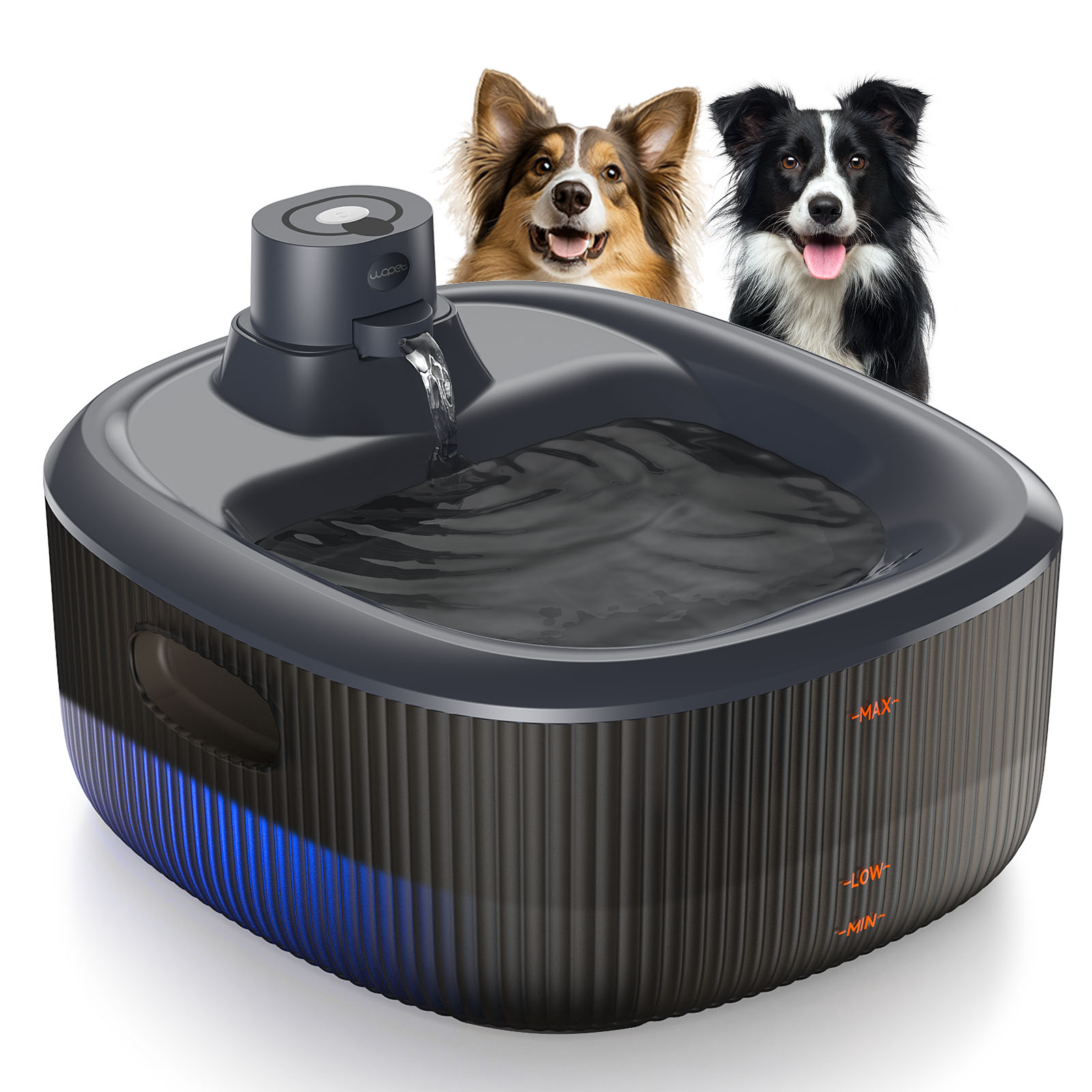
The WOPET W600 Pro is a wireless dog water fountain option for pet owners who value flexible placement.
When comparing its filtration system with other models, consider:
Filter materials
Filter replacement requirements
Water circulation path
Reservoir capacity
Cleaning accessibility
Availability of replacement filters
Its wireless design can be convenient when you want to position a drinking station away from a permanent electrical outlet.
However, the specific filter structure and replacement schedule should be confirmed using the current official product documentation.
Best for: Dog owners who want a wireless drinking station and practical everyday maintenance.

The WOPET A08 is designed for dogs and multi-cat households.
Its intended use makes it relevant for owners comparing fountains for shared drinking areas.
When uating the A08, consider:
Water capacity
Drinking basin accessibility
Filter design
Ease of disassembly
Replacement filter availability
Cleaning frequency
For multi-pet homes, the ability to maintain the fountain consistently is especially important.
Best for: Dog owners and multi-cat households looking for a practical drinking station.
| Feature | WOPET W600 Pro | WOPET A08 |
|---|---|---|
| Main positioning | Wireless convenience | Dogs and multi-cat households |
| Construction | Plastic | Plastic |
| Main consideration | Placement flexibility | Shared drinking needs |
| Filtration details | Verify official specifications | Verify official specifications |
| Filter replacement | Follow model instructions | Follow model instructions |
| Cleaning | Regular maintenance required | Regular maintenance required |
Neither model should be described as having superior filtration without comparable performance data.
Explore WOPET Pet Water Fountains: https://wopet.com/
Filter performance depends on the materials, design, and tested capabilities.
Most ordinary pet fountain filters do not reliably disinfect water.
An exhausted or clogged filter may no longer perform as intended.
A clean filter cannot compensate for dirty water channels or an unmaintained impeller.
Insufficient capacity can lead to frequent refilling, especially for large dogs.
The initial purchase price does not represent the total cost of ownership.
Water should still be refreshed regularly.
A dog water fountain filter uses physical filtration media to capture certain particles. Some filters also contain activated carbon or other materials that address specific water-quality characteristics.
Ordinary pet fountain filters should not be assumed to remove or kill bacteria reliably. Regular cleaning and safe source water remain essential.
Activated carbon is commonly used in water filtration, but the suitability of a specific filter depends on its materials, construction, and intended use.
Follow the manufacturer's recommended replacement schedule. More frequent maintenance may be needed in households with multiple pets or substantial debris.
Only if the manufacturer permits operation without the filter. Removing required filtration components may affect circulation or performance.
Not automatically. Performance depends on the filter materials, water flow, and tested capabilities.
Some activated carbon filters may reduce free chlorine under suitable conditions, but performance depends on the filter design and operating conditions.
Yes. Filtration does not prevent biofilm or eliminate the need to wash the reservoir, drinking basin, and circulation components.
They can be, provided the fountain has sufficient water capacity, an appropriate drinking area, and manageable filtration maintenance.
It can be useful for owners who want circulating water and a system that helps capture everyday debris. However, filtration should be viewed as a supplement to fresh water and regular cleaning.
A dog water fountain with filter uses a circulation system to move water through filtration materials before or after it reaches the drinking area.
Mechanical filtration helps capture hair and debris.
Activated carbon may reduce certain substances that affect taste or odor.
Other specialized materials may provide additional functions depending on their design.
However, filtration does not automatically disinfect water or eliminate the need for regular maintenance.
For pet owners exploring WOPET products, the W600 Pro offers wireless placement flexibility, while the A08 is designed for dogs and multi-cat households.
When choosing a fountain, consider filtration alongside water capacity, drinking comfort, cleaning accessibility, and replacement filter availability.
The best filtered dog water fountain is one that combines effective debris management with reliable circulation, convenient maintenance, and consistent access to fresh drinking water.
Label:
Popular Post

Top 8 Reasons Why Does My Cat Sleep Between My Legs?
Mar 03, 2025

What to Do If My Dog's Poop Is Black But Not Tarry
Feb 04, 2023

Superfecundation Cats: When Kittens in One Litter Have Different Fathers
Jul 11, 2025
Can Cats Have Orange Eyes? Genetics, Breeds, and Care Guide
May 20, 2025
How Long Does Dry Cat Food Last Once Opened? A Comprehensive Guide
Mar 19, 2025
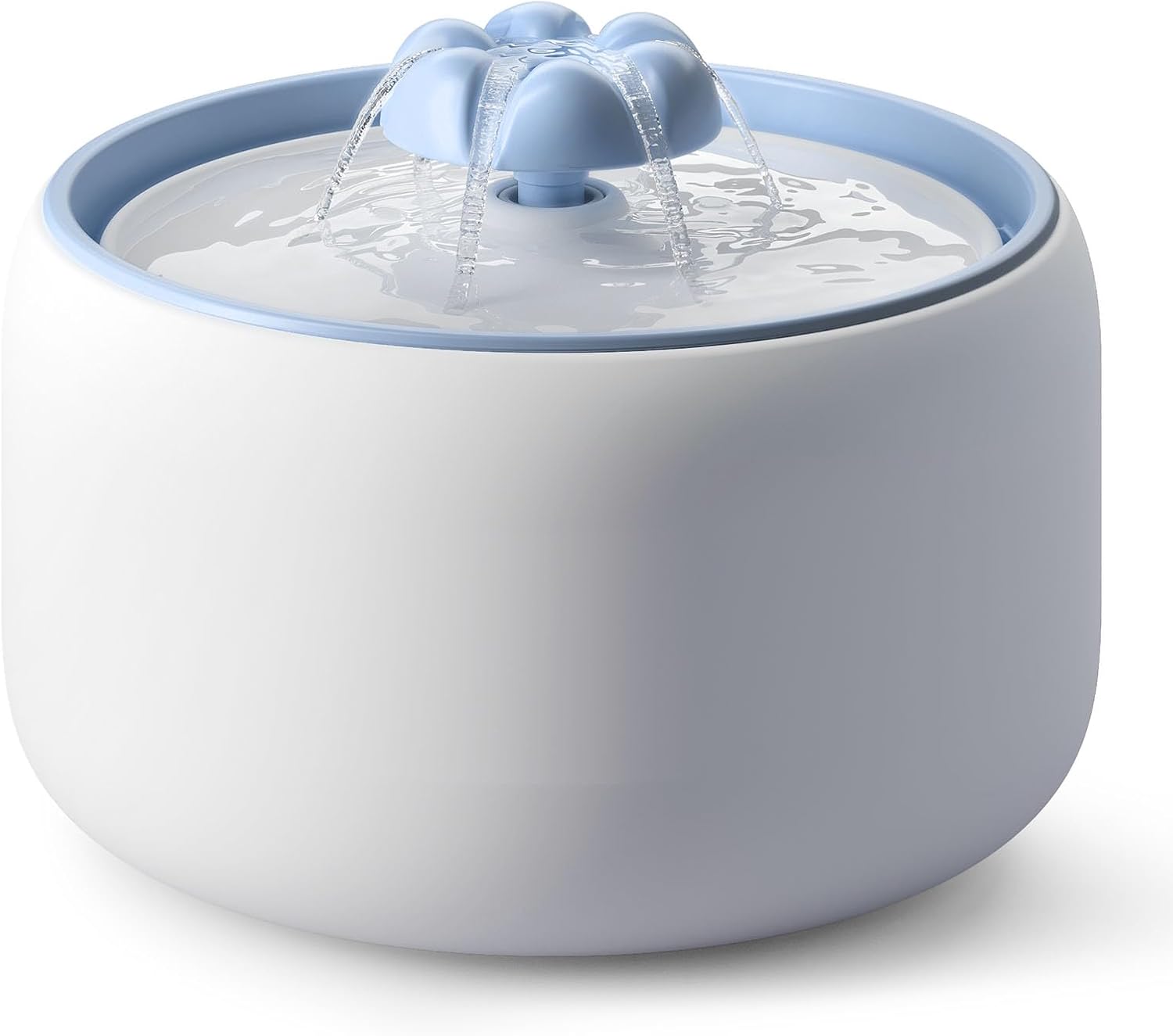
[Blue] W03L 3L Premium Ceramic Cat Water Fountain
Model: W03 LITE
$59.99
$69.99
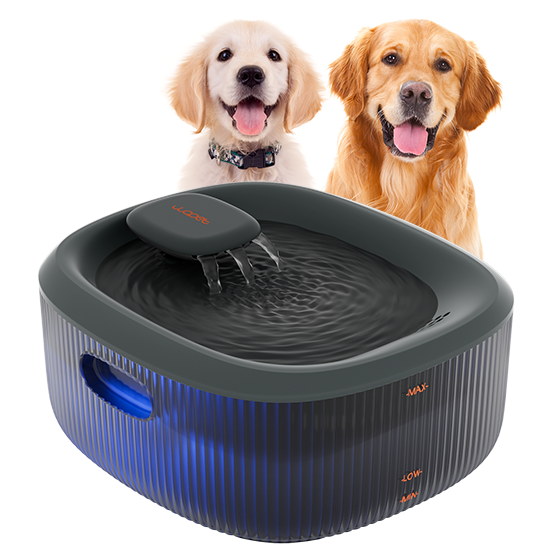
Basin Pet Water Fountain-W600
Model: W600
$43.99
$69.99
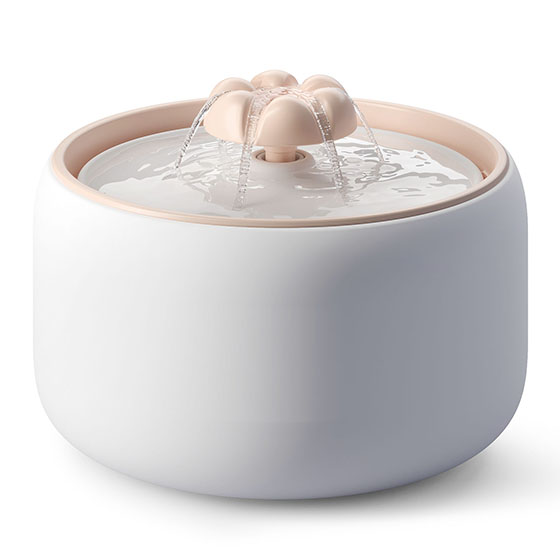
[Basic] Ceramic Pet Water Fountain with Power Cable
Model: W03L
$59.99
$99.00
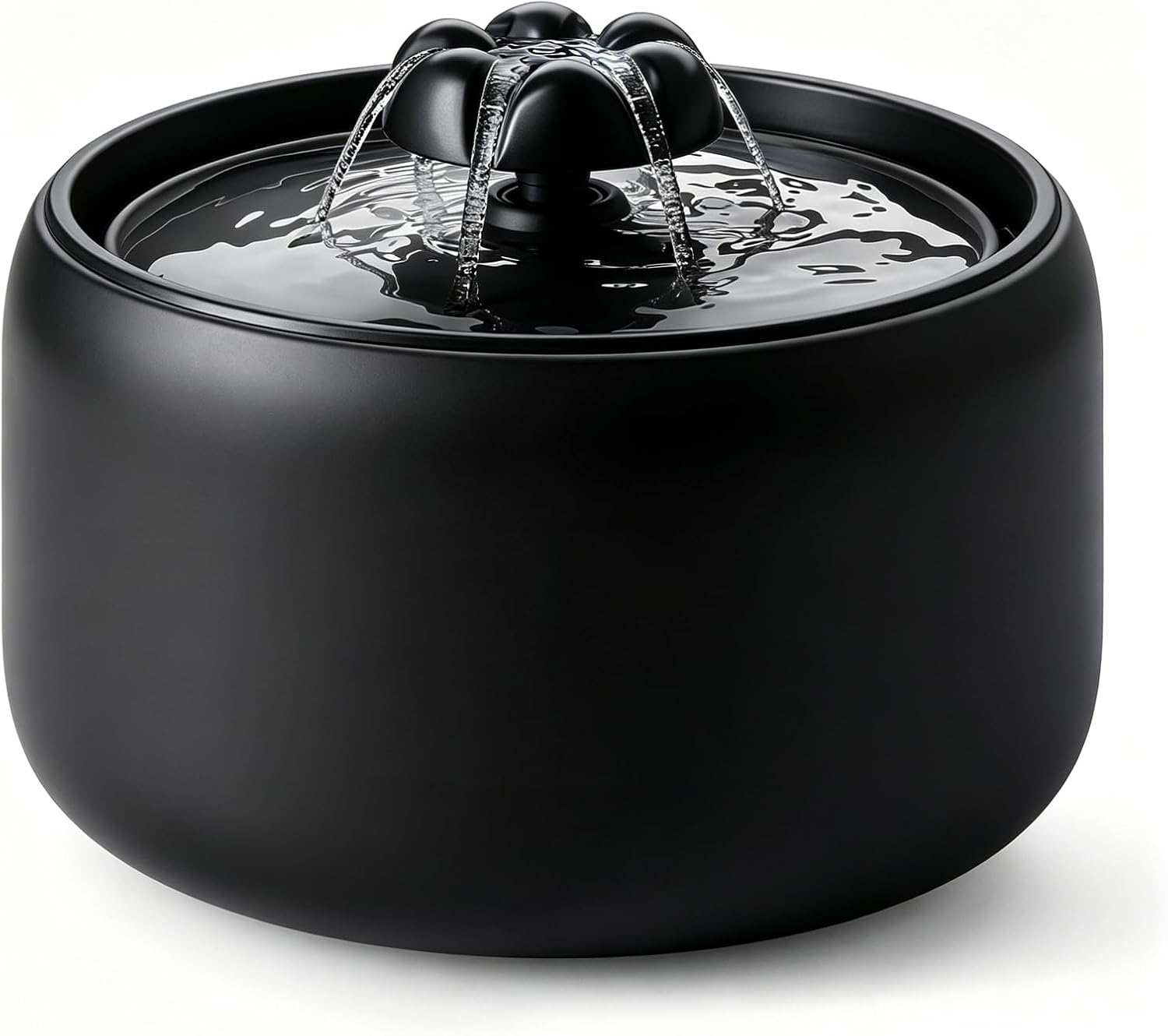
[Black] W03L 3L Premium Ceramic Cat Water Fountain
Model: W03L Black
$59.99
$69.99

WOPET 8L Pet Water Fountain For Multiple Cats or Large Dogs A08
Model: A08
$49.99
$59.99
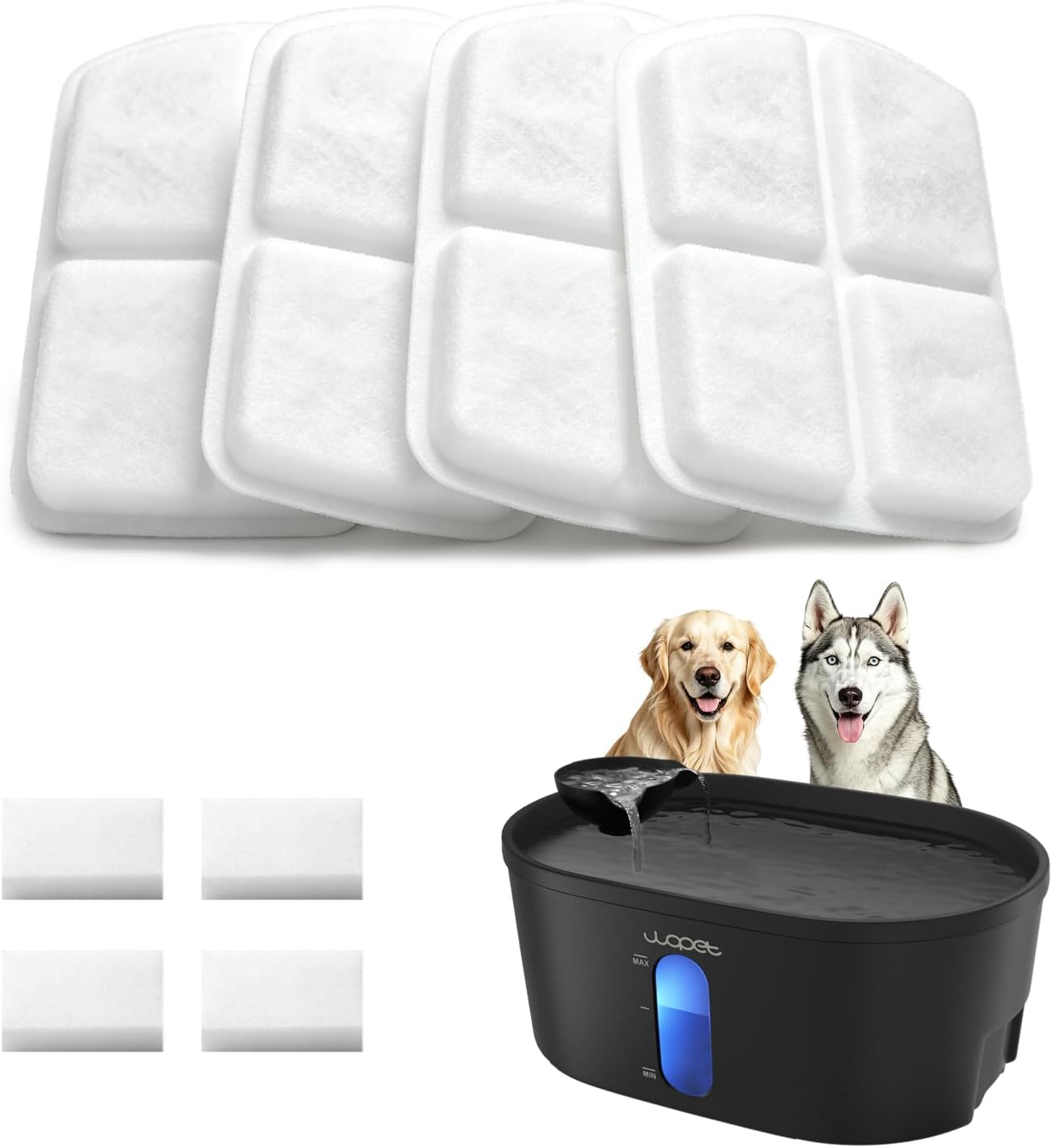
WOPET A08 Dog Water Fountain Filters
Model: A08 Filter
$19.99
$29.99

DOWNLOAD APP

WOpet life




Copyright © 2026 WOPET. All Rights Reserved.