Nov 03, 2026
Author:Jackson Watson
Choosing the right dog water fountain isn't simply about buying the largest reservoir available.
A small dog may be comfortable using a compact fountain, while a large dog may need a wider drinking area and more water capacity. If you have multiple pets, the amount of water they drink together becomes another important factor.
But here's something many pet owners overlook: a fountain's advertised capacity isn't always the same as the amount of water available before it needs refilling.
Some fountains must maintain a minimum water level to keep their circulation systems operating correctly.
So, what size dog water fountain do you actually need?
The answer depends on your dog's weight, daily water consumption, drinking habits, number of pets, and how frequently you can refill and clean the fountain.
In this guide, we'll compare common fountain sizes, explain how to estimate water requirements, and help you choose a practical drinking station for your home.
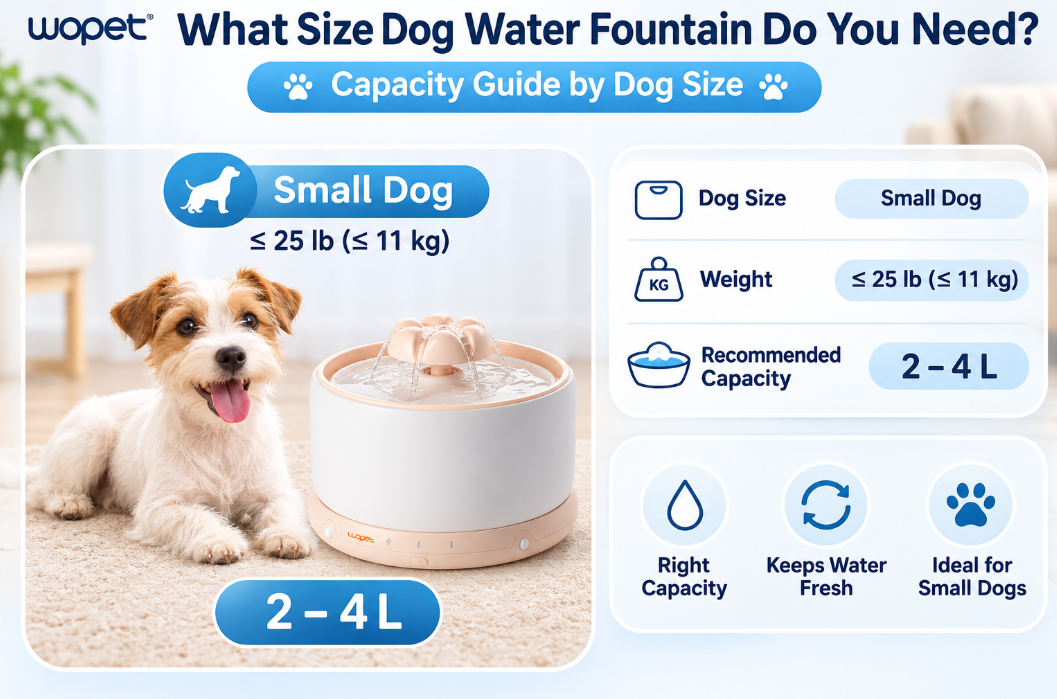
The size of a dog water fountain affects more than how much water it can hold.
A properly sized fountain should provide enough drinking water while remaining comfortable and convenient for your dog to use.
Dogs need access to drinking water throughout the day.
If a fountain is too small, the water level may drop quickly, particularly during hot weather or after exercise.
A reservoir with adequate capacity helps reduce the risk of running low between checks.
However, a larger fountain doesn't eliminate the need to monitor and refresh the water.
The dimensions of the drinking basin matter just as much as the reservoir.
A large dog may find a narrow drinking area uncomfortable.
Similarly, a very small dog may have difficulty reaching a fountain with a high drinking surface.
The ideal design should allow your dog to drink naturally without awkward positioning.
Many automatic dog water fountains rely on a circulation system that requires a minimum water level.
If the water drops below that level, circulation may become irregular or stop.
In some designs, low water levels can also increase noise or place additional stress on components.
A large reservoir may require less frequent refilling, but it still needs regular cleaning.
Larger fountains can also occupy more space and may be heavier when full.
Choosing the right size means balancing capacity with everyday convenience.
Before choosing a fountain, estimate how much water your dog typically drinks.
A commonly used starting estimate is approximately 1 US fluid ounce of water per pound of body weight per day, equivalent to about 65 mL per kilogram.
This is only a general planning guideline.
Actual requirements vary significantly.
| Dog Weight | Approximate Daily Water Intake |
|---|---|
| 5 lbs (2.3 kg) | 150 mL |
| 10 lbs (4.5 kg) | 300 mL |
| 20 lbs (9.1 kg) | 600 mL |
| 30 lbs (13.6 kg) | 900 mL |
| 40 lbs (18.1 kg) | 1.2 L |
| 50 lbs (22.7 kg) | 1.5 L |
| 60 lbs (27.2 kg) | 1.8 L |
| 80 lbs (36.3 kg) | 2.4 L |
| 100 lbs (45.4 kg) | 3.0 L |
These estimates are not individual medical recommendations.
Several factors can influence how much water your dog drinks.
Activity level: Active dogs may require more water, especially after exercise.
Temperature: Hot weather can increase water requirements.
Diet: Dogs eating dry food may drink more water directly than dogs eating moisture-rich diets.
Age: Puppies and older dogs may have different drinking patterns.
Health: Certain medical conditions and medications can affect thirst and urination.
Individual habits: Two dogs of similar weight may consume different amounts of water.
If your dog's water consumption changes suddenly or becomes unusually high or low, consult your veterinarian rather than relying on a capacity chart.
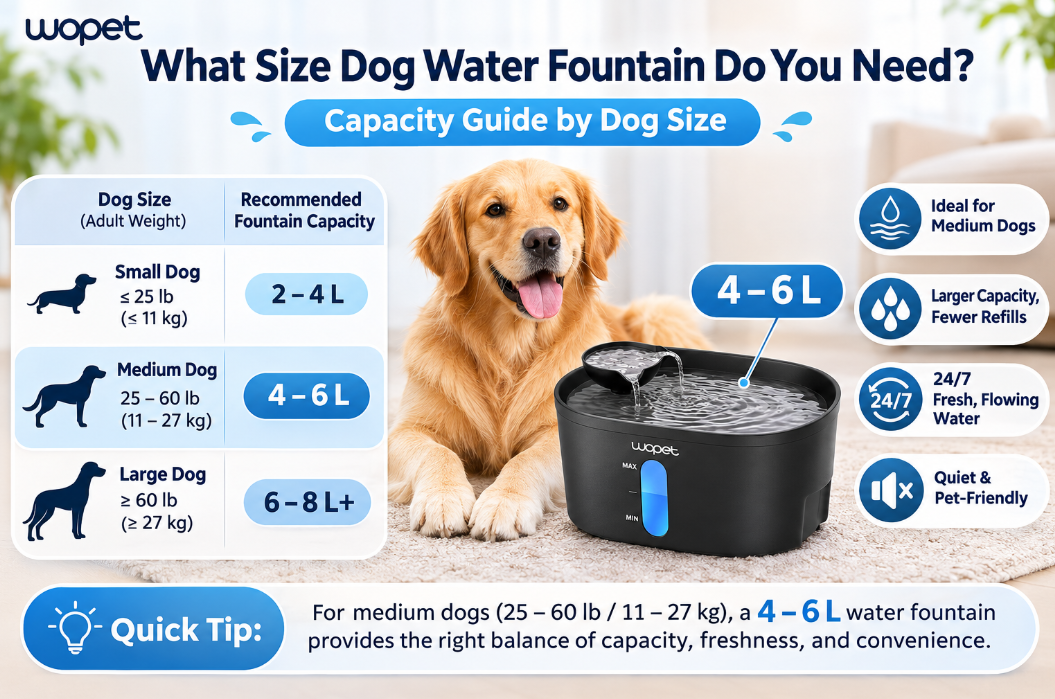
Once you have a general estimate of your dog's water consumption, you can begin comparing fountain sizes.
The following table provides practical starting points.
| Dog Size | Typical Weight | Suggested Fountain Capacity |
|---|---|---|
| Toy breeds | Under 15 lbs | Around 2L |
| Small dogs | 15–30 lbs | 2–3L |
| Medium dogs | 30–50 lbs | 3–4L |
| Large dogs | 50–80 lbs | 4–6L |
| Giant breeds | Over 80 lbs | 6L or larger |
These suggestions assume regular refilling and daily water checks.
They are not strict minimum requirements. A smaller fountain may be suitable with more frequent refilling, while a larger fountain may be preferable for households with higher water consumption.
Also remember that the fountain's usable water volume may be lower than its advertised capacity.
Common fountain capacities include 2 liters, 3 liters, 4 liters, and 6 liters.
Each size offers different advantages.
A 2-liter fountain may be a practical choice for small dogs.
It generally occupies less space than a larger reservoir and can be convenient for apartments or smaller rooms.
Potential advantages:
Compact footprint
Easier to move when empty
Suitable for some small dogs
Convenient for limited spaces
Potential limitations:
More frequent refilling for larger dogs
Less reserve capacity for multiple pets
Drinking basin may be relatively small
Best suited for: Small dogs with moderate water consumption and owners who check the water level regularly.
A 3-liter fountain offers more capacity than a compact 2-liter model.
It may suit small and medium dogs, depending on their actual drinking needs.
Potential advantages:
More water reserve
Practical for many households
May reduce refill frequency
Available in various fountain designs
Potential limitations:
May still be insufficient for large dogs without frequent refilling
Basin dimensions vary between products
Best suited for: Small to medium dogs and some cat-and-dog households.
A 4-liter fountain can provide additional water capacity for medium and larger dogs.
It may also be useful when more than one pet shares the drinking station.
Potential advantages:
Greater water reserve
Potentially fewer refills
Suitable for higher daily consumption
Useful for some multi-pet households
Potential limitations:
Requires more space
Heavier when filled
Still needs regular cleaning and water replacement
Best suited for: Medium and large dogs whose drinking habits fit the fountain's usable capacity.
A 6-liter fountain is worth considering for large dogs, giant breeds, or households with multiple pets.
It offers more reservoir space, although the drinking basin still needs to be suitable for the animals using it.
Potential advantages:
Larger water reserve
Convenient for higher consumption
May reduce the risk of low water levels between checks
Useful for some multi-dog households
Potential limitations:
Larger footprint
More weight when full
Potentially more involved cleaning
Not necessarily suitable for every small dog
Best suited for: Large dogs and households with substantial combined water consumption.
| Capacity | Main Advantage | Main Consideration |
|---|---|---|
| 2L | Compact size | Frequent checks for higher consumption |
| 3L | Balance of size and capacity | May need refilling for larger dogs |
| 4L | More daily water reserve | Requires additional space |
| 6L | Larger capacity | Heavier and bulkier |
Important: A larger fountain is not automatically better. The right choice is the one that provides enough usable water while remaining comfortable to drink from and practical to maintain.
Small dogs often need less total water than large breeds, but their physical comfort still matters.
A compact fountain can work well when the drinking area is easy to reach.
Low drinking height: Helps small dogs access water comfortably.
Stable construction: Reduces the chance of the fountain shifting during use.
Appropriate basin size: Allows comfortable drinking without unnecessary bulk.
Easy cleaning: Makes routine maintenance manageable.
Adequate capacity: Provides enough water between checks.
For many small dogs, a 2-liter reservoir can provide ample nominal capacity relative to estimated daily consumption.
However, the usable water volume, operating minimum, and your dog's actual intake must still be considered.
A small dog doesn't necessarily need a large reservoir, but it does need reliable access to fresh water.
Medium-sized dogs often fall into a broad range of water requirements.
For example, a 30-pound dog may consume around 900 mL daily, while a 50-pound dog may consume approximately 1.5 liters.
This makes 3-liter and 4-liter fountains useful starting points.
Daily drinking volume
Reservoir's usable capacity
Drinking basin width
Water circulation reliability
Refill frequency
Cleaning convenience
A medium dog with high activity levels may benefit from more capacity than a less active dog of similar weight.
A 3-liter fountain may be sufficient when you refill regularly.
A 4-liter model provides more reserve capacity.
Neither is automatically superior.
The better choice depends on your household's routine and your dog's actual drinking habits.
Large dogs often need both greater water capacity and a more spacious drinking area.
A fountain designed primarily for cats may have enough reservoir capacity on paper but still be uncomfortable for a large dog's muzzle.
Large breeds may prefer a wide drinking surface that allows them to lower their heads naturally.
A narrow basin can make drinking awkward, particularly for dogs with broad muzzles.
For dogs weighing approximately 50–80 pounds, a 4–6L fountain may be a useful starting range.
For giant breeds or dogs with particularly high water consumption, a 6L or larger fountain may be more convenient.
Stable base: Helps prevent movement or tipping.
Accessible drinking height: Supports a comfortable posture.
Adequate water flow: Keeps the drinking area supplied according to the fountain's design.
Easy-to-clean components: Helps manage saliva, hair, and debris.
Reliable circulation: Reduces the likelihood of problems caused by low water levels.
Buying tip: Measure the drinking basin and compare it with your dog's muzzle size instead of relying on reservoir capacity alone.
Multi-dog households should consider the combined daily water consumption of every dog using the fountain.
Suppose you have two dogs weighing 40 pounds each.
Using the general planning estimate:
Dog 1: Approximately 1.2L per day
Dog 2: Approximately 1.2L per day
Combined: Approximately 2.4L per day
A 3-liter fountain may have enough nominal capacity, but its usable water volume could be lower.
A 4-liter or larger fountain may provide more practical headroom.
Imagine a household with:
One 70-pound dog
One 15-pound dog
Their estimated combined daily consumption would be approximately 2.5 liters.
A 4-liter fountain may be a reasonable starting point, assuming its usable capacity and drinking area are appropriate.
They can, but one fountain is not always the best solution.
Consider providing multiple drinking stations when:
Dogs compete for water access
One dog guards the fountain
Pets prefer different drinking locations
The household has a large number of animals
One fountain cannot provide adequate capacity
Multiple water sources can also provide backup access if a fountain stops working.
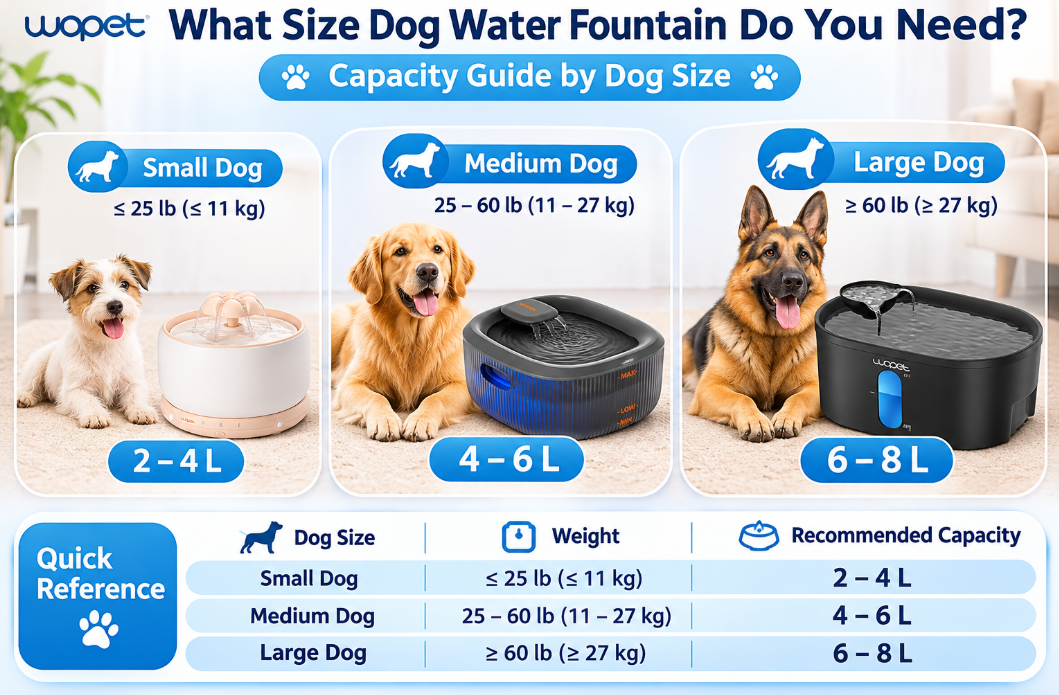
These two measurements are often confused.
Reservoir capacity describes the volume of water the fountain can hold.
It is usually expressed in liters or fluid ounces.
Examples include:
2L
3L
4L
6L
Drinking basin size describes the physical area where your dog drinks.
Important dimensions include:
Width
Depth
Height from the floor
Accessible water surface
A large reservoir can still have a relatively narrow drinking area.
A fountain may hold enough water for a large dog but have an uncomfortable basin.
Conversely, a wide drinking area may be paired with a relatively small reservoir.
The best fountain balances reservoir capacity with drinking comfort.
One of the most overlooked aspects of choosing a fountain is the difference between total and usable capacity.
Advertised capacity usually refers to the amount of water a fountain can hold under specified conditions.
Usable capacity is the amount of water available before the fountain reaches its minimum recommended operating level.
For some circulation systems, water must remain above a particular level.
That means not every milliliter of advertised capacity is necessarily available for use between refills.
Imagine a fountain with a nominal capacity of 3 liters.
If its circulation system requires a minimum of 500 mL to remain in the reservoir, approximately 2.5 liters would be available before reaching that operating threshold.
This is a hypothetical example, not a specification for any particular WOPET product.
If your dog drinks 2 liters daily, a fountain with a nominal capacity of 2 liters may not provide a full day's usable supply.
When comparing products, look for:
Total reservoir capacity
Minimum operating water level
Low-water protection
Water level indicators
Refill instructions
You can estimate a suitable fountain size using three steps.
Start with approximately 65 mL of water per kilogram of body weight per day.
For example, a 20 kg dog:
20 × 65 = 1,300 mL
Estimated daily intake: 1.3L.
If two dogs share the fountain, calculate their needs separately and add the results.
For example:
Dog A: 1.3L
Dog B: 0.7L
Total: 2.0L
Choose a fountain with enough usable capacity to cover expected consumption between checks, plus some reserve.
For planning purposes, an additional 20–30% may be helpful.
This is a convenience margin, not a veterinary requirement.
A dog drinks approximately 1.5L daily.
Adding 25% reserve:
1.5L × 1.25 = 1.875L
You would look for a fountain offering at least approximately 1.9L of usable water before the next planned refill.
Because usable capacity may be lower than advertised capacity, a 2L fountain could be borderline depending on its design.
A 3L model may provide more practical flexibility.
Do not use a capacity calculation as a reason to leave water unchanged for several days.
Fresh water, daily checks, and regular cleaning remain necessary regardless of reservoir size.
Not necessarily.
A larger reservoir holds more water, but capacity alone does not determine cleanliness.
Water quality also depends on:
Number of pets
Drinking habits
Filtration system
Water replacement frequency
Reservoir design
Cleaning routine
Environmental conditions
A fountain filter may capture hair, food particles, and other debris.
Some filters contain activated carbon that may reduce certain odors or taste-related substances.
However, ordinary pet fountain filters do not reliably disinfect water.
A large fountain still needs fresh water and routine cleaning.
Sometimes.
Smaller fountains may be lighter and easier to handle.
However, cleaning convenience also depends on whether the fountain can be disassembled easily and whether its water channels are accessible.
Choose a size you can maintain consistently.
WOPET offers several fountain designs for different pets and household needs.
When comparing models, consider reservoir capacity, drinking basin dimensions, placement flexibility, and cleaning requirements.
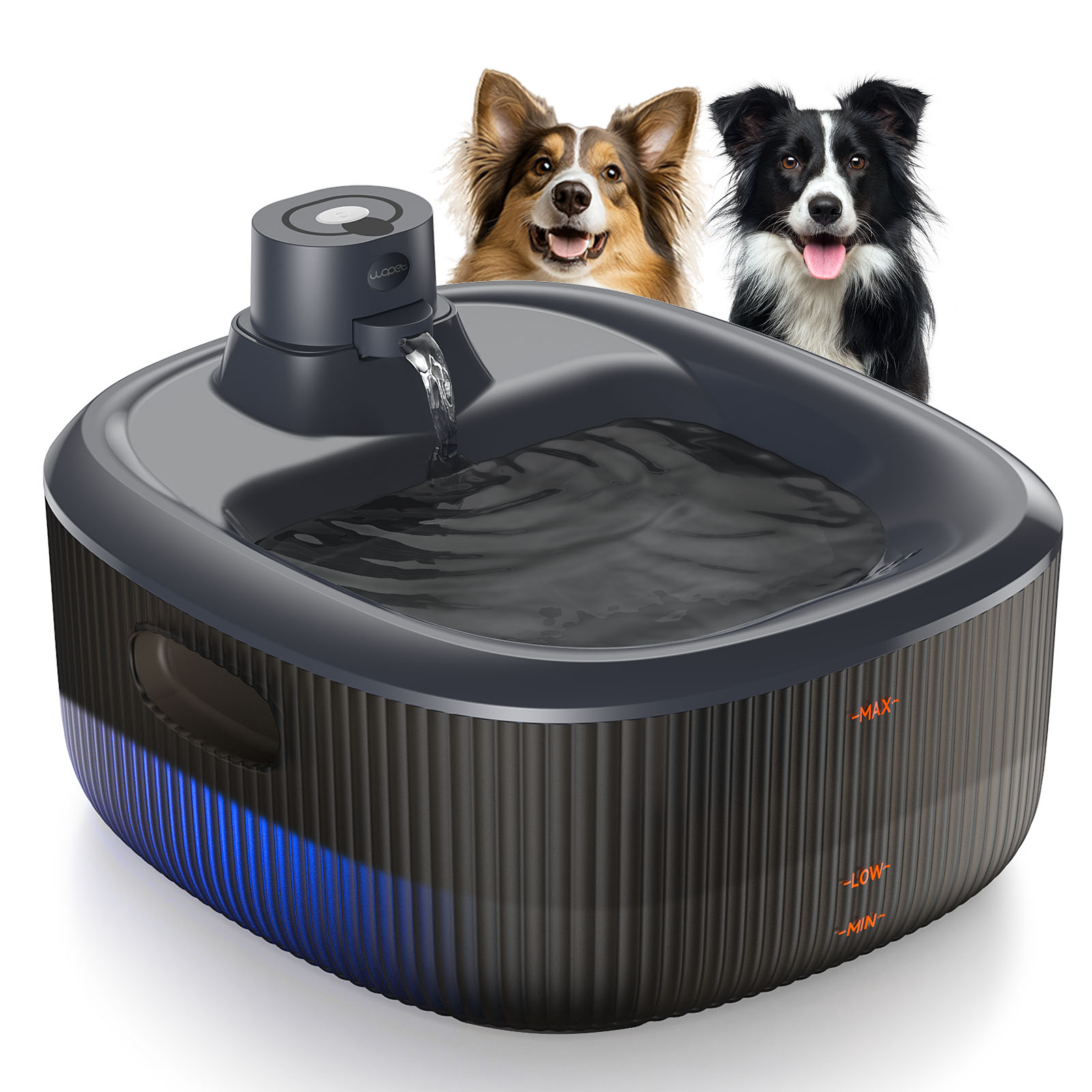
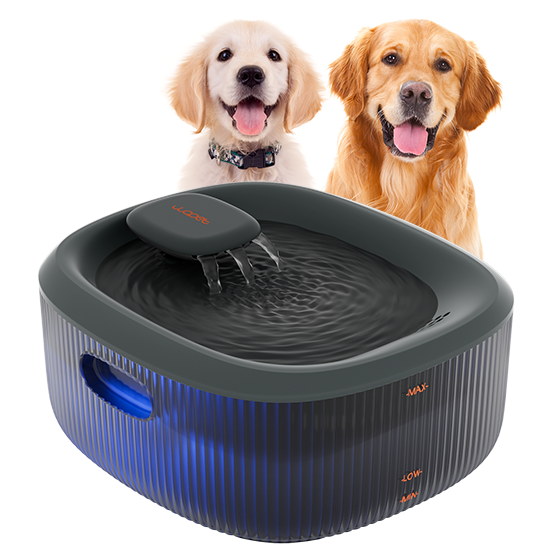
The WOPET W600 Pro is a wireless dog water fountain option for owners who want more flexibility when positioning a drinking station.
For large dogs or households with higher water consumption, consider the model's actual capacity and drinking basin dimensions before purchasing.
Features to uate include:
Published reservoir capacity
Usable water volume
Drinking basin size
Wireless placement convenience
Water circulation design
Cleaning accessibility
Best for: Dog owners who prioritize flexible placement and want to uate a wireless fountain for their dog's size.

The WOPET A08 is designed for dogs and multi-cat households.
It may be worth considering when several pets share a drinking station.
Important factors include:
Total water capacity
Basin accessibility
Combined daily water consumption
Ease of cleaning
Filtration maintenance
Available placement space
Best for: Dog owners and multi-cat households seeking a practical shared drinking station.
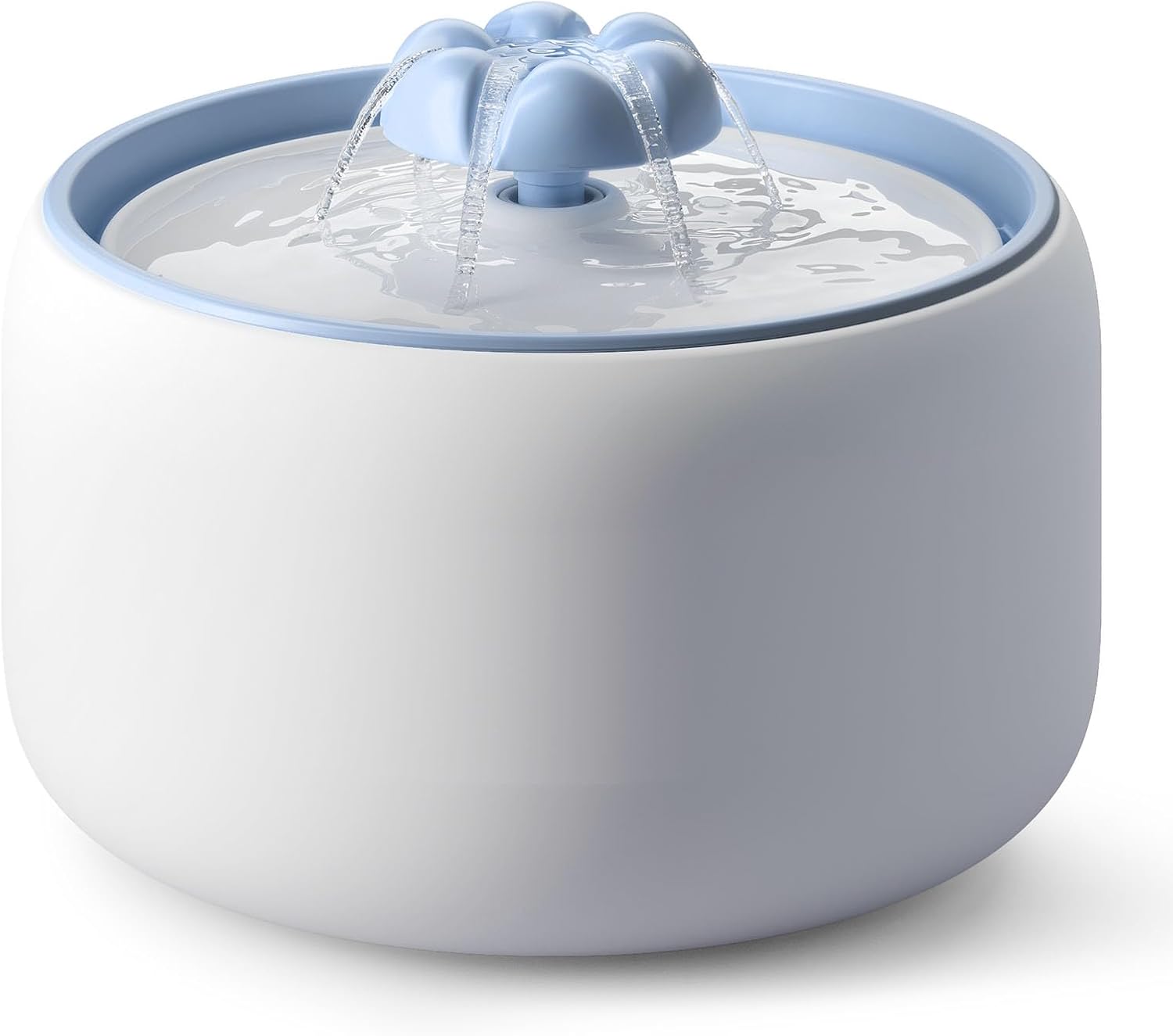
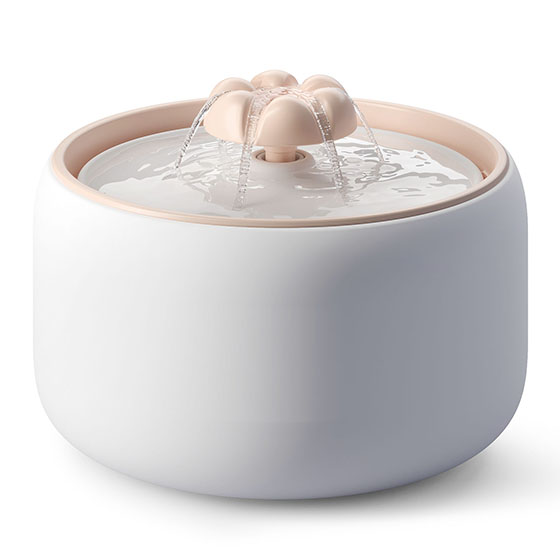
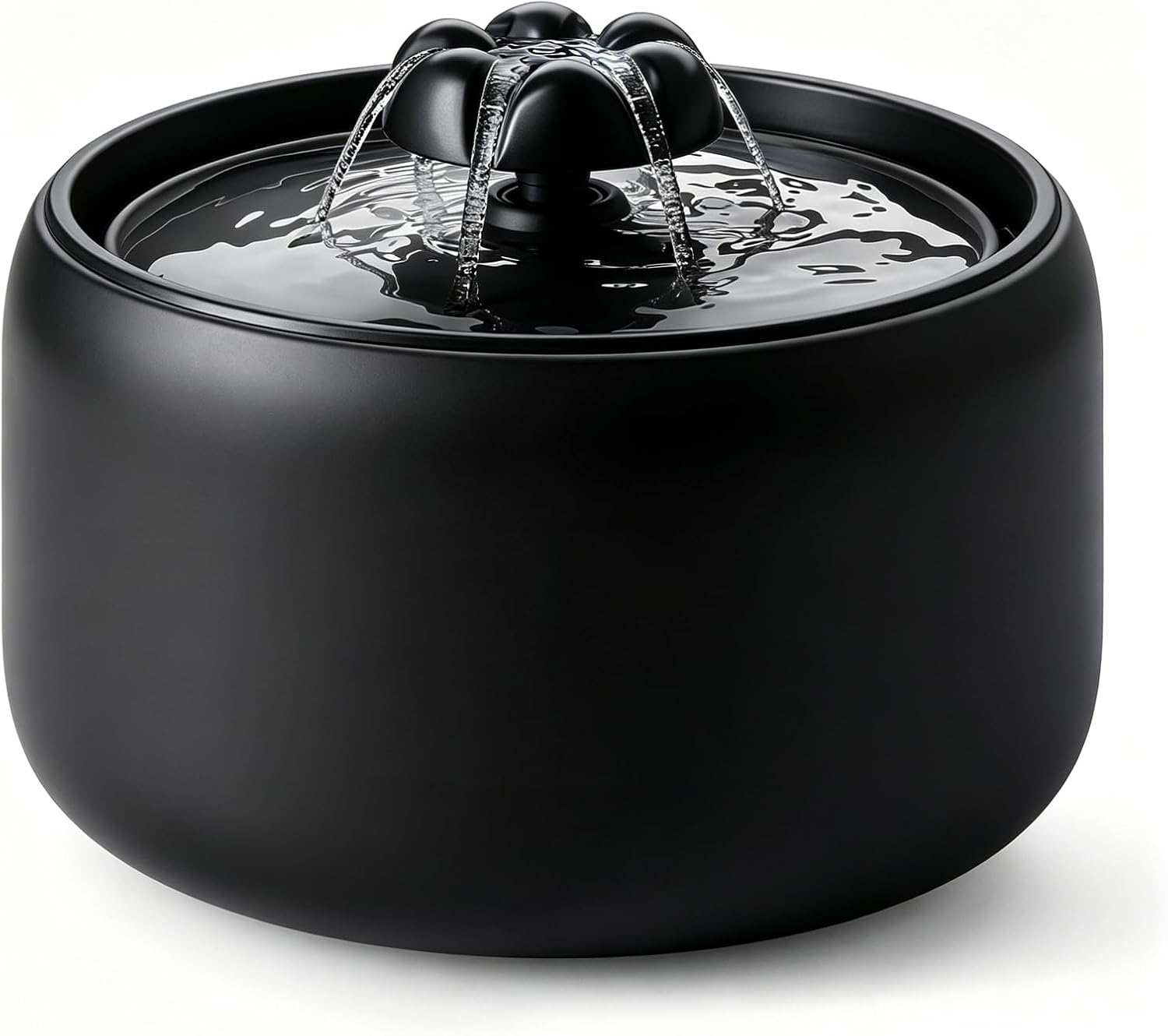
The WOPET W03 Lite is a ceramic fountain option.
For small dogs or mixed cat-and-dog households, assess whether its drinking height and basin dimensions are suitable.
Ceramic construction may appeal to owners who prefer that material, but suitability depends on more than the reservoir's capacity.
Best for: Households considering a ceramic fountain, provided the model's dimensions and capacity suit their pets.
| Model | Main Consideration | What to Verify |
|---|---|---|
| WOPET W600 Pro | Wireless placement | Capacity, basin dimensions, usable water volume |
| WOPET A08 | Dogs and multi-cat households | Capacity, shared drinking space, maintenance |
| WOPET W03 Lite | Ceramic construction | Drinking height, basin size, dog suitability |
Always check the current official product specifications before choosing a model.
A large reservoir doesn't guarantee a comfortable drinking experience.
Check the basin dimensions.
Dogs of similar weight may have different drinking habits.
Observe your dog's typical intake.
Some fountains require a minimum operating water level.
Check the product instructions.
A larger fountain may occupy unnecessary space and be harder to handle.
Choose a practical size.
Calculate combined consumption when pets share a drinking station.
Larger reservoirs still require regular water replacement and cleaning.
A fountain may not fit comfortably in the intended location.
Check its width, height, and overall footprint.
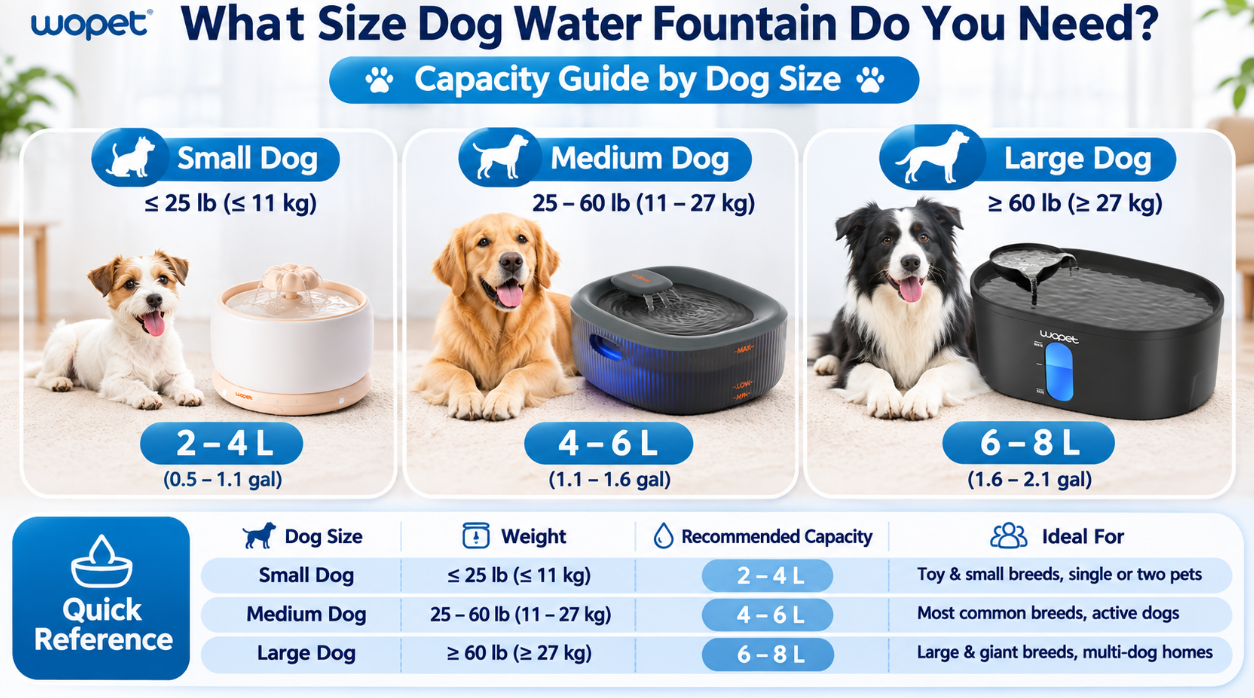
Choose based on your dog's daily water consumption, body size, drinking comfort, and refill routine. Many small dogs can use a 2–3L fountain, while larger dogs may benefit from 4–6L or more.
It may be sufficient for a small dog with moderate water consumption, provided you refill and maintain it regularly.
A 3L fountain may suit many small and medium dogs. Check the usable water capacity and your dog's actual intake.
A 4–6L fountain may be a useful starting point for many large dogs, but basin width, drinking height, and usable capacity are equally important.
Not necessarily. A small dog may use a 6L fountain if the drinking area is accessible and comfortable. However, the larger size may be unnecessary.
A general planning estimate is approximately 1.5 liters per day. Actual needs vary.
Estimate each dog's daily consumption, combine the totals, and select a fountain with enough usable capacity and reserve. Multiple drinking stations may also be beneficial.
No. A larger reservoir may reduce refill frequency, but it does not eliminate the need to refresh water and clean the fountain.
Both matter. Capacity determines the available water reserve, while basin size affects drinking comfort.
They can be, provided the fountain offers adequate capacity, a comfortable drinking area, stable construction, and reliable access to water.
The right dog water fountain size depends on more than the number of liters printed on the product description.
A good choice should balance:
Your dog's body weight
Actual daily water consumption
Drinking basin width and height
Number of pets
Usable reservoir capacity
Refill frequency
Cleaning convenience
Available space at home
For many small dogs, a 2–3L fountain can be a practical starting point.
Medium dogs may benefit from 3–4L models.
Large dogs and multi-pet households may prefer 4–6L fountains or larger, depending on their combined water needs.
When exploring WOPET options, consider the W600 Pro for wireless placement flexibility, the A08 for dogs and multi-cat households, and the W03 Lite where a ceramic fountain suits the pet's drinking needs.
The best dog water fountain isn't necessarily the biggest one. It's the one that provides enough usable water, comfortable drinking access, and a maintenance routine you can manage every day.
Label:
Popular Post
The Ultimate Guide to Tabby Cats: Patterns, Personalities, and More
Mar 27, 2025

Top 8 Reasons Why Does My Cat Sleep Between My Legs?
Mar 03, 2025

What to Do If My Dog's Poop Is Black But Not Tarry
Feb 04, 2023
Superfecundation Cats: When Kittens in One Litter Have Different Fathers
Jul 11, 2025
Can Cats Have Orange Eyes? Genetics, Breeds, and Care Guide
May 20, 2025

[Blue] W03L 3L Premium Ceramic Cat Water Fountain
Model: W03 LITE
$59.99
$69.99
Basin Pet Water Fountain-W600
Model: W600
$43.99
$69.99
[Basic] Ceramic Pet Water Fountain with Power Cable
Model: W03L
$59.99
$99.00
[Black] W03L 3L Premium Ceramic Cat Water Fountain
Model: W03L Black
$59.99
$69.99

WOPET 8L Pet Water Fountain For Multiple Cats or Large Dogs A08
Model: A08
$49.99
$59.99
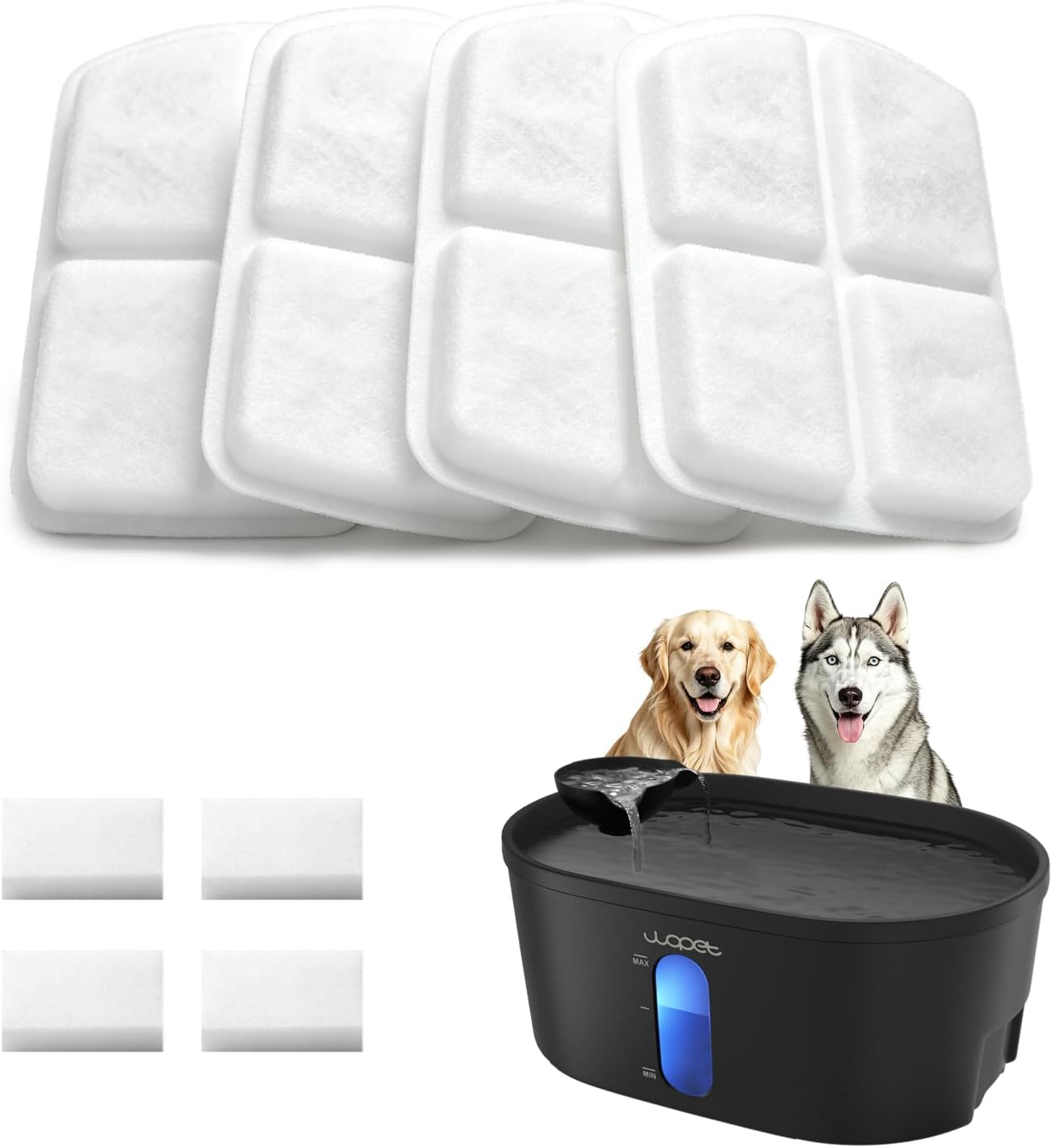
WOPET A08 Dog Water Fountain Filters
Model: A08 Filter
$19.99
$29.99

DOWNLOAD APP

WOpet life




Copyright © 2026 WOPET. All Rights Reserved.