Nov 05, 2026
Author:Lisa Martinez
Prioritize cleaning access, a comfortable drinking surface, suitable capacity, and a power source that works in your home. These features determine whether a cat fountain fits your daily routine. Then compare operating sound, controls, replacement parts, and ongoing costs. A longer feature list is only valuable when those features serve a need you actually have.
Use these ten criteria to compare two or three models. For each one, record whether a requirement is met, not met, or still unknown. Verify the unknowns before optional extras influence your choice.

1. Cleaning Access You Can Understand Before Buying
Start with how the fountain comes apart. Look for a diagram or video showing the reservoir, drinking tray, water channels, and any pump components that require routine cleaning. Check whether you can reach the wet surfaces with the recommended tools.
The CDC recommends daily cleaning of water bowls and following item-specific care instructions. A fountain adds components with separate handling requirements, so read the cleaning directions for the exact model. Do not assume that a dishwasher-safe tray makes the pump, electronics, or entire reservoir dishwasher-safe.
Give extra weight to a design you can disassemble and reassemble comfortably. Small seals, narrow channels, or hard-to-release clips may make routine cleaning awkward.
2. A Drinking Surface Your Cat Can Reach
Compare the drinking height, rim shape, depth of the accessible pool, and available approach space. Overall dimensions can hide a deeply recessed drinking area or a spout that occupies much of the top. Side views and measurements are more useful than an image showing only how the fountain matches a room's decor.
Watch the way your cat uses its current bowl. If it drinks comfortably from an open surface, consider whether a candidate fountain offers a similarly approachable area. Do not assume a raised design is always better or that a wide surface guarantees acceptance. For cats with movement difficulties, consider professional advice about their needs as well as the physical design.
A practical buying question is, “Where will my cat stand, and what will it reach?” If the listing cannot answer that, ask for another photo or measurement. A fountain's appearance should not require your cat to adapt to an awkward posture or reach around decorative parts.
3. Capacity Matched to Real Refill Needs
Capacity helps you plan refills, but it does not tell you how long you can leave a cat unattended. Read the minimum and maximum operating levels as well as the advertised tank size. Some water may need to remain in the unit for normal operation, so do not treat the stated capacity as entirely usable before the next refill.
More water adds carrying weight; the reservoir’s shape and grip determine how manageable it is at the sink. Compare those practical costs with the benefit of holding more water. In a multi-cat home, extra volume does not create an alternative drinking location for an animal that avoids the main fountain. See how many fountains a multi-cat household needs for that separate decision.
Once the fountain is installed, observe refill needs under your actual routine. Water losses include more than drinking, especially if a cat splashes or paws at the stream. Use that observation to manage the reservoir, not as an exact record of an individual cat's intake.
4. Suitable Materials Throughout the Water Path
Look beyond the material named in the headline. A stainless steel top does not necessarily mean a stainless steel reservoir, and a ceramic body may still contain plastic water-path components. Check the full construction and the care directions for each part that contacts water.
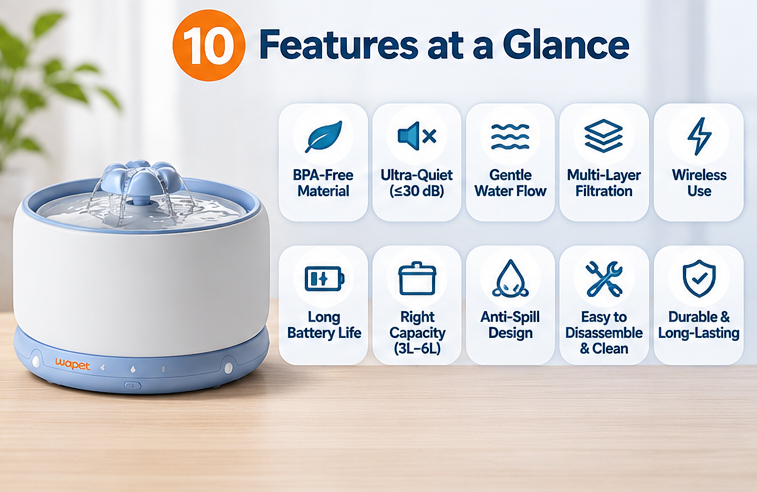
Compare condition and maintenance requirements rather than assuming one material solves every problem. Consider weight, breakage risk, surface finish, and whether you can inspect the components for damage. “BPA-free” describes one material characteristic; it is not a complete safety or durability assessment. Likewise, a premium finish does not make an inaccessible channel easier to wash.
Choose a design with clear use and replacement instructions. If a piece cracks, chips, or becomes otherwise damaged, follow the manufacturer's guidance instead of continuing to use it because the rest of the fountain looks fine. The condition of the actual surfaces matters throughout ownership.

5. A Power Source That Fits Your Routine
Outlet-powered operation can be convenient when the best drinking location has safe, practical cord access. Battery operation can help when the location is farther from an outlet, but it adds charging responsibilities. Neither power source tells you everything about the available flow modes. Verify the exact behavior in the configuration you intend to use.
For a battery model, ask how runtime is specified: which mode, what frequency of activation, and under what stated conditions. An “up to” figure is a manufacturer claim under particular assumptions, not a promise for every household. Also check how charging works and whether the instructions allow the fountain to run during charging.
For a plug-in model, review the adapter requirements and included components. A plug that fits is not enough: use an adapter that meets the manufacturer's electrical requirements. The home setup guide can help you choose a location before power limitations dictate an unsuitable spot.
6. Flow Modes Your Cat Can Actually Use
Common options include continuous operation, timed cycles, and sensor activation, but the terms need model-specific explanations. Ask when water starts, how long it runs, and whether the settings differ between battery and wall power. If a sensor is involved, find out which area it detects and whether the cat's intended approach falls within that area.
Cornell's hydration guidance notes that individual cats differ in their response to fountains. More modes give you choices, but do not guarantee increased intake. An accessible still-water area can also be useful, provided the design actually retains drinkable water there when the pump is off.
Ask the seller a specific question: “Does this model provide continuous flow on battery power, or only when plugged in?” Then check the answer against its manual. For sensor operation, confirm the detection area and run time after activation. Choose the mode your cat can use from its normal approach.
7. Sound You Can Tolerate in the Intended Room
Assess pump hum, splashing, and vibration together. A listing may describe the motor as quiet while saying little about the sound of water falling into the reservoir. A demonstration can be helpful if it has no background music and shows the unit operating normally, though recording equipment and playback volume limit what you can infer.
If a decibel figure is provided, look for the measurement distance, water level, operating mode, and background conditions. Numbers measured differently are not a reliable ranking of products. The relevant question is whether the fountain works comfortably in your bedroom, office, or living area, and whether your cat uses it without apparent difficulty.
Check the return terms before purchase if sound is a deciding factor. After installation, follow the manual if the unit begins making an unusual noise. Do not use improvised modifications to silence a problem that needs inspection or repair.
8. Stability and Clear Operating Status
A stable base, secure assembly, and readable water level can reduce everyday frustration. Examine how the pieces connect and whether routine refilling requires disturbing electrical connections. If the unit has a removable reservoir, check whether it is comfortable to grip and whether it can be set down safely while you work.
Low-water s and automatic pump shutoff may be useful when provided, but verify exactly what they do. Some features protect equipment rather than guaranteeing that water remains accessible to the cat. Find out whether restarting requires a refill, a button press, or another action. Keep checking the actual water level rather than relying entirely on an .
Treat app information with the same care. Determine whether a notification reports power, water level, visits, or another event. Connectivity and s can be convenient, but they do not replace a direct check of the fountain and the animal using it. A simple indicator you regularly notice may be more useful than data you rarely review.
9. Replacement Parts You Can Identify
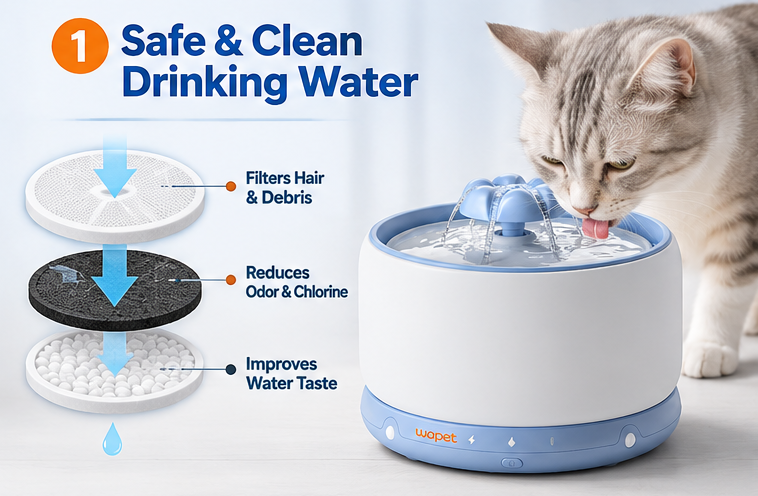
Find the replacement filter listing before buying the fountain. Confirm the exact model compatibility and package quantity, then check for other parts intended for user replacement. A filter that looks similar in a photo may have different dimensions or fit requirements. Model numbers provide a better starting point than appearance.
Repairability deserves the same scrutiny. A separately sold pump does not prove that the battery, controller, seals, or every other component can be replaced. Ask which repairs the manufacturer supports and whether instructions are available. Do not plan on opening sealed electrical components unless the manufacturer specifically describes a user-serviceable procedure.
When comparing WOPET models, use the accessories collection to identify compatible supplies and check their current availability. Keep the model information with your care instructions after purchase. That small step can prevent confusion when it is time to reorder.
10. Ownership Costs and Clear Purchase Terms
Compare more than the price in the product headline. Include the items you will actually need: compatible replacement filters, any separately required power adapter, shipping, tax, and likely care supplies. For energy costs, use measured average power use when available; a product name or appearance tells you nothing about consumption.
Filter costs depend on both the pack price and the manufacturer's replacement instructions. Work out how many paid replacements you expect during the same comparison period, accounting for included starter filters. For a cash budget, count the full packs you need to buy, including any shipping charges, and note the unused filters left at the end of the period.
Finally, read warranty and return terms for the exact offer and seller. Check whether opening or using the fountain affects returns, who pays return shipping, and what any warranty excludes. A lower price may still be attractive, but it should be a clear choice rather than a surprise after setup.
How to Compare Your Final Two or Three Models
First, rule out models that fail a must-have requirement. If Model A cannot provide your preferred flow mode on battery power, an app does not make up for that limitation. If both models meet the basics, compare refill handling, replacement costs, and return terms. Treat missing information as unknown rather than giving it the benefit of the doubt.
|
Priority |
What belongs here |
How to use it |
|
Must work |
Drinking access, cleaning, placement, compatible power |
Remove unsuitable models from the shortlist |
|
Important for your routine |
Capacity, sound, flow behavior, refill handling |
Compare against the actual home and cat |
|
Important over time |
Replacement parts, consumables, warranty terms |
Check ownership practicality before ordering |
|
Optional convenience |
App controls, decorative lighting, extra schedules |
Pay more only when there is a useful purpose |
Browse the WOPET fountain collection once you have those priorities. Read each model's instructions to confirm its features; a collection page may describe several different designs. For the individual cat's day-to-day experience, the indoor cat fountain guide covers comfortable use and introduction.
Buy WOPET W03 BLUE WIRELESS CAT FOUNTAIN ON AMAZON
Frequently Asked Questions
What is the most important cat fountain feature?
Easy cleaning and a comfortable drinking surface are the most important cat fountain features to check first. The power source and dimensions must also suit the intended location. Optional controls have limited value if those basics do not work for your household.
Is a more expensive cat fountain always better?
No. A higher price may buy materials, controls, styling, or a different power system, but those additions need to serve your needs. Compare the exact features, care requirements, and ownership costs rather than treating price as a quality score.
Do more filtration layers mean cleaner water?
More filter layers do not, by themselves, tell you how well a cat fountain filters water. Check what the manufacturer says each filter does and how it should be maintained. Filtration does not replace cleaning the fountain, and an unspecified filter should not be treated as making unsafe source water safe.
Should I choose sensor or continuous flow?
Choose a supported mode that works for your cat and power setup. Continuous mode runs the flow continuously during normal operation; sensor mode starts flow when its sensor is triggered. Neither option is universally better, so verify the details and keep other water available during introduction.
Do I need smart features on a cat fountain?
Smart fountain features are worth considering when they provide information or controls you will use. Clarify what the device measures, how s work, and what happens without connectivity. An app is not a substitute for checking water, cleaning the fountain, or seeking advice about changes in your cat's health.
Pay for Features That Earn Their Place
A good comparison ends with a short list of verified requirements, not the longest specification sheet. Choose a fountain your cat can use comfortably and that you can clean, refill, and maintain consistently. Pay extra when a feature solves a problem you can name, such as moving the fountain away from an outlet or making refills easier. Otherwise, a simpler model that meets your requirements remains a reasonable choice.
Summary
Use ten practical criteria to compare cat fountains beyond their appearance and feature count. Learn what to verify in product listings, which extras depend on your household, and how to make a shortlist with fewer unknowns.
Label:
Popular Post
The Ultimate Guide to Tabby Cats: Patterns, Personalities, and More
Mar 27, 2025

Top 8 Reasons Why Does My Cat Sleep Between My Legs?
Mar 03, 2025

What to Do If My Dog's Poop Is Black But Not Tarry
Feb 04, 2023
Superfecundation Cats: When Kittens in One Litter Have Different Fathers
Jul 11, 2025
How Long Does Dry Cat Food Last Once Opened? A Comprehensive Guide
Mar 19, 2025
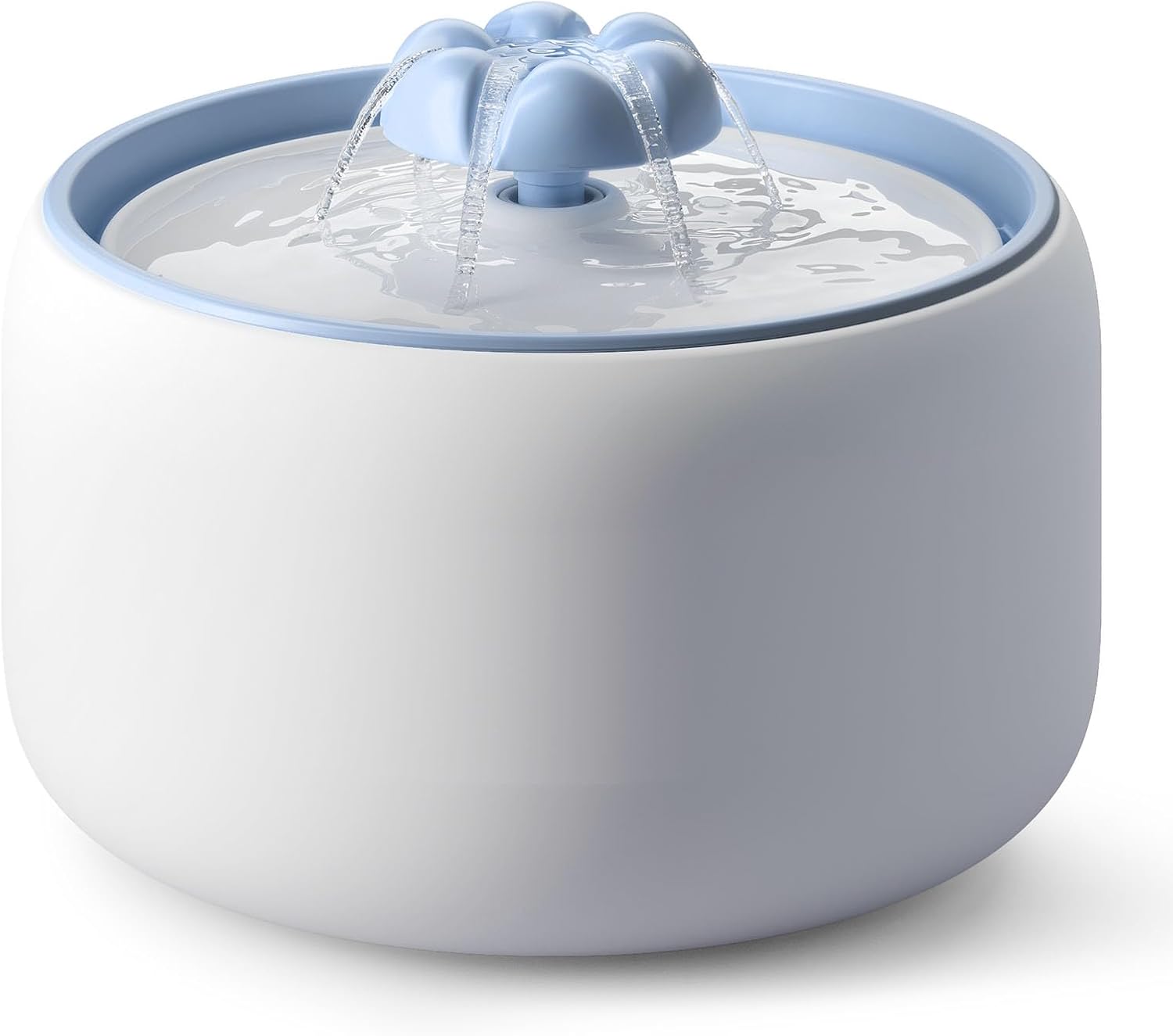
[Blue] W03L 3L Premium Ceramic Cat Water Fountain
Model: W03 LITE
$59.99
$69.99
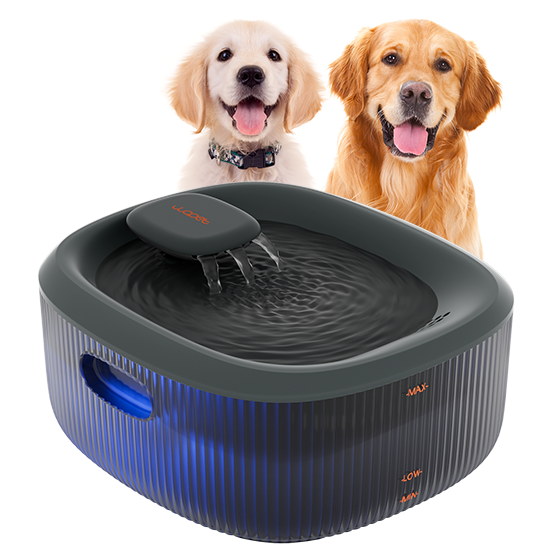
Basin Pet Water Fountain-W600
Model: W600
$43.99
$69.99
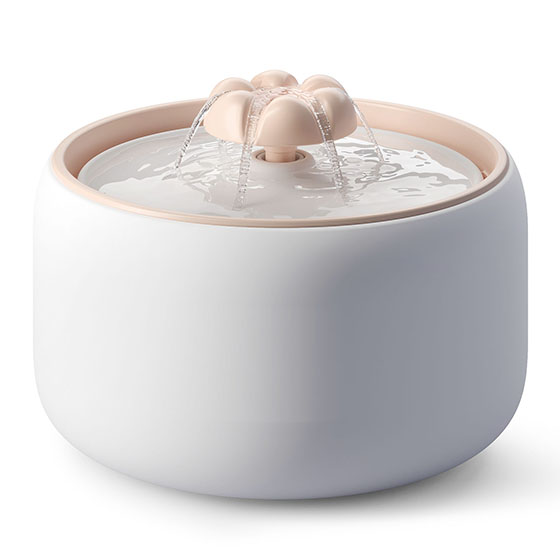
[Basic] Ceramic Pet Water Fountain with Power Cable
Model: W03L
$59.99
$99.00
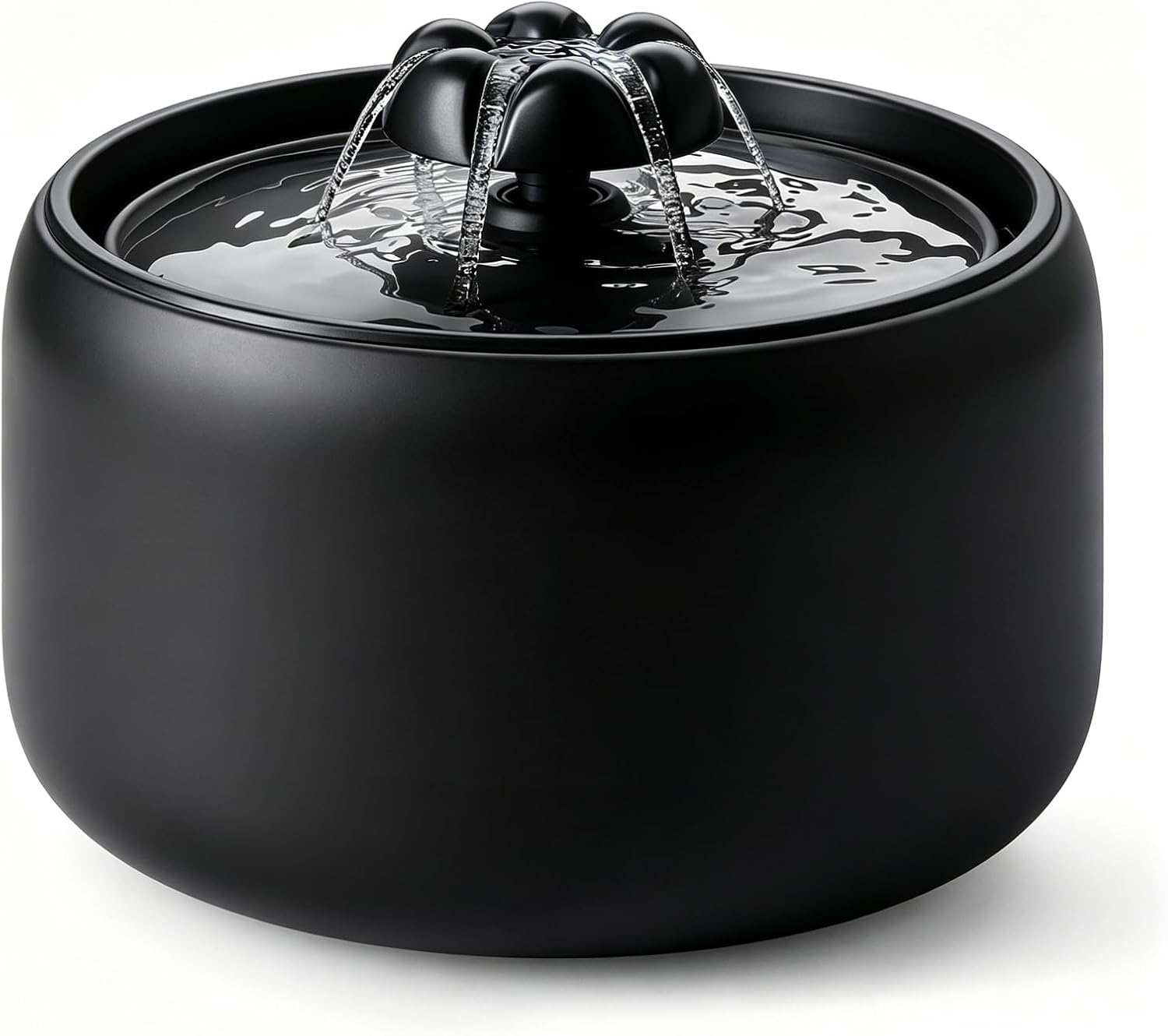
[Black] W03L 3L Premium Ceramic Cat Water Fountain
Model: W03L Black
$59.99
$69.99
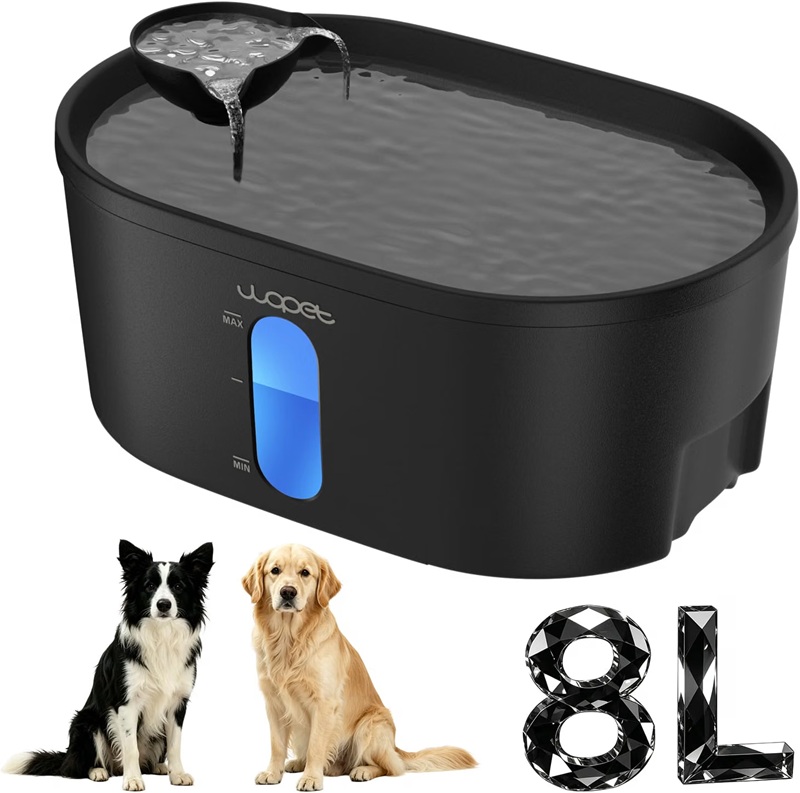
WOPET 8L Pet Water Fountain For Multiple Cats or Large Dogs A08
Model: A08
$49.99
$59.99
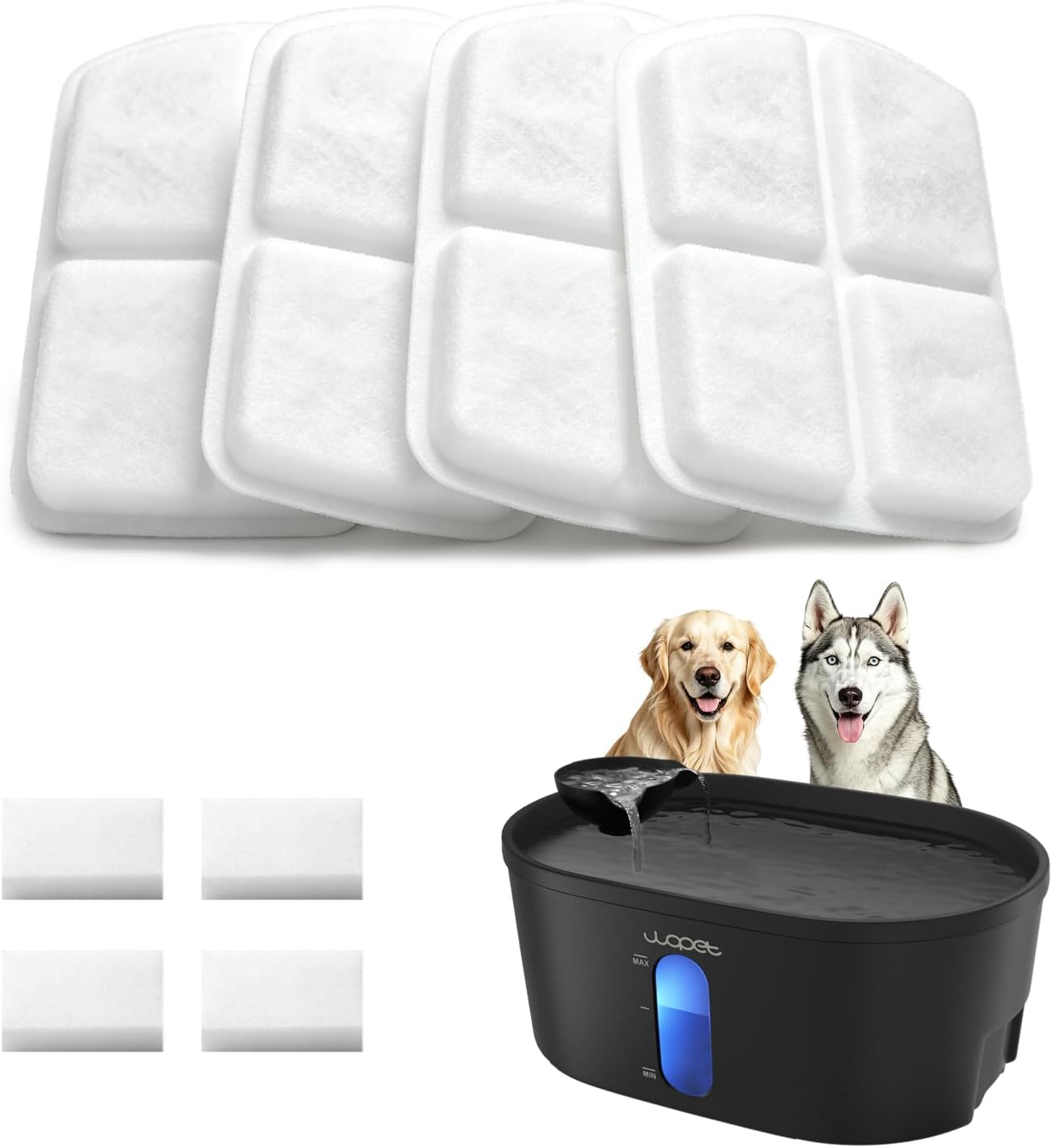
WOPET A08 Dog Water Fountain Filters
Model: A08 Filter
$19.99
$29.99

DOWNLOAD APP

WOpet life




Copyright © 2026 WOPET. All Rights Reserved.