Nov 10, 2026
Author:Sam Wonder
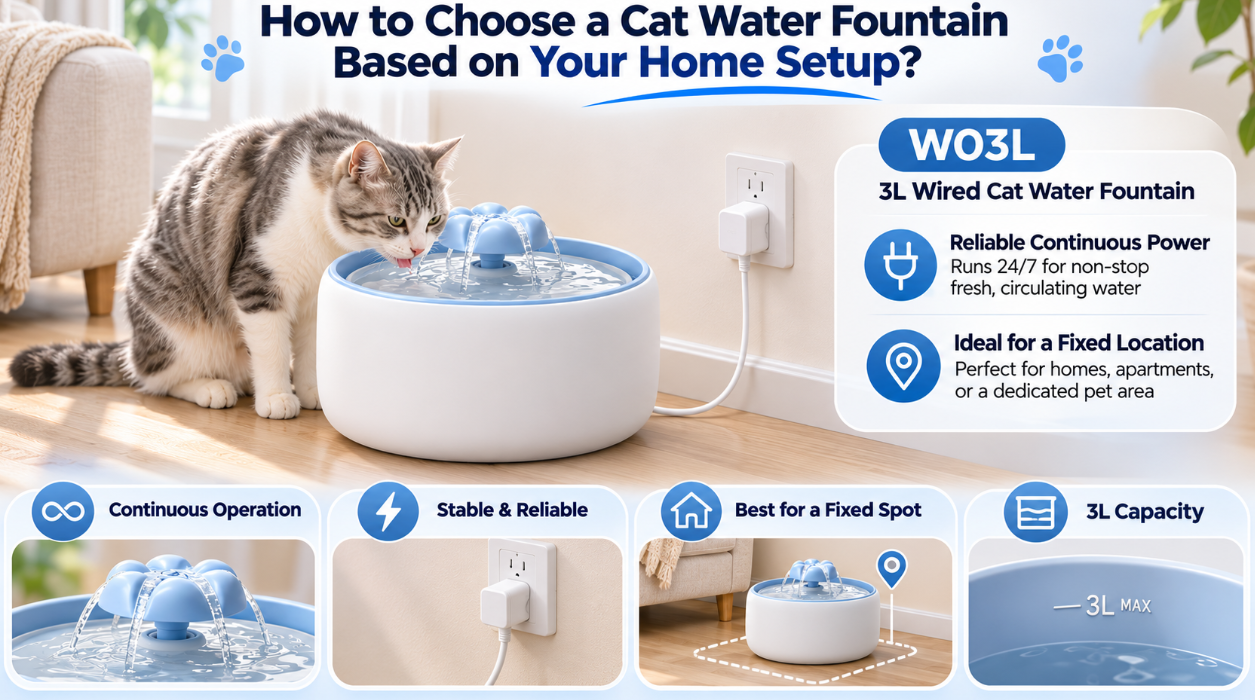
Choose a cat water fountain by checking the location, power access, and cleaning space first. The right fit lets your cat approach comfortably and lets you refill and wash the unit without rearranging the room. Start by identifying two possible spots, checking how your household uses them, and measuring the space around each one. Then compare fountains against those requirements instead of trying to make a favorite product fit an unsuitable corner.
Before opening product listings, note four things: the available floor space, the nearest suitable outlet, when the room is accessible, and the route to your sink. These details turn a vague search for the “best fountain” into a manageable shortlist. A model that fails one of those basic checks needs a different location or a different place on your shopping list.
Start With Your Cat's Route Through the Home
Walk through the rooms your cat actually uses. Notice the resting spots, frequently closed doors, busy passageways, and places where another pet tends to wait. A location is only convenient if your cat can reach it when needed; an attractive corner inside a closed home office does not provide dependable access.
Cornell's guidance on feline hydration emphasizes accessible water and notes that conflicts between pets can interfere with access. Apply that principle to the route as well as the destination. A fountain at the end of a narrow hallway may be easy for one cat to reach but awkward for another when a dog occupies the entrance.
Watch the household at more than one time of day. The kitchen might be calm at noon and crowded during dinner preparation, while a bedroom becomes unavailable when guests visit. You do not need a complicated floor plan. A quick sketch showing doors, outlets, and your cat's usual resting areas is enough to expose problems that a product comparison cannot.
Measure the Working Space, Not Just the Base
Record the fountain's width, depth, and height, then allow room for your cat to stand beside it. Check whether the lid lifts straight up, whether the reservoir comes out separately, and where the cable connects. The space must support those movements without forcing you to slide a full fountain across the floor every time you refill it.
Mark the proposed footprint with a paper outline, including the mat, then open nearby drawers and walk past it. For example, a base may fit beneath a shelf while its lid cannot lift high enough for removal. Check both the assembled dimensions and the clearance needed for refilling. No single clearance measurement works for every design, so use the candidate model’s instructions and dimensions.
Also consider your own reach. A spot under a deep console table may require kneeling and leaning forward to see the water level. If someone else will handle care while you are away, make sure they can remove, carry, and reassemble the parts comfortably. Easy access for cleaning is part of the layout, not a separate concern to address later.
Match the Power Source to the Location
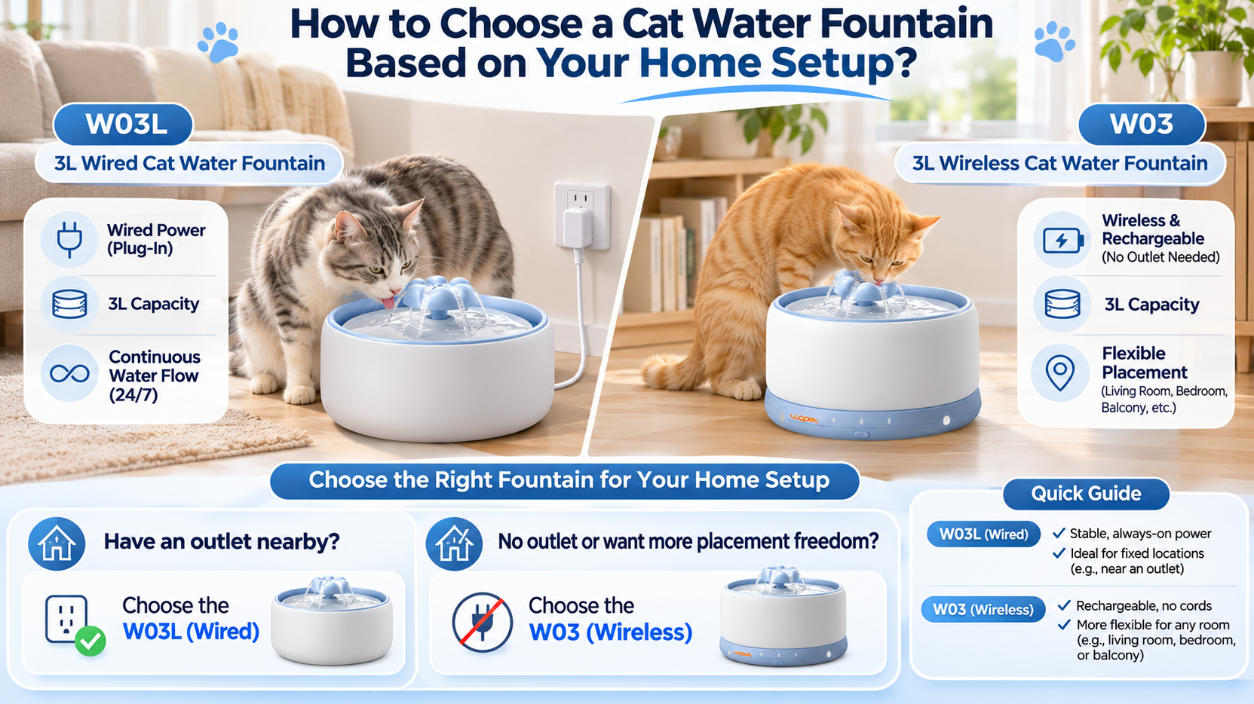
An outlet-powered fountain is a practical option when a suitable outlet is nearby and its cord can stay out of walking paths. Check the supplied cord length and the instructions for the exact model. Keep electrical connections away from likely splashes and avoid routing cables through doors or anywhere they can be pinched, pulled, or chewed.
Battery operation gives you more placement options, but confirm what the fountain actually does without wall power. Some models offer different flow modes depending on the power source, and a battery-life claim is useful only when you know the operating mode and conditions. Check how charging works, whether water remains accessible during charging, and whether the instructions permit operation while plugged in.
Choose a comfortable drinking location, then work out how to supply power. If the best spot has no convenient outlet, compare a suitable battery model with a simple bowl in that location. The goal is reliable water access, not making every drinking point a powered device. For a broader feature comparison, use the cat water fountain buying guide.
Choose Priorities for Your Type of Home
Different homes create different compromises. Use the table to identify what deserves attention before you compare capacity, material, or optional controls. These are practical planning suggestions rather than requirements for every home of that type.
|
Home setup |
What to check first |
Common compromise to avoid |
|
Studio apartment |
Clearance, sound near the bed, and a reachable cleaning spot |
Putting water beside the litter box solely to group pet supplies |
|
Open-plan living area |
Foot traffic, cords, and other pets' approach routes |
Treating one central location as equally comfortable for every cat |
|
Two-story home |
Water access on the levels your cats use |
Expecting a reluctant stair user to make every trip downstairs |
|
Shared home office |
Door habits and sound during work calls |
Leaving the only water source behind a closed door |
|
Home with wood flooring |
Spill inspection and drying under the base or mat |
Assuming a mat eliminates the need to check for moisture |
|
Home with several pets |
Separate approaches and alternative drinking points |
Choosing a larger reservoir to solve an access problem |
Small Apartments: Protect the Space Around the Fountain
In a small apartment, a fountain's shape can matter more than its capacity. A tall, narrow model may fit a nook but be harder to fill under a shelf. A broad, low model may be easy to reach while taking up too much floor space beside the only walkway. Compare the whole installation, including the cord and mat, rather than the advertised dimensions alone.
Try to separate the drinking area from the litter setup and busy food preparation surfaces as your space allows. There is no universal distance that makes a studio work, so focus on a clean, accessible location you can maintain. Furniture may help separate a drinking spot from a busy walkway, but leave an open approach and an easy way out.
Multistory Homes: Think in Terms of Everyday Access
For a cat that spends substantial time upstairs, a downstairs fountain may be only one part of the arrangement. Keep clean drinking water on the level where the cat rests, particularly if stairs have become difficult. That extra source can be a bowl; buying a second fountain is a separate decision based on preference and practical care.
Before adding equipment, ask who will clean and refill it. Carrying a full reservoir down a staircase may be less convenient than maintaining a removable bowl nearby. If several cats use different parts of the house, the multi-cat fountain quantity guide explains how to assess separate drinking areas without relying on a fixed fountain-per-cat formula.
Bedrooms and Offices: Listen Where You Will Use It
A fountain can be unobtrusive in a kitchen yet noticeable beside a bed. Consider the pump, falling water, and vibration through the surface beneath it. If possible, assess a demonstration that shows the fountain running continuously without music, while recognizing that a recording cannot reproduce its exact sound in your room.
Sensor operation may reduce the time the pump runs, but starts and stops can be more noticeable than a steady background sound. Check the return policy before trying a fountain in a quiet room. After setup, listen from your normal sleeping or working position, and do not turn off your cat's only usable source to solve a sound problem.
Plan the Trip From Fountain to Sink
Trace the cleaning route before you buy. Can you lift the reservoir without tilting it, carry it through a doorway, and fit the washable parts inside your sink? Water adds carrying weight, and some decorative shapes are hard to grip when wet. Check the filled weight and how you would hold the reservoir. A removable reservoir or comfortable grip may matter more to your routine than an extra operating mode.
The CDC recommends daily cleaning of pet water bowls and following care instructions for pet items. For a fountain, check the directions for its drinking surface, reservoir, pump, and filters separately. A dishwasher-safe label on one removable piece does not mean the entire fountain can go in the dishwasher.
Choose a model whose wet surfaces you can reach. Look at assembly diagrams or a cleaning demonstration rather than relying only on the phrase “easy to clean.” If the manual calls for opening a removable pump cover for cleaning, check how it comes off and whether you can handle the small parts. Leave another clean water source available during the job.
Protect the Floor Without Hiding Problems
A mat can catch small splashes, but water may collect underneath it or escape beyond its edge. Choose something you can lift and dry, and inspect the flooring rather than checking only the top of the mat. The aim is a setup you can monitor easily, especially on surfaces that are sensitive to moisture.
Keep the base level and use the product as instructed. Do not improvise a wobbly stand to raise a fountain or place electrical equipment inside a tray that could fill with water. If your cat plays with the stream, observe what actually gets wet before deciding whether a larger mat, a different approved flow setting, or another location would help.
Make a Shortlist That Fits Your Home
Write down three must-have features for your chosen spot. For example, you might need a removable reservoir, a cord that reaches a nearby outlet, and a drinking surface low enough for comfortable access. Then add two preferences, such as a particular finish or a light that can be switched off. This keeps attractive extras from displacing basic fit.
Use the WOPET fountain collection to identify possible models, then verify measurements and operating instructions for each candidate. Check WOPET accessories for the exact compatible replacement parts rather than assuming every filter or pump fits every fountain. Availability and compatibility are separate questions, and both belong in the purchase decision.
Check the Setup After Installation
Keep your cat's familiar water source available while introducing the fountain. Observe whether the cat can approach, drink, and leave without being crowded or startled. Look for practical problems such as a door catching the cord, a reservoir you cannot lift easily, or splashes extending beyond the mat. Change one aspect at a time when possible so the results are easier to interpret.
Check the spot during a busy evening as well as a quiet afternoon. Can your cat still approach, can you read the water level, and can a caregiver refill it without moving furniture? Revisit those questions after a room rearrangement or a change in door habits. Keeping the setup convenient makes regular care easier to sustain.
Frequently Asked Questions
Where should I put a cat water fountain in an apartment?
Choose an accessible spot outside the main walking path, with room for your cat to approach and for you to remove the parts. Check nearby doors, litter placement, and safe power access. A compact fountain still needs clearance around it, so test the full footprint before buying.
Does a two-story home need two fountains?
A two-story home does not automatically need two fountains. What matters is having water available where your cats spend time. A fountain on one floor and a clean bowl on another may meet that need; consider another fountain if moving water is preferred and you can maintain it properly.
Can I put a cat fountain on carpet?
Check the manufacturer's placement instructions and whether you can provide a stable, level setup. Carpet can make spilled water harder to notice and dry. When possible, choose a location where the base, surrounding surface, and any protective mat are easy to inspect.
Is a battery fountain always better for a small home?
A battery fountain can help when the best drinking spot lacks a convenient outlet, but it adds charging responsibilities and may limit flow modes. A plug-in model can be simpler when its cord fits safely into the room and its operating sound is acceptable.
Should the fountain stay in one place?
A predictable location can make everyday use easier to observe, but you can adjust an unsuitable setup. Keep other water available during a move and allow your cat to investigate. If drinking habits change unexpectedly, consider health and other household changes rather than assuming placement is the only explanation.
Choose the Location You Can Live With
The right fountain fits your cat's route and your care routine at the same time. Settle the location, clearance, power connection, and cleaning route first, then compare products. Before ordering, confirm that your chosen model fits both the marked floor space and the space needed to remove its parts. That final check connects the product listing to the room where it will actually be used.
Summary
Start with the spot where your cat will drink, then choose W03L OR W03 WIRELESS fountain that fits. This guide covers apartments, multistory homes, shared rooms, cord routing, cleanup, and a practical room-by-room placement check.
Label:
Popular Post
Top 8 Reasons Why Does My Cat Sleep Between My Legs?
Mar 03, 2025

What to Do If My Dog's Poop Is Black But Not Tarry
Feb 04, 2023

Superfecundation Cats: When Kittens in One Litter Have Different Fathers
Jul 11, 2025
Can Cats Have Orange Eyes? Genetics, Breeds, and Care Guide
May 20, 2025
How Long Does Dry Cat Food Last Once Opened? A Comprehensive Guide
Mar 19, 2025
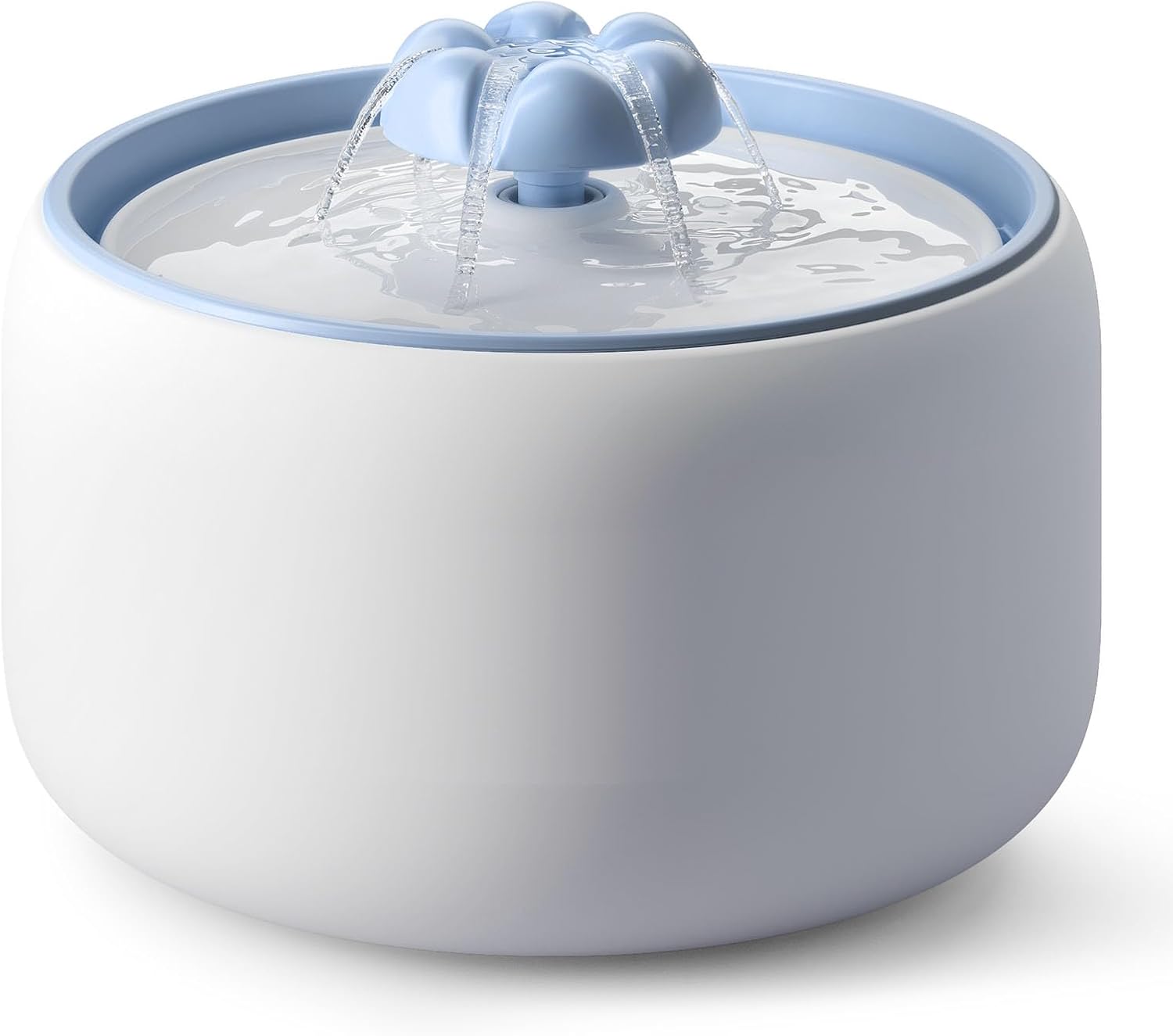
[Blue] W03L 3L Premium Ceramic Cat Water Fountain
Model: W03 LITE
$59.99
$69.99
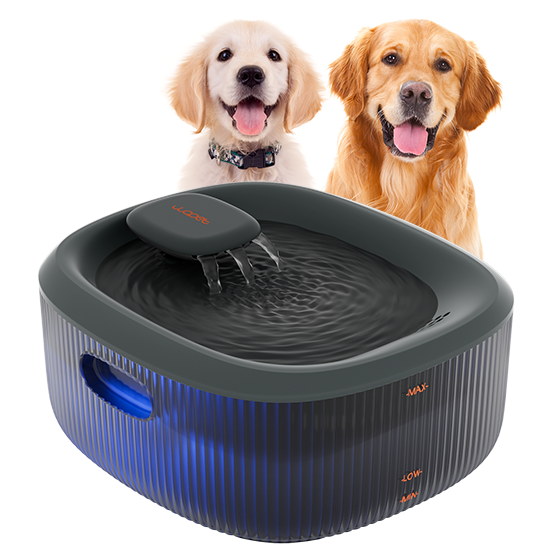
Basin Pet Water Fountain-W600
Model: W600
$43.99
$69.99
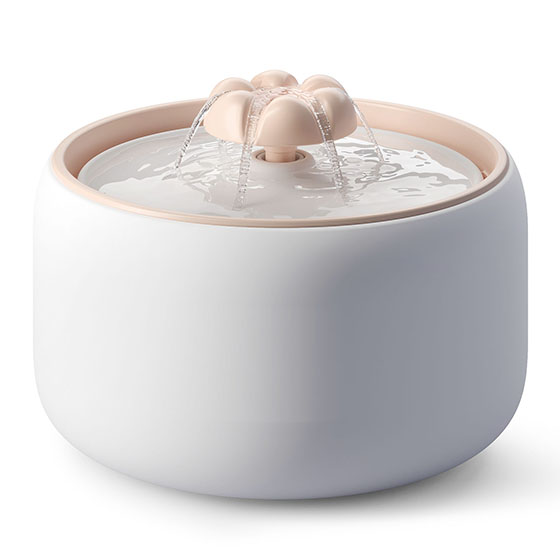
[Basic] Ceramic Pet Water Fountain with Power Cable
Model: W03L
$59.99
$99.00
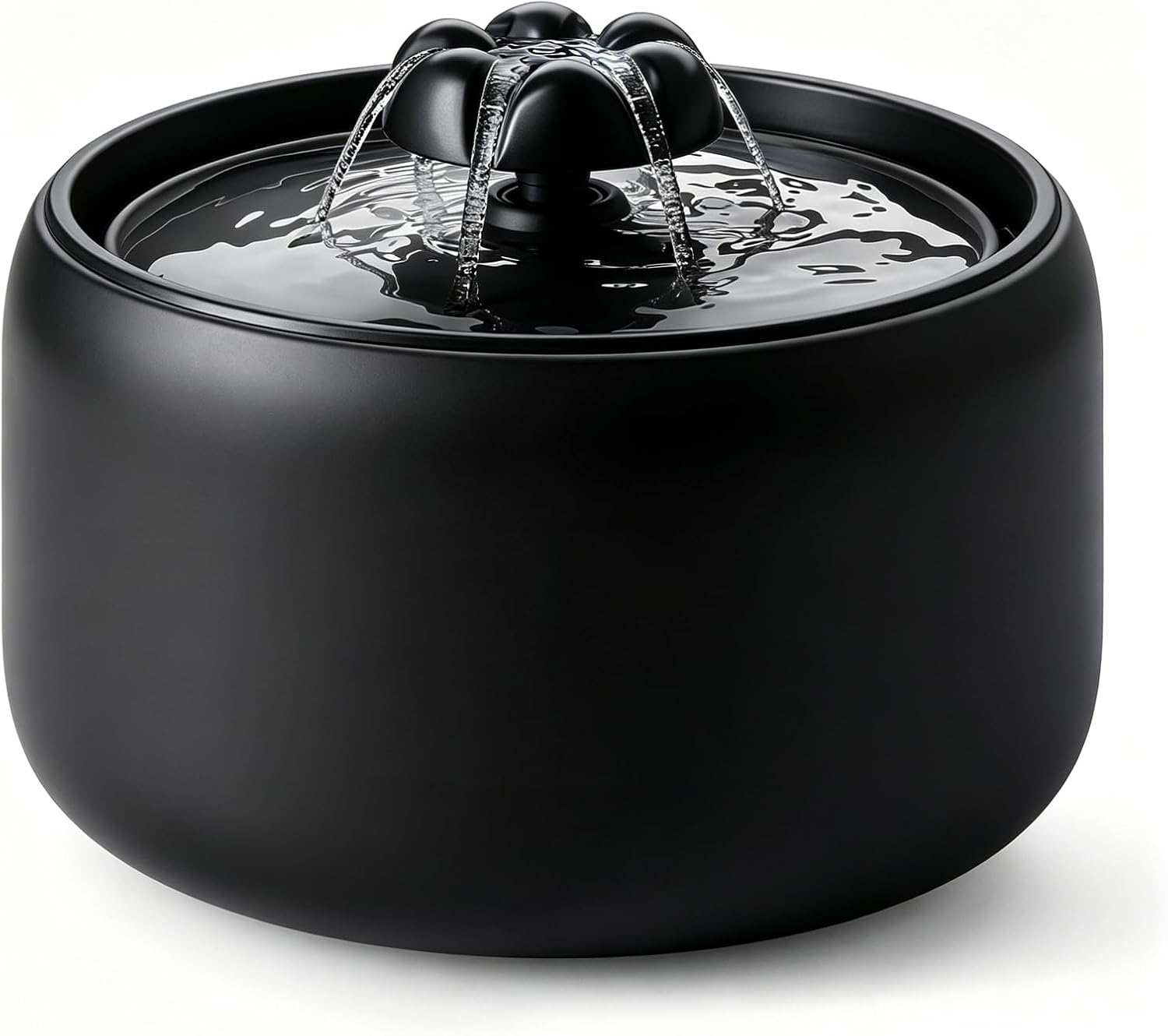
[Black] W03L 3L Premium Ceramic Cat Water Fountain
Model: W03L Black
$59.99
$69.99
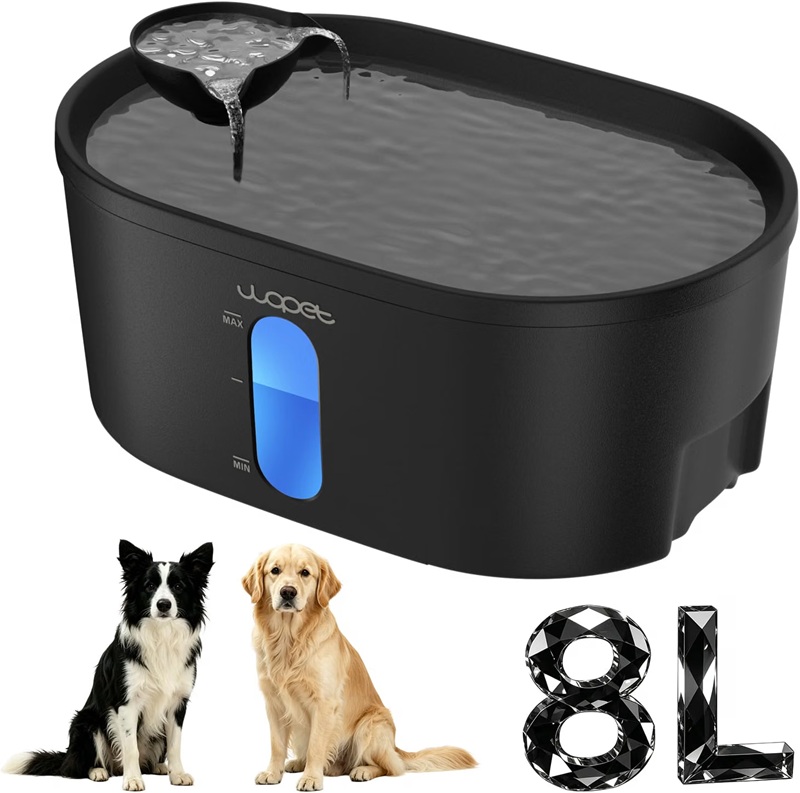
WOPET 8L Pet Water Fountain For Multiple Cats or Large Dogs A08
Model: A08
$49.99
$59.99
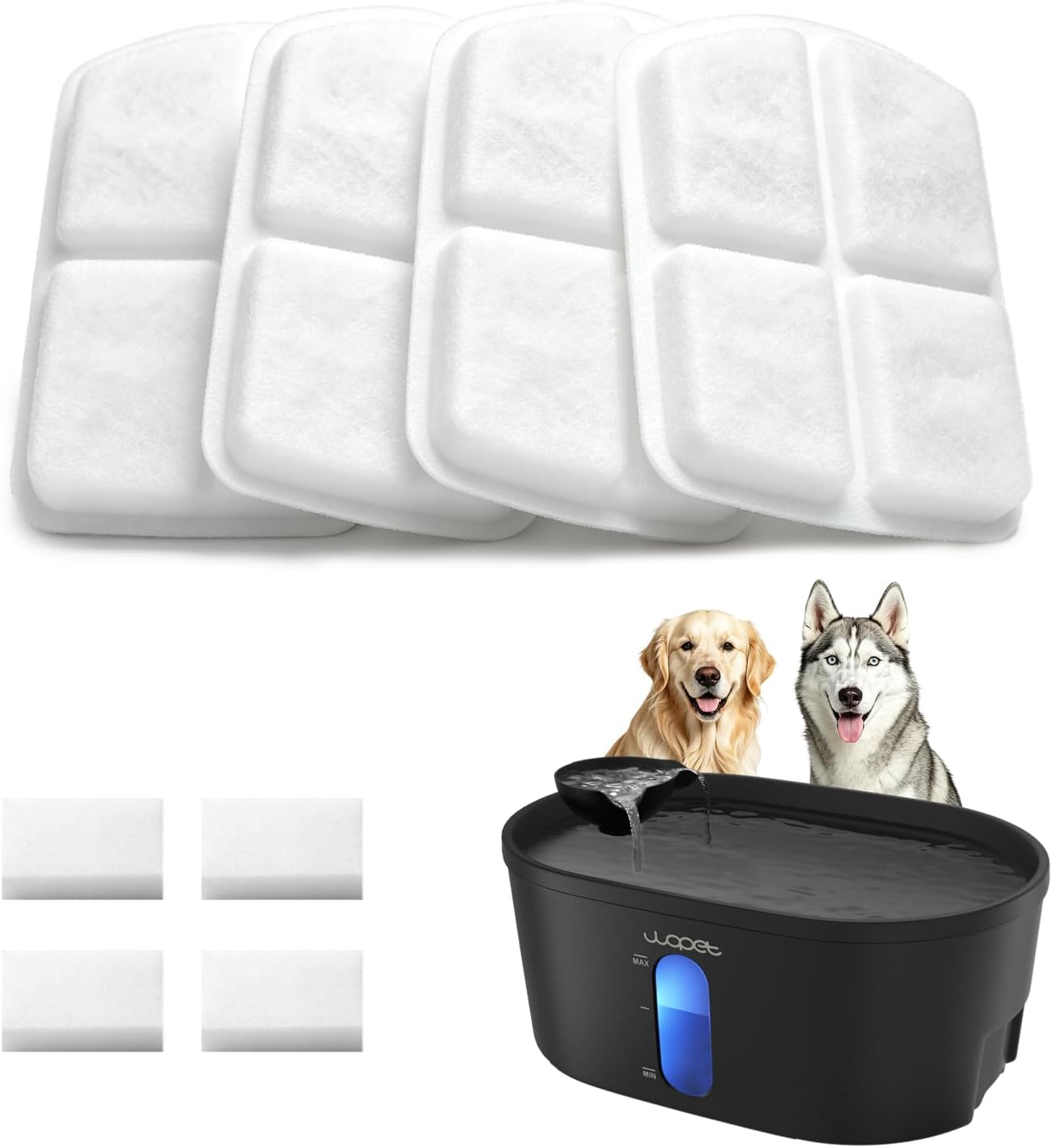
WOPET A08 Dog Water Fountain Filters
Model: A08 Filter
$19.99
$29.99

DOWNLOAD APP

WOpet life




Copyright © 2026 WOPET. All Rights Reserved.