Nov 03, 2026
Author:Sam Wonder
A battery-powered cat water fountain is useful when the best drinking spot is away from an outlet. A plug-in fountain is often simpler when you have a suitable outlet nearby and want to avoid a charging routine. Check the available flow modes separately, since the power source alone doesn't tell you how the fountain operates. Choose the setup that fits your cat's drinking spot and your daily routine.
Choose battery power when a better drinking location outweighs the extra charging task. Choose plug-in power when the location already works and avoiding recharge reminders matters more. If you need uninterrupted moving water, check the exact backup behavior rather than choosing by power label alone. Keep a separate bowl available during cleaning or interruptions.
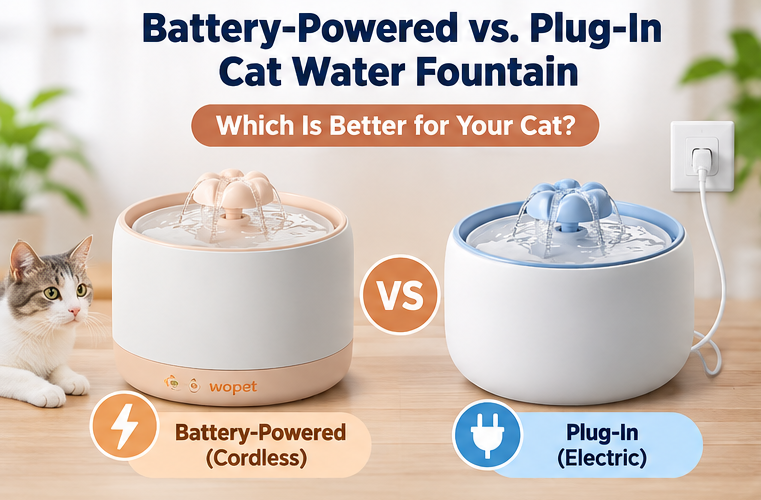
Battery-Powered vs Plug-In at a Glance
|
What matters |
Battery-powered fountain |
Plug-in fountain |
|
Placement |
Can work away from an outlet when charged |
Needs a suitable nearby power connection |
|
Ongoing task |
Check charge and recharge as instructed |
Check cable, adapter, and power connection |
|
Flow modes |
Battery operation may restrict available modes |
Supported modes still depend on the model |
|
Power outage |
May continue if already operating on a charged battery |
Pump generally stops without a supported backup |
|
Long-term parts |
Battery service or replacement may matter |
Cable, adapter, and pump availability may matter |
|
Cleaning |
Includes water-contact parts and model-specific electronics precautions |
Includes water-contact parts and model-specific electronics precautions |
|
Best reason to choose it |
A better drinking location without a nearby outlet |
Convenient operation in an already suitable location |
These differences explain the tradeoffs between power sources. Either type can work well when the design fits your home. Compare the exact model's drinking surface, cleaning access, and replacement parts before letting “cordless” or “plug-in” settle the purchase.
Start With the Drinking Location
Picture where the fountain will sit before looking at battery capacity. The location should work for your cat, allow normal household movement, and give you access for refilling and cleaning. An outlet behind a crowded entertainment center does not automatically make that area a good drinking spot. Likewise, a cordless fountain is not useful if it ends up in a doorway where a pet hesitates to approach.
Cornell's feline hydration guidance emphasizes accessible water and notes that fountain preferences vary. That supports choosing a usable location before choosing extra features. If your cat already drinks comfortably from a bowl in a quiet room, decide whether adding a fountain there would help before relocating the entire setup.
Measure the available footprint and check where the cord would run for a plug-in model. Avoid arrangements that depend on a stretched cable, an exposed connection near splashes, or a route people repeatedly step over. If no suitable connection is available, battery operation may solve a real placement problem. A bowl is also a practical option while you decide.
The Advantages of Battery-Powered Fountains
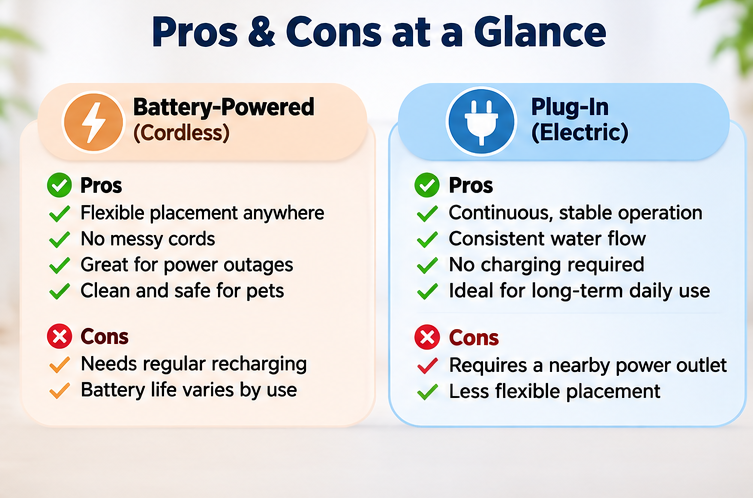
The clearest advantage is being able to place the fountain away from an outlet while it runs on battery power. You can choose among more indoor locations without moving furniture just to reach power. This may be helpful in a rental, an upstairs room, or a home where the available outlets are in busy areas. Placement still has to meet the fountain's instructions, including any restrictions on surfaces or exposure to moisture.
A rechargeable fountain can also make it easier to try a different drinking location. That does not mean moving it every day; it means you can test one sensible alternative without redesigning the cable route. Once you find a spot that works, keeping the arrangement predictable makes it easier to observe how your cat uses it. Make changes gradually and keep familiar water available.
Battery operation can keep a pump running through a household power outage if the fountain is charged and already operating in a supported battery mode. However, a rechargeable label does not prove automatic switchover from external power. Confirm whether the model switches by itself, needs a control change, or stops when its adapter loses power. Do not assume every hybrid design behaves the same way.
The Drawbacks of Battery Operation
Charging becomes part of the care routine, and the advertised maximum runtime may not resemble your household's experience. Frequent activation, a different operating mode, and other electronics can change how quickly the battery is depleted. A low-charge indicator helps only if you notice it and have a plan to recharge. Check actual operation rather than relying on the calendar alone.
Some designs require removing a battery module or moving the unit to charge it. Before ordering, work through one charging session: what comes off, where it charges, and what your cat drinks from while you wait. Check whether operation during charging is permitted and which components must stay dry. A long advertised runtime can lose its appeal if every recharge disrupts a useful drinking location.
Battery service is another ownership question. Ask whether the battery is user-replaceable, replaced through the manufacturer, or sealed inside a larger assembly. Do not open a sealed battery enclosure to extend its life. If repair options are unclear, treat that as missing information when comparing prices rather than assuming the battery will last as long as the rest of the fountain.
The Advantages and Limitations of Plug-In Fountains
A plug-in fountain can be convenient when its location already has a suitable outlet. There is no charge level to manage, and you do not need to move the unit to recharge it. If the model supports continuous flow, the stream can remain available during normal powered operation. That can fit a routine where the fountain stays in one location throughout the day.
The tradeoff is the power connection. Check the required adapter specifications, whether the adapter is included, and how easily you can disconnect the fountain for cleaning. A USB plug that fits doesn't necessarily mean the adapter meets the fountain's power requirements. Use the power equipment specified by the manufacturer and replace damaged components through an appropriate source.
A plug-in pump normally stops if its power is interrupted, but that does not always mean the drinking surface is empty. Some designs retain accessible water, while others leave little usable water in the tray. Inspect that detail before relying on the fountain during an outage. Even a tray with standing water is not a substitute for a separate backup bowl that you check regularly.
Power Source and Flow Mode Are Different Decisions
Battery-powered does not automatically mean motion-activated, and plug-in does not automatically mean nonstop circulation. A model may offer sensor, timer, or continuous modes, with different options available on battery and external power. Read the mode descriptions for the exact version you intend to buy. The label on a collection page may not explain these restrictions.
Sensor mode generally starts the pump after a detected approach or movement, while timer mode follows a programmed cycle. Continuous flow keeps the pump running during normal operation, subject to safeguards. These distinctions matter if your cat waits for an existing stream or remains at the tray after a timed cycle stops. Our home fountain buying guide explains how to weigh power alongside other household requirements.
Also distinguish battery-powered placement from a “wireless pump.” A product can use a particular pump connection while the fountain still needs external power. Ask a direct question: can this exact unit operate away from an outlet, and in which modes? That is more useful than trying to infer its operation from the word “wireless.”
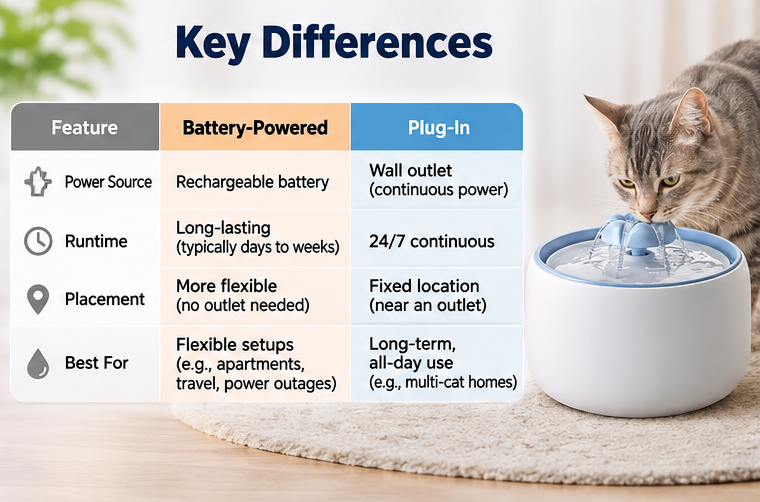
Buy WOPET W03L CERAMIC CAT FOUNTAIN ON AMAZON
How to Compare Battery-Life Claims
Compare runtime claims only when the conditions are clear. Look for the operating mode, cycle duration, activation frequency, and whether the figure is a maximum under specified conditions. Two fountains advertised with the same number of days may run their pumps for very different amounts of time. A large battery number by itself cannot tell you which unit fits your routine.
Before ordering, check whether the manual explains low-charge behavior and restart settings. Does the fountain stop immediately, change modes, or display a warning? After charging, must you select the previous mode again? These details affect daily convenience more directly than a headline runtime that leaves its test conditions unstated.
After setup, note the charging date, selected mode, and charge indication if the model provides one. Do not assume every fountain has a low-charge warning. Recharge according to its instructions rather than deliberately running the battery down. Use ordinary-use observations to plan charging; that interval describes your household, not a verified runtime for every buyer.
For example, the WOPET W03 support page advertises up to 30 days on a full charge in timer mode. We have not independently tested that claim. It does not tell you how long the fountain runs in other modes or whether it automatically switches to battery power during an outage.
Cleaning and Replacement Parts Still Matter
The CDC's pet-supply guidance includes daily water-bowl cleaning. For fountains, follow the model's instructions for disassembly and care of the pump, channels, and electrical components. A longer battery runtime does not lengthen the cleaning interval. Choose a design you can maintain comfortably whether it is rechargeable or plugged in.
Look for compatible filters and service parts before buying. The WOPET accessories collection provides a starting point, but match the exact model and component rather than relying on appearance. Check battery-related service separately from pump replacement. Finding a replacement pump doesn't mean the battery or controller can also be replaced.
When reviewing costs, include required power accessories, filters, and any known service-part prices. Keep possible repairs separate from predictable supplies, since a contingency is not a guaranteed expense. Battery operation still uses electricity when you recharge it. To compare running costs fairly, you need each model's energy use under comparable operating conditions. Battery power alone is not evidence of lower costs.
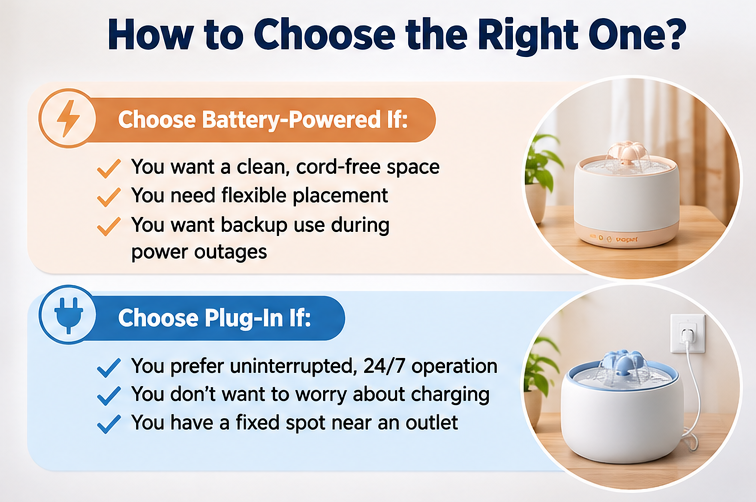
Buy WOPET W03 WIRELESS CAT WATER FOUNTAIN ON AMAZON
Which Setup Fits Your Home?
|
Your situation |
A sensible starting point |
Confirm before buying |
|
Preferred spot has no suitable outlet |
Battery-powered fountain |
Available modes, charging access, and battery service |
|
Suitable outlet is already nearby |
Plug-in fountain |
Safe cable route and supported flow modes |
|
You often forget to charge devices |
Plug-in fountain |
Power connection and backup water |
|
You want flow during outages |
A model with documented battery operation |
Switchover behavior and remaining charge |
|
Your cat needs an existing stream |
A model with supported continuous flow |
Whether that mode works on the intended power source |
|
Neither power arrangement fits the location |
A bowl or another location |
Comfortable access and regular care |
For example, a bedroom with no suitable outlet near the drinking area may favor a rechargeable unit. A kitchen corner with a safe, convenient connection may favor plug-in operation. These are household examples, not product-test results. Browse the WOPET fountain collection after identifying which situation matches your home, then verify the individual model's instructions.
Frequently Asked Questions
Can a battery-powered cat fountain run continuously?
Some models support continuous flow, but battery operation may be limited to other modes. Check the exact power-and-mode combination in the manual. Do not assume a continuous setting works while unplugged simply because it appears in the feature list.
Is a battery-powered fountain safer than a plug-in model?
Battery operation can remove the need for a connection to a wall outlet at the drinking location. It does not mean the unit has no internal wires or powered components. Safety depends on the design, condition, charging, and setup; neither power source is automatically safer in every situation.
Will a rechargeable fountain work during a blackout?
A rechargeable fountain may work during a blackout if its battery has charge and the selected mode supports battery operation. Automatic switchover is model-specific. Check the documented behavior and keep a separate bowl available rather than assuming uninterrupted flow.
Does a plug-in fountain need to run all day?
Use the operating schedule and modes the manufacturer permits, while keeping drinking water accessible. Whether you leave the pump running depends on the model and your setup. Turning the pump off does not remove the need to clean the fountain or check the water.
Should I choose a hybrid fountain?
A fountain that supports both battery and external power can be useful if you need that flexibility. Confirm charging rules, mode restrictions, and switchover behavior first. Paying more for two power options makes sense only if both are practical for your household.
Choose the Power Source You Can Manage Reliably
Choose battery operation when it makes a suitable drinking spot possible and you can keep up with charging. Choose plug-in operation when the outlet and cable arrangement already work and you prefer one less routine task. In either case, prioritize comfortable access, clear operating instructions, manageable cleaning, and water available when the pump stops.Label:
Popular Post

The Ultimate Guide to Tabby Cats: Patterns, Personalities, and More
Mar 27, 2025

Top 8 Reasons Why Does My Cat Sleep Between My Legs?
Mar 03, 2025

What to Do If My Dog's Poop Is Black But Not Tarry
Feb 04, 2023

Superfecundation Cats: When Kittens in One Litter Have Different Fathers
Jul 11, 2025

How Long Does Dry Cat Food Last Once Opened? A Comprehensive Guide
Mar 19, 2025
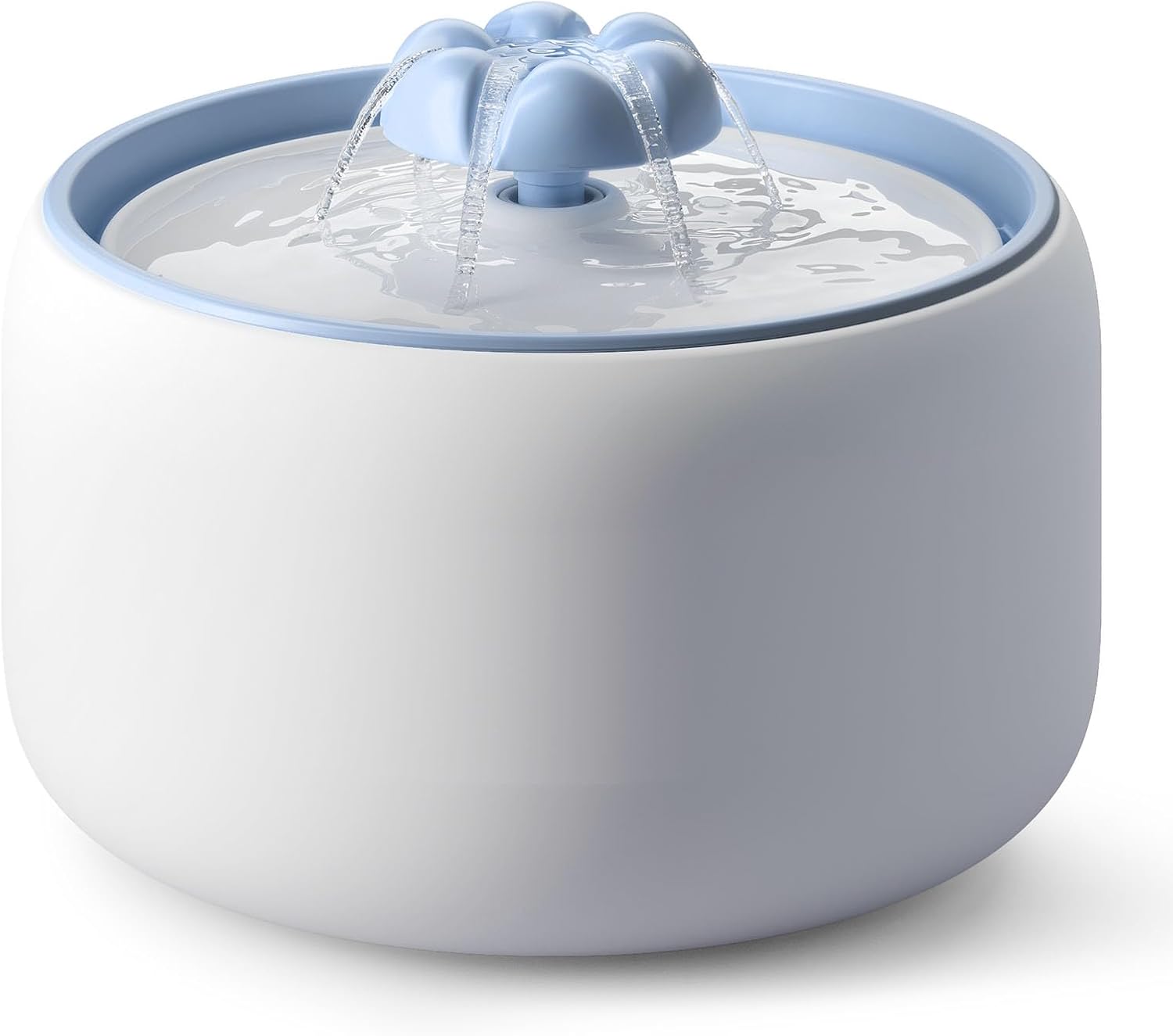
[Blue] W03L 3L Premium Ceramic Cat Water Fountain
Model: W03 LITE
$59.99
$69.99
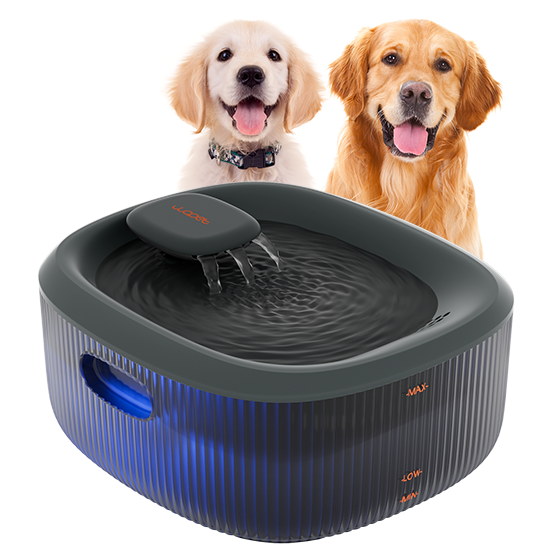
Basin Pet Water Fountain-W600
Model: W600
$43.99
$69.99
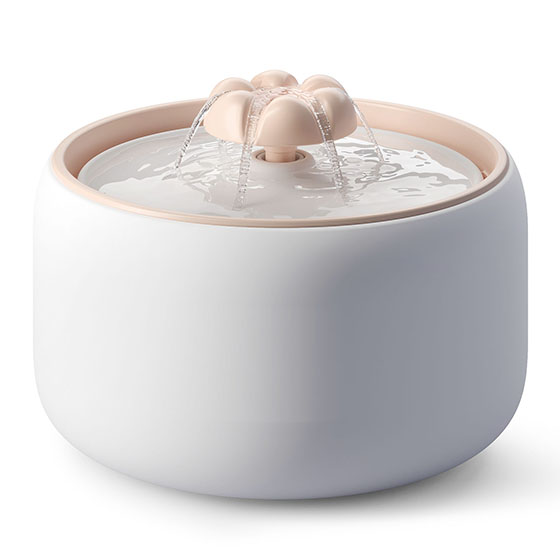
[Basic] Ceramic Pet Water Fountain with Power Cable
Model: W03L
$59.99
$99.00
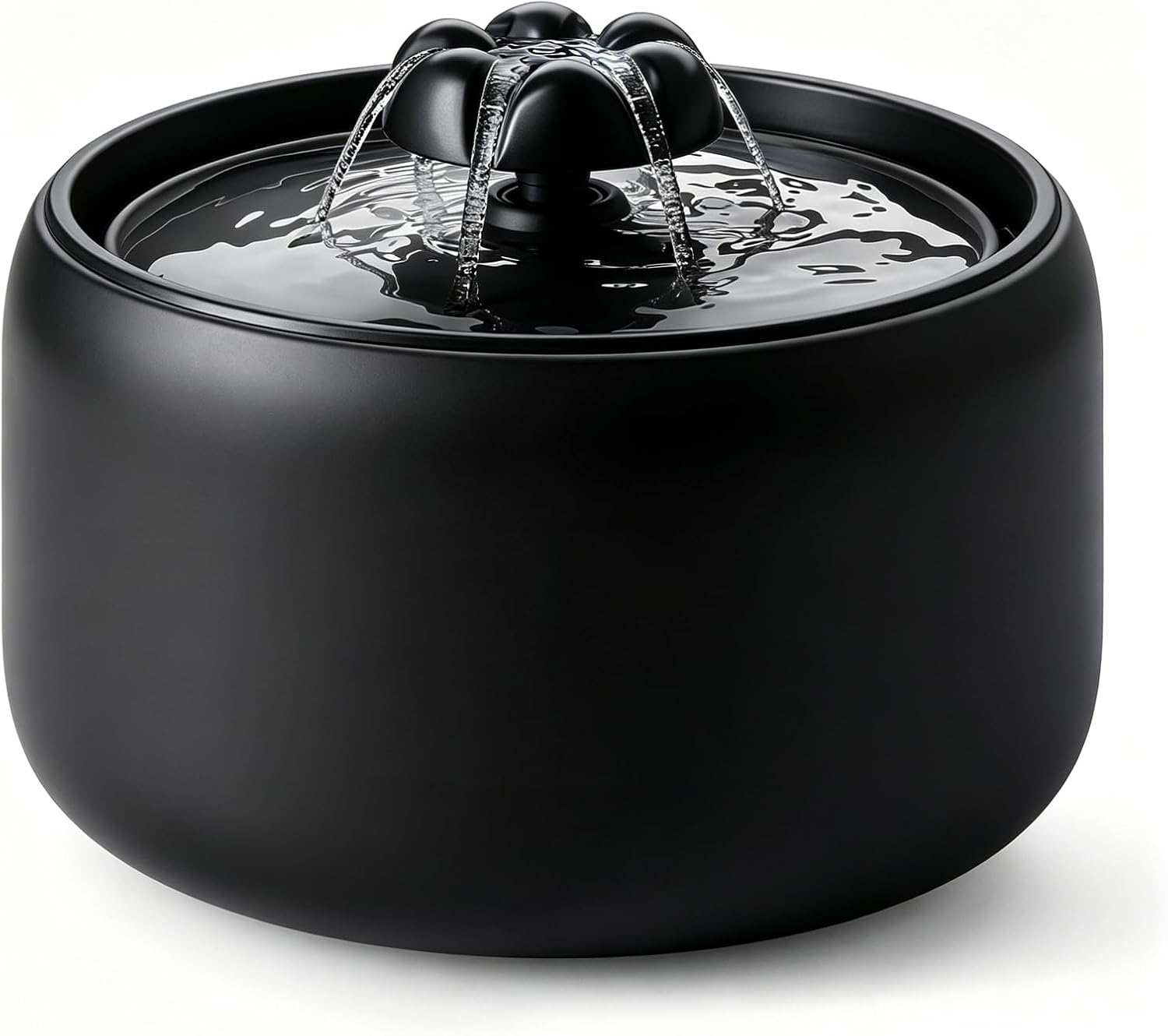
[Black] W03L 3L Premium Ceramic Cat Water Fountain
Model: W03L Black
$59.99
$69.99
WOPET 8L Pet Water Fountain For Multiple Cats or Large Dogs A08
Model: A08
$49.99
$59.99
WOPET A08 Dog Water Fountain Filters
Model: A08 Filter
$19.99
$29.99

DOWNLOAD APP

WOpet life




Copyright © 2026 WOPET. All Rights Reserved.