Nov 03, 2026
Author:Jackson Watson
A rechargeable dog water fountain can make everyday pet care more convenient, especially when you want to place your dog's drinking station somewhere without a nearby electrical outlet.
Unlike traditional plug-in fountains, rechargeable models use battery power to circulate water. This can provide greater flexibility in kitchens, living rooms, apartments, and other indoor spaces.
But not all rechargeable fountains offer the same experience.
Some prioritize long battery life, while others focus on larger water reservoirs, quieter operation, or easier cleaning. A fountain that works well for a small dog may not provide enough water or drinking space for a large breed.
So, what features matter most when choosing a rechargeable dog water fountain?
The best model should balance battery performance, water capacity, filtration, cleaning convenience, safe construction, and your dog's drinking comfort.
This guide explains seven essential features to uate before buying, how rechargeable fountains compare with plug-in models, and how to decide whether a cordless drinking station is right for your dog.
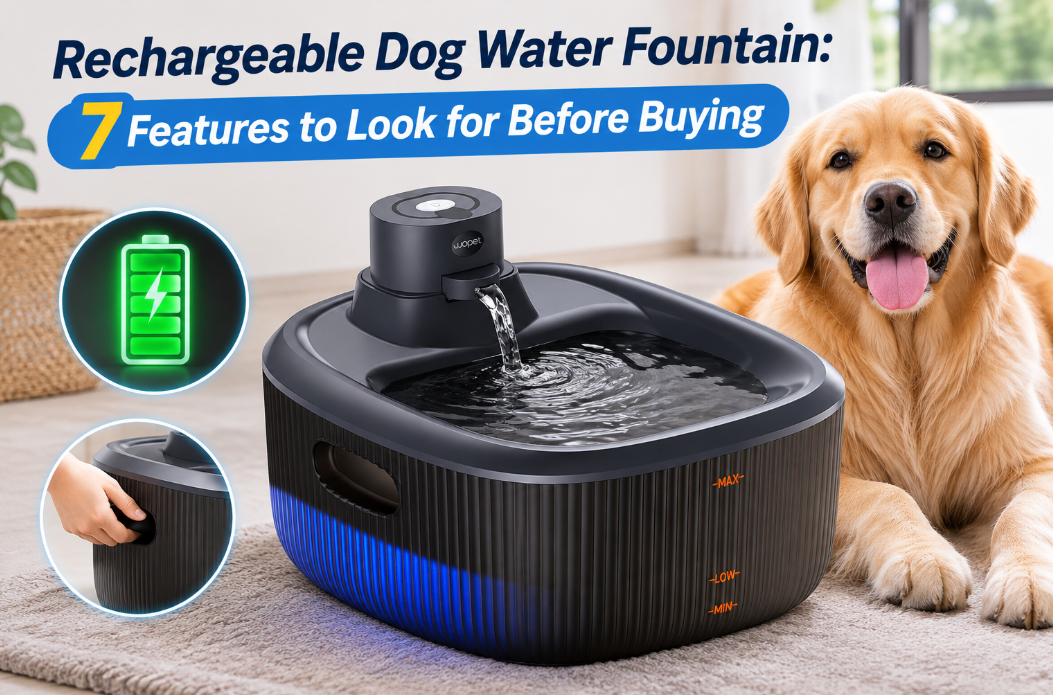
A rechargeable dog water fountain is an automatic pet drinking system that uses a rechargeable battery to power its water circulation mechanism.
Instead of requiring a continuous connection to a wall outlet, the fountain can operate using stored battery power.
Depending on the model, it may include:
A rechargeable battery
A water reservoir
A drinking basin
A circulation mechanism
A filtration system
A charging connection
Different water-flow or operating modes
Some rechargeable fountains circulate water continuously, while others use intermittent or sensor-activated operation.
These differences can significantly affect battery life.
These terms are often used interchangeably, but they do not always describe the same technology.
Rechargeable: The fountain uses a battery that can be charged again.
Cordless: The fountain can operate without a permanent external power cable.
Wireless: This may describe cordless operation or a wireless internal pump design, depending on the manufacturer.
A fountain with a wireless pump is not necessarily battery-powered.
Before purchasing, confirm whether the entire fountain can operate without being connected to a wall outlet.
Rechargeable fountains offer several practical advantages over traditional plug-in designs.
Without a permanent power cable, you can place the fountain in different areas of your home.
This can be useful when your dog's preferred drinking location is far from an electrical outlet.
A cordless fountain can reduce the need for a power cable running across the floor.
This may help keep the drinking area tidier.
However, the fountain still requires safe charging and proper electrical maintenance.
Rechargeable fountains can be useful in apartments, kitchens, living rooms, and other indoor spaces.
Some models may also be convenient for temporary use in locations where power outlets are unavailable.
However, portability depends on the fountain's weight, size, and water capacity.
Some rechargeable fountains use timed or sensor-activated circulation to conserve battery power.
However, intermittent operation does not necessarily mean the fountain uses less total energy than every plug-in model.
Actual energy consumption depends on the circulation system, operating schedule, and charging efficiency.
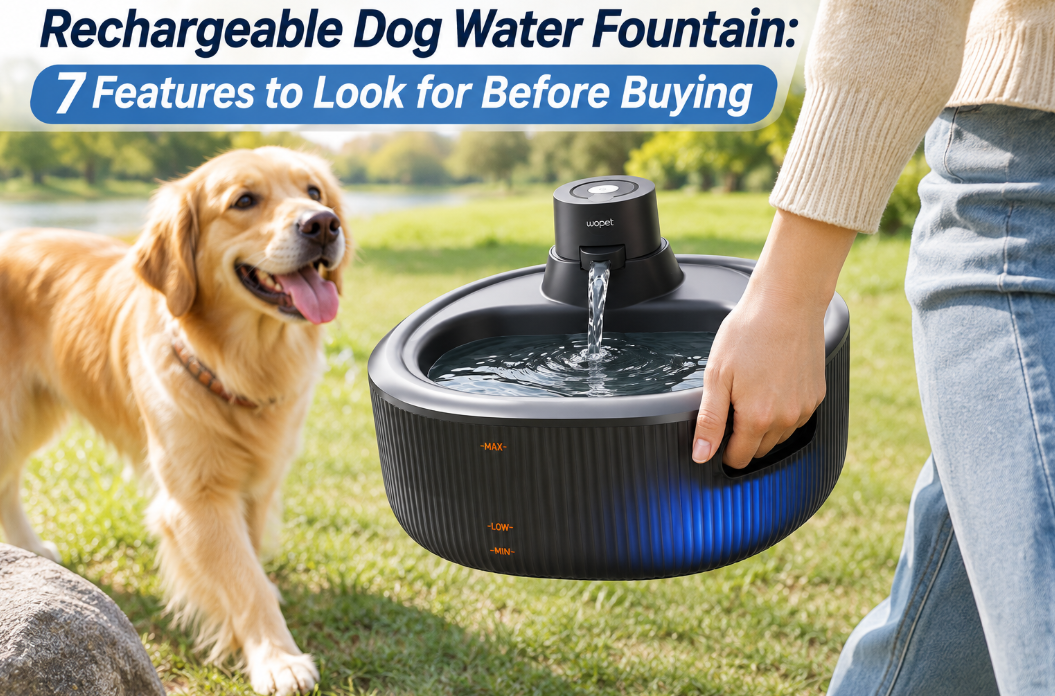
Battery performance is one of the most important considerations when buying a rechargeable dog water fountain.
A fountain that requires frequent charging may be inconvenient, especially for busy pet owners.
However, advertised battery life can be misleading if you don't understand how it was measured.
Battery runtime depends on several factors:
Battery capacity
Circulation power consumption
Operating mode
Frequency of water circulation
Sensor activity
Battery age and condition
Environmental conditions
For example, a fountain that circulates water continuously may use battery power faster than one that runs intermittently.
Some fountains provide different circulation modes.
Continuous mode: Water circulates regularly without long pauses.
Intermittent mode: Water circulates at scheduled intervals.
Sensor mode: Circulation activates when a sensor detects activity, depending on the model.
Each mode has different advantages.
Continuous circulation may be preferable for dogs that enjoy moving water throughout the day.
Intermittent operation may extend battery runtime but may not suit every dog's drinking preferences.
There is no universal minimum battery life that works for every household.
Instead, consider how often you're willing to recharge the fountain.
If you prefer a low-maintenance routine, look for a model with a charging schedule that fits your daily habits.
Buying tip: Check whether the advertised battery runtime applies to continuous, intermittent, or sensor operation. These figures may differ significantly.
Also consider whether the fountain can be used while charging and whether charging requires moving the entire unit.
Water capacity is especially important when choosing a rechargeable fountain for dogs.
A small reservoir may work well for a small dog but require frequent refilling when used by a large breed.
A commonly used starting estimate is approximately one fluid ounce of water per pound of body weight per day.
| Dog Weight | Approximate Daily Water Needs |
|---|---|
| 10 lbs | 300 mL |
| 25 lbs | 740 mL |
| 50 lbs | 1.5 L |
| 75 lbs | 2.2 L |
| 100 lbs | 3.0 L |
These are general planning estimates, not fixed requirements.
Actual water needs vary depending on diet, exercise, temperature, age, and health.
Dogs eating dry food may obtain less moisture from their meals than dogs eating wet food.
Active dogs and dogs living in warm environments may also need more water.
Consider:
Your dog's size
Number of pets
Typical daily water consumption
How frequently you can refill the reservoir
The fountain's usable water volume
A large reservoir can reduce refilling frequency, but it does not eliminate the need to refresh the water.
Capacity alone is not enough.
A large dog may struggle to drink comfortably from a narrow basin.
Look for a fountain with a drinking area that accommodates your dog's muzzle.
The basin should also be positioned at a comfortable height.
Buying tip: Compare both reservoir capacity and drinking-area dimensions before purchasing.
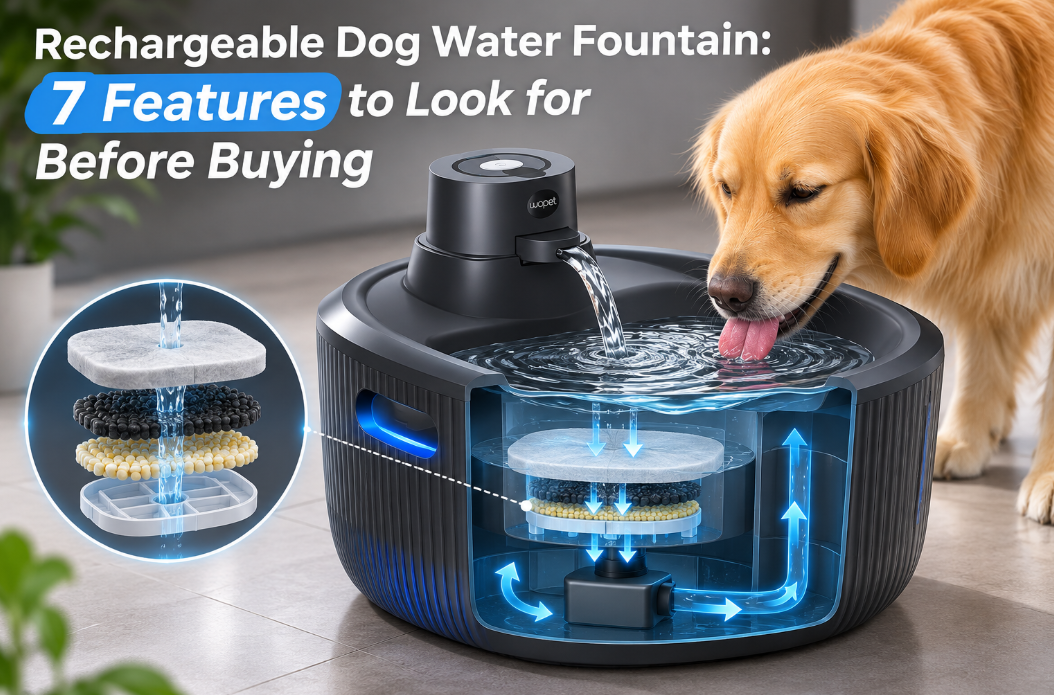
Filtration is another important feature of a rechargeable dog water fountain.
As dogs drink, hair, saliva, food particles, and other debris may enter the water.
A filtration system can help capture certain particles and improve the condition of circulating water.
Depending on the design, a fountain may use:
Mesh or sponge filters: Help capture larger particles such as hair and debris.
Activated carbon: May reduce certain odors and substances that affect taste, depending on the filter design.
Additional filter media: Some systems use other materials for specific filtration purposes.
The effectiveness of filtration depends on the complete filter system and its maintenance.
Not automatically.
Most ordinary pet fountain filters are not designed to make contaminated water microbiologically safe.
Use drinking water that is already suitable for your pet.
Filters also do not eliminate the need to clean the fountain.
Before buying, ask:
How often should filters be replaced?
Are compatible filters readily available?
How much do replacement filters cost?
Can the filter compartment be cleaned easily?
Buying tip: Consider the ongoing filter cost rather than focusing only on the fountain's purchase price.
Dogs can be sensitive to unfamiliar sounds.
A fountain that produces loud vibration, splashing, or mechanical noise may discourage some dogs from drinking.
A quiet circulation system can help make the drinking area more comfortable.
Common causes include:
Low water levels
Air entering the circulation mechanism
Loose components
Mineral buildup
Debris in the circulation system
Water splashing against the basin
Vibration from the fountain's base
Some noises can be reduced through regular maintenance.
Not necessarily.
Noise depends on circulation design, water flow, construction, and maintenance rather than battery power alone.
A rechargeable fountain is not automatically quieter than a plug-in model.
Choose a model with:
Gentle water circulation
Stable construction
Securely fitted components
Accessible circulation parts
Clear maintenance instructions
If your dog is nervous around unfamiliar sounds, introduce the fountain gradually.
Buying tip: Look for real-world demonstrations of the fountain operating in a quiet room, rather than relying only on advertised noise claims.
A rechargeable dog water fountain should be easy to clean.
This is particularly important because circulating water can still accumulate bacteria, biofilm, mineral deposits, and debris.
A fountain with complicated internal components may require more time to maintain.
A practical design should allow access to:
Drinking basin
Water reservoir
Circulation mechanism
Filter compartment
Internal water channels
Seals and connectors
Removable components can make routine cleaning more manageable.
Rechargeable fountains may use plastic, ceramic, stainless steel, or combinations of materials.
Each has advantages.
Plastic: Usually lightweight and convenient to handle.
Ceramic: Often features a smooth glazed surface but can be heavy and fragile.
Stainless steel: Generally durable and easy to wash, although mineral deposits may be visible.
The easiest material to maintain depends on the fountain's overall design.
Refresh drinking water daily and clean the fountain regularly according to the manufacturer's instructions.
More frequent cleaning may be necessary when:
Multiple pets share the fountain
Visible residue develops
The fountain is used in a dusty environment
Food particles frequently enter the water
Mineral buildup appears
Buying tip: A fountain that is easy to clean consistently is often more practical than one with complicated features.
Safety should be a priority when choosing any dog water fountain.
Rechargeable models introduce additional considerations because they contain batteries and charging components.
Choose fountains made with materials appropriate for drinking-water contact.
Check whether the manufacturer provides clear information about the drinking basin and reservoir materials.
Avoid products with damaged, cracked, or deteriorating surfaces.
Follow the manufacturer's instructions for charging and battery care.
Important considerations include:
Appropriate charging equipment
Protection of electrical connections from water
Secure battery placement
Clear charging instructions
Protection from excessive heat
Safe handling of damaged components
Do not immerse electrical components unless the manufacturer specifically identifies them as waterproof.
Dogs may accidentally bump their drinking station.
A stable fountain should have an appropriate base shape and weight distribution.
For large or energetic dogs, stability is particularly important.
The drinking basin should be comfortable for your dog's size.
A fountain that is too tall, narrow, or difficult to approach may discourage drinking.
Buying tip: Evaluate the complete product, including water-contact materials, electrical safety, base stability, and drinking comfort.
One of the main reasons to choose a rechargeable dog water fountain is the freedom to place it without a permanent power connection.
However, not all rechargeable fountains offer the same placement flexibility.
Choose a location that is:
Easy for your dog to access
Away from excessive heat
On a stable, level surface
Convenient for refilling
Easy to clean around
Appropriate for the product's environmental rating
Avoid placing a fountain outdoors unless the manufacturer specifically approves outdoor use.
Some rechargeable fountains offer multiple circulation modes.
These may include continuous, intermittent, or sensor-activated operation.
Different modes can affect battery life and your dog's experience.
For example, a dog accustomed to continuously flowing water may prefer a different setting from a dog that drinks comfortably from a stationary basin.
A rechargeable fountain should fit your dog's habits.
If your dog drinks frequently throughout the day, confirm that water remains accessible even when circulation is paused.
Buying tip: The best operating mode is the one that provides reliable water access while fitting your charging routine.
Both rechargeable and plug-in fountains have advantages.
| Feature | Rechargeable Fountain | Plug-In Fountain |
|---|---|---|
| Power source | Rechargeable battery | Continuous electrical connection |
| Placement flexibility | Usually high | Limited by cable and outlet |
| Charging required | Yes | No battery charging |
| Continuous operation | Depends on model and battery | Generally supported while powered |
| Portability | Often convenient | Requires nearby outlet |
| Battery maintenance | Required | Usually not applicable |
| Power outage operation | May continue while charged | Usually stops without backup |
| Best for | Flexible placement | Fixed drinking stations |
A rechargeable fountain may be more convenient if:
You want fewer exposed cables
Your preferred location lacks an outlet
You frequently reposition the fountain
You value cordless operation
You can maintain a regular charging schedule
A plug-in fountain may be preferable if:
You want continuous operation without charging
The drinking station remains in one location
An electrical outlet is conveniently available
You prefer not to manage battery runtime
Verdict: Rechargeable fountains offer flexibility, while plug-in models eliminate the need for battery charging.
Neither is automatically better for every household.
Rechargeable fountains can be suitable for large dogs, but several factors deserve attention.
Large dogs may consume substantial amounts of water throughout the day.
Choose a fountain that provides adequate water between refills.
A wide, accessible basin can be more comfortable for large breeds.
If the fountain circulates water frequently, battery runtime may be shorter than advertised under intermittent operating conditions.
Large dogs may accidentally bump or move lightweight fountains.
Look for a stable design.
Larger fountains may contain more components or be heavier when filled.
Choose a model you can comfortably maintain.
Large-dog verdict: A rechargeable fountain can work well for a large dog when it offers sufficient capacity, comfortable drinking access, and reliable battery performance.
A long battery life is useful, but it does not compensate for insufficient water capacity or difficult cleaning.
Battery runtime may vary significantly between continuous and intermittent operation.
A compact fountain may require frequent refilling when used by a large dog.
Filters help capture certain particles, but they do not eliminate bacteria or remove the need for regular washing.
Check how the fountain charges and whether it can operate during charging.
Consider filter replacement, circulation components, and other maintenance expenses.
A wireless internal circulation system does not necessarily mean the fountain can operate without an external power connection.
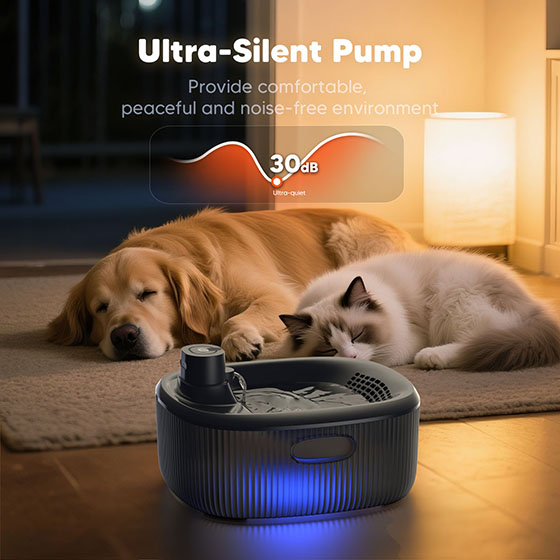
For pet owners interested in a rechargeable drinking station, the WOPET W600 Pro is a model worth exploring.
Its wireless design is relevant to households that want greater flexibility when choosing where to place a dog water fountain.
A cordless fountain can make it easier to position your dog's drinking station away from a permanent electrical outlet.
This may be useful in apartments, living rooms, and other indoor spaces.
When uating the W600 Pro, consider how its reservoir, drinking area, and circulation system fit your dog's daily routine.
Review the latest official specifications for:
Battery capacity
Charging time
Runtime under different operating modes
Charging method
Water circulation behavior
Avoid assuming that advertised battery life applies to continuous operation unless the manufacturer explicitly confirms it.
Check the current cleaning instructions, filter replacement requirements, and accessibility of the circulation components.
The W600 Pro may be worth considering if you want:
A wireless drinking station
Greater placement flexibility
A fountain designed for everyday pet use
An alternative to a permanently plugged-in fountain
Before purchasing, confirm that the model's drinking basin dimensions and reservoir capacity meet your dog's needs.
The initial purchase price is only one part of the total cost.
Ongoing expenses may include:
Replacement filters
Circulation-system components
Cleaning supplies
Battery replacement, where supported
Electricity used for charging
Suppose a fountain requires a $5 replacement filter every four weeks.
52 weeks ÷ 4 = 13 replacements
13 × $5 = $65 per year
This is an illustrative example, not a WOPET-specific price or replacement schedule.
Rechargeable fountains generally use relatively small amounts of electricity, but actual energy consumption depends on the battery, charging efficiency, and operating frequency.
The larger practical consideration for many owners is charging convenience rather than electricity cost.
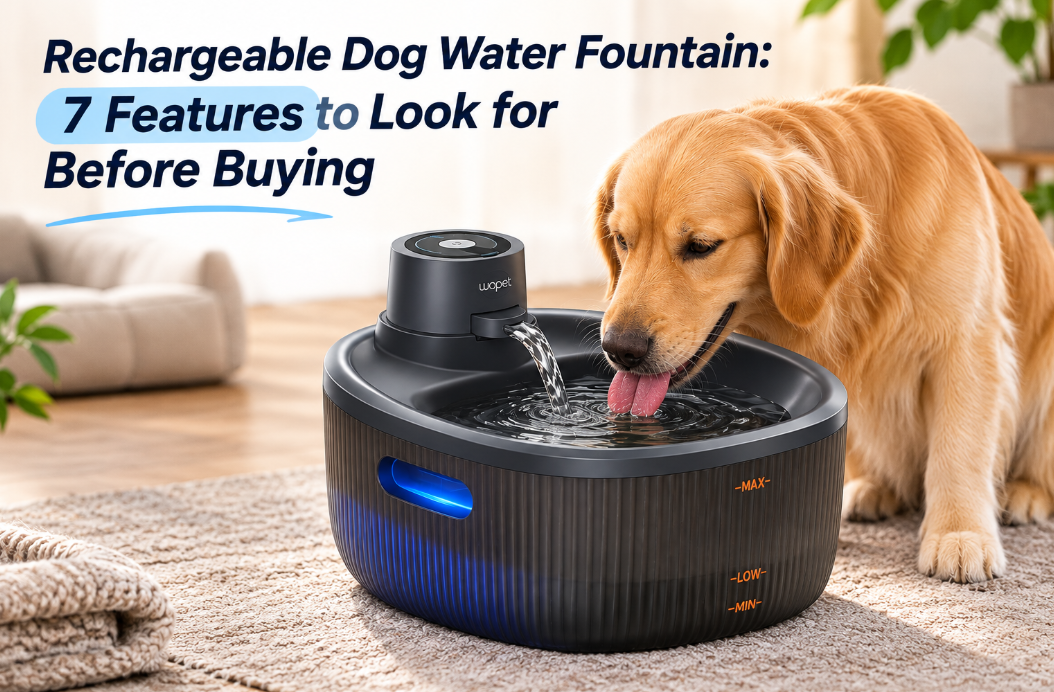
Battery runtime depends on capacity, circulation power, operating mode, and usage conditions. Check whether the advertised runtime applies to continuous or intermittent operation.
They can be suitable for everyday use when properly manufactured, charged, maintained, and operated according to the manufacturer's instructions.
Some models can operate throughout the day, but continuous circulation may reduce battery runtime. Check the specific model's operating modes and specifications.
Yes, provided they offer adequate reservoir capacity, a comfortable drinking area, stable construction, and reliable power.
Many models include filtration systems. Follow the manufacturer's instructions for cleaning and filter replacement.
Only if the manufacturer specifically approves outdoor use. Weather exposure and temperature can affect electrical and battery safety.
Not necessarily. Noise depends on circulation design, water flow, construction, and maintenance.
Water circulation generally stops when battery power is depleted. Depending on the fountain's design, water may remain accessible in the drinking basin.
Check the model's behavior before relying on it for extended periods.
Refresh water daily and clean the fountain regularly according to the manufacturer's instructions. Increase cleaning frequency when necessary.
It can be worthwhile if you value flexible placement and cordless convenience. However, a plug-in fountain may be more practical if you prefer continuous operation without battery charging.
A rechargeable dog water fountain can make everyday pet care more flexible, but choosing the right model requires more than comparing battery life.
The seven features that matter most are:
Reliable battery life and convenient charging
Adequate reservoir capacity and drinking space
Effective filtration
Quiet water circulation
Easy cleaning and maintenance
Safe materials and stable construction
Flexible placement and suitable operating modes
For pet owners exploring cordless options, the WOPET W600 Pro is a model worth comparing.
Before purchasing, uate your dog's size, drinking habits, and your preferred charging routine.
The best rechargeable dog water fountain is the one that provides comfortable access to fresh water while making everyday maintenance simple and reliable.
Label:
Popular Post

The Ultimate Guide to Tabby Cats: Patterns, Personalities, and More
Mar 27, 2025

Top 8 Reasons Why Does My Cat Sleep Between My Legs?
Mar 03, 2025

What to Do If My Dog's Poop Is Black But Not Tarry
Feb 04, 2023

Superfecundation Cats: When Kittens in One Litter Have Different Fathers
Jul 11, 2025
Can Cats Have Orange Eyes? Genetics, Breeds, and Care Guide
May 20, 2025
[Blue] W03L 3L Premium Ceramic Cat Water Fountain
Model: W03 LITE
$59.99
$69.99
Basin Pet Water Fountain-W600
Model: W600
$43.99
$69.99
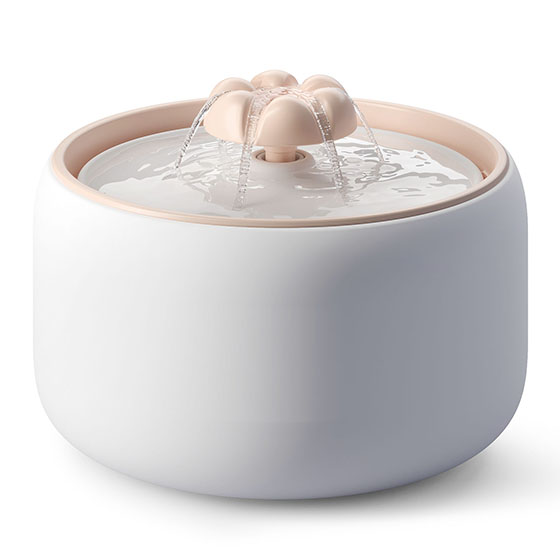
[Basic] Ceramic Pet Water Fountain with Power Cable
Model: W03L
$59.99
$99.00
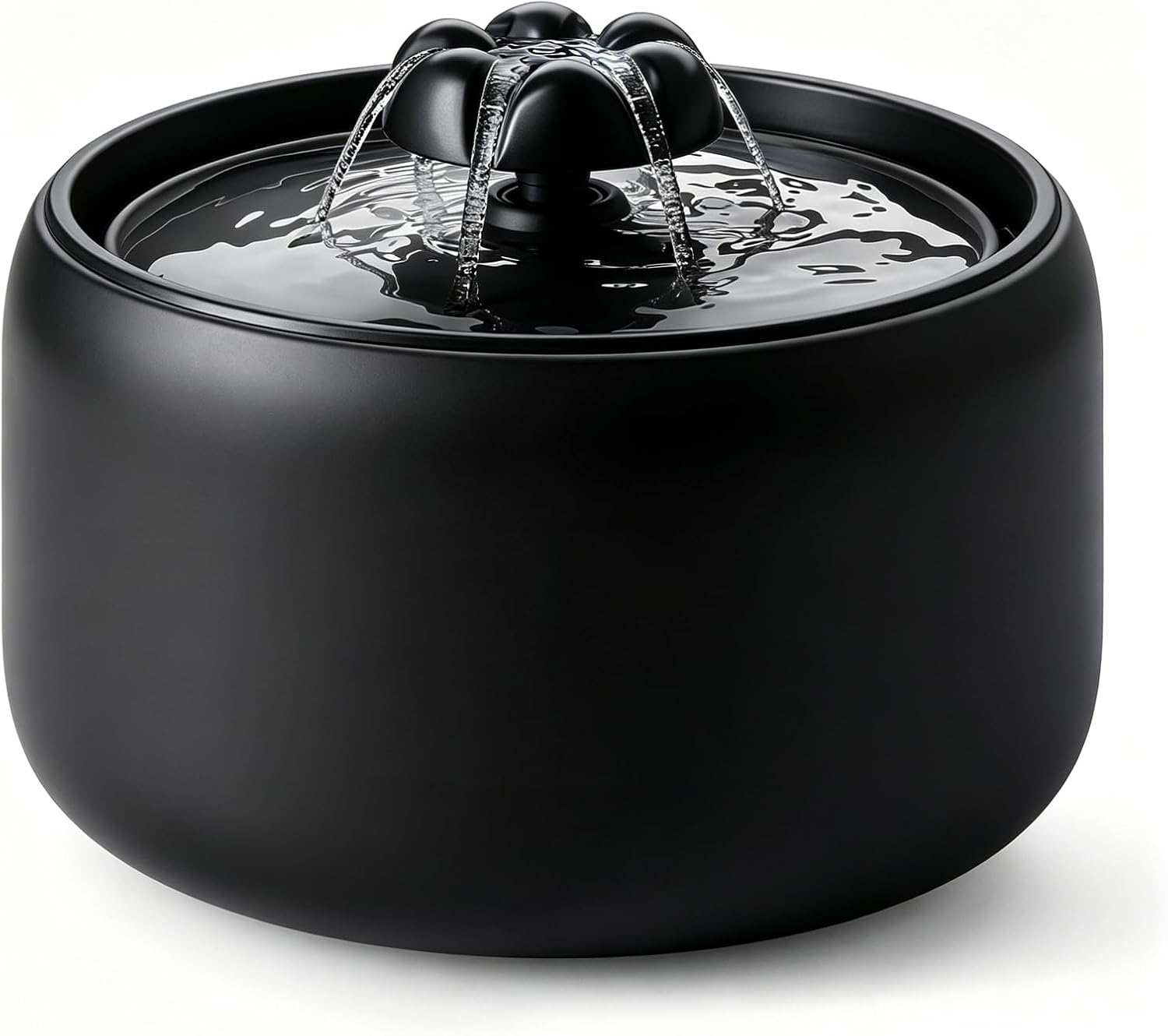
[Black] W03L 3L Premium Ceramic Cat Water Fountain
Model: W03L Black
$59.99
$69.99
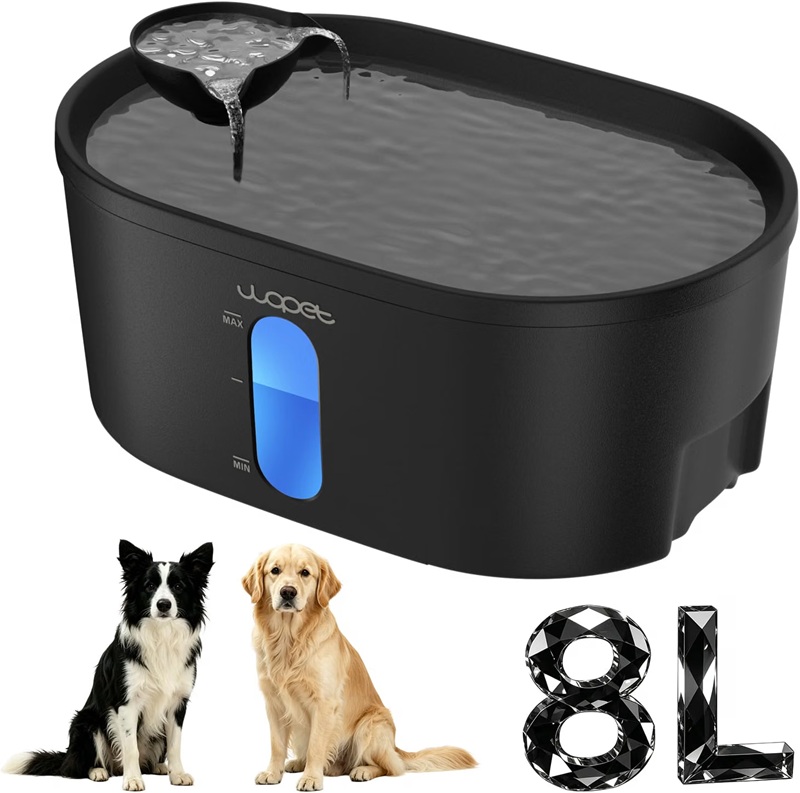
WOPET 8L Pet Water Fountain For Multiple Cats or Large Dogs A08
Model: A08
$49.99
$59.99
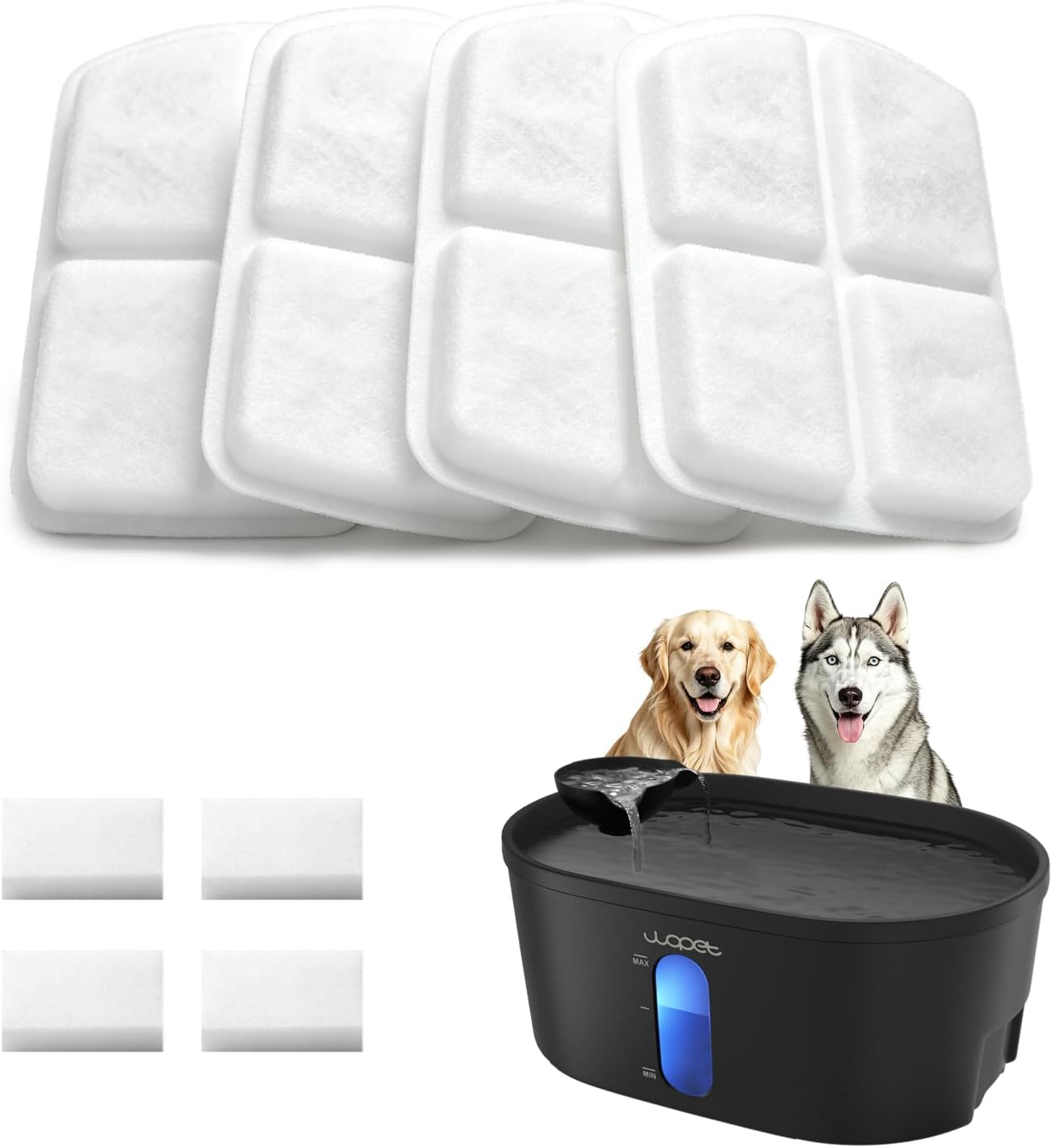
WOPET A08 Dog Water Fountain Filters
Model: A08 Filter
$19.99
$29.99

DOWNLOAD APP

WOpet life




Copyright © 2026 WOPET. All Rights Reserved.