Nov 03, 2026
Author:Lisa Martinez
Choosing a water fountain for your dog sounds simple until you start comparing the options. Some fountains need a nearby electrical outlet, while others promise cordless convenience, rechargeable batteries, and flexible placement. But how do you know which one is actually worth buying?
A cordless dog water fountain can make everyday pet care more convenient, especially if you want to keep your dog's drinking area away from electrical outlets. However, not all cordless fountains offer the same battery performance, water capacity, cleaning convenience, or drinking experience.
For dog owners, the most important question isn't simply whether a fountain is wireless. It's whether the fountain fits your dog's size, drinking habits, and your daily routine.
Before purchasing, consider these seven essential features to help you choose a cordless fountain that provides dependable access to fresh drinking water.
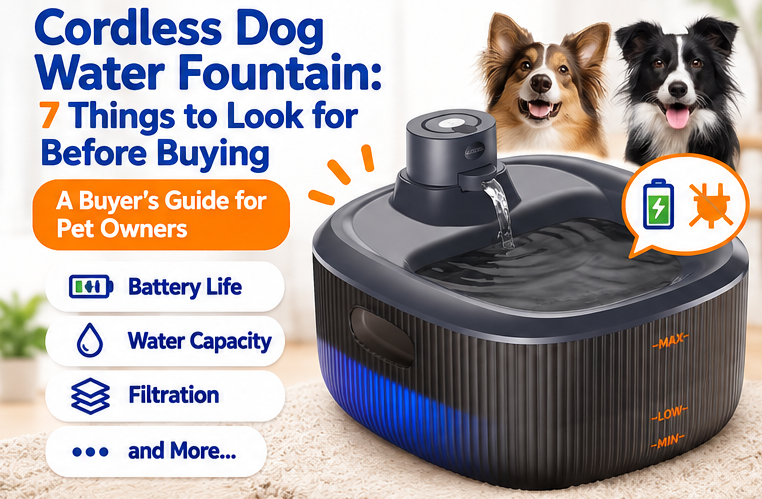
A cordless dog water fountain is a pet drinking system that can operate without remaining continuously connected to a wall outlet.
Most cordless models use a rechargeable battery to power their water circulation system. Depending on the design, water may circulate continuously, at scheduled intervals, or when a motion sensor detects activity.
Unlike traditional plug-in fountains, battery-powered models offer more flexibility in where you place them.
For example, you might position a cordless fountain in your living room, beside your dog's feeding area, or in another suitable indoor location without worrying about nearby electrical outlets.
However, it's important to distinguish between two terms:
Cordless water fountain: Can operate without an external power cable during battery-powered use.
Wireless pump fountain: Uses a wireless connection or drive mechanism between components but may still require external electrical power.
Always check the manufacturer's specifications before assuming that a fountain is completely battery-powered.
Battery performance is one of the first things to uate when buying a cordless dog water fountain.
A fountain with limited battery life may require frequent charging, which can become inconvenient for busy pet owners.
There is no universal battery-life standard for cordless pet fountains.
Runtime depends on several factors:
Battery capacity
Water circulation frequency
Continuous versus intermittent operating modes
Sensor activation frequency
Battery age and condition
Manufacturer-specific power management
For example, a fountain operating continuously may use more power than one that circulates water only at intervals.
When comparing products, check whether the advertised battery life applies to continuous circulation or an energy-saving mode.
Look for clear answers to these questions:
How many days can the fountain operate between charges?
How long does a full recharge take?
Does it have a low-battery indicator?
Can your dog still access standing water if the battery runs out?
Does the manufacturer provide battery care instructions?
Buying Tip: Choose a fountain with a charging routine you can realistically maintain. Longer advertised battery life is useful only when it reflects how you intend to operate the fountain.
Water capacity is particularly important for medium and large dogs.
A fountain designed primarily for cats may have an attractive appearance but a reservoir that is too small for your dog's drinking habits.
A commonly used starting estimate is approximately one fluid ounce of water per pound of body weight per day.
Actual drinking needs vary depending on temperature, activity, diet, age, and individual health.
| Dog Weight | Approximate Daily Water Needs |
|---|---|
| 10 lbs | 300 mL |
| 20 lbs | 600 mL |
| 40 lbs | 1.2 L |
| 60 lbs | 1.8 L |
| 80 lbs | 2.4 L |
These figures are general estimates rather than fixed daily requirements. Dogs consuming wet food may drink less directly from a fountain, while active dogs may need more.
Consider the number of pets using the fountain and how often you can refill it.
For example, if your dog typically drinks around 1.5 liters of water daily, a 2-liter reservoir may require frequent attention.
A larger reservoir provides more flexibility, but it doesn't eliminate the need for regular water replacement and cleaning.
Reservoir capacity isn't the only consideration.
Large dogs may struggle with narrow drinking openings, even when the fountain holds plenty of water.
Look for a basin that allows your dog to drink comfortably without awkward positioning.
Buying Tip: For large breeds or multi-dog households, prioritize both sufficient reservoir capacity and an accessible drinking surface.
A filtration system is another important feature to uate.
Dogs sometimes introduce food particles, hair, saliva, and other debris into their drinking water.
A properly maintained fountain filter can help capture certain particles and improve the appearance of the circulating water.
Activated Carbon Filters
Activated carbon may help reduce certain odors and substances that affect water taste, depending on the filter design.
Mesh or Sponge Filters
These components help capture larger particles, such as pet hair and visible debris.
Multi-Layer Filters
Some fountains combine different filtration materials to address several types of particles.
Not necessarily.
A fountain filter does not automatically remove every contaminant or prevent bacterial growth.
Even filtered fountains need regular cleaning, fresh water, and scheduled filter replacement.
What type of filtration system does the fountain use?
How often should filters be replaced?
Are replacement filters readily available?
Can the fountain be cleaned without damaging the filter housing?
How much will replacement filters cost over time?
Buying Tip: Consider long-term filter availability and cost, not just the filtration features advertised on the product page.
Noise can influence how comfortable your dog feels around a water fountain.
Some dogs readily approach flowing water, while others are sensitive to unfamiliar sounds.
A fountain that produces loud vibrations, excessive splashing, or mechanical humming may discourage a cautious pet.
Common causes include:
Low water levels
Loose or improperly installed components
Air entering the circulation system
Mineral buildup
Debris obstructing water movement
Vibration against hard flooring
A well-maintained fountain generally performs more consistently than one with clogged or incorrectly assembled components.
Not necessarily.
Some cordless fountains circulate water continuously, while others use intermittent or sensor-activated operation.
Continuous circulation provides a constantly moving water surface but may require more frequent charging.
Intermittent circulation can conserve battery power, although some dogs may prefer a more predictable water source.
Buying Tip: If your dog is nervous around new appliances, choose a fountain with gentle water movement and a stable, low-noise design.
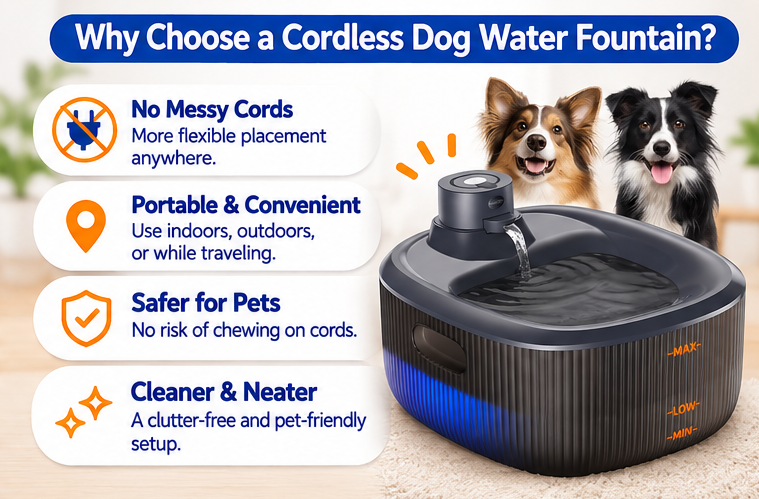
One of the most overlooked features of a cordless dog water fountain is how easy it is to clean.
Water fountains contain multiple surfaces where saliva, food residue, mineral deposits, and biofilm can accumulate.
If cleaning requires complicated disassembly, owners may find the maintenance routine frustrating.
Look for:
Removable drinking basin
Smooth interior surfaces
Accessible water channels
Easy-to-remove filtration components
Simple assembly and disassembly
Clear manufacturer cleaning instructions
A fountain with fewer hard-to-reach areas may be easier to maintain.
Check and refresh drinking water daily.
Wash the drinking area regularly and perform a thorough cleaning according to the manufacturer's instructions. More frequent cleaning may be necessary in warm environments or multi-pet households.
Pay attention to slippery surfaces, unpleasant odors, and visible residue, which may indicate that cleaning is overdue.
Cordless fountains contain electrical components that require appropriate care.
Before washing, follow the manufacturer's instructions for separating water-safe components from the battery and charging system.
Never immerse electrical parts unless the manufacturer explicitly states that doing so is safe.
Buying Tip: A fountain that is easy to clean is often a better long-term purchase than one offering extra features you rarely use.
A cordless design eliminates the need for a permanently connected external power cable during battery operation, but safety involves more than the absence of cords.
Dogs may accidentally bump their drinking station while playing or moving around the house.
A fountain with a wide, stable base can help reduce the risk of tipping.
This is especially important for larger breeds and energetic puppies.
Common fountain materials include:
Plastic
Often lightweight and affordable. Choose food-contact-appropriate materials and inspect surfaces for scratches or wear.
Stainless Steel
Generally durable and relatively easy to clean when properly maintained.
Ceramic
Often offers a substantial, stable feel and a smooth drinking surface, although ceramic components may be heavier and break if dropped.
No single material guarantees better hygiene. Proper cleaning and maintenance remain essential.
For rechargeable fountains:
Use the recommended charger.
Keep charging connections dry.
Avoid damaged charging cables or battery housings.
Follow manufacturer temperature guidelines.
Stop using the product if the battery shows signs of swelling, overheating, or damage.
Buying Tip: Prioritize stable construction, suitable materials, and clear safety instructions over decorative features.
The main advantage of a cordless dog water fountain is that it doesn't need to remain beside a power outlet.
This allows you to choose a drinking location based on your dog's habits.
Living Room
A quiet corner can provide convenient access throughout the day.
Kitchen or Feeding Area
Placing the fountain near your dog's feeding station may simplify daily care, provided the area stays clean and accessible.
Apartment
Cordless models can reduce cable clutter in smaller spaces.
Multi-Pet Household
A fountain may provide an additional shared drinking location, although multiple water stations can be beneficial when pets compete for access.
A cordless fountain isn't automatically suitable for outdoor environments.
Check whether the manufacturer specifically approves outdoor use and whether the product can withstand moisture, temperature changes, and exposure to the elements.
Even outdoor-rated fountains should be placed in a safe, shaded location when appropriate.
Buying Tip: Select a location where your dog feels comfortable and where you can easily inspect, refill, and clean the fountain.
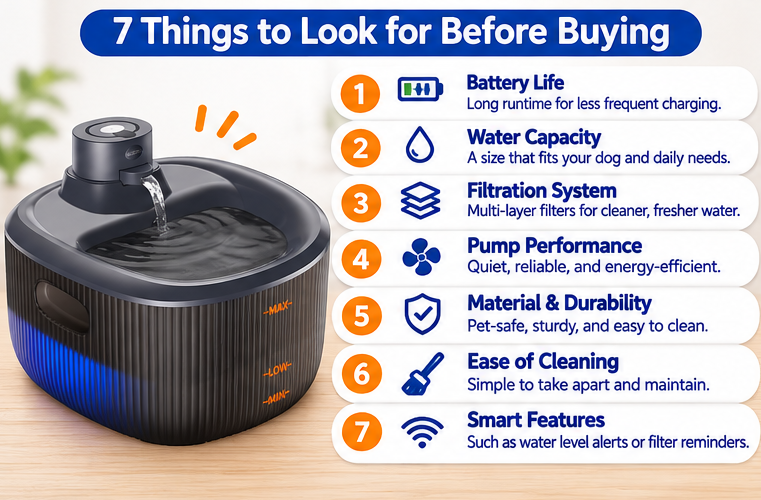
Both cordless and plug-in fountains can provide a useful drinking station.
The better choice depends on your priorities.
| Feature | Cordless Fountain | Plug-In Fountain |
|---|---|---|
| Power Source | Rechargeable battery | Electrical outlet |
| Placement | More flexible | Outlet-dependent |
| Charging | Required periodically | Usually unnecessary |
| Continuous Circulation | Model-dependent | Commonly available |
| Cable Exposure | No permanent cable during battery use | Power cable required |
| Power Outages | May operate if charged | Usually stops circulating |
| Maintenance | Cleaning and battery care | Cleaning and filter care |
| Best For | Flexible, cord-free locations | Fixed drinking locations |
You want more placement flexibility, prefer fewer exposed cables, and are comfortable maintaining a rechargeable battery.
You prefer a fixed drinking station with continuous electrical power and don't want to manage battery charging.
Neither option is universally superior.
A well-designed plug-in fountain may suit one household better, while a cordless fountain may be more practical for another.
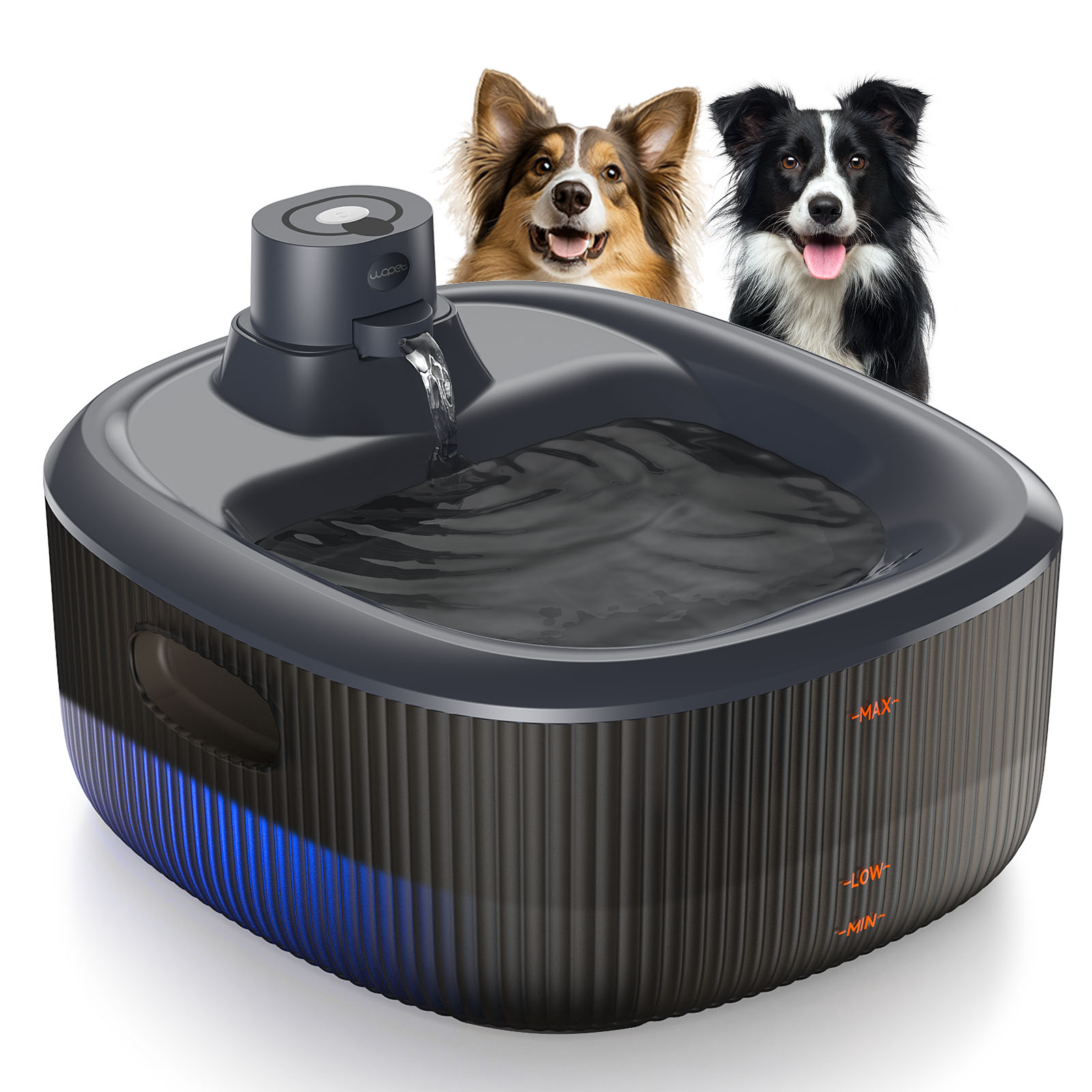
If you're exploring cordless drinking solutions, the WOPET W600 Pro Wireless Pet Water Fountain is one model worth considering.
Designed around a wireless drinking setup, the W600 Pro is relevant for pet owners who want greater flexibility in where they position their dog's water station.
Its basin-style design is also worth uating for households that prefer an accessible drinking surface.
Flexible Placement
A cordless setup allows more freedom when choosing a convenient drinking location.
Basin-Style Drinking Area
The drinking area is an important consideration for dogs that prefer an open water surface.
Everyday Convenience
A wireless fountain may fit naturally into homes where running a permanent power cable would be inconvenient.
Suitable for Comparison Shopping
The W600 Pro can be uated alongside other cordless models using the seven criteria discussed in this guide.
Before purchasing, confirm the current specifications for reservoir capacity, battery runtime, charging time, operating modes, cleaning requirements, and compatible replacement filters.
A product's suitability should be determined by its actual specifications and your dog's needs rather than marketing claims alone.
The purchase price is only one part of the total cost of ownership.
Over time, you may need to pay for:
Replacement filters
Compatible replacement components
Cleaning supplies
Battery replacement, if supported by the manufacturer
Electricity used for charging is generally another consideration, although the actual cost depends on battery capacity, charging efficiency, and local electricity rates.
Suppose a replacement filter costs $5 and requires replacement every four weeks.
Over 52 weeks:
52 ÷ 4 = 13 filter replacements
13 × $5 = $65 annually
This is an illustrative example, not a WOPET-specific filter price or replacement schedule.
The actual annual cost depends on the fountain's filter design and manufacturer recommendations.
Buying Tip: Compare the expected annual maintenance cost of different fountains before making your final decision.
Some fountains advertise wireless pump technology but still require a power cable.
Verify whether the entire unit operates on battery power.
A compact fountain may be suitable for a small dog but inconvenient for a large breed.
Check both water capacity and basin dimensions.
A complicated design may be harder to maintain than expected.
Review the cleaning instructions before purchasing.
Battery runtime often depends on operating mode and usage.
Compare realistic operating conditions rather than headline figures.
A fountain becomes less convenient if compatible filters are difficult to obtain.
Check long-term replacement options.
For many dog owners, a cordless fountain can be a practical upgrade.
Its main benefit is convenience: you can position the drinking station where your dog needs it without relying on a nearby electrical outlet.
A cordless design may also reduce cable clutter and provide more flexibility in apartments or shared living spaces.
However, it introduces the responsibility of charging the battery and monitoring its operation.
If you want continuous water circulation without thinking about charging, a plug-in fountain may be simpler.
If flexible placement is more important, a rechargeable fountain could be the better fit.
Ultimately, the best choice is the one that consistently provides accessible, fresh drinking water with a maintenance routine you can manage.
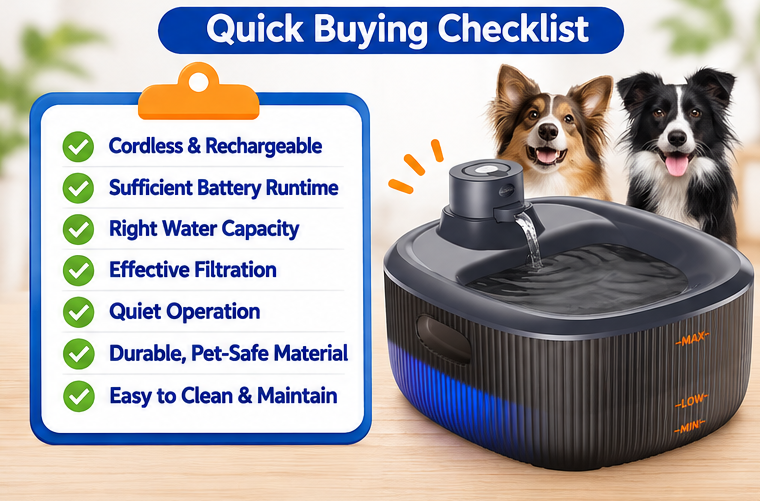
A properly designed cordless fountain can be a suitable drinking option when used according to the manufacturer's instructions. Choose a stable model, maintain the battery safely, and clean the drinking area regularly.
Battery runtime varies by model, battery capacity, and circulation mode. Check the manufacturer's stated runtime for your intended operating setting.
Some models support continuous circulation, while others use intermittent or sensor-based modes to conserve battery power. Check the product specifications before buying.
Yes, provided the fountain offers enough water capacity and a sufficiently accessible drinking area. A larger dog may need a wider basin and more frequent refilling.
Many models include filters, although filtration systems vary. Follow the manufacturer's instructions for replacement and maintenance.
That depends on the design. Some fountains retain accessible standing water when circulation stops, while others may not provide a suitable drinking surface. Check this feature before purchasing and keep a backup water bowl available.
Not necessarily. A clean water bowl can meet a dog's drinking needs. A cordless fountain adds circulation and placement flexibility, which may be useful for certain households.
Check the water level daily and refill as needed. Frequency depends on reservoir capacity, the number of pets, and their water consumption.
A cordless dog water fountain can make daily pet care more flexible, but choosing the right model requires looking beyond its wireless design.
Before buying, uate battery life, reservoir capacity, filtration, noise, cleaning convenience, safety, and placement options.
For dog owners who value cord-free placement, the WOPET W600 Pro is one option to explore.
The most important goal is simple: choose a drinking station that makes fresh water easy for your dog to access and easy for you to maintain.
Label:
Popular Post

The Ultimate Guide to Tabby Cats: Patterns, Personalities, and More
Mar 27, 2025

Top 8 Reasons Why Does My Cat Sleep Between My Legs?
Mar 03, 2025

What to Do If My Dog's Poop Is Black But Not Tarry
Feb 04, 2023

Superfecundation Cats: When Kittens in One Litter Have Different Fathers
Jul 11, 2025
How Long Does Dry Cat Food Last Once Opened? A Comprehensive Guide
Mar 19, 2025
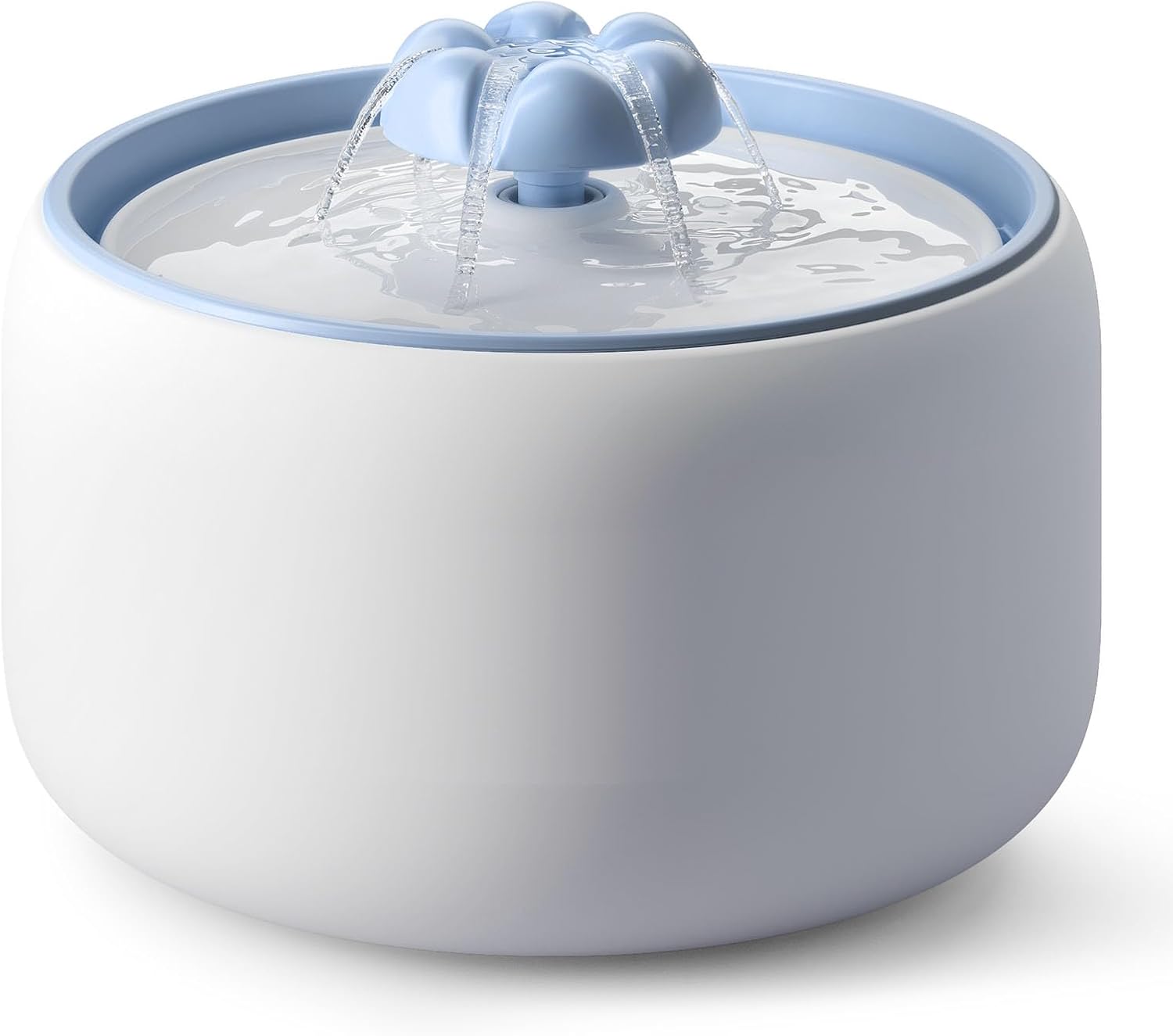
[Blue] W03L 3L Premium Ceramic Cat Water Fountain
Model: W03 LITE
$59.99
$69.99
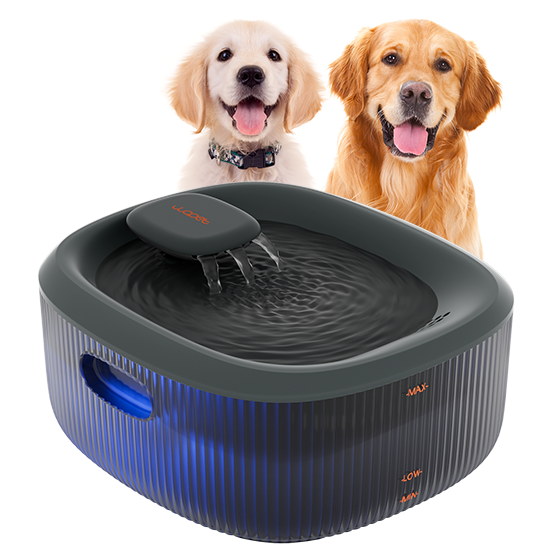
Basin Pet Water Fountain-W600
Model: W600
$43.99
$69.99
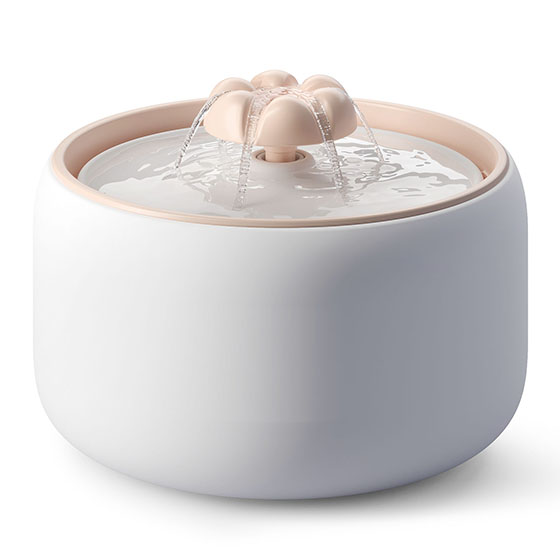
[Basic] Ceramic Pet Water Fountain with Power Cable
Model: W03L
$59.99
$99.00
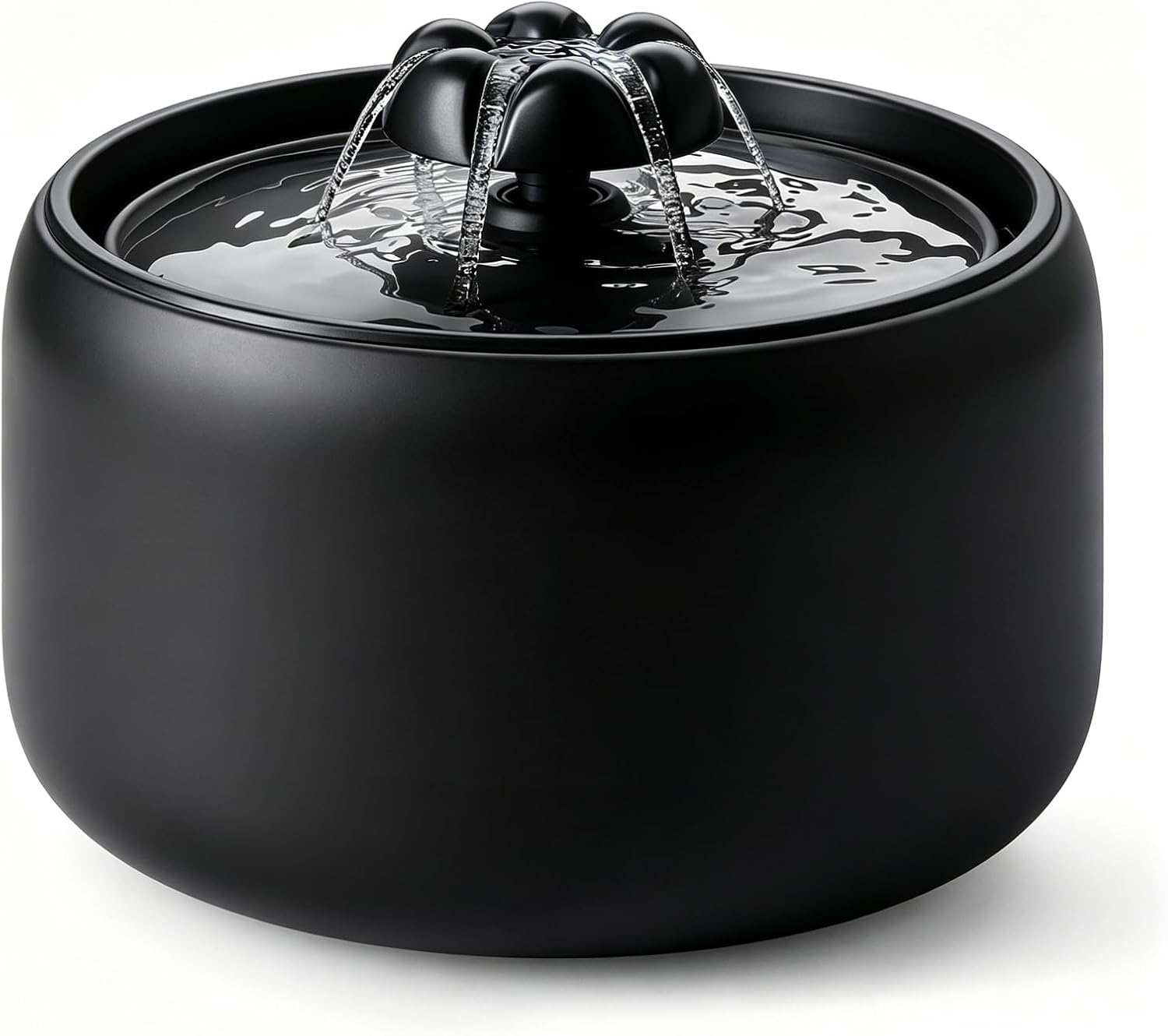
[Black] W03L 3L Premium Ceramic Cat Water Fountain
Model: W03L Black
$59.99
$69.99
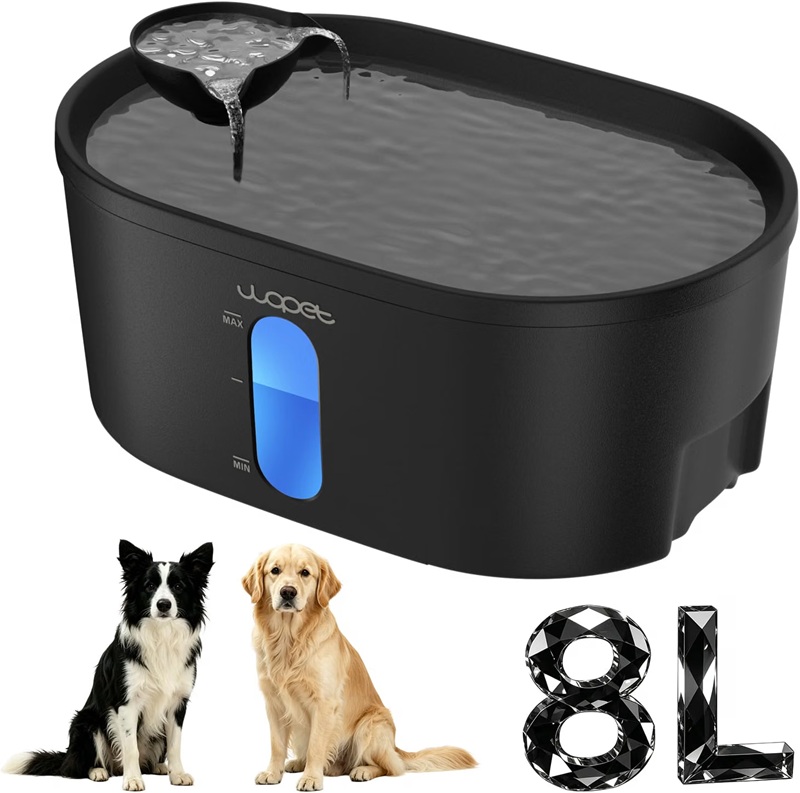
WOPET 8L Pet Water Fountain For Multiple Cats or Large Dogs A08
Model: A08
$49.99
$59.99
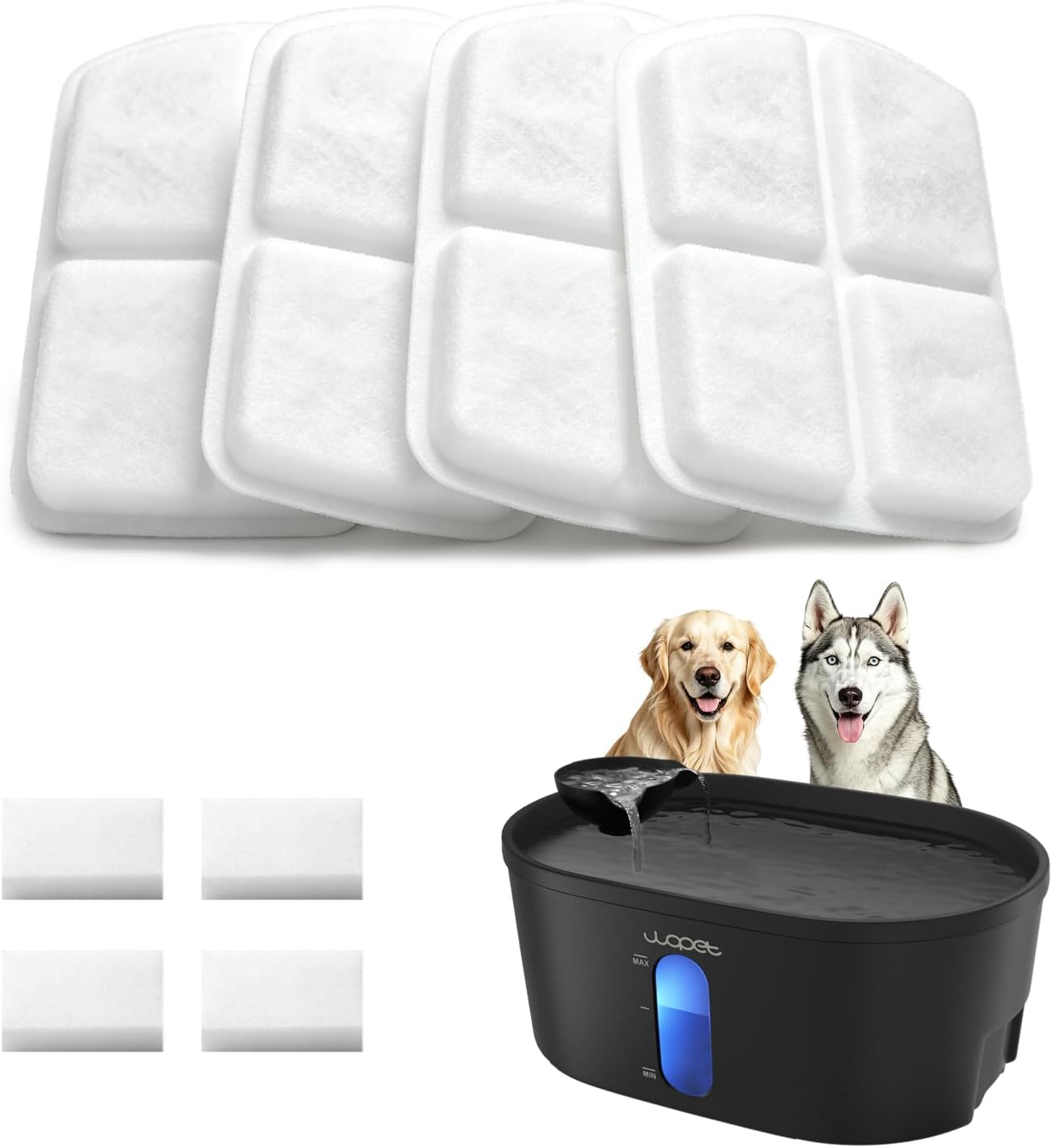
WOPET A08 Dog Water Fountain Filters
Model: A08 Filter
$19.99
$29.99

DOWNLOAD APP

WOpet life




Copyright © 2026 WOPET. All Rights Reserved.