Nov 03, 2026
Author:Lisa Martinez
If you've been shopping for a dog water fountain, you've probably noticed that many popular models are made from plastic. They're often lightweight, affordable, easy to move, and available in a variety of designs. But one question comes up frequently among pet owners: Are plastic dog water fountains safe for everyday use?
The short answer is yes. A well-made plastic dog water fountain can be suitable for daily use when it is manufactured from appropriate food-contact materials, cleaned regularly, and replaced when its surfaces become damaged.
However, not all plastic fountains are created equal. Material quality, scratches, cleaning habits, filtration, and overall design can all affect how hygienic and practical a fountain remains over time.
In this guide, we'll explore what makes a plastic dog water fountain safe, the potential risks to consider, and how plastic compares with stainless steel and ceramic alternatives. We'll also explain what to look for when choosing a fountain for your dog or multi-pet household.
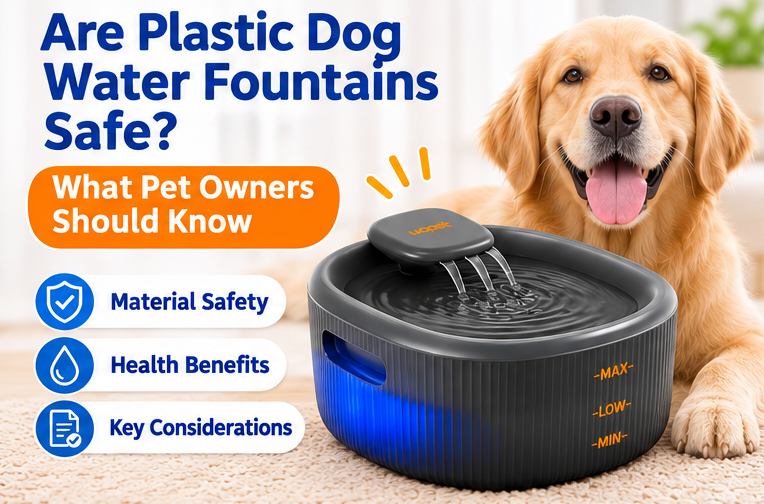
Plastic dog water fountains can be suitable for everyday drinking when they are made from materials intended for food or drinking-water contact and are maintained properly.
Plastic itself is not automatically unsafe. Many everyday food-storage containers, kitchen products, and pet accessories use plastics selected for their intended applications.
What matters is the specific material, how the product is manufactured, its condition, and how it is used.
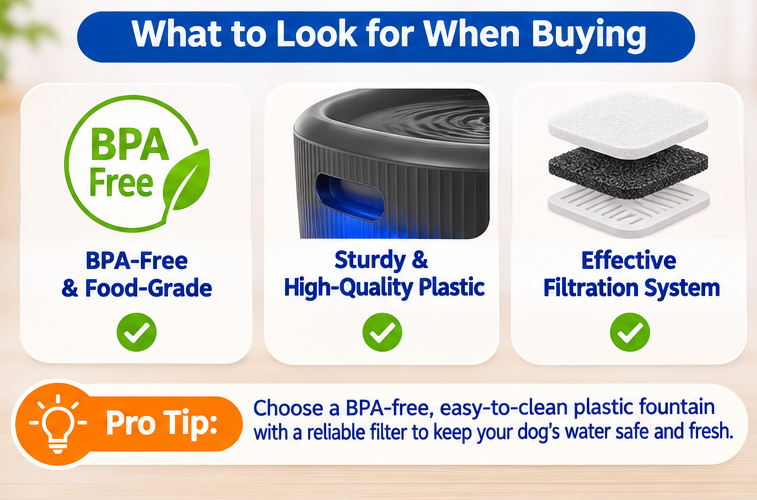
A good plastic water fountain should have:
Materials appropriate for contact with drinking water
Smooth, easy-to-clean drinking surfaces
A stable design that resists tipping
Accessible components for regular cleaning
A reliable water circulation system
Clear manufacturer instructions for maintenance
The most important factor is not simply whether a fountain is made of plastic, but whether it remains clean and in good condition during daily use.
For example, a regularly cleaned plastic fountain with smooth, undamaged surfaces may be more hygienic in practice than a stainless steel fountain that is rarely washed.
Key takeaway: Plastic can be a practical material for dog water fountains, but material quality and consistent maintenance are essential.
Several factors determine whether a plastic fountain is a suitable choice for your pet.
Look for manufacturers that clearly identify the materials used in the fountain.
Common plastics used in food-contact products include certain grades of polypropylene (PP), polyethylene (PE), and acrylonitrile butadiene styrene (ABS).
However, a plastic's name alone does not prove that a finished product is appropriate for drinking-water contact.
Suitability depends on the specific formulation, additives, manufacturing process, and intended conditions of use.
When uating a fountain, look for clear material information and relevant manufacturer documentation.
The condition of the fountain matters.
Scratches, cracks, and rough surfaces can create areas where residue and microorganisms are more difficult to remove.
A smooth plastic basin is generally easier to wash thoroughly than one with deep scratches or damaged seams.
Inspect your fountain regularly and replace components that can no longer be cleaned effectively.
A fountain with complicated internal channels or inaccessible corners may require more effort to maintain.
Choose a design that allows you to remove the drinking basin, access water-contact surfaces, and clean the circulation system according to the manufacturer's instructions.
Water circulation can help keep water moving and may appeal to dogs that prefer flowing water.
However, circulating water is not automatically free from bacteria.
Even a fountain with a filtration system requires regular cleaning and fresh water.
One of the most common selling points for plastic pet water fountains is the label BPA-Free.
But what does that actually mean?
BPA, or bisphenol A, is a chemical used in the manufacture of certain plastics and resins.
A product labeled BPA-free is represented as being made without BPA, but that label does not automatically establish that the entire product is free from all potentially concerning substances.
Choosing a fountain with clearly documented food-contact materials can be a reasonable precaution.
However, BPA-free should not be treated as a complete safety certification.
Other considerations include:
The full material formulation
Manufacturing quality
Intended contact with drinking water
Resistance to wear and damage
Proper cleaning and use
The U.S. Food and Drug Administration provides information about BPA in food-contact applications, but conclusions about specific human food-contact uses should not automatically be interpreted as proof of safety for every pet product.
Buying tip: Look beyond the BPA-free label and choose a manufacturer that provides transparent material information and care instructions.
Although plastic fountains can be practical, there are several potential disadvantages worth understanding.
Plastic can become scratched through repeated use, cleaning, or contact with abrasive materials.
Over time, these scratches may make surfaces more difficult to clean thoroughly.
To reduce wear:
Use cleaning tools recommended by the manufacturer.
Avoid harsh abrasive scrubbers.
Inspect the basin for deep scratches.
Replace damaged components when necessary.
Biofilm is a layer of microorganisms and associated material that can develop on wet surfaces.
It may appear as a slippery coating inside a water bowl or fountain.
Biofilm is not unique to plastic. It can also develop on stainless steel, ceramic, and other surfaces.
Poor cleaning habits are a major concern regardless of material.
Regular washing and water replacement help reduce buildup.
Tap water may contain dissolved minerals that accumulate on fountain surfaces.
These deposits can appear as white or cloudy residue.
Mineral buildup may affect appearance and make certain areas more difficult to clean.
Use cleaning methods recommended for your fountain's materials and components.
Plastic components may deteriorate over time, particularly if exposed to inappropriate temperatures, harsh chemicals, or excessive sunlight.
Discoloration, cracking, deformation, or persistent odors may indicate that a component needs replacement.
The drinking basin is not the only part that requires attention.
Water channels, filters, and circulation components may also accumulate debris.
Follow the manufacturer's instructions for cleaning these parts.
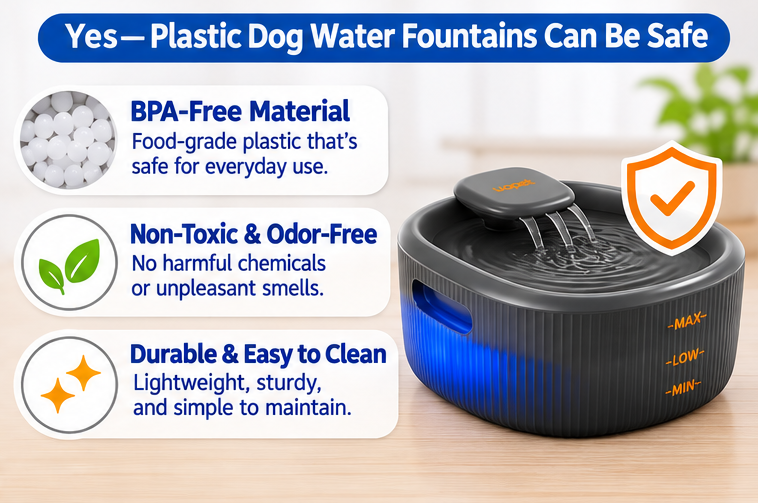
Plastic, stainless steel, and ceramic fountains each offer different advantages.
| Feature | Plastic | Stainless Steel | Ceramic |
|---|---|---|---|
| Weight | Usually lightweight | Moderate | Often heavy |
| Durability | Can scratch or crack | Generally durable | Can chip or break |
| Cleaning | Easy if smooth and accessible | Generally easy | Easy with intact glaze |
| Portability | Usually convenient | Moderate | Less convenient |
| Price | Often affordable | Varies | Often higher |
| Design options | Wide variety | Moderate | Wide variety |
| Maintenance | Regular cleaning | Regular cleaning | Regular cleaning |
Plastic is often a practical choice for owners who want a lightweight, portable, and affordable fountain.
It can be especially convenient in households where the drinking station needs to be moved for cleaning or rearranging furniture.
Stainless steel may appeal to owners who prioritize resistance to scratching and long-term durability.
However, stainless steel fountains still require regular washing and maintenance.
Ceramic fountains can provide a stable drinking station with a smooth glazed surface.
Their disadvantages may include greater weight and the possibility of chipping or breaking.
There is no universal winner.
A well-designed plastic fountain can be a suitable everyday option, while stainless steel or ceramic may better suit owners with different priorities.
Choose based on your dog's needs, the product's material quality, and how easily you can maintain it.
Plastic fountains can be suitable for large dogs, provided they offer enough water capacity, a comfortable drinking area, and stable construction.
Large dogs may drink substantial amounts of water throughout the day.
As a broad starting estimate, dogs may need approximately one fluid ounce of water per pound of body weight daily, although actual needs vary.
For example:
| Dog Weight | Approximate Daily Water Intake |
|---|---|
| 20 lbs | 600 mL |
| 40 lbs | 1.2 L |
| 60 lbs | 1.8 L |
| 80 lbs | 2.4 L |
These are general estimates rather than fixed requirements.
Diet, exercise, temperature, and health conditions can influence water intake.
When shopping for a large dog, consider both reservoir capacity and basin dimensions.
A fountain with a large reservoir but a narrow drinking opening may still be uncomfortable.
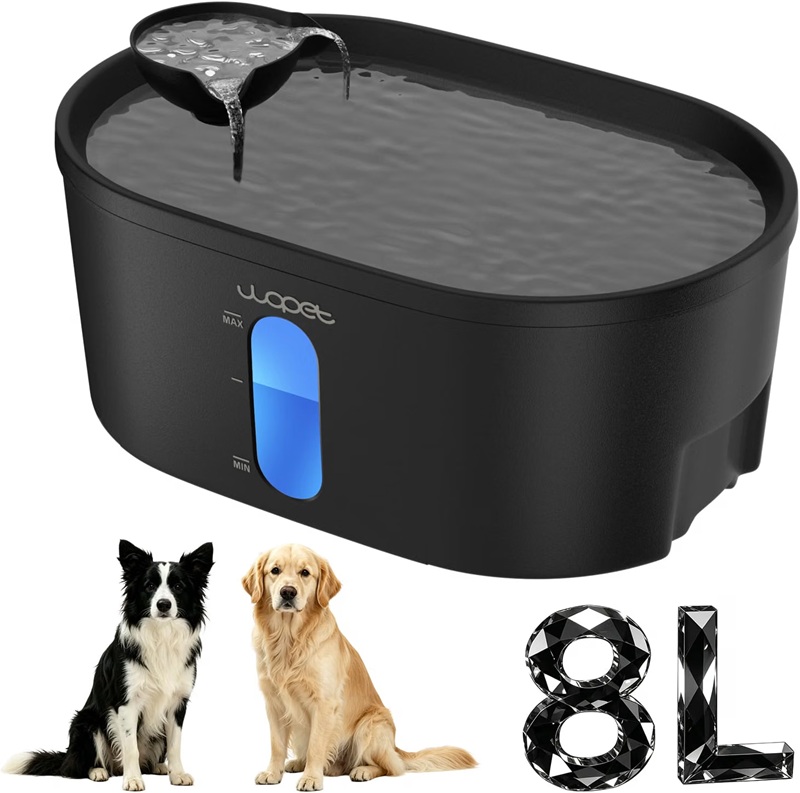
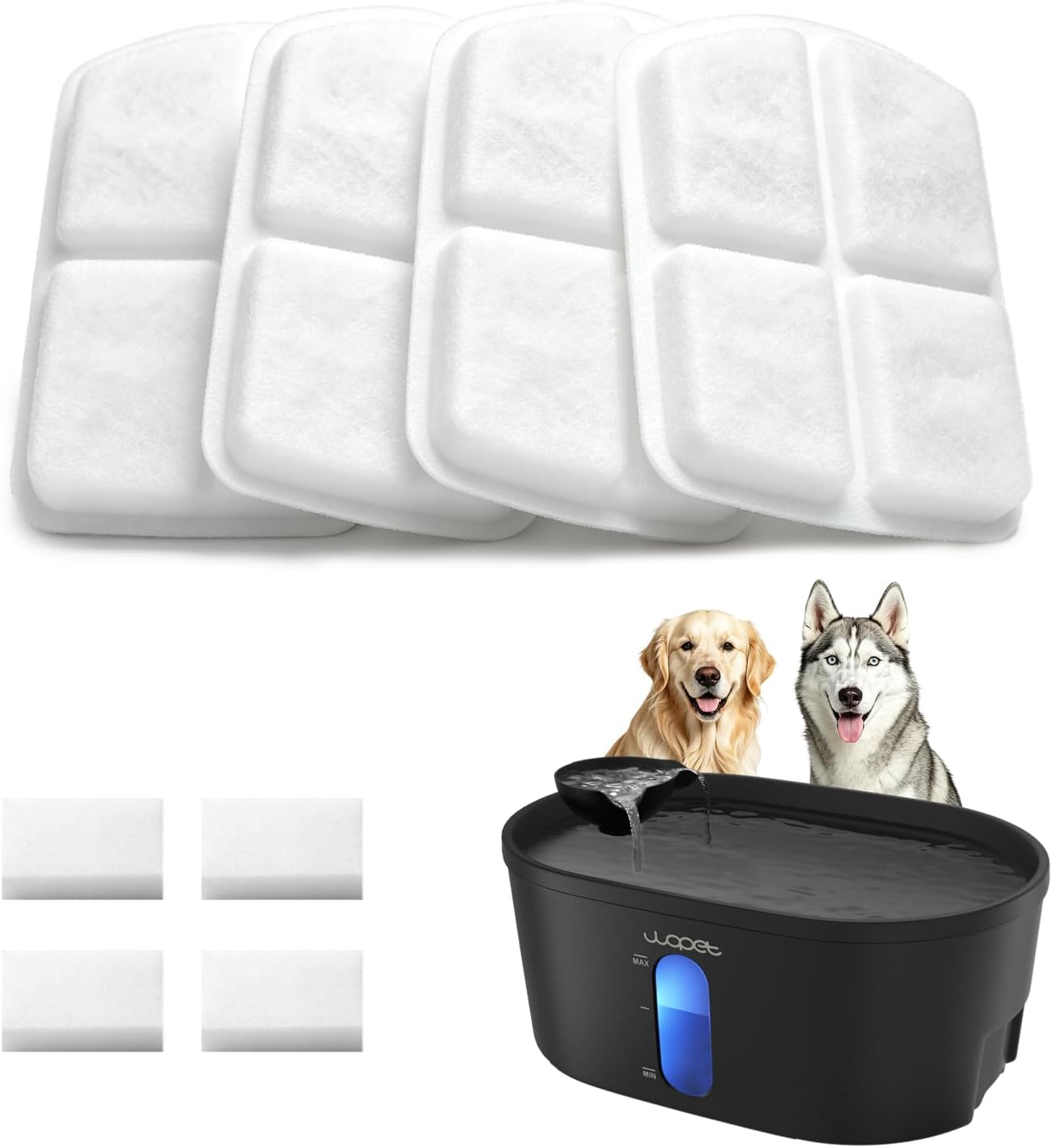
For pet owners looking for a plastic drinking fountain, the WOPET A08 is an option to consider.
The A08 is positioned for dogs and multi-cat households, making it relevant to homes where more than one pet may use the same drinking station.
Designed for Multi-Pet Households
The A08 is intended for dogs and households with multiple cats, where drinking-area accessibility and water capacity are important considerations.
Practical Plastic Construction
Plastic construction can make a fountain easier to move and handle during routine cleaning compared with heavier materials.
Everyday Drinking Convenience
A dedicated water fountain provides an additional drinking station for pets that may prefer circulating water.
A Useful Alternative to Metal or Ceramic
For owners who prefer a lightweight fountain, a plastic model such as the A08 may offer a practical option.
Before purchasing, check the current product specifications for material composition, reservoir capacity, dimensions, filtration, and cleaning requirements.
The best fountain is one that comfortably accommodates your pets and is easy to maintain.
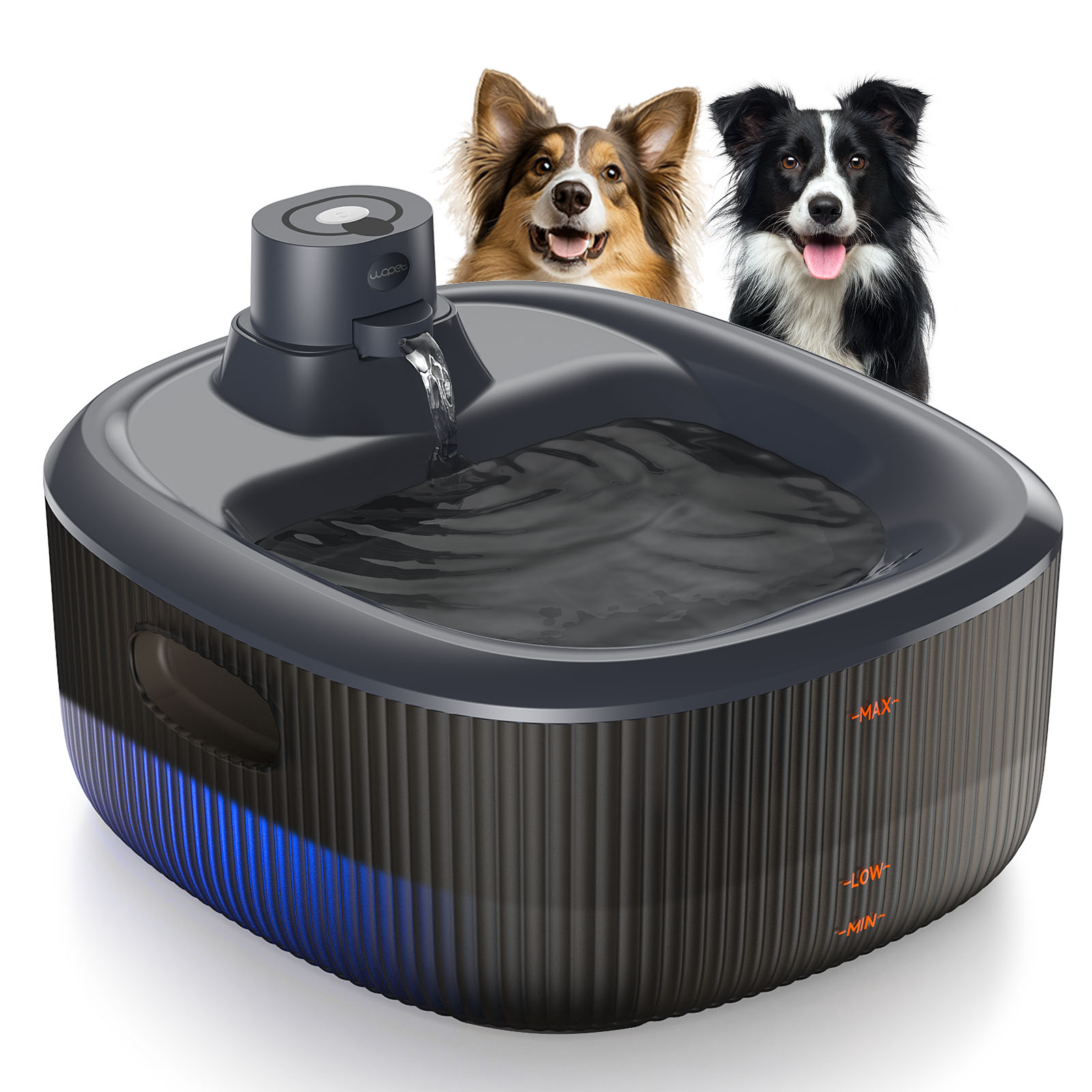
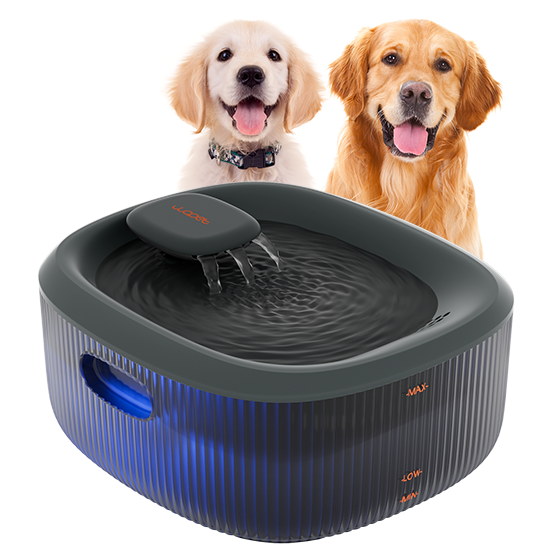
The WOPET W600 Pro is another option for owners comparing plastic pet water fountains.
Its wireless design makes it relevant to households looking for more flexibility in fountain placement.
For example, a cordless drinking station can be convenient in a living room or feeding area without a nearby electrical outlet.
Placement Flexibility
A battery-powered design can allow greater freedom when choosing where to position the fountain.
Drinking Area
Evaluate whether the basin provides enough room for your dog's muzzle and drinking habits.
Maintenance
Review the cleaning process, filter replacement requirements, and availability of compatible parts.
Battery Performance
Confirm the manufacturer's stated runtime and charging requirements for the operating mode you intend to use.
The W600 Pro may be worth considering if flexible placement is an important part of your buying decision.
However, material safety and cleaning requirements should be uated separately from wireless convenience.
Regular cleaning is essential for maintaining a hygienic drinking station.
Check the water level every day and provide fresh drinking water.
Remove visible debris, hair, or food particles.
Follow the manufacturer's instructions for removing the basin, reservoir, filter, and circulation components.
Disconnect the power supply or follow battery safety procedures before cleaning.
Use a mild cleaning product appropriate for the fountain's materials.
Clean corners, seams, and other areas where residue may accumulate.
Avoid abrasive tools that could scratch plastic surfaces.
Inspect the water circulation mechanism for hair, debris, and mineral deposits.
Follow the product manual for safe cleaning procedures.
Remove cleaning-product residue before refilling the fountain.
Follow the manufacturer's replacement schedule.
A clogged or worn filter may reduce water flow or filtration performance.
Reassemble the fountain correctly, refill it with clean drinking water, and confirm that the circulation system operates as expected.
Maintenance tip: Clean more frequently if multiple pets share the fountain, if water becomes visibly dirty, or if slippery residue develops.
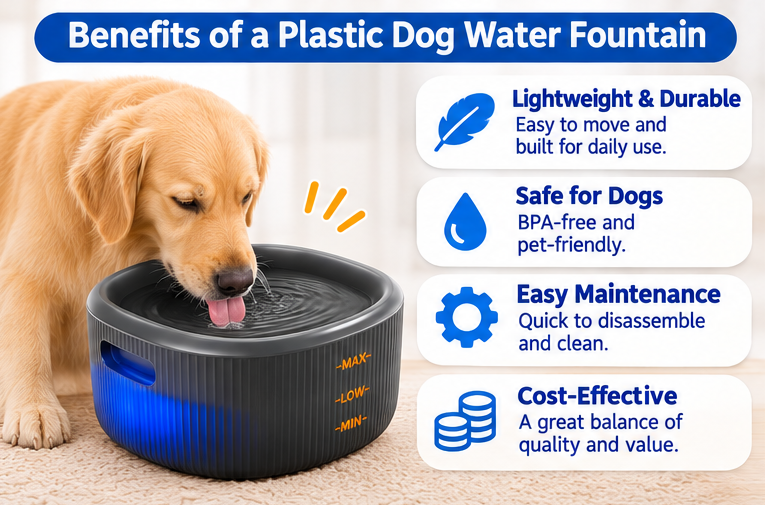
There is no universal replacement interval for every plastic fountain.
The useful life of a fountain depends on material quality, cleaning habits, environmental conditions, and wear.
Consider replacing the fountain or affected components if you notice:
Deep scratches that are difficult to clean
Cracks or leaking seams
Persistent odors after thorough washing
Deformation or visible material deterioration
Damaged electrical or circulation components
Surfaces that remain rough or difficult to sanitize
A fountain that remains structurally sound and can be cleaned properly may continue to serve its intended purpose.
However, damaged components should not be ignored simply because the fountain still operates.
Before purchasing, use this checklist to compare products.
Does the manufacturer provide clear information about the materials used in water-contact components?
Does the fountain hold enough water for your dog's size and drinking habits?
Can your dog drink comfortably without awkward positioning?
Can the reservoir, basin, and circulation components be cleaned thoroughly?
Are compatible replacement filters easy to obtain?
Is the fountain designed to resist tipping during normal use?
Are replacement parts, user manuals, and maintenance instructions available?
A fountain that performs well across these areas is generally a more practical choice than one selected solely for appearance or price.
Plastic fountains are not inherently toxic. Safety depends on the specific materials, manufacturing quality, and intended use. Choose products with appropriate food-contact materials and clear manufacturer information.
BPA-free labeling addresses the presence of BPA but does not guarantee overall product safety. Material quality, manufacturing, cleaning, and product condition also matter.
Yes. Bacteria and biofilm can develop on wet surfaces, including plastic, stainless steel, and ceramic. Regular cleaning and fresh water are essential.
Not necessarily in every situation. Stainless steel is generally resistant to scratching, but both materials can be suitable when properly manufactured and maintained.
Refresh the water daily and clean the fountain regularly according to the manufacturer's instructions. Increase cleaning frequency when multiple pets share the fountain or visible residue develops.
Some dogs may develop skin irritation around the muzzle or chin, and contaminated or damaged drinking surfaces can be a contributing concern. However, irritation has multiple possible causes and should not automatically be attributed to plastic. Consult a veterinarian if symptoms persist.
Yes, if the fountain provides sufficient reservoir capacity, an accessible drinking basin, and stable construction.
Many models include filters, but filtration systems vary. Filters help capture certain particles and must be maintained or replaced according to the manufacturer's instructions.
Only if the manufacturer specifically identifies the relevant components as dishwasher-safe. Heat can damage some plastics and electrical parts must not be washed in a dishwasher.
Look for cracks, deep scratches, persistent odors, deformation, leaking seams, or damaged components. Replace parts that cannot be cleaned effectively or used safely.
Yes, a well-made plastic dog water fountain can be suitable for everyday use when it is made from appropriate materials and maintained properly.
Plastic offers several practical advantages, including lightweight construction, convenient handling, and a wide variety of designs.
However, the material alone does not determine whether a fountain is hygienic or safe.
Regular cleaning, appropriate filtration maintenance, smooth undamaged surfaces, and reliable access to fresh drinking water are all essential.
For dog owners and multi-cat households, the WOPET A08 is one plastic fountain option worth exploring. For those interested in cordless placement flexibility, the WOPET W600 Pro provides another model to compare.
Ultimately, the best dog water fountain is not necessarily the most expensive or the one made from a particular material.
It's the fountain that fits your pet's needs, is easy to maintain, and helps you provide fresh drinking water every day.
Label:
Popular Post

The Ultimate Guide to Tabby Cats: Patterns, Personalities, and More
Mar 27, 2025

Top 8 Reasons Why Does My Cat Sleep Between My Legs?
Mar 03, 2025

What to Do If My Dog's Poop Is Black But Not Tarry
Feb 04, 2023

Superfecundation Cats: When Kittens in One Litter Have Different Fathers
Jul 11, 2025
How Long Does Dry Cat Food Last Once Opened? A Comprehensive Guide
Mar 19, 2025
[Blue] W03L 3L Premium Ceramic Cat Water Fountain
Model: W03 LITE
$59.99
$69.99
Basin Pet Water Fountain-W600
Model: W600
$43.99
$69.99
[Basic] Ceramic Pet Water Fountain with Power Cable
Model: W03L
$59.99
$99.00
[Black] W03L 3L Premium Ceramic Cat Water Fountain
Model: W03L Black
$59.99
$69.99

WOPET 8L Pet Water Fountain For Multiple Cats or Large Dogs A08
Model: A08
$49.99
$59.99
WOPET A08 Dog Water Fountain Filters
Model: A08 Filter
$19.99
$29.99

DOWNLOAD APP

WOpet life




Copyright © 2026 WOPET. All Rights Reserved.