Aug 28, 2026
Author:Lisa Martinez
Quick Answer
A single-bowl automatic cat feeder is usually better for one cat, different diets, or individual intake tracking. A dual-bowl automatic cat feeder can simplify mealtime for two compatible cats that eat the same food on the same schedule. However, two bowls do not guarantee that each cat eats an equal amount, and they do not stop one cat from moving to the other bowl.
Choose based on diet, portion needs, eating speed, comfort around food, available space, and the amount of supervision your cats need.
What Is the Difference Between a Single-Bowl and Dual-Bowl Feeder?
Both designs use a hopper and dispensing mechanism to release dry food at scheduled times. The difference is what happens after the food leaves the dispenser.
• A single-bowl feeder sends food into one bowl for one feeding position.
• A dual-bowl feeder uses a splitter or dual tray to direct food toward two feeding positions.
Some dual-bowl models are designed to divide one dispensed meal between two bowls. They do not necessarily create two independently measured meals. Unless a product specifically says otherwise, assume that both bowls receive food from the same hopper, use the same schedule, and contain the same type of kibble.
Single-Bowl vs Dual-Bowl Feeder Comparison
|
Factor |
Single-Bowl Feeder |
Dual-Bowl Feeder |
|
Best for |
One pet, or one dedicated feeder per pet |
Two compatible pets on the same food and schedule |
|
Portion tracking |
Easier to associate food with one pet |
Harder to know how much each pet actually ate |
|
Different diets |
Suitable when each pet has a dedicated feeder |
Usually unsuitable when both bowls share one hopper |
|
Food competition |
Allows wider separation between feeding stations |
May increase competition if bowls are close together |
|
Floor space |
More compact |
Requires more width around the feeder |
|
Cleaning |
Fewer food-contact parts |
More bowls and a splitter or tray to clean |
|
Supervision |
Straightforward for one pet |
Helpful during the adjustment period |
|
Convenience |
Simple setup |
Can feed two pets at the same scheduled time |
When Is a Single-Bowl Automatic Feeder Better?
You Have One Pet
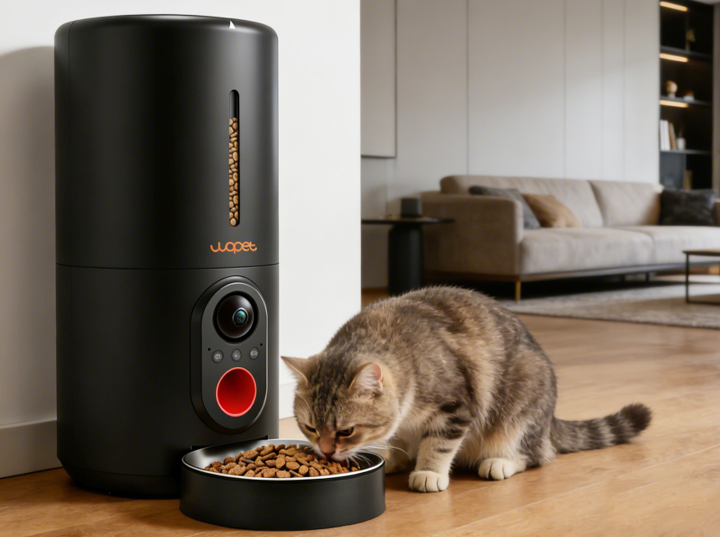
For a one-pet household, a single bowl is usually the simplest option. It takes up less floor space, has fewer parts to wash, and makes it easier to compare the amount dispensed with the amount left behind.
That does not mean every single-bowl feeder is interchangeable. Capacity, minimum portion size, kibble compatibility, Wi-Fi requirements, power options, and cleaning access still matter.
Your Pets Eat Different Foods
Two pets may need different diets because of age, calorie needs, allergies, veterinary recommendations, or food preferences. A shared hopper cannot keep two foods separate. In that situation, two individual feeders placed apart from each other offer more control than one dual-bowl unit.
If a veterinarian has prescribed a diet, do not assume a shared bowl setup will prevent another pet from eating it. Feeding in separate rooms or using individually controlled access may be necessary.
You Need to Monitor Individual Intake
A single feeding position makes it easier to notice whether one cat left food behind. This can be especially useful when appetite changes need to be monitored.
Some smart automatic feeders can record when food was dispensed, but that record does not prove the intended cat ate the meal. A camera may provide additional context, but it does not replace hands-on observation or veterinary care when a cat's appetite changes suddenly.
One Pet Guards or Steals Food
Adding a second bowl next to the first does not automatically stop resource guarding or food theft. If one cat pushes the other away, a dual-bowl feeder may simply give the faster or more confident cat access to both bowls.
WOPET's guide on how to stop a cat from stealing food provides additional strategies. In more difficult cases, separate rooms and supervised meals are usually more reliable than placing two bowls side by side.
You Have Limited Floor Space
A single bowl works well in apartments, kitchens with narrow walkways, and compact feeding stations. Leave enough room for your pet to approach, turn, and eat without being trapped between a wall and another animal.
When Is a Dual-Bowl Automatic Feeder Better?
You Have Two Compatible Pets
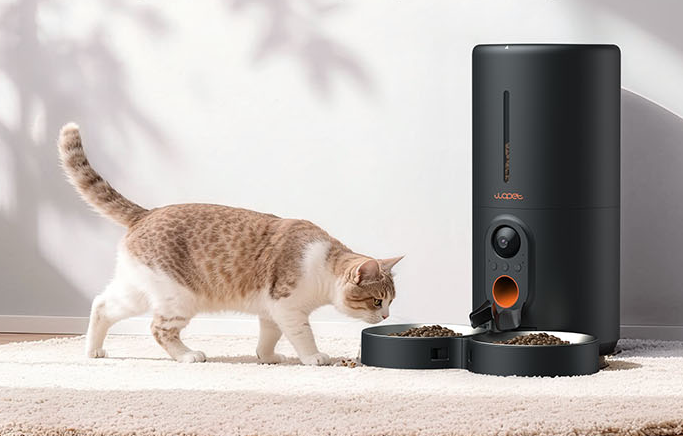
A dual-bowl feeder can simplify mealtime when both cats:
• Eat the same dry food
• Follow the same feeding schedule
• Need similar meal sizes
• Eat comfortably near each other
• Do not guard food or push each other away
This setup is most practical for two adult cats with established, calm mealtime behavior. The same general comparison can apply to dogs, but bowl size, food, portions, and species-specific nutrition still need to match each animal.
You Want One Schedule and One Hopper
A shared hopper means one device to refill and program, and both bowls stay on the same schedule. The tradeoff is less individual control. If one cat needs a schedule or diet change, separate feeders may be a better fit.
Both Pets Benefit From Smaller Scheduled Meals
The American Association of Feline Practitioners' feeding consensus statement explains that cats naturally tend to eat multiple small meals and may prefer to eat alone. An automatic feeder can help schedule smaller meals, but the physical arrangement should still respect each cat's comfort and normal feeding behavior.
Two bowls can provide separate eating positions, yet they may still be too close for cats that prefer distance. Observe body language instead of assuming that cats who live together also want to eat shoulder to shoulder.
Does a Dual-Bowl Feeder Divide Food Evenly?
A dual-bowl feeder is designed to direct food toward two bowls, but perfectly equal delivery should not be assumed.
Kibble shape, feeder angle, floor level, splitter position, and how full each bowl already is can influence distribution. After setup:
1. Place the feeder on a hard, level surface.
2. Confirm that the splitter is centered and fully attached.
3. Run at least 10 test dispensings.
4. Weigh the food collected in each bowl.
5. Adjust the setup if one side consistently receives more.
Even when the machine splits food evenly, one pet may finish quickly and move to the other bowl. Supervise early meals before relying on the arrangement while you are away.
Can Two Cats Share One Automatic Feeder?
Yes, but sharing works best when both cats have similar needs and relaxed mealtime behavior. WOPET's multi-cat feeding guide explains why different appetites, eating speeds, special diets, and food competition can complicate shared meals.
A dual-bowl feeder is a convenience tool, not an individualized feeding system. Use separate feeding stations when one cat needs a different diet, eats much faster, blocks the other cat, or shows an unexplained appetite or weight change.
If appetite or weight changes are a concern, ask your veterinarian to assess the pet and recommend an appropriate daily calorie target. The WSAVA Global Nutrition Guidelines emphasize that nutrition plans should be tailored to the individual animal.
How WOPET Single- and Dual-Bowl Options Compare
WOPET currently offers several configurations for different household needs.
|
WOPET feeder |
Bowl setup |
Current manufacturer-listed features |
Best fit |
Important limitation |
|
Single or dual |
6-liter hopper, app scheduling, paced feeding, anti-jam design, 2.4/5 GHz Wi-Fi |
Households choosing between one feeding position and a shared two-bowl setup |
The dual option still uses a shared hopper and schedule |
|
|
Dual |
6-liter hopper, scheduled feeding, adjustable camera view, feeding records and app notifications |
Two-cat households that want to check mealtime remotely |
The camera shows behavior but cannot prevent food swapping |
|
|
Dual |
Timer-based dry-food dispensing, 4-liter hopper, two stainless-steel bowls |
Households that prefer straightforward scheduled feeding |
Both bowls share the same food supply and schedule |
These features are manufacturer-reported and were not independently performance-tested for this article. Specifications, app functions, and availability can change, so confirm the current product page and the manual supplied with the feeder before buying.
How to Choose the Right Bowl Setup
Ask these five questions before buying:
1. Do your cats eat the same food and similar portions? If not, use separate feeding systems. A splitter cannot separate two diets stored in one hopper.
2. Do they eat at similar speeds? A fast eater may finish one bowl and move to the other.
3. Are they comfortable eating close together? Staring, blocking, swatting, leaving early, or waiting for the other cat to move can signal tension.
4. Do you need individual intake tracking? A single dedicated feeder makes leftovers easier to associate with one cat.
5. Which convenience features matter? Consider floor space, cleaning, app scheduling, feeding records, s, a camera, or simpler timer-based controls.
Dual-bowl systems add another bowl and may include a splitter that collects crumbs. Follow the manufacturer's cleaning instructions, and review WOPET's guide on how to clean an automatic pet feeder.
Setup Tips for a Two-Pet Feeding Station
• Start while you are home and able to supervise.
• Place the feeder on a stable, level, washable surface.
• Leave an open escape path so neither pet feels cornered.
• Test whether the splitter distributes kibble consistently.
• Watch which pet reaches the feeder first and who finishes each bowl.
• Clean bowls regularly and remove accumulated crumbs.
• Recheck portions whenever you change kibble because density and shape affect the amount dispensed.
• Weigh pets regularly and discuss unexplained changes with a veterinarian.
Common Mistakes to Avoid
• Assuming two bowls mean two controlled portions: Many models split one programmed serving rather than creating two independently measured meals.
• Using one hopper for different diets: Food mixes inside a shared hopper, so use separate feeders when diets differ.
• Missing subtle mealtime tension: A timid cat may wait, leave early, or stop approaching instead of fighting.
• Skipping the test period: Check scheduling, portion output, bowl distribution, s, and backup power before depending on the feeder while away.
• Treating the feeder as a pet sitter: Automatic feeding does not replace fresh water, litter-box care, exercise, medication, emergency planning, or daily human check-ins.
Frequently Asked Questions
Is a dual-bowl automatic feeder good for two cats?
It can be, provided both cats eat the same food on the same schedule and are comfortable eating close together. It is less suitable when one cat steals food, eats faster, or needs a different diet.
Does a dual-bowl feeder give each pet the same amount?
Not necessarily. A splitter may direct food toward both bowls, but kibble shape, alignment, and pet behavior affect the final amount each animal receives and eats. Test and weigh both sides.
Can I put different foods in a dual-bowl automatic feeder?
Not when both bowls are supplied by one shared hopper. Use separate feeders or another individually controlled system for different foods.
Is one dual-bowl feeder better than two single feeders?
It is more compact and easier to manage when pets have matching needs. Two single feeders provide more separation and individual control.
Will a dual-bowl feeder stop one cat from stealing food?
No. It creates two feeding positions but does not control which pet uses each bowl.
Can cats and dogs share a dual-bowl feeder?
Only if the model, kibble, portions, bowl size, and feeding behavior suit both animals. Different nutritional needs and eating speeds often make separate feeding a safer, more practical choice.
Final Verdict
Choose a single-bowl automatic feeder when individual control, compact size, dietary separation, or appetite monitoring matters most. Choose a dual-bowl automatic feeder when two compatible pets eat the same dry food at the same times and can share a feeding area without stress.
For many two-pet homes, the better question is not “one bowl or two?” but “can these pets safely share one feeding system?” Test the arrangement while you are home, confirm actual portions, and be prepared to use separate feeders if either pet is not getting the right meal.
|
Editorial note: WOPET product specifications were checked against current product pages on August 27, 2026. This article provides general feeding and equipment information and is not a substitute for individualized veterinary advice. |
Label:
Popular Post
The Ultimate Guide to Tabby Cats: Patterns, Personalities, and More
Mar 27, 2025
Top 10 Most Expensive Cat Breeds in The World
May 07, 2025
Can Cats Have Ice Cream? Dangers, Safe Flavors & Healthy Cat Treats
Sep 02, 2025
My Cat Only Eats A Little at A Time - What to Do?
Feb 27, 2023
Top 8 Reasons Why Does My Cat Sleep Between My Legs?
Mar 03, 2025
[Blue] W03L 3L Premium Ceramic Cat Water Fountain
Model: W03 LITE
$59.99
$69.99
Basin Pet Water Fountain-W600
Model: W600
$43.99
$69.99
[Basic] Ceramic Pet Water Fountain with Power Cable
Model: W03L
$59.99
$99.00
[Black] W03L 3L Premium Ceramic Cat Water Fountain
Model: W03L Black
$59.99
$69.99
WOPET 8L Pet Water Fountain For Multiple Cats or Large Dogs A08
Model: A08
$49.99
$59.99
WOPET A08 Dog Water Fountain Filters
Model: A08 Filter
$19.99
$29.99

DOWNLOAD APP

WOpet life




Copyright © 2026 WOPET. All Rights Reserved.