Oct 22, 2026
Author:Lisa Martinez
Quick answer: There is no single battery-life figure for every wireless cat fountain. Runtime depends on the exact model, operating mode, pump-on time, sensor activity, maintenance, and battery condition. Start with the manufacturer’s estimate for the mode you plan to use, then compare it with two or three charge cycles in your own home.
There is no honest single answer that applies to every rechargeable fountain. Two products can use batteries with similar capacity and still deliver very different runtime because their pumps, sensors, controllers, and duty cycles are different.
Battery Capacity Is Only the Starting Point
Battery capacity is commonly expressed in milliamp-hours, or mAh. In general, more capacity means more stored charge. But mAh alone cannot tell you how many days a fountain will run.
Runtime also depends on voltage and how much current the complete system draws. A fountain that powers the pump continuously has a much higher daily energy demand than one that runs for short periods. Indicator lights, sensor activity, and control electronics also use energy, even if their individual draw is small.
That is why the runtime listed for each operating mode is more useful than the mAh number by itself.
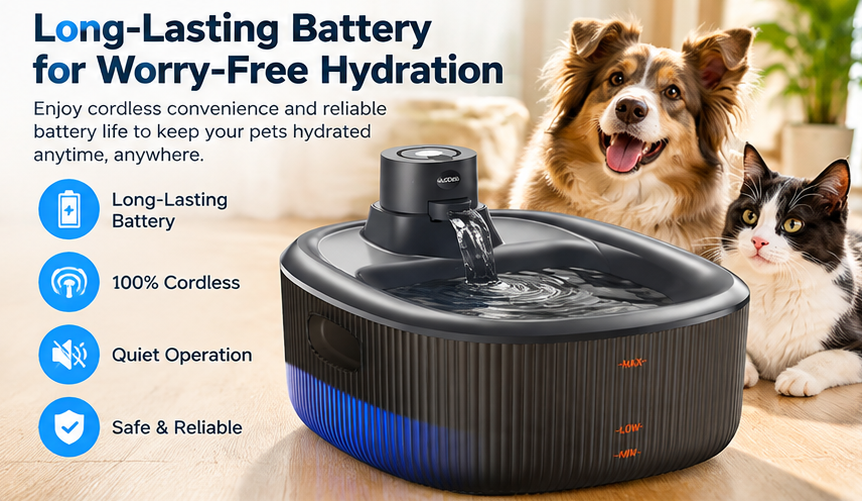
Which Operating Mode Uses the Most Battery?
Continuous mode
Continuous mode keeps the pump running. It provides steady movement, but it usually produces the shortest battery life because the motor consumes power around the clock.
Interval mode
Interval mode alternates between active flow and rest periods. If the pump runs for only part of each hour, average power use drops. The exact benefit depends on the timing programmed into that particular fountain.
Sensor mode
Sensor mode runs the pump when the fountain detects movement or proximity. It can extend runtime in a quiet, single-cat home, but results vary. A fountain in a busy hallway may activate for people and other pets. A multi-cat household may trigger it many times throughout the day.
An advertised “up to” figure often reflects the most energy-efficient mode under controlled conditions. It should not be read as a promise for continuous operation.
What Shortens Wireless Fountain Battery Life?
|
Factor |
Typical effect on runtime |
What to check |
|
Pump-on time |
More running time usually means faster battery use |
Continuous, interval, or sensor mode |
|
Sensor traffic |
Frequent activations can shorten the time between charges |
Doors, walkways, other pets, and feeding areas |
|
Pump cleanliness |
Hair, mineral buildup, and debris can restrict flow |
Intake, pump cover, and impeller |
|
Water level |
Low water can affect flow and increase noise |
Manufacturer’s fill range |
|
Battery age |
Usable capacity usually declines over time |
Changes across several charge cycles |
|
Temperature |
Excessive heat or cold can affect performance |
Indoor operating and storage limits |
|
Extra electronics |
Lights, displays, and connectivity use additional power |
Features active in the selected mode |
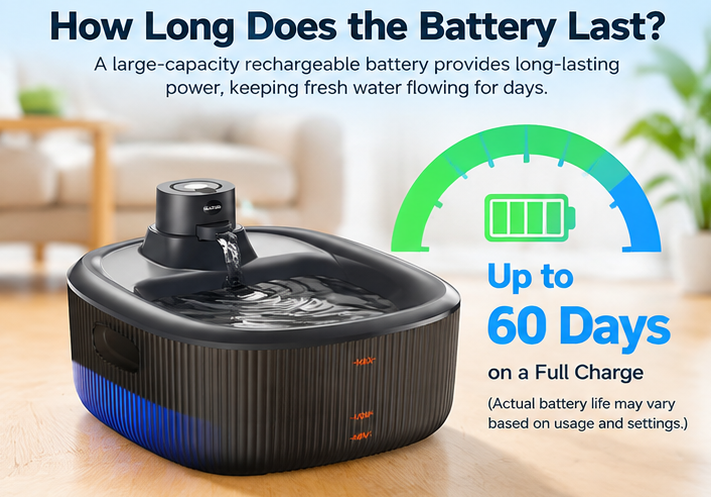
Buy WOpet W600 Pro Wireless Cat Water Fountain on Amazon
These factors do not affect every fountain equally. If flow becomes weak, check the water level, filter, and pump before assuming the battery is failing.
How to Interpret an Advertised Runtime
Before relying on a number, look for four details:
1. Mode: Was the estimate measured in continuous, interval, or sensor mode?
2. Test conditions: Does the manufacturer describe activation frequency or other assumptions?
3. Wording: “Up to 30 days” is a maximum under stated conditions, not a minimum.
4. Model: Do not transfer the runtime from one fountain to another, even within the same brand.
If those details are missing, treat the number as a comparison point rather than a household schedule.
A Simple Home Runtime Test
You can establish a more useful estimate in one week or one full charge cycle.
1. Fully charge the fountain according to the manual.
2. Record the date, time, operating mode, and starting indicator level.
3. Place the fountain where it will normally be used.
4. Refill and clean it as usual without changing modes.
5. Note when the low-battery indicator appears or performance stops.
6. Repeat once or twice to account for unusual days.
Then create a charging reminder before the shortest observed runtime. For example, if two cycles lasted 12 and 14 days, plan to charge before day 12 rather than building your routine around the longest result.
Our separate guide explains how often you should recharge a wireless cat fountain once you know its actual runtime.
How to Tell Low Battery From a Maintenance Problem
Battery and pump symptoms can overlap. Use this sequence:
|
Symptom |
First check |
Next check |
|
No flow |
Battery indicator and power switch |
Water level, assembly, pump blockage |
|
Weak flow |
Water level and filter placement |
Pump intake and impeller cleanliness |
|
Shorter runtime |
Mode and activation frequency |
Battery age, charging equipment, pump condition |
|
More noise |
Water level and pump seating |
Mineral buildup, trapped air, impeller debris |
Do not open a sealed battery enclosure or attempt a battery repair unless the manufacturer explicitly provides a user-serviceable procedure. Contact support if the unit becomes unusually hot, swells, leaks, smells odd, or shows damaged electrical parts.
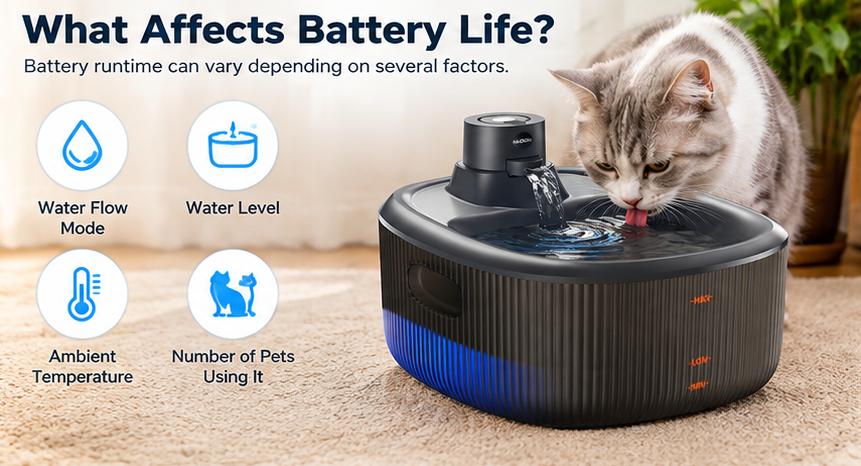
How to Extend Runtime Without Guesswork
You can often improve runtime without using risky shortcuts:
• Choose interval or sensor mode if it suits your cat.
• Position the sensor away from unnecessary foot traffic.
• Keep the pump and intake clean.
• Maintain the correct water level.
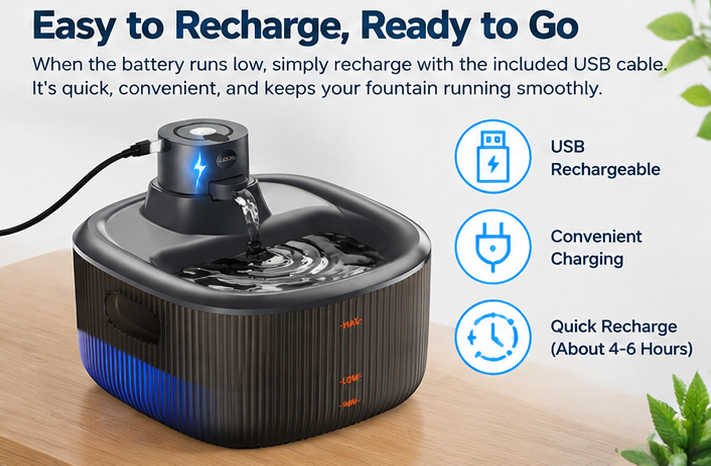
• Use the charging equipment approved for the fountain.
• Avoid storing the fountain in excessive heat.
• Charge before a long absence and make sure your cat has another water source.
Do not disable safety features or use an unapproved battery or charger.
UL Research Institutes recommends using batteries and chargers supplied or approved by the original manufacturer because mismatched or counterfeit components can increase safety risks. See its safe shopping guidance for lithium-ion products.
What Runtime Should You Compare Before Buying?
Rather than choosing the largest number on the page, ask whether the runtime matches how you will use the fountain.
• If you want continuous flow, find the estimate for continuous mode.
• If your cat is comfortable with intermittent flow, check interval timing.
• If you want sensor mode, consider how busy the placement area is.
• If you travel, prioritize a clear low-battery indicator and a reliable care plan—not just a long maximum runtime.
• Check whether replacement charging cables, filters, and support are available.
The broader rechargeable cat water fountain buying guide covers battery life alongside material, capacity, cleaning, noise, and placement.
You can also compare currently listed wireless and corded options in WOPET’s pet water fountain collection. Confirm the latest specification on the individual product page before purchase because models and published details can change.
Long Battery Life Does Not Replace Fresh Water
A long runtime does not mean the water can sit untouched for the same period. Check it daily, replace it regularly, and clean the fountain whenever you see buildup or reduced flow.
VCA Animal Hospitals recommends keeping a cat’s water source fresh and washing and rinsing bowls daily to help avoid buildup. A fountain’s reservoir, pump, channels, and filter create additional surfaces that also require attention. Review VCA’s tips for encouraging cats to drink.
Frequently Asked Questions
Does a 5,000mAh fountain always last 30 days?
No. Battery capacity does not equal a fixed number of days. Runtime depends on system voltage, pump draw, operating mode, sensor activations, and other electronics.
Why does my fountain battery drain faster than advertised?
Common reasons include continuous mode, frequent sensor activation, a dirty pump, extra powered features, battery aging, or test conditions that differ from your home.
Should I fully drain the battery before recharging?
Follow the manual for the specific fountain. Do not deliberately run a pet’s only water source until it stops merely to complete a battery cycle.
Does low battery make the pump weaker?
Some products may stop at a controlled cutoff, while others may show changing behavior. Weak flow can also come from low water, incorrect assembly, a clogged filter, or pump debris.
How long should a rechargeable fountain battery last before replacement?
There is no universal lifespan. Battery health depends on chemistry, cycle count, temperature, and charging conditions. Contact the manufacturer if capacity drops sharply or the battery shows physical changes.
What Battery Life Should You Expect?
Wireless cat fountain battery life is a range, not a universal promise. Start with the exact model’s mode-specific estimate, then measure performance where you actually use the fountain. Recharge before the shortest runtime you observed, keep the pump clean, and make sure a drained battery never leaves your cat without water.
Label:
Popular Post
The Ultimate Guide to Tabby Cats: Patterns, Personalities, and More
Mar 27, 2025
Top 10 Most Expensive Cat Breeds in The World
May 07, 2025
Can Cats Have Ice Cream? Dangers, Safe Flavors & Healthy Cat Treats
Sep 02, 2025

My Cat Only Eats A Little at A Time - What to Do?
Feb 27, 2023
Top 8 Reasons Why Does My Cat Sleep Between My Legs?
Mar 03, 2025
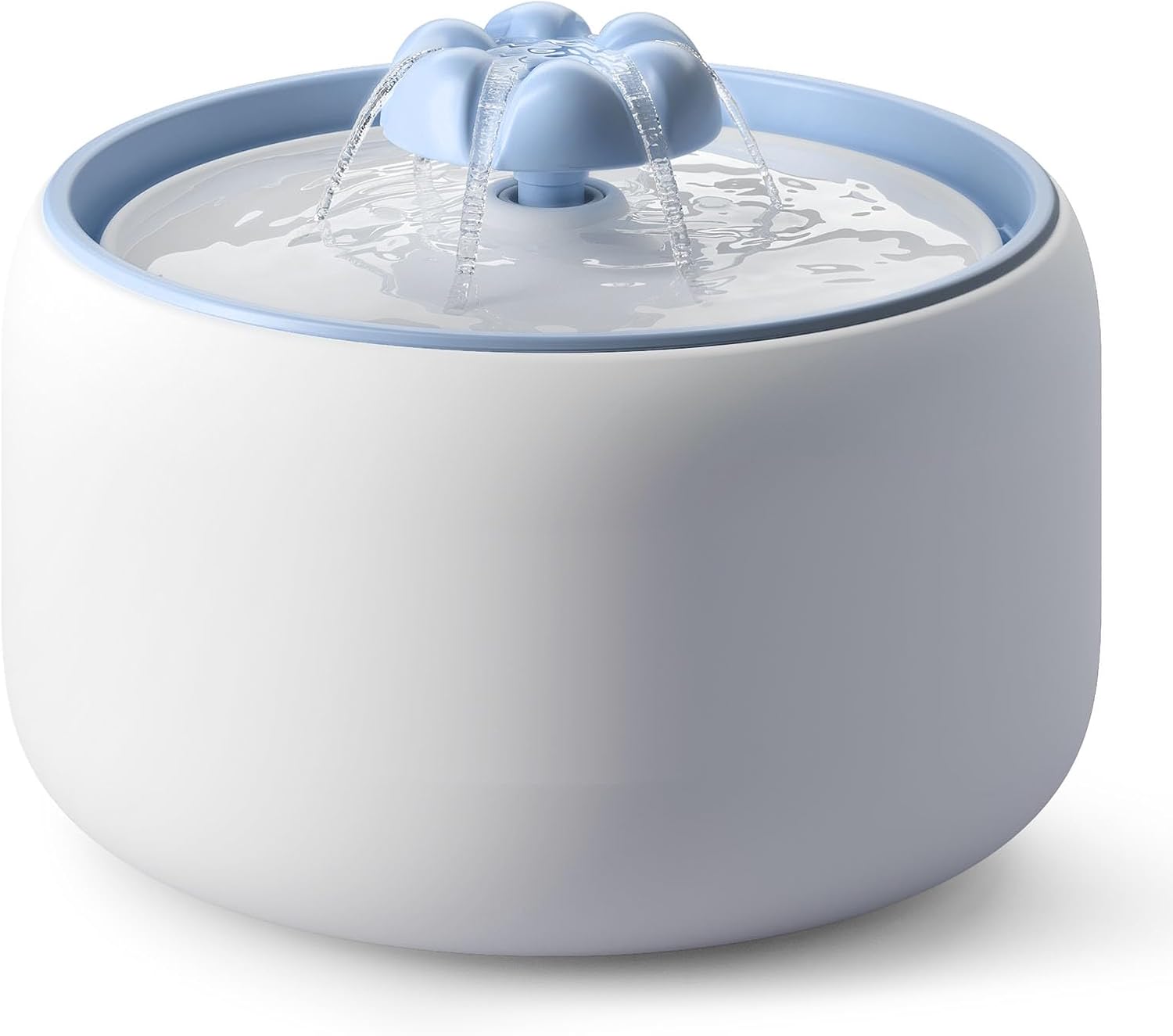
[Blue] W03L 3L Premium Ceramic Cat Water Fountain
Model: W03 LITE
$59.99
$69.99
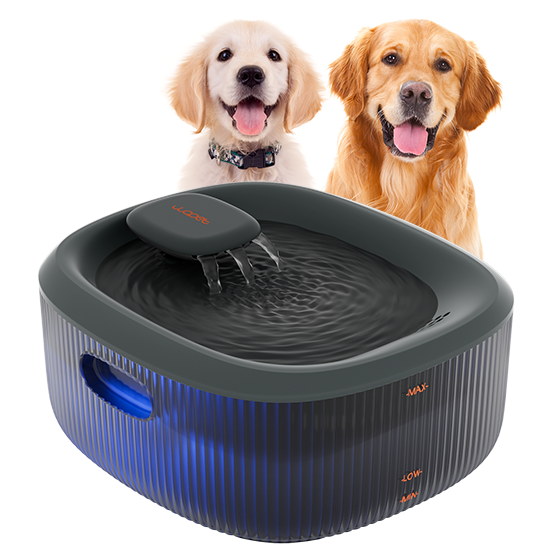
Basin Pet Water Fountain-W600
Model: W600
$43.99
$69.99
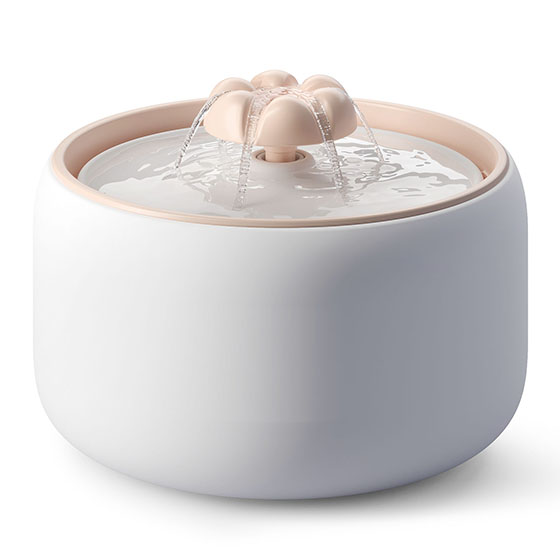
[Basic] Ceramic Pet Water Fountain with Power Cable
Model: W03L
$59.99
$99.00
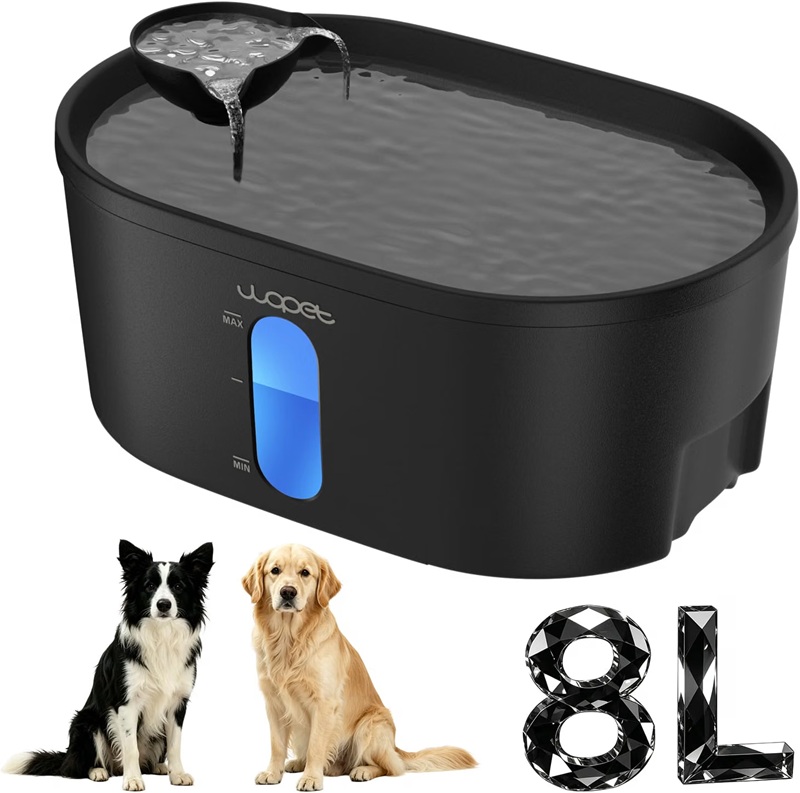
WOPET 8L Pet Water Fountain For Multiple Cats or Large Dogs A08
Model: A08
$49.99
$59.99
WOPET A08 Dog Water Fountain Filters
Model: A08 Filter
$19.99
$29.99
[WHITE] Heritage View 6L Cat Feeder Dual Bowls For Two Cats
Model: HV10DP-white
$114.99
$134.99

DOWNLOAD APP

WOpet life




Copyright © 2026 WOPET. All Rights Reserved.