Oct 21, 2026
Author:Amanda Lyu
Quick answer: There is no reliable universal lifespan for a cat water fountain pump. Low-water operation, hair, mineral buildup, restricted filters, poor assembly, and the pump’s own design all affect how long it works. Do not replace a pump by calendar alone. Clean and retest it first, then replace it if damage, unreliable startup, persistent noise, or weak flow remains.
An exact “one year” or “three years” answer may sound helpful, but it is not dependable across products and households. Pump design, duty cycle, water hardness, pet hair, cleaning frequency, and part quality vary too widely.
A warranty period is not a lifespan estimate. It describes the manufacturer’s coverage window and terms, not the date on which a working pump should be replaced. Likewise, the sale of a replacement pump shows that the component can be serviced; it does not predict how long the original will last.
The more useful question is: Is the pump dirty, incorrectly installed, temporarily stopped by a protective feature, or actually worn out?
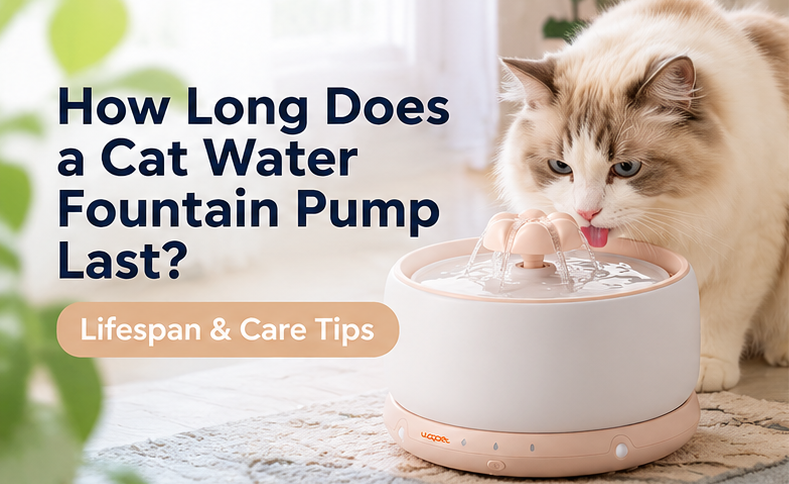
What Determines Pump Lifespan?
|
Factor |
Why it matters |
What the owner can do |
|
Water level |
Low water can reduce cooling and introduce air |
Check the reservoir daily and respect fill marks |
|
Hair and debris |
Material around the intake or impeller increases resistance |
Clean the pre-filter and pump regularly |
|
Mineral buildup |
Deposits can restrict moving parts and channels |
Inspect more often in hard-water areas; follow the manual |
|
Filter condition |
A clogged or incorrect filter may restrict flow |
Use the correct filter and replacement schedule |
|
Operating mode |
Continuous use creates a different duty cycle from interval use |
Use supported modes and realistic maintenance intervals |
|
Assembly |
Misaligned outlets, tubes, or contacts can interrupt flow |
Reassemble using the model-specific instructions |
|
Pump quality and age |
Components eventually wear |
Use approved replacement parts when performance does not recover |
The Pump’s Job—and Why Small Problems Matter
The pump draws water through an intake and pushes it toward the drinking surface. Inside many compact pumps, a small impeller spins in a chamber. Hair, filter fibers, slime, grit, or mineral scale around that chamber can reduce movement.
The pump may then show symptoms that resemble failure:
• a weaker stream;
• delayed startup;
• humming without normal flow;
• rattling or grinding;
• repeated stopping; or
• flow that returns briefly after the unit is moved.
These signs justify inspection, but they do not automatically mean the motor is dead. Cleaning and correct reassembly should come before replacement when there is no visible electrical or structural damage.
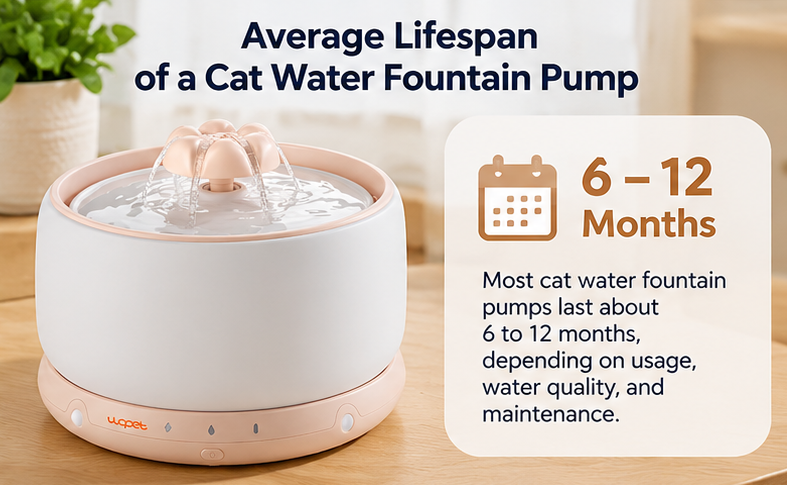
Seven Signs a Pump Needs Attention
1. Flow is weaker than usual
First check water level, filter seating, tubing, and the intake. A clogged filter or low reservoir can reduce flow even when the pump itself still works.
2. The pump becomes louder
A new rattle, buzz, or grinding sound can indicate trapped air, debris, low water, or a loose part. Turn the fountain off before disassembling it.
3. It starts only after tapping or repositioning
An impeller that repeatedly needs help may be obstructed or worn. Clean and test it according to the manual. If reliable startup does not return, replace the pump.
4. It stops and restarts unexpectedly
The cause may be a selected timer or sensor mode, low-water protection, a loose connection, depleted battery, or pump restriction. Diagnose the operating mode before blaming the pump. See why a cat water fountain keeps turning off for a step-by-step check.
5. Cleaning no longer restores flow
When the reservoir, filter, water path, pump cover, and impeller area are clean and correctly assembled but output stays weak, wear or internal damage becomes more likely.
6. The cord, housing, or connector is damaged
Stop using the pump. Do not patch a wet-environment electrical component with household tape or continue testing a cracked housing.
7. The pump shows heat, odor, or discoloration
Turn it off, disconnect power when applicable, and contact the manufacturer. Do not continue running a pump that shows a possible electrical fault.
How to Clean a Cat Fountain Pump Safely
Always follow the model’s instructions; construction varies. A general sequence is:
1. Switch off the fountain and disconnect it from power or charging.
2. Remove the pump from the reservoir as instructed.
3. Take off the pump cover and intake plate if the manual permits.
4. Remove the impeller only if it is designed to be removed.
5. Rinse away hair and loose debris.
6. Clean narrow areas with the recommended small brush or tool.
7. Address mineral deposits only with a method approved for that model.
8. Rinse every cleaned part thoroughly.
9. Reassemble the pump, filter, and outlet in the correct orientation.
10. Refill above the minimum line and test while present.
Never submerge a battery pack, charging base, plug, or other dry-only component unless the manual explicitly identifies it as washable. Keep electrical contacts dry before reconnecting power.
How Often Should You Clean the Pump?
Use the manufacturer’s schedule as the baseline, then shorten the interval when conditions demand it. The pump may need attention sooner when:
• several pets share the fountain;
• a long-haired pet sheds heavily;
• food crumbs often enter the water;
• the home has hard water;
• the flow weakens before the normal cleaning day; or
• biofilm becomes visible in hidden channels.
A monthly exterior wipe is not the same as opening the pump. Build pump care into the full-fountain cleaning routine so the most important moving part is not forgotten.
VCA Animal Hospitals recommends keeping a cat’s water source fresh and clean and washing and rinsing bowls daily. A fountain adds a pump and internal water path, so its visible drinking surface should not be the only part receiving routine care. See VCA’s cat hydration and water-source guidance.
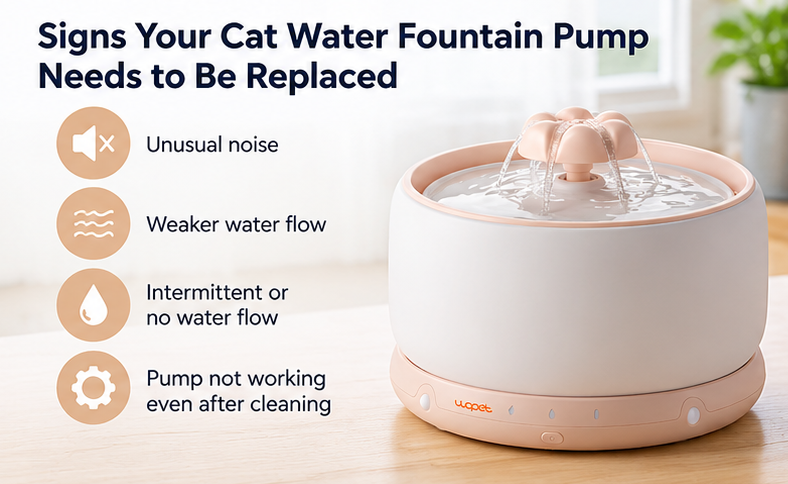
Buy WOPET W03 CERAMIC CAT FOUNTAIN ON AMAZON
When Cleaning Is Enough—and When to Replace
Clean and retest when:
• flow recently weakened;
• the pump sounds different but has no visible damage;
• hair or deposits are visible;
• the filter is overdue or incorrectly seated;
• the fountain was recently reassembled; or
• the water fell below the recommended level.
Replace or seek support when:
• the housing, cable, or connector is damaged;
• the pump fails to start after correct cleaning and assembly;
• flow remains abnormally weak with a clean path and adequate water;
• noise returns immediately after careful cleaning;
• the pump operates intermittently in a mode that should be steady; or
• the manufacturer directs replacement after troubleshooting.
Do not use a random replacement merely because it fits in the reservoir. Match the exact model, electrical specifications, connector, flow path, and physical fit.
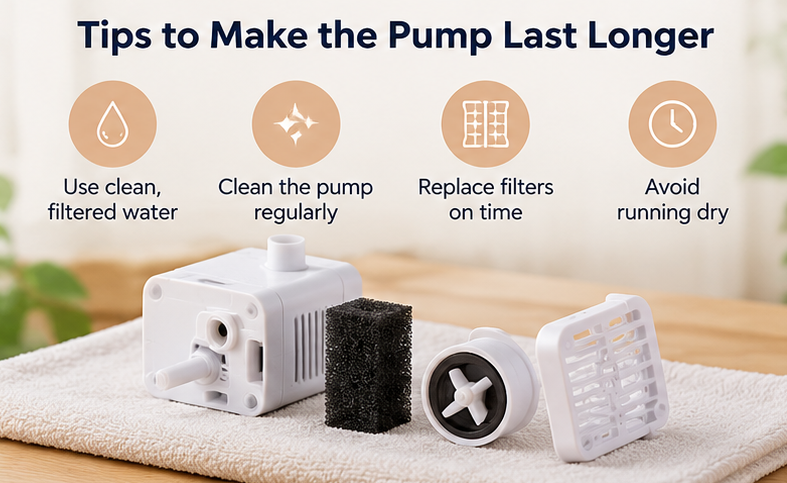
How to Extend the Pump’s Useful Life
Keep it submerged to the proper level
Check water daily. Do not rely only on reservoir capacity or an automatic shutoff.
Protect the intake
Install the correct pre-filter and main filter in the correct orientation. Rinse new filters as directed so loose material does not enter the pump.
Replace water instead of topping up forever
Adding water preserves the level but does not remove dissolved material, saliva, hair, or debris already in the system.
Clean before performance drops sharply
A short, regular maintenance session is easier on the pump than waiting until the impeller is heavily restricted.
Reassemble carefully
A clean pump cannot work correctly if its outlet does not align with the fountain entry. WOPET’s W03 troubleshooting page specifically recommends checking pump-to-fountain alignment, water level, connections, cleanliness, and filter condition when the pump does not work normally.
Use model-specific parts
Confirm compatibility rather than choosing by appearance. WOPET currently lists replacement pumps for its basin models and identifies exact model compatibility for fountain filters. Check the WOPET fountain collection and support resources for the current part path.
Does Continuous Operation Wear Out a Pump Faster?
A continuously running pump accumulates operating hours faster than one that runs intermittently, but lifespan still depends on design and conditions. Frequent starts, restricted flow, low water, and debris can also add stress. It is therefore inaccurate to say that one mode always produces a specific lifespan.
Use the mode the manufacturer supports and maintain the fountain for that duty cycle. If all-day water access is the goal, read can a wireless cat fountain run all day to separate continuous flow from continuous availability.
Does the Filter Protect the Pump?
It can help, especially when a pre-filter catches hair before it reaches the impeller. But an overdue, clogged, damaged, or incorrectly installed filter can also restrict the water path.
WOPET’s W03 replacement filters are listed for the W03 and W03 Lite, with instructions to rinse them before use and replace them on the model-specific schedule. That compatibility detail matters: a filter that looks similar may not seat or flow correctly.
Frequently Asked Questions
How many years should a cat fountain pump last?
There is no trustworthy universal number. Design, water conditions, duty cycle, low-water operation, debris, assembly, and maintenance all affect service life. Use performance symptoms and model-specific guidance rather than an arbitrary calendar date.
Can a clogged filter make the pump look broken?
Yes. Restricted flow can cause weak output or abnormal sound. Check the water level, filter, intake, impeller area, and assembly before concluding that the pump has failed.
Why is my fountain pump loud after cleaning?
It may contain trapped air, sit below the proper water level, be assembled incorrectly, or still contain debris. Switch it off and review the manual before testing again.
Can I replace a cat fountain pump with any small aquarium pump?
Not safely by assumption. The replacement must match electrical requirements, connector, dimensions, flow, and water-path alignment. Use the manufacturer-approved part when available.
Should I leave the pump running when the water is low?
No. Refill to the approved level. If the fountain has stopped through low-water protection, resolve the water level and follow the restart instructions.
Judge the Pump by Condition, Not a Guess
A cat fountain pump does not have one meaningful lifespan across every model and home. Clean water paths, correct water level, compatible filters, careful assembly, and early attention to sound or flow changes give it the best chance of lasting. When maintenance no longer restores dependable operation—or electrical or structural damage appears—stop using it and obtain the correct model-specific part or manufacturer support.
Label:
Popular Post
The Ultimate Guide to Tabby Cats: Patterns, Personalities, and More
Mar 27, 2025
Top 10 Most Expensive Cat Breeds in The World
May 07, 2025
Can Cats Have Ice Cream? Dangers, Safe Flavors & Healthy Cat Treats
Sep 02, 2025

My Cat Only Eats A Little at A Time - What to Do?
Feb 27, 2023
Top 8 Reasons Why Does My Cat Sleep Between My Legs?
Mar 03, 2025
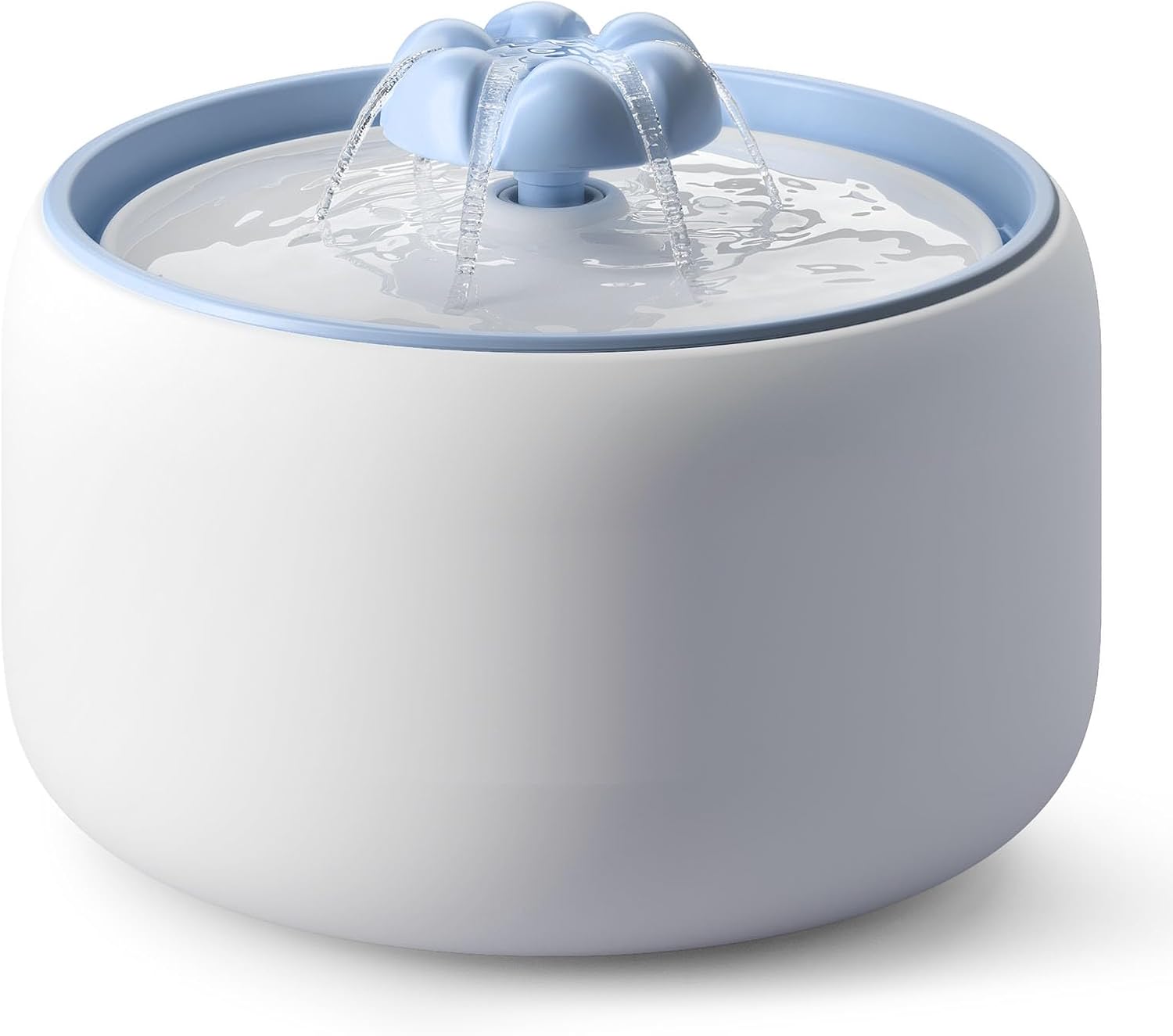
[Blue] W03L 3L Premium Ceramic Cat Water Fountain
Model: W03 LITE
$59.99
$69.99
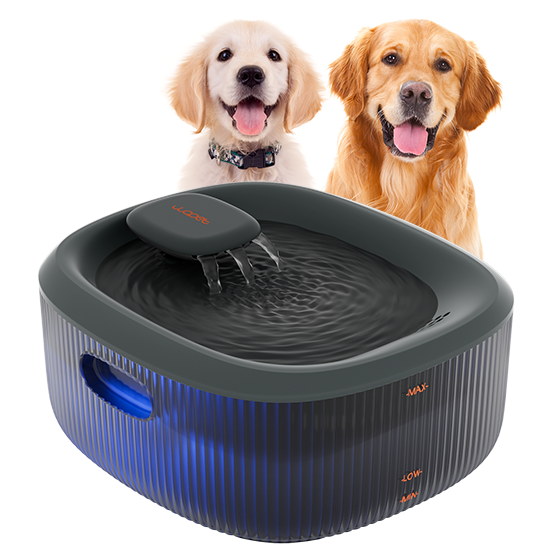
Basin Pet Water Fountain-W600
Model: W600
$43.99
$69.99
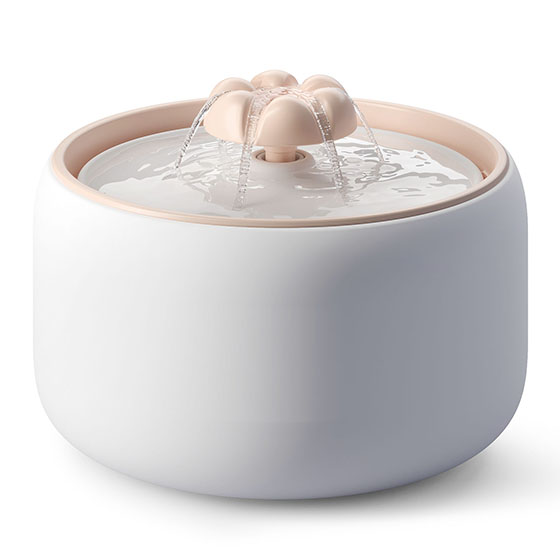
[Basic] Ceramic Pet Water Fountain with Power Cable
Model: W03L
$59.99
$99.00
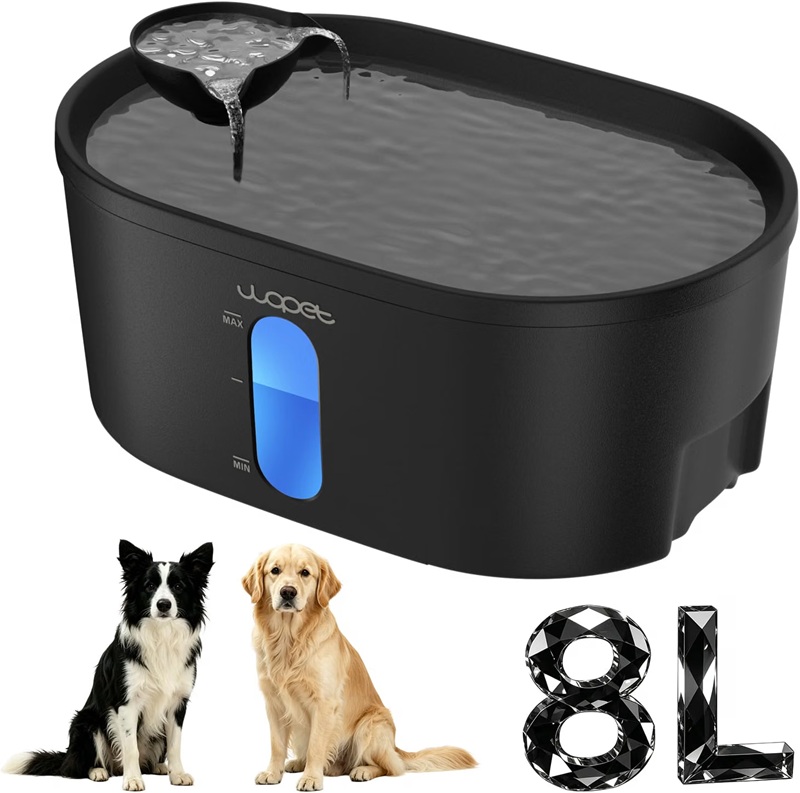
WOPET 8L Pet Water Fountain For Multiple Cats or Large Dogs A08
Model: A08
$49.99
$59.99
WOPET A08 Dog Water Fountain Filters
Model: A08 Filter
$19.99
$29.99
[WHITE] Heritage View 6L Cat Feeder Dual Bowls For Two Cats
Model: HV10DP-white
$114.99
$134.99

DOWNLOAD APP

WOpet life




Copyright © 2026 WOPET. All Rights Reserved.