Oct 15, 2026
Author:Jackson Watson
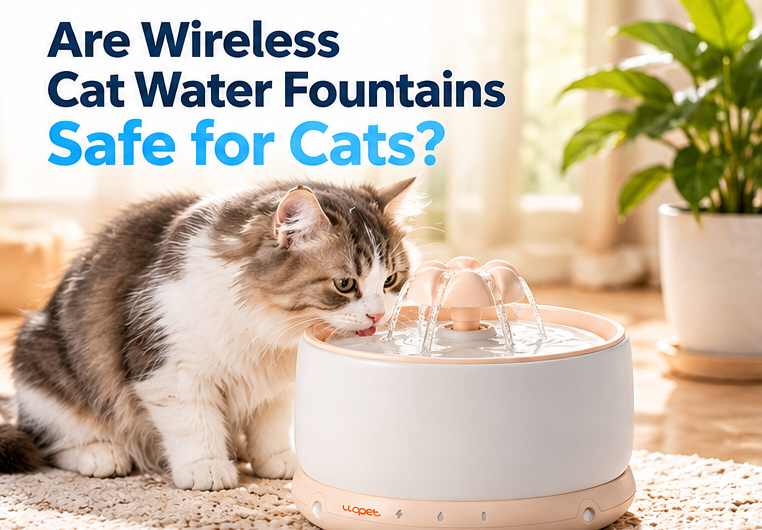
Quick answer: Wireless cat water fountains can be safe when they are used, charged, cleaned, and inspected as directed. Because they run on a rechargeable battery, they do not need to stay plugged into an outlet during normal use. Owners still need to keep the charging port dry, use approved charging equipment, maintain the water level, clean the fountain, and stop using damaged parts.
No pet appliance is risk-free. A wireless or cordless fountain combines a water container, pump, filter, electrical controls, and a rechargeable battery. Each part needs a different safety check.
Wireless Fountain Safety at a Glance
|
Area |
Warning sign |
What to do |
|
Battery |
Swelling, unusual heat, odor, smoke, or a deformed base |
Stop using the fountain and contact the manufacturer |
|
Charging port |
Water, corrosion, looseness, or a damaged cover |
Keep it disconnected until it is dry and inspected |
|
Pump |
Weak flow, new noise, repeated stopping, or visible debris |
Check the water level, clean the pump, and inspect assembly |
|
Water path |
Slime, odor, discoloration, or trapped debris |
Replace the water and clean every washable part |
|
Housing and cable |
Cracks, exposed wire, sharp edges, or damaged insulation |
Stop using the damaged part and arrange a replacement |
1. Electrical Safety During Normal Use
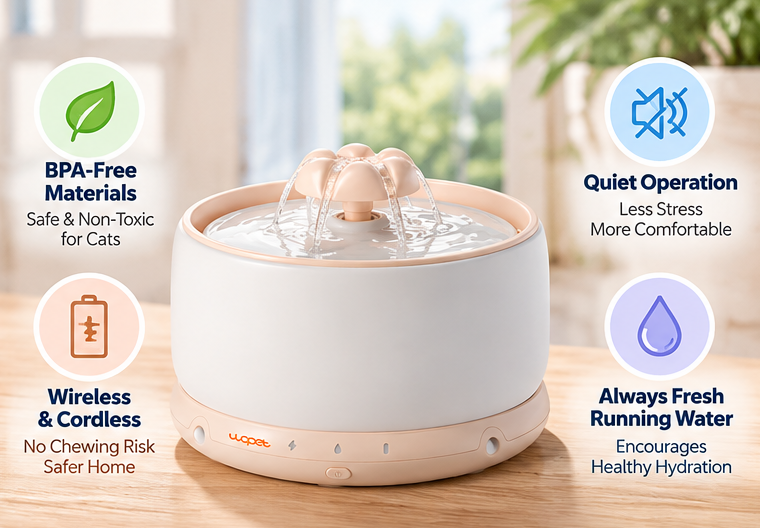
During battery-powered operation, a wireless fountain is not continuously connected to a wall outlet. That can make placement easier and reduce exposed-cable concerns around the drinking area.
Before use, check that the housing and seals are intact, the charging port cover closes, and no wire or connector is loose. Place the fountain on a stable surface where a spill cannot reach an outlet or power strip. Stop using it if you see exposed wire, repeated electrical faults, or water inside a part that should stay dry.
2. Charging Safety
Charging reconnects the fountain to an outlet. Check the manual to see whether the battery module should be removed, whether the fountain must be empty, and whether it can run while charging.
Use this basic routine:
1. Keep the charger and port away from splashes.
2. Dry the connection area and your hands.
3. Inspect the cable before every charge.
4. Use the supplied or manufacturer-approved charging equipment.
5. Charge on a firm, dry, ventilated surface.
6. Keep the cord away from chewing pets.
7. Stop if the unit becomes unusually hot, swollen, discolored, or produces odor, smoke, or abnormal sounds.
The National Fire Protection Association’s lithium-ion battery safety guidance covers safer buying, charging, and recycling habits for rechargeable products. The fountain manual remains the main source for model-specific instructions.
UL Research Institutes also advises buying batteries and chargers from the original manufacturer and checking for recognized safety certification. Its safe shopping tips explain why mismatched or counterfeit charging products can increase risk.
3. Water and Battery Separation
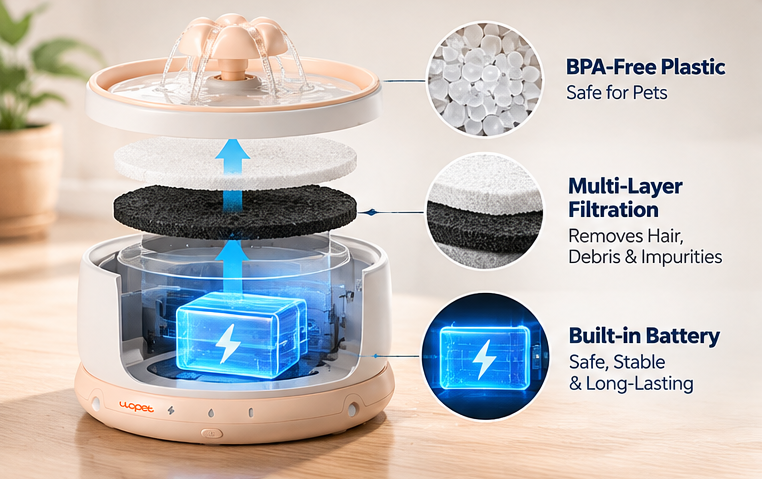
A fountain with clear instructions should separate washable parts from the battery base, charging port, and anything else that must stay dry. Before the first cleaning, identify:
• which pieces can be submerged;
• whether the pump can be rinsed;
• whether the battery base is wipe-only;
• where the charging contacts are located;
• how seals and port covers should be positioned.
Never submerge a battery housing simply because the outer surface looks sealed. “Water-resistant” and “waterproof” have specific meanings, and neither should be assumed without documentation.
4. Low-Water and Pump Safety
Some fountains include low-water shutoff or dry-run protection. This can help protect the pump, but it is a backup feature rather than permission to let the reservoir run empty.
Check the level daily because:
• pets may drink more than expected;
• evaporation varies;
• water can splash out;
• a filter or pump can be incorrectly seated;
• a low-water sensor can become dirty or fail.
Running a pump without enough water can increase noise, wear, and heat. Refill within the marked range and investigate repeated unexpected water loss.
5. Hygiene and Biofilm
Moving water is not self-cleaning. Saliva, hair, food particles, dust, and microorganisms enter the reservoir during use. Filters may catch debris or alter taste and odor, but they do not sterilize the fountain.
VCA Animal Hospitals recommends fresh water and regular washing of a cat’s water source, including daily washing and rinsing of bowls. Review its guidance on helping cats drink more water.
For a fountain, a sensible care routine includes:
• checking the water and surface every day;
• replacing water regularly;
• washing the reservoir and drinking tray;
• opening and cleaning the pump as instructed;
• replacing filters on the model-specific schedule;
• cleaning sooner when you see slime, hair, odor, discoloration, or reduced flow.
Household conditions matter. Multiple pets, warm rooms, long-haired cats, and food placed close to the fountain can increase debris and cleaning needs.
6. Material Safety
Stainless steel, ceramic, and food-contact plastics are all used in pet fountains. Safety depends on material quality, construction, surface condition, and care.
Inspect for:
• cracks or chips in ceramic;
• rust-like discoloration, damaged coatings, or sharp edges on metal parts;
• deep scratches, warping, clouding, or odors in plastic;
• loose seals or small pieces a pet could chew;
• residue that does not wash away normally.
Replace damaged water-contact parts rather than continuing to use them because the pump still works.
7. Tip, Spill, and Chewing Risks
A curious cat may paw at flowing water or try to move a lightweight fountain. Choose a stable footprint and place the unit where a spill will not reach outlets, power strips, or other electronics.
If the cat chews cables, do not leave a charging cord accessible. Charge the unit in a controlled area or use manufacturer-approved cable protection that does not interfere with ventilation or the connection.
Observe a new fountain before leaving it unattended. Look for pawing, attempts to dismantle the lid, chewing, or fear of the pump cycle.
8. Is Sensor Mode Safe?
Sensor activation is generally a convenience and battery-saving feature. The main practical question is whether the cat can still access water when the pump is off.
Some fountains leave water in an open basin between cycles; others may present less accessible water when inactive. Confirm the design and keep a separate bowl available while the cat learns the new system.
For a clearer explanation of operating modes, see how wireless pet water fountains work.
When to Stop Using the Fountain
Stop using the fountain if the battery swells, becomes unusually hot, gives off an odor, or changes the shape of the base. The same applies to melted plastic, exposed wire, a loose charging port, unexplained shutdowns, or water inside the battery housing. Contact the manufacturer for the next step. Do not puncture or compress a damaged battery, and follow local rules for battery recycling or disposal.
Safe Setup Checklist
Before first use:
• Wash every part approved for water contact.
• Install the filter and pump in the correct position.
• Fill to the marked level.
• Dry the charging port and contacts.
• Test the modes you plan to use.
• Make sure your cat can reach water between pump cycles.
• Place the fountain away from the litter box, outlets, and power strips.
Cat Friendly Homes notes that some cats may be attracted to moving water and recommends considering multiple water stations and individual preferences. See its cat water-intake guidance.
Can You Leave a Wireless Fountain Unattended?
A properly functioning fountain is designed for routine use, but it should not be the only safeguard for a long absence. Battery depletion is only one failure mode. A pump can clog, a lid can shift, water can spill, or a cat can stop using the fountain.
For travel or extended time away:
• fully charge and test the unit;
• clean and refill it;
• provide at least one separate bowl;
• arrange for a person to check water access and the cat’s condition;
• never use reservoir size as a substitute for pet care.
Choosing a Safer Rechargeable Fountain
Look for clear documentation rather than vague safety language. Useful information includes charging specifications, battery indicators, low-water protection, cleaning diagrams, material descriptions, replacement parts, warranty terms, and accessible customer support.
Our rechargeable cat water fountain buying guide provides a full uation checklist. WOPET’s pet water fountain collection currently includes rechargeable and corded options; verify current specifications on each product page before deciding.
When to Call a Veterinarian
A fountain cannot diagnose or treat dehydration, urinary disease, kidney disease, diabetes, or other medical conditions. Contact a veterinarian promptly if a cat suddenly drinks much more or less, stops drinking, vomits repeatedly, or becomes lethargic. Straining to urinate or producing little or no urine also needs prompt veterinary attention.
Changing the fountain is not an adequate response to a potentially urgent health change.
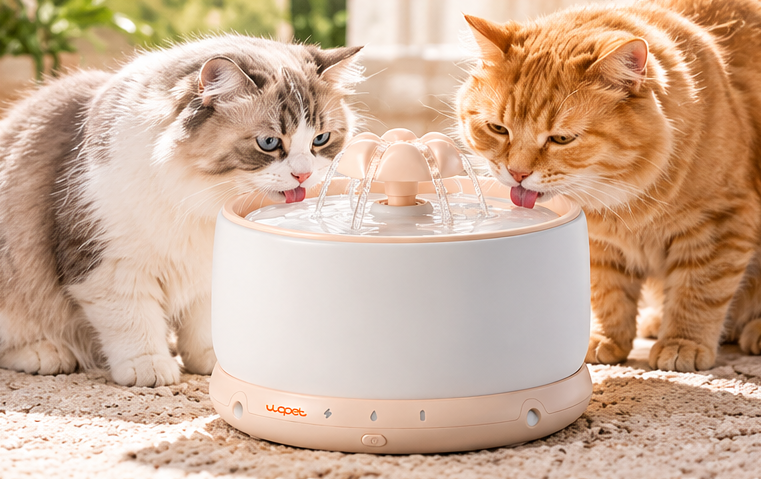
Buy WOPET W03 Wireless Cat Water Fountain on Amazon
Frequently Asked Questions
Are battery-powered cat fountains safer than corded fountains?
They do not need to stay plugged into an outlet while running on battery power, but they still require safe charging and battery care. Overall safety depends on design, condition, placement, and maintenance.
Can water touch the pump?
Submersible fountain pumps are designed for water contact. The battery base and charging port are different. Follow the manual to see which parts can be rinsed or submerged.
Are wireless fountains safe for kittens?
Choose a stable, accessible design and supervise initial use. Keep small removable parts and charging cables out of reach, and provide a shallow alternative water source.
Is it safe to run a fountain with no filter?
Use the product only in configurations approved by the manufacturer. Removing a required filter can allow debris into the pump or change water flow.
How often should I inspect the battery area?
Look at the housing, port, and cable during routine refilling, cleaning, and charging. Stop use immediately if you notice heat, swelling, cracking, odor, corrosion, or moisture where it should remain dry.
Label:
Popular Post

The Ultimate Guide to Tabby Cats: Patterns, Personalities, and More
Mar 27, 2025

Top 10 Most Expensive Cat Breeds in The World
May 07, 2025

Can Cats Have Ice Cream? Dangers, Safe Flavors & Healthy Cat Treats
Sep 02, 2025

My Cat Only Eats A Little at A Time - What to Do?
Feb 27, 2023

Top 8 Reasons Why Does My Cat Sleep Between My Legs?
Mar 03, 2025
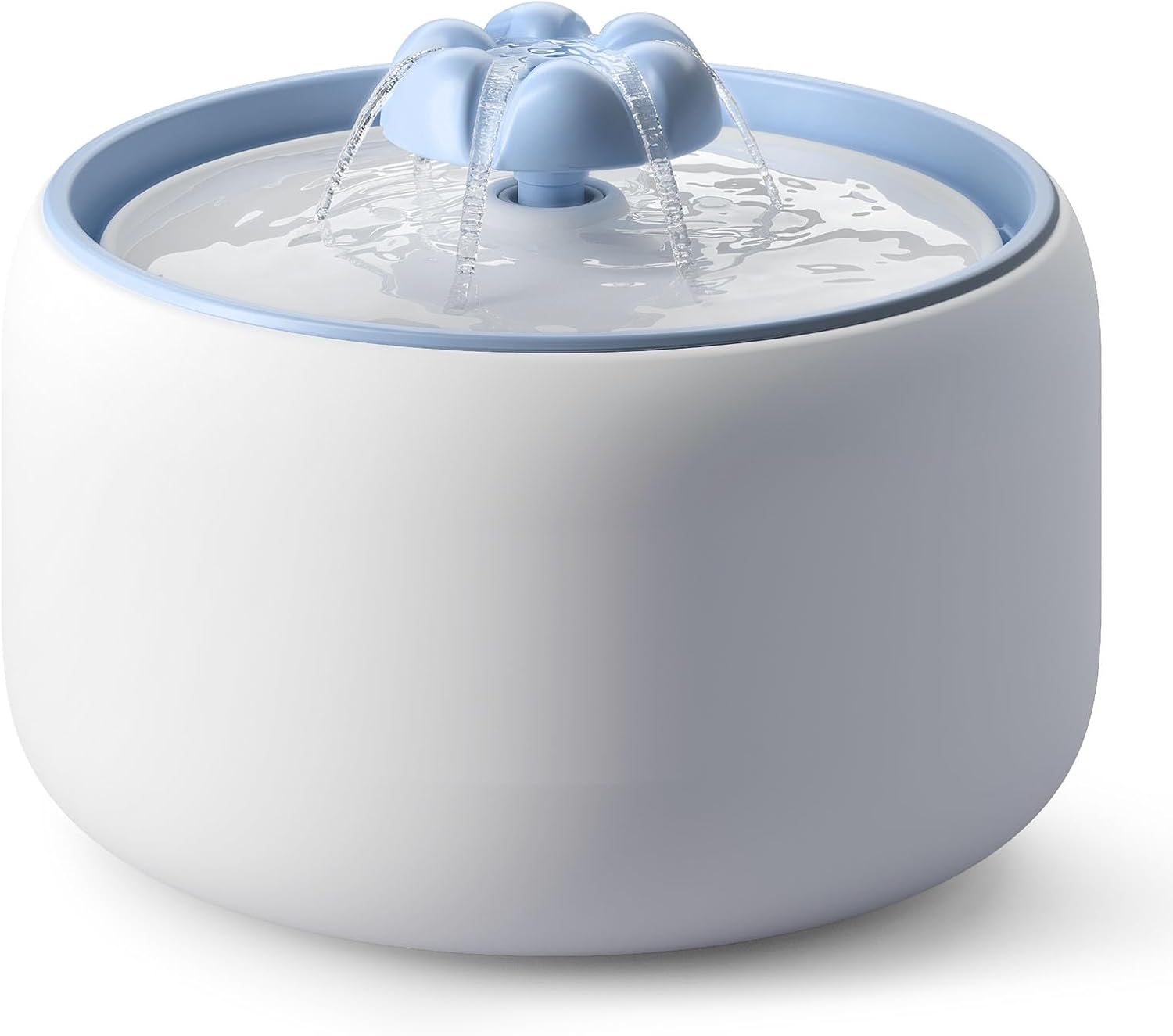
[Blue] W03L 3L Premium Ceramic Cat Water Fountain
Model: W03 LITE
$59.99
$69.99
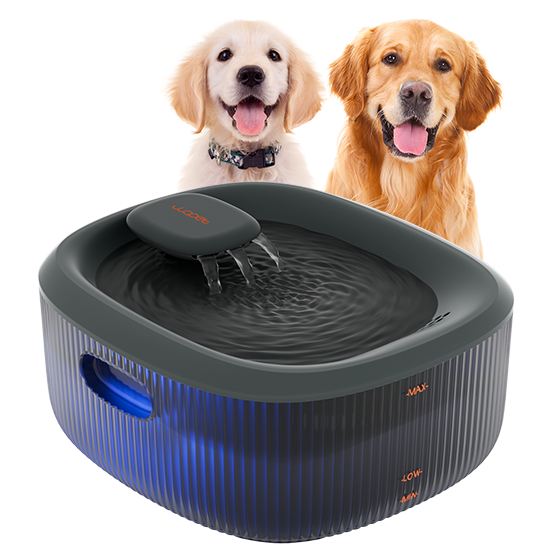
Basin Pet Water Fountain-W600
Model: W600
$43.99
$69.99
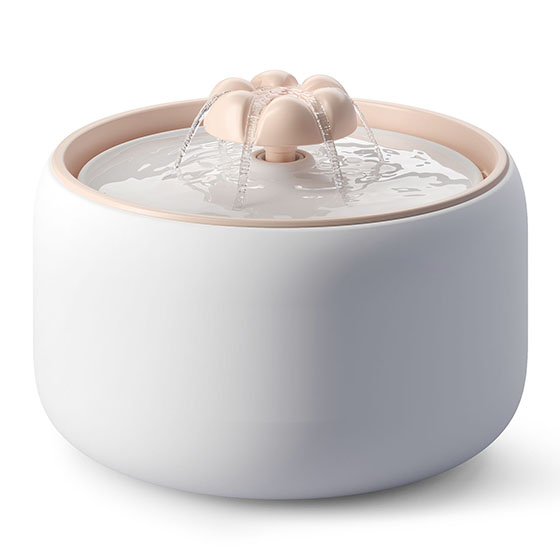
[Basic] Ceramic Pet Water Fountain with Power Cable
Model: W03L
$59.99
$99.00
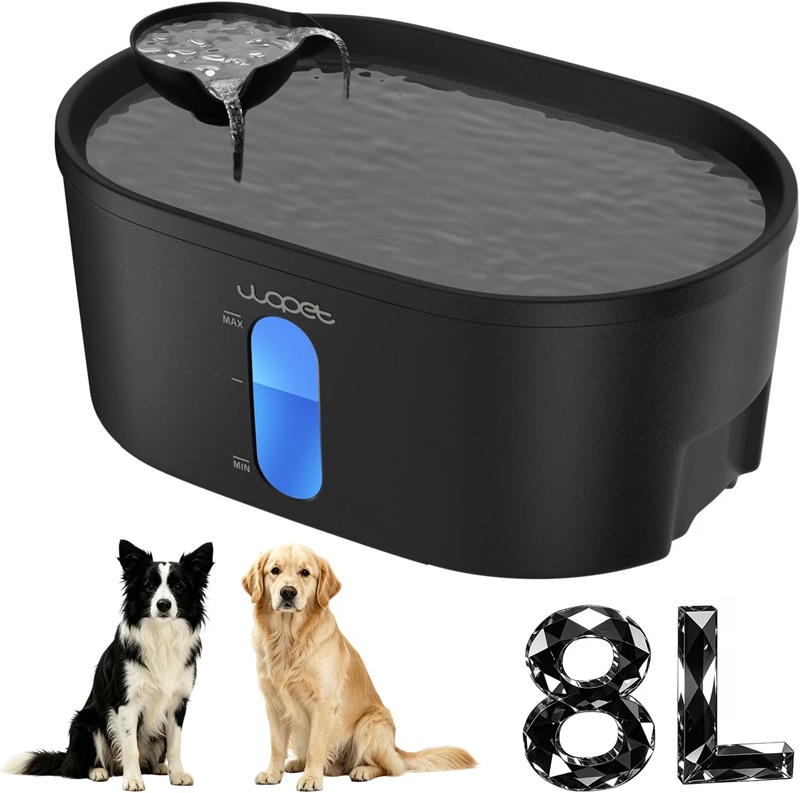
WOPET 8L Pet Water Fountain For Multiple Cats or Large Dogs A08
Model: A08
$49.99
$59.99
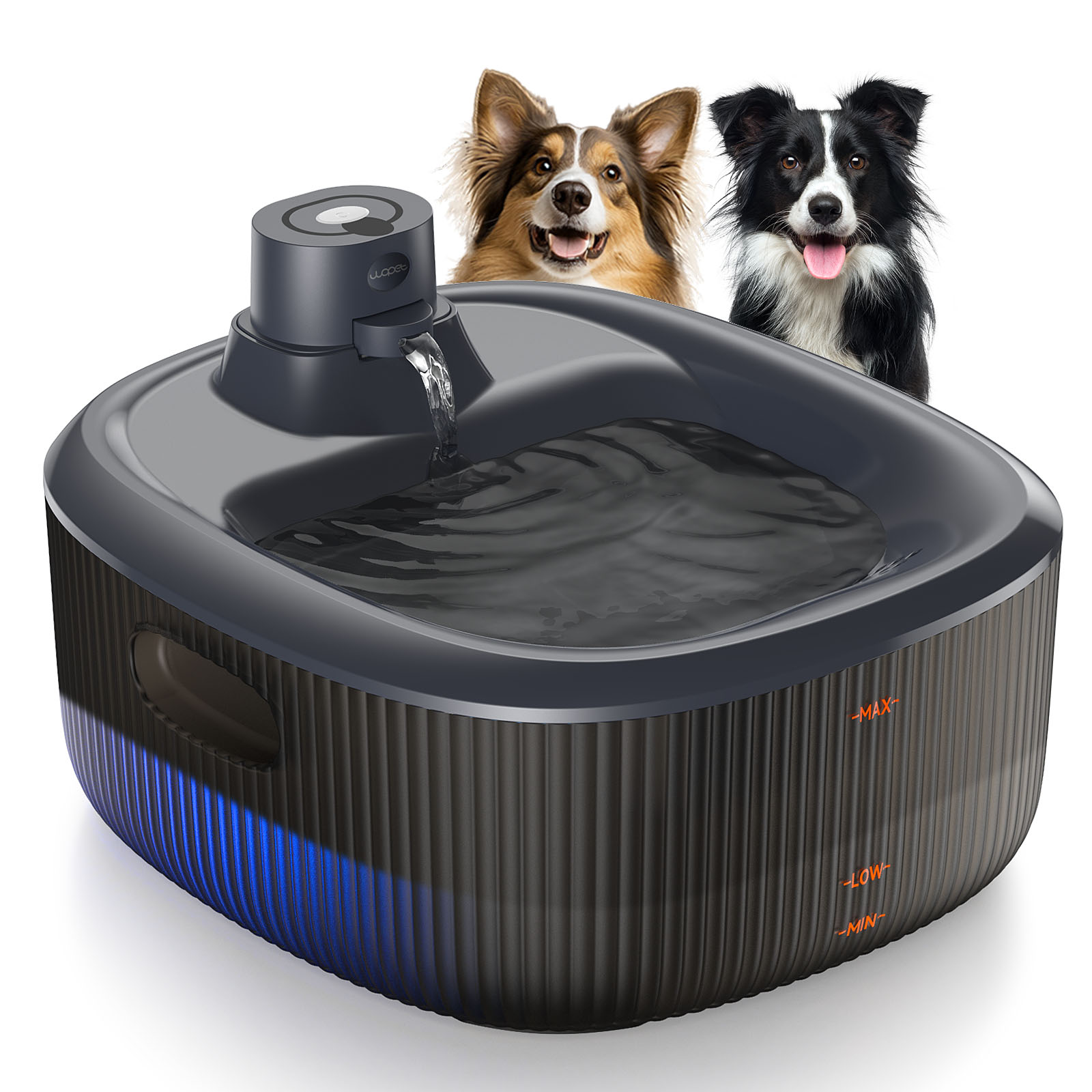
[Upgrade] Basin Wireless Pet Water Fountain
Model: W600 Pro
$69.99
$89.99
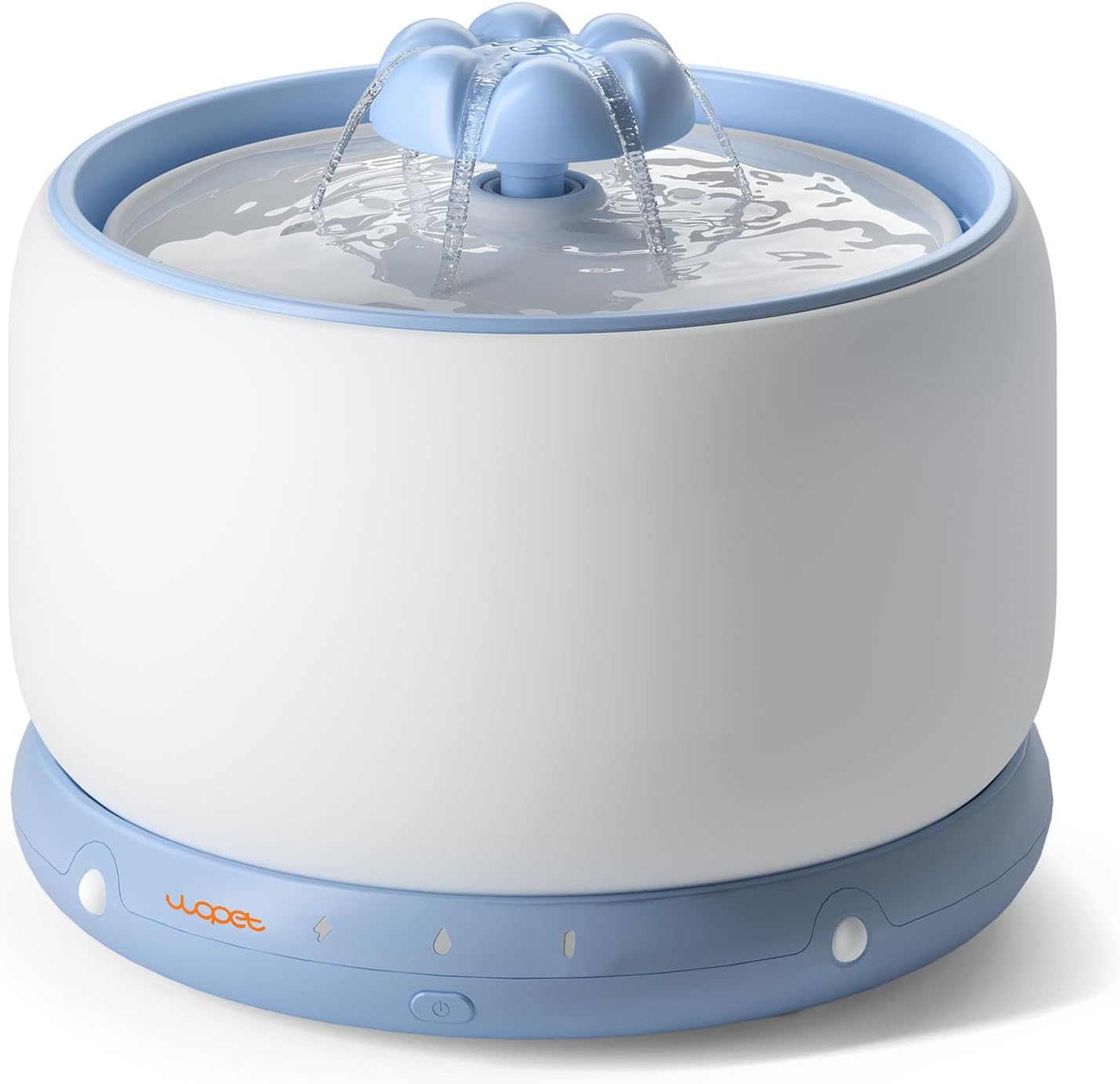
[Blue] W03 3L Ceramic Cordless Cat Water Fountain
Model: W03
$89.99
$99.99

DOWNLOAD APP

WOpet life




Copyright © 2026 WOPET. All Rights Reserved.