Oct 13, 2026
Author:Amanda Lyu
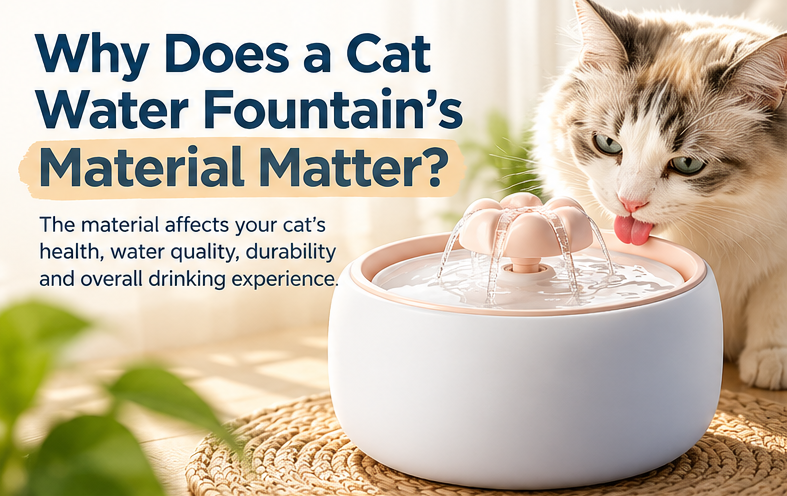
Cat water fountain material matters because it affects surface wear, cleanability, stability, noise, breakage risk, and how easily you can spot residue. It does not determine hygiene on its own. A smooth, intact fountain that comes apart for cleaning is a better choice than a damaged or complicated model made from a supposedly “premium” material.
What Material Changes Most
|
Dimension |
Why it matters in daily use |
|
Surface condition |
Scratches, chips, or corrosion can make inspection and cleaning harder |
|
Weight |
Affects stability and how easy the fountain is to carry |
|
Construction |
Seams, corners, and mixed materials determine cleaning access |
|
Sound |
Weight and stiffness can change how pump vibration is transmitted |
|
Failure mode |
Ceramic may crack, plastic may warp, and steel may dent or corrode |
Material should therefore be uated as part of the complete design, not as a standalone quality score.
Material Changes How a Fountain Ages
Every fountain repeatedly contacts water, minerals, saliva, hair, dust, and cleaning tools. Over time, its surfaces may scratch, chip, stain, scale, warp, or corrode. The type of change depends partly on the material:
• Plastic may develop scratches, clouding, or warping.
• Glazed ceramic may chip, crack, or develop damaged glaze.
• Stainless steel may show water spots, scratches, or—in poor conditions—corrosion.
• Silicone seals and tubing may discolor, loosen, or become difficult to clean.
These are inspection points, not reasons to panic. Normal cosmetic marks are different from damage that creates a rough, sharp, leaking, or uncleanable surface.
1. Surface Condition Affects Cleaning
Smooth surfaces are easier to wipe and inspect than rough or damaged ones. This principle matters more than assuming that one material is “antibacterial.” A household fountain is not sterile, and no common body material eliminates the need to wash the reservoir, drinking tray, pump, tubing, and filter housing.
VCA notes that scratched or irregular plastic dishes may be more prone to bacterial contamination and may be associated with feline chin acne. The exact cause of feline acne is not fully understood, so material should be treated as one factor rather than a diagnosis.
Inspect water-contact surfaces during every deep clean. Replace parts that remain rough, cracked, pitted, or impossible to clean after following the manufacturer’s directions.
2. Material Affects Stability and Handling
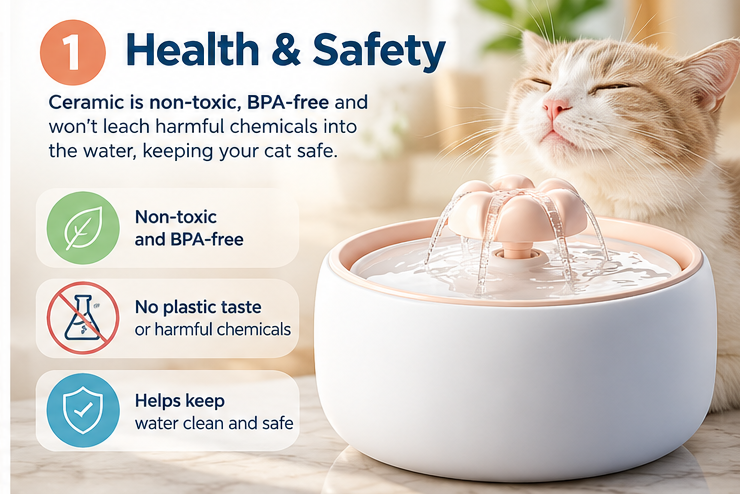
Ceramic is usually the heaviest of the three common fountain materials. Stainless steel varies by construction, while plastic is generally the lightest.
Extra weight can help a fountain resist pawing and pushing. Low weight makes a unit easier to carry to the sink. Neither is automatically better: the right choice depends on your cat’s behavior, the fountain’s capacity, and who must lift it.
A non-slip base and a level location can matter as much as body material. Never place a fountain where a sliding unit could pull on a cord or where spilled water could reach an unprotected electrical connection.
3. Material Influences Noise—but Does Not Control It
A heavy basin may damp vibration. A thin metal tray may ring if it is loose, and a light plastic shell may buzz against a wall. Those are tendencies, not fixed outcomes.
Before blaming the material, check:
• whether the pump is fully seated;
• whether the water level meets the operating minimum;
• whether the lid or tray is aligned;
• whether the power cord touches the housing;
• whether mineral buildup or debris affects the impeller;
• whether the fountain rests on a hard, uneven surface.
A quiet fountain is the result of material, construction, assembly, water level, and maintenance working together.
4. Material Changes Breakage and Replacement Risk
Ceramic can break or chip when dropped. Plastic is difficult to shatter but may crack near clips or thin stress points. Stainless steel generally tolerates impacts but can dent or develop sharp deformation.
Replacement decisions should be based on function and surface condition:
|
Finding |
Practical response |
|
Cosmetic water spots on intact steel |
Clean according to instructions and monitor |
|
Deeply scratched plastic in the wet zone |
Replace the affected part |
|
Chipped or cracked ceramic touching water |
Stop using the part and replace it |
|
Persistent pitting or rough corrosion on steel |
Stop using the part and contact the manufacturer |
|
Warped part that prevents correct assembly |
Replace it before running the fountain |
|
Sharp edge on any material |
Stop use immediately |
5. Material Claims Need Context
Terms such as “food-grade,” “BPA-free,” “304 stainless steel,” “lead-free glaze,” or “dishwasher-safe” can be useful, but they answer different questions.
• Food-contact suitability concerns whether a material is appropriate for its intended contact use.
• BPA-free addresses one chemical, not surface durability or overall construction.
• Stainless grade identifies an alloy family, but not the quality of every seam, finish, or component.
• Lead-free or compliant glaze concerns ceramic formulation and firing; the glaze must also remain intact.
• Dishwasher-safe should specify the exact removable parts and rack position, if relevant.
The FDA regulates food-contact substances by intended use, while NSF standards and protocols uate material and sanitation considerations for food equipment and consumer tableware. A responsible product description should identify the water-contact materials and provide care limits rather than relying on one vague safety phrase.
6. The Fountain Is a Material System, Not One Material
Many fountains combine a ceramic or steel drinking tray with a plastic reservoir, silicone seals, a polymer pump housing, electrical insulation, and filter media. The headline material may describe only the part your cat sees.
Trace the water path:
1. reservoir;
2. pump intake and cover;
3. impeller chamber;
4. tube or channel;
5. filter housing;
6. outlet and drinking tray;
7. return opening.
If one area cannot be opened, reached, or replaced, it may determine maintenance more than the top tray does. WOPET’s cat water fountain care guide explains why the pump and hidden water path need attention alongside the visible basin.
How to Evaluate Material Before Buying
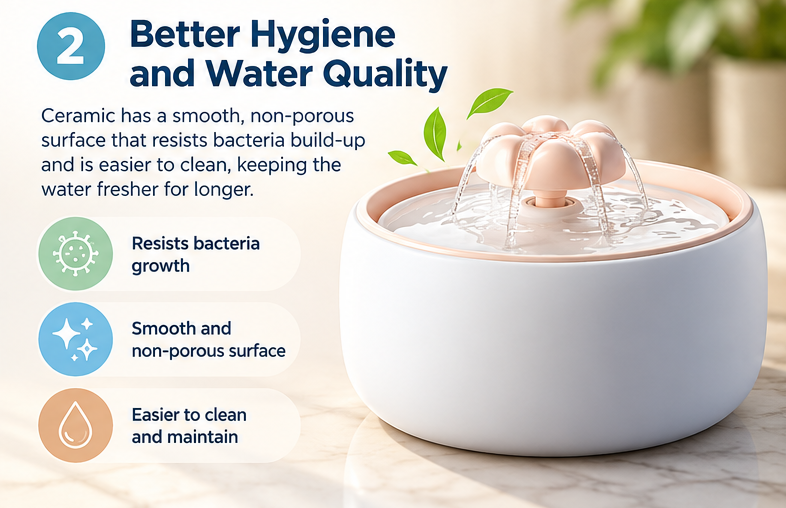
Use this checklist instead of choosing by appearance alone:
• The product is intended for pet drinking water.
• Water-contact materials are identified clearly.
• Ceramic glaze is smooth and free of visible cracks or chips.
• Steel is smoothly finished, without sharp seams or unexplained coatings.
• Plastic parts feel solid and do not have rough flashing in the wet zone.
• The pump can be removed and serviced as directed.
• Cleaning instructions name dishwasher-safe and hand-wash-only parts.
• Replacement filters, pumps, and wear parts are available.
• The filled weight is manageable for the person cleaning it.
• The flow style and basin depth suit the cat’s drinking posture.
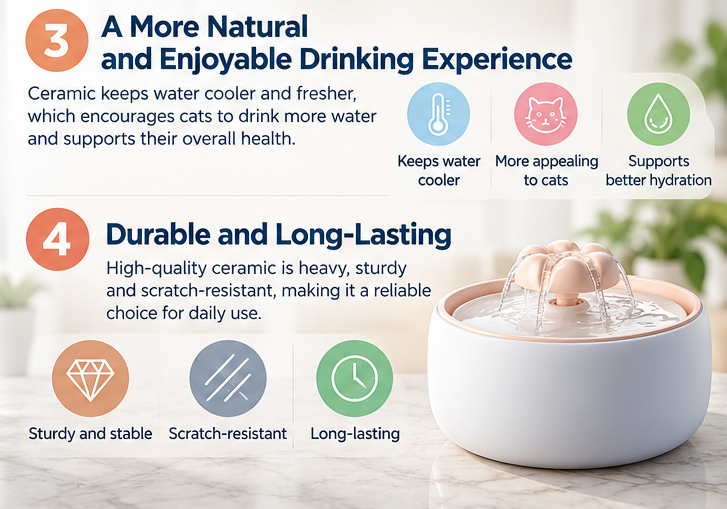
Buy WOPET W03 LITE CAT WATER FOUNTAIN ON AMAZON
Frequently Asked Questions
What is the best cat water fountain material?
There is no universal best. Stainless steel is durable, glazed ceramic is heavy and easy to inspect, and plastic is light and break-resistant. Choose an intact food-contact surface within a simple, serviceable design.
Does material prevent bacteria or biofilm?
No fountain material makes routine cleaning unnecessary. Surface smoothness and condition can make cleaning easier, but water, residue, and hidden pump areas still require regular attention.
Should I replace a fountain because it looks stained?
Not automatically. First identify whether the mark is removable mineral scale, cosmetic discoloration, transferred residue, or actual material damage. Follow the manufacturer’s cleaning directions. Replace a part if it remains rough, pitted, cracked, warped, or unsafe.
Can the wrong material stop a cat from drinking?
Possibly, but preference can relate to sound, movement, bowl shape, water freshness, location, or a recent negative experience. Offer another clean water source while you test one variable at a time.
Bottom Line
Material matters because it changes how a fountain feels, sounds, wears, breaks, and cleans. The correct buying decision combines material with surface condition, full-path access, replacement support, and your ability to maintain the unit. No label can compensate for damaged parts or neglected cleaning.
Editorial Method and Sources
This article explains mechanisms rather than ranking materials. It distinguishes established food-contact principles from practical inspection advice and treats the reported plastic-dish connection to feline chin acne as an association, not proven causation.
• FDA: Understanding Food-Contact Substance Regulation
• NSF: Food Equipment Standards
• NSF: Home Product Protocols and Standards
• VCA Animal Hospitals: Chin Acne in Cats
Label:
Popular Post
Top 10 Most Expensive Cat Breeds in The World
May 07, 2025
The Ultimate Guide to Tabby Cats: Patterns, Personalities, and More
Mar 27, 2025
Can Cats Have Ice Cream? Dangers, Safe Flavors & Healthy Cat Treats
Sep 02, 2025
My Cat Only Eats A Little at A Time - What to Do?
Feb 27, 2023

Top 8 Reasons Why Does My Cat Sleep Between My Legs?
Mar 03, 2025
Basin Pet Water Fountain-W600
Model: W600
$43.99
$69.99
[Basic] Ceramic Pet Water Fountain with Power Cable
Model: W03L
$59.99
$99.00
WOPET 8L Pet Water Fountain For Multiple Cats or Large Dogs A08
Model: A08
$49.99
$59.99
[Upgrade] Basin Wireless Pet Water Fountain
Model: W600 Pro
$69.99
$89.99
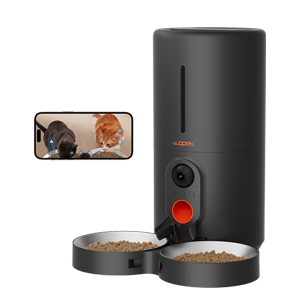
Heritage View Pet Feeder Dual Bowls For Two Cats
Model: HV10DP
$119.99
$149.99
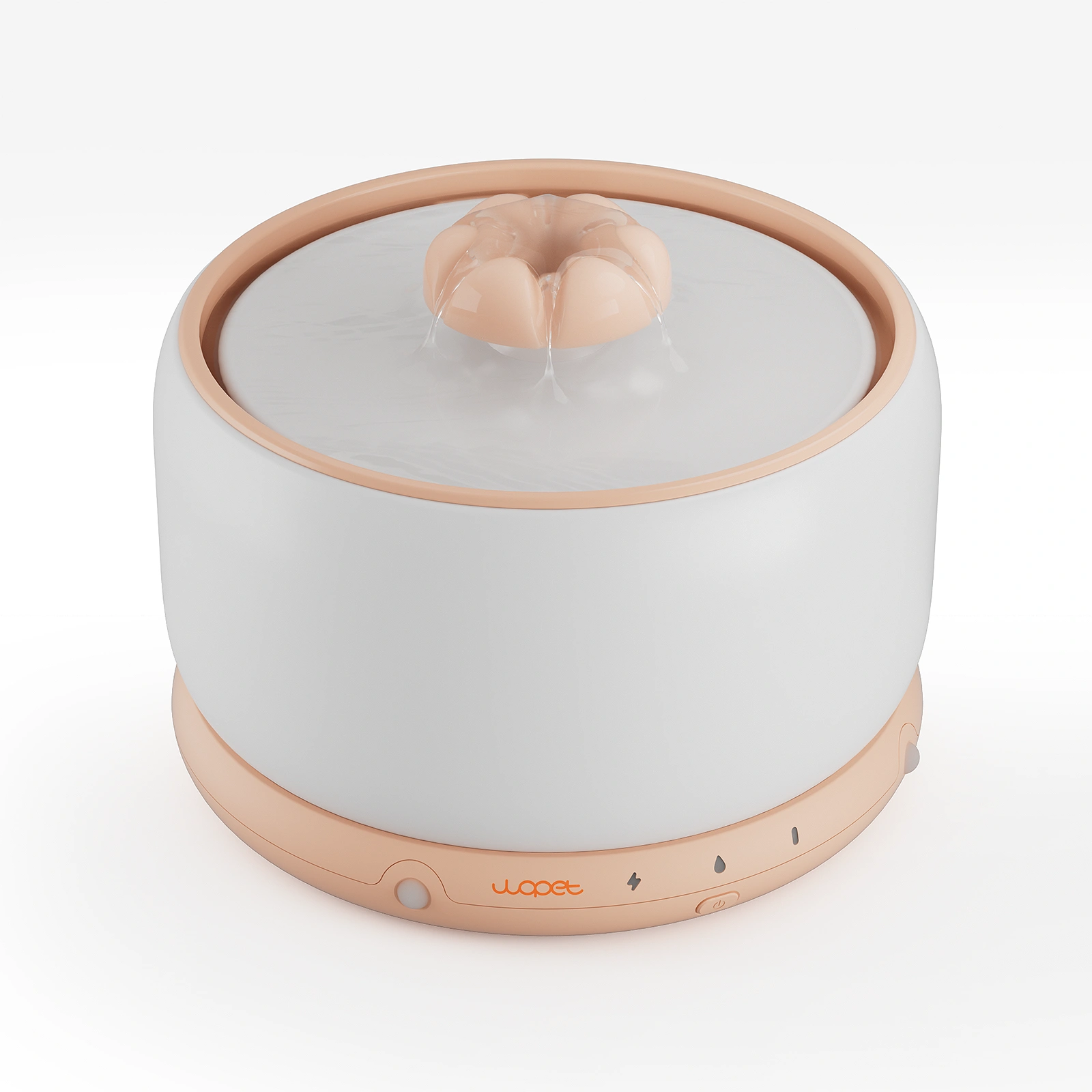
[New] Ceramic Wireless Pet Water Fountain W03
Model: W03
$89.99
$129.00

DOWNLOAD APP

WOpet life




Copyright © 2026 WOPET. All Rights Reserved.