Nov 03, 2026
Author:Sam Wonder
You fill your dog's water bowl in the morning, only to discover it's nearly empty an hour later. Your dog returns for another drink, then another. Perhaps you've also noticed more frequent bathroom breaks or unexpected accidents indoors.
It's natural to wonder: Why is my dog drinking so much water?
Sometimes, increased thirst has a straightforward explanation. Hot weather, exercise, dry food, or certain medications can cause dogs to drink more than usual.
But excessive thirst can also be an early warning sign of medical conditions such as diabetes, kidney disease, or Cushing's disease.
The key is understanding the difference between normal fluctuations and a significant change in drinking behavior.
This guide explains how much water dogs typically need, 10 possible causes of increased thirst, warning signs to watch for, and practical steps to take if your dog suddenly starts drinking more water.
Important: Never restrict your dog's access to water because you're concerned about excessive drinking. If the increase is sudden, persistent, or accompanied by other symptoms, contact your veterinarian.
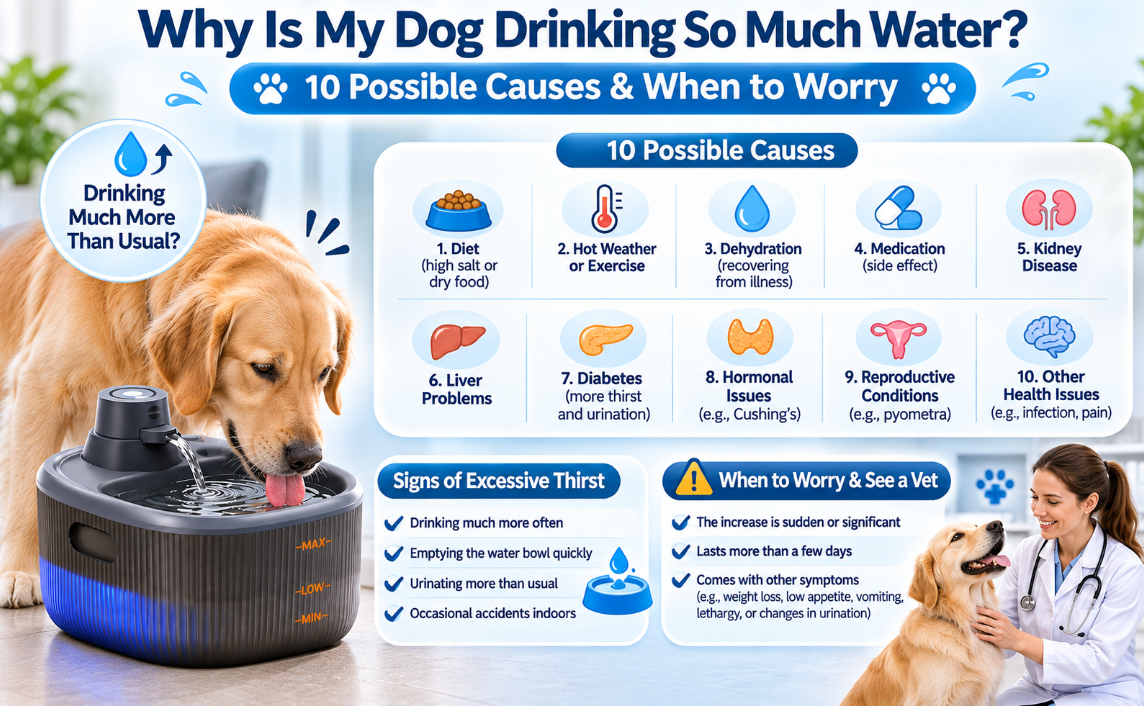
Before deciding whether your dog is drinking too much, it helps to understand typical water requirements.
Many healthy adult dogs consume approximately 40–60 milliliters of water per kilogram of body weight per day as a general starting estimate.
However, individual requirements vary.
A dog's actual water consumption depends on:
Body weight
Activity level
Environmental temperature
Diet and food moisture
Age
Pregnancy or nursing
Medications
Overall health
| Dog Weight | Approximate Daily Water Intake |
|---|---|
| 10 lbs (4.5 kg) | 180–270 mL |
| 20 lbs (9.1 kg) | 360–550 mL |
| 30 lbs (13.6 kg) | 540–820 mL |
| 40 lbs (18.1 kg) | 720–1,090 mL |
| 50 lbs (22.7 kg) | 910–1,360 mL |
| 60 lbs (27.2 kg) | 1.1–1.6 L |
| 80 lbs (36.3 kg) | 1.5–2.2 L |
| 100 lbs (45.4 kg) | 1.8–2.7 L |
These numbers are approximate planning ranges, not fixed medical requirements.
Dogs eating wet food may drink less directly from a bowl because their food provides additional moisture.
Active dogs or dogs spending time in warm environments may need more.
What matters most is whether your dog's drinking habits have changed significantly from their usual pattern.
Veterinarians use the term polydipsia to describe excessive drinking.
In clinical uation, sustained water consumption above approximately 100 mL per kilogram of body weight per day is sometimes used as a reference point for excessive drinking.
For example:
A 10 kg dog drinking more than approximately 1L daily
A 20 kg dog drinking more than approximately 2L daily
A 30 kg dog drinking more than approximately 3L daily
However, this is not a diagnostic test.
A dog can have a medical problem even when its measured intake falls below that level.
Similarly, increased consumption during hot weather or after strenuous exercise does not automatically indicate disease.
Imagine two dogs weighing 20 kg.
Dog A typically drinks 900 mL per day.
Dog B typically drinks 1.3L per day.
If Dog A suddenly begins drinking 1.8L daily without an obvious explanation, that change may be more concerning than Dog B maintaining a stable intake.
Tracking changes over time can help your veterinarian determine whether additional testing is needed.
Dogs can lose water through panting, especially during warm weather.
Unlike humans, dogs do not rely primarily on sweating to regulate body temperature.
When temperatures rise, increased panting and activity can raise fluid requirements.
Drinking more after spending time outdoors
Increased panting
Seeking cooler places
Drinking more during summer than winter
Provide continuous access to fresh water and shade.
Avoid strenuous exercise during the hottest parts of the day.
If your dog shows severe weakness, collapse, confusion, or signs of overheating, seek emergency veterinary care immediately.
Heatstroke is a medical emergency, not simply a reason for increased thirst.
Dogs often drink more after running, hiking, playing, or participating in other physical activities.
Water helps replace fluid losses and supports normal body functions.
A dog that has recently become more active may naturally increase its water consumption.
Offer fresh water before, during, and after appropriate exercise.
Allow your dog to drink voluntarily and take breaks.
If your dog continues drinking unusually large amounts even on inactive days, discuss the change with your veterinarian.
Food moisture can significantly influence how much water dogs drink directly.
Dry kibble generally contains much less moisture than canned or other wet foods.
If you recently switched your dog from wet food to dry kibble, you may notice more frequent visits to the water bowl.
Salty treats or unusually high-sodium foods may also increase thirst.
Review recent dietary changes.
Consider:
Switching from wet to dry food
Introducing new treats
Changes in feeding frequency
Changes in food formulation
Avoid feeding excessively salty human foods.
If increased thirst is substantial or persists without a clear explanation, consult your veterinarian.
Some medications can increase thirst and urination.
Examples include certain corticosteroids, diuretics, and other medications that affect fluid balance.
A dog may begin drinking noticeably more after starting a new prescription.
Review your dog's medication history and note when the drinking change began.
Contact the prescribing veterinarian to discuss whether the increase is expected.
Never stop or adjust prescribed medication without veterinary guidance.
Diabetes mellitus is an important medical cause of excessive thirst in dogs.
When blood glucose becomes elevated, excess glucose may pass into the urine and draw additional water with it.
This can lead to increased urination and compensatory thirst.
Drinking more water than usual
Urinating more frequently
Increased appetite
Unexplained weight loss
Reduced energy
Changes in vision
Not every dog with diabetes displays all these signs.
Contact your veterinarian if excessive drinking is accompanied by increased urination, weight loss, or appetite changes.
Veterinarians may use blood and urine tests to uate blood glucose and other findings.
Diabetes cannot be diagnosed based on drinking behavior alone.
The kidneys help regulate fluid balance and remove waste products from the body.
When kidney function is impaired, a dog may lose the ability to concentrate urine normally.
This can result in increased urine production and increased thirst.
Drinking more water
Urinating more frequently
Reduced appetite
Weight loss
Vomiting
Lethargy
Some dogs show increased drinking before other symptoms become obvious.
Arrange a veterinary examination if your dog has persistent unexplained thirst.
Bloodwork and urinalysis can help assess kidney function and identify possible underlying problems.
Early uation is important because kidney conditions vary widely in severity and treatment needs.
Cushing's disease, also called hyperadrenocorticism, occurs when the body produces excessive amounts of cortisol.
It is one possible cause of increased drinking and urination, particularly in middle-aged and older dogs.
Increased thirst
Increased urination
Increased appetite
Panting
Abdominal enlargement
Hair thinning
Muscle weakness
These symptoms can overlap with other conditions.
Contact your veterinarian if your dog develops several of these changes.
Diagnosis may involve blood tests, urine tests, and specialized hormonal testing.
A veterinarian must interpret the results alongside your dog's clinical signs.
Some urinary tract conditions may cause dogs to urinate more frequently.
Owners sometimes interpret frequent bathroom trips as increased urine production, although the dog may actually be passing only small amounts.
Urinary tract infections, bladder inflammation, and other urinary problems can cause changes in urination behavior.
Frequent attempts to urinate
Urinating small amounts
Straining
Accidents indoors
Blood in the urine
Discomfort during urination
Not all urinary tract problems cause excessive thirst.
Contact your veterinarian if your dog's urination pattern changes.
If your dog repeatedly tries to urinate but produces little or no urine, seek emergency veterinary care. Urinary obstruction can be life-threatening.
Pyometra is a serious infection of the uterus that can occur in unspayed female dogs.
It may develop after a heat cycle and can cause increased thirst and urination.
Increased drinking
Increased urination
Lethargy
Reduced appetite
Vomiting
Abdominal discomfort
Vaginal discharge in some cases
Importantly, vaginal discharge may be absent in some forms of pyometra.
Seek urgent veterinary care if an unspayed female dog develops increased thirst along with illness, particularly after a recent heat cycle.
Pyometra can become life-threatening and requires prompt veterinary treatment.
Excessive thirst can also be associated with other conditions affecting the body's fluid balance.
Examples include:
Certain liver diseases
Disorders affecting calcium levels
Diabetes insipidus
Some infections
Other hormonal or metabolic disorders
These conditions are less straightforward to recognize at home.
If your dog continues drinking unusually large amounts, a veterinarian can uate the pattern and determine which tests are appropriate.
Do not attempt to diagnose a specific condition based solely on the amount of water your dog drinks.
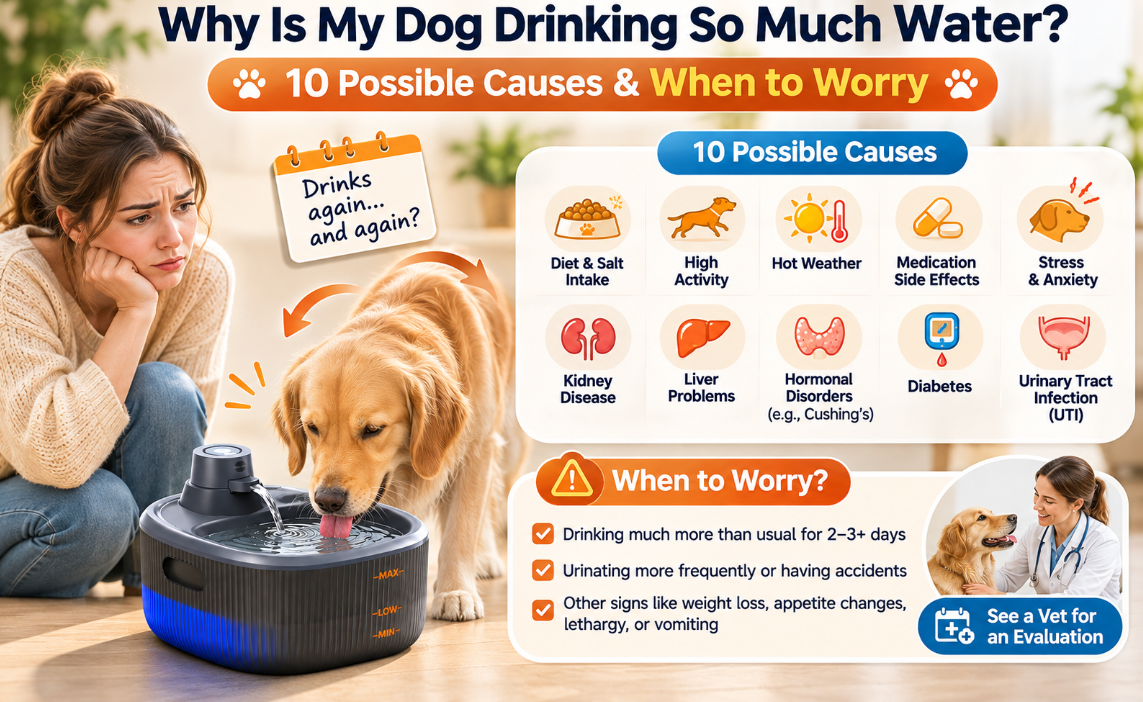
When increased drinking occurs together with increased urination, veterinarians may describe the pattern as polyuria and polydipsia, often abbreviated as PU/PD.
Polyuria: Excessive urine production
Polydipsia: Excessive drinking
These symptoms frequently occur together because the body must compensate for fluid losses.
In some diseases, the kidneys produce unusually large amounts of urine.
The dog then drinks more water to replace the lost fluid.
In other situations, excessive water consumption can contribute to increased urine production.
Determining the underlying cause requires veterinary assessment.
These are not the same thing.
| Observation | Possible Interpretation |
|---|---|
| Producing large amounts of urine repeatedly | Increased urine production |
| Urinating frequently in small amounts | Possible urinary tract irritation or other urinary problem |
| Straining with little or no urine | Possible urinary obstruction |
| Drinking more and having accidents indoors | Possible change in urine production or bladder control |
If your dog has difficulty passing urine, seek veterinary attention promptly.
If your dog seems unusually thirsty, measuring water consumption can provide useful information for your veterinarian.
Use a measuring cup or container with volume markings.
Record how much water you add to the bowl or fountain.
For example:
Morning water added: 2,000 mL.
If you refill the container during the day, add the new amount to your total.
For example:
Afternoon refill: 500 mL.
Total water provided: 2,500 mL.
At the end of the measurement period, measure the water left in the container.
For example:
Remaining water: 900 mL.
Total water provided minus remaining water:
2,500 mL − 900 mL = 1,600 mL.
Estimated drinking-water consumption: 1.6L.
Water may also be lost through:
Spilling
Evaporation
Cleaning or emptying the fountain
Other pets drinking from the same container
These losses can make consumption appear higher than it really is.
If multiple pets share a fountain, you cannot reliably determine one dog's intake by measuring the shared reservoir alone.
For more accurate monitoring, consider temporarily providing a separate measured water source for each pet, without limiting access to water.
Keep notes about:
Appetite
Activity
Urination frequency
Accidents indoors
Vomiting
Diarrhea
Weight changes
Medications
These observations may help your veterinarian interpret the drinking pattern.
A noticeable change in drinking behavior deserves attention, particularly when it has no clear explanation.
| Situation | Recommended Action |
|---|---|
| Drinking more after exercise or hot weather, otherwise normal | Provide water and monitor |
| Drinking more after a diet change | Review food moisture and observe |
| Sudden, unexplained increase in thirst | Contact your veterinarian promptly |
| Drinking more and urinating more | Arrange veterinary assessment |
| Increased thirst with weight loss or appetite changes | Prompt veterinary uation |
| Increased thirst with vomiting or significant lethargy | Urgent veterinary assessment |
| Unspayed female dog with increased thirst and signs of illness | Urgent veterinary care |
| Collapse, severe weakness, or inability to urinate | Emergency veterinary care |
Do not wait for a dog to reach a particular water-intake threshold before seeking help if other concerning symptoms are present.
No. Never restrict your dog's access to water unless a veterinarian specifically instructs you to do so.
When a dog is drinking excessively because of an underlying medical condition, restricting water can worsen dehydration and cause serious complications.
Keep fresh water available
Measure drinking-water consumption when practical
Observe urination patterns
Record changes in behavior
Contact your veterinarian
Follow veterinary recommendations
If your veterinarian needs to uate your dog's ability to concentrate urine, any specialized testing must be conducted under appropriate veterinary supervision.
Do not attempt a water-deprivation test at home.
A dog water fountain can provide a convenient source of circulating water.
Some dogs prefer moving water, while others prefer a traditional bowl.
However, a fountain does not automatically measure how much an individual dog drinks.
Continuous access: A suitable fountain can help maintain an accessible drinking station.
Circulation: Water moves through the fountain's circulation system.
Filtration: Depending on the design, filters may capture hair and other debris.
Placement options: Wireless fountains can offer more flexibility when choosing a drinking location.
A standard fountain cannot:
Diagnose excessive thirst
Identify diabetes or kidney disease
Reliably measure individual intake without a dedicated measurement system
Replace veterinary uation
Treat an underlying medical condition
If you use a fountain, record the amount added and the amount remaining over a defined period.
Account for spills, cleaning, evaporation, and water consumed by other pets.
For accurate individual monitoring, a separate measured bowl may be easier than a shared fountain.
WOPET offers water fountain designs for different household needs.
For a healthy dog, choosing a suitable fountain can help create a comfortable and convenient drinking environment.
If your dog is drinking excessively because of a possible medical condition, veterinary assessment should come first.
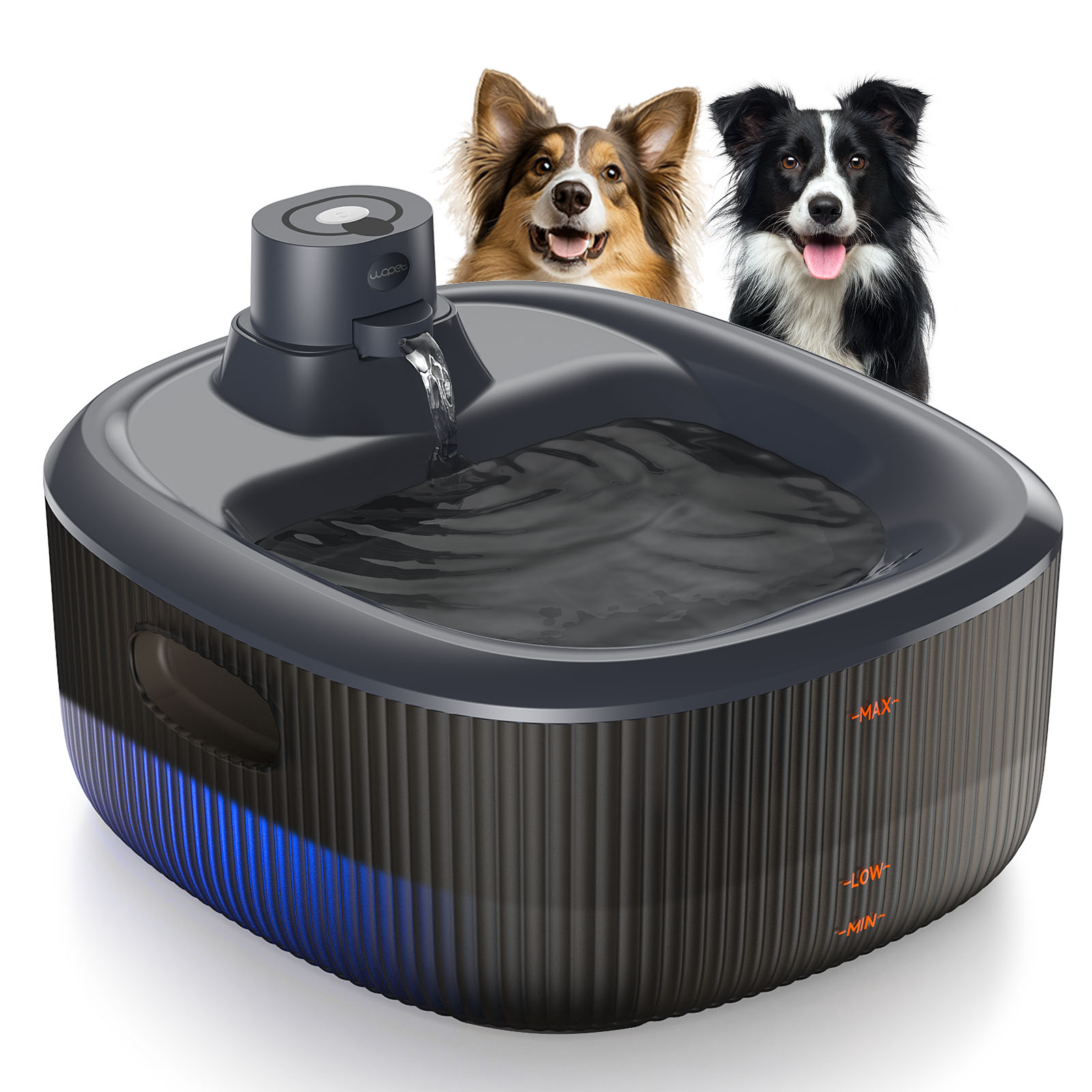
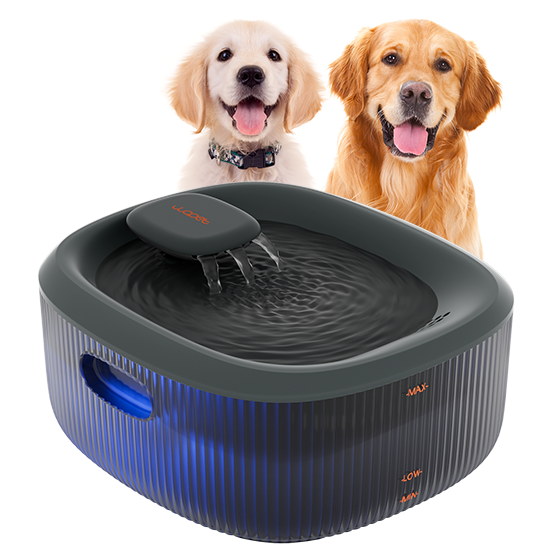
The WOPET W600 Pro is a wireless dog water fountain option for owners who value flexible placement.
A cordless design allows more freedom when choosing where to position a drinking station.
When uating the W600 Pro, consider:
Reservoir capacity
Drinking basin dimensions
Water level visibility
Cleaning requirements
Circulation performance
Battery maintenance
For dogs whose drinking habits are being monitored, owners should continue recording water added and remaining rather than assuming the fountain measures consumption automatically.
Best for: Dog owners looking for a wireless drinking station that fits their home and pet's needs.
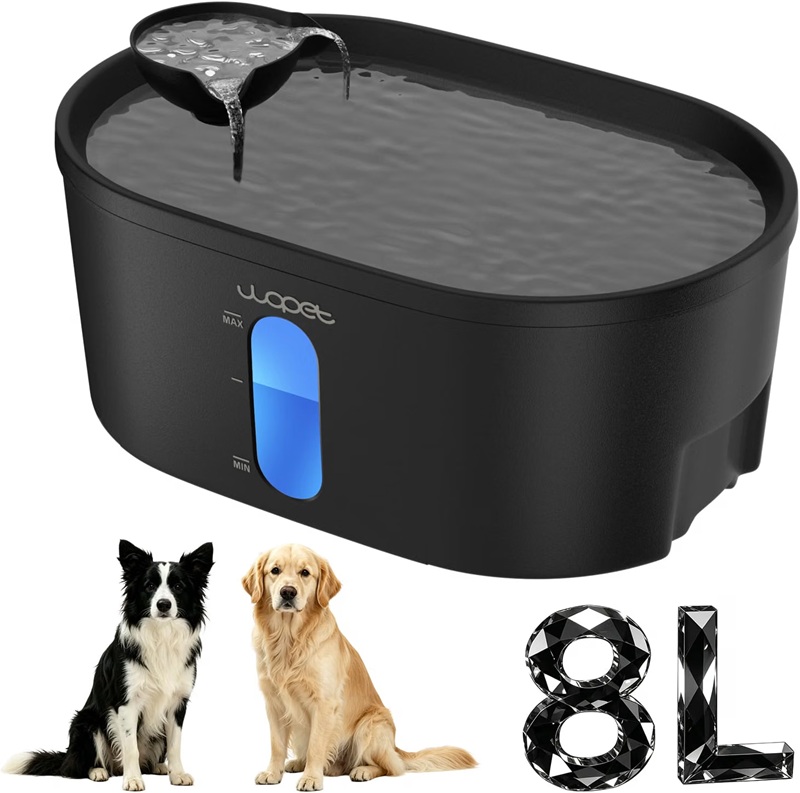
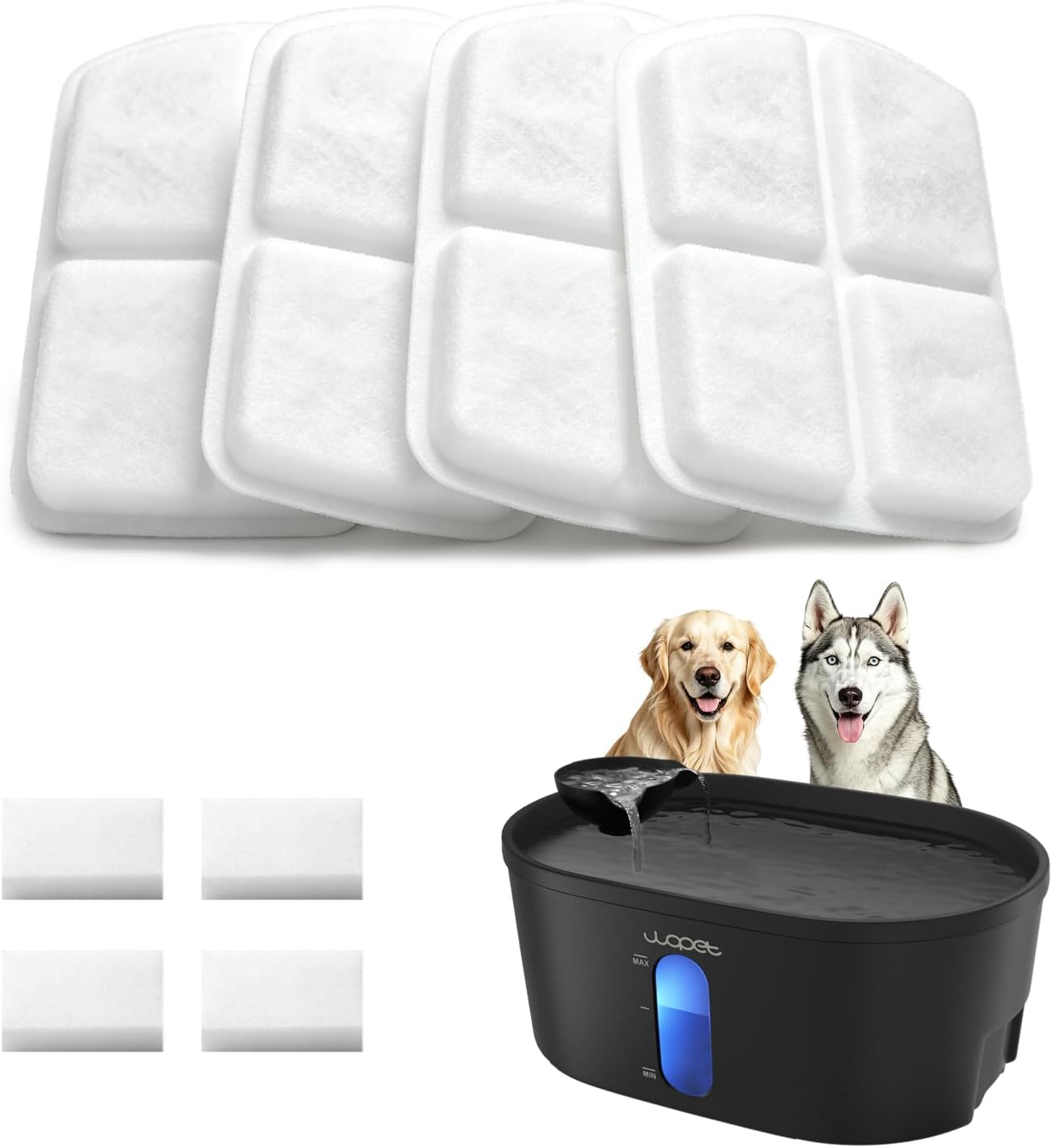
The WOPET A08 is designed for dogs and multi-cat households.
It may be worth considering when multiple pets share a drinking area.
Important factors include:
Combined daily water requirements
Reservoir capacity
Basin accessibility
Ease of cleaning
Shared water access
For households monitoring excessive thirst in one dog, remember that a shared fountain cannot reveal exactly how much each animal drinks.
Best for: Dog owners and multi-cat households seeking a shared drinking station.
| Feature to Consider | WOPET W600 Pro | WOPET A08 |
|---|---|---|
| Main positioning | Wireless dog water fountain | Dogs and multi-cat households |
| Drinking convenience | Flexible placement | Shared drinking access |
| Individual water tracking | Requires separate measurement | Requires separate measurement |
| Cleaning | Regular maintenance required | Regular maintenance required |
| Medical diagnosis | Not a diagnostic device | Not a diagnostic device |
Whether your dog drinks from a bowl or fountain, a consistent routine can make it easier to recognize changes.
Keep clean drinking water available.
Wash bowls and fountains according to their care instructions.
Learn your dog's normal drinking pattern.
A sudden change may be more meaningful than a single measurement.
Remember that wet food contributes to total water intake.
In larger homes or multi-pet households, additional water stations may improve accessibility.
Do not limit water access to reduce urination or manage suspected excessive thirst.
Routine examinations can help identify health conditions that may affect drinking and urination.
Possible causes include hot weather, increased activity, dietary changes, medications, or underlying medical conditions. A sudden unexplained increase should be discussed with your veterinarian.
Sustained consumption above approximately 100 mL/kg/day is one veterinary reference for excessive drinking, but it is not a standalone diagnostic cutoff. Smaller increases may also warrant investigation.
This combination may indicate polyuria and polydipsia. Possible causes include diabetes, kidney disease, Cushing's disease, and other conditions. Veterinary testing is needed to determine the cause.
Yes. Increased panting and activity in warm weather can raise water requirements. However, excessive thirst accompanied by weakness, collapse, or signs of overheating requires urgent care.
Increased thirst in older dogs may be associated with medications, kidney disease, diabetes, Cushing's disease, or other conditions. Do not assume it is simply a normal part of aging.
Yes. Dry food contains less moisture than wet food, so dogs eating dry diets may drink more water directly.
No. Diabetes is only one possible cause. Increased thirst can also result from environmental, dietary, medication-related, and other medical factors.
No. Do not restrict water unless specifically directed by a veterinarian. Restriction can be dangerous when a dog is losing excessive fluid.
Some dogs may prefer moving water and drink more readily from a fountain. However, a sudden or persistent increase in thirst should not automatically be attributed to the fountain.
Measure drinking-water consumption over a defined period, compare it with your dog's usual habits, and note other symptoms. A veterinarian can help determine whether the change requires testing.
Nighttime drinking may reflect daytime activity, environmental conditions, or a medical issue. If your dog suddenly begins waking repeatedly to drink or urinate, contact your veterinarian.
Depending on the history and examination, a veterinarian may recommend bloodwork, urinalysis, urine culture, or additional testing for hormonal and metabolic conditions.
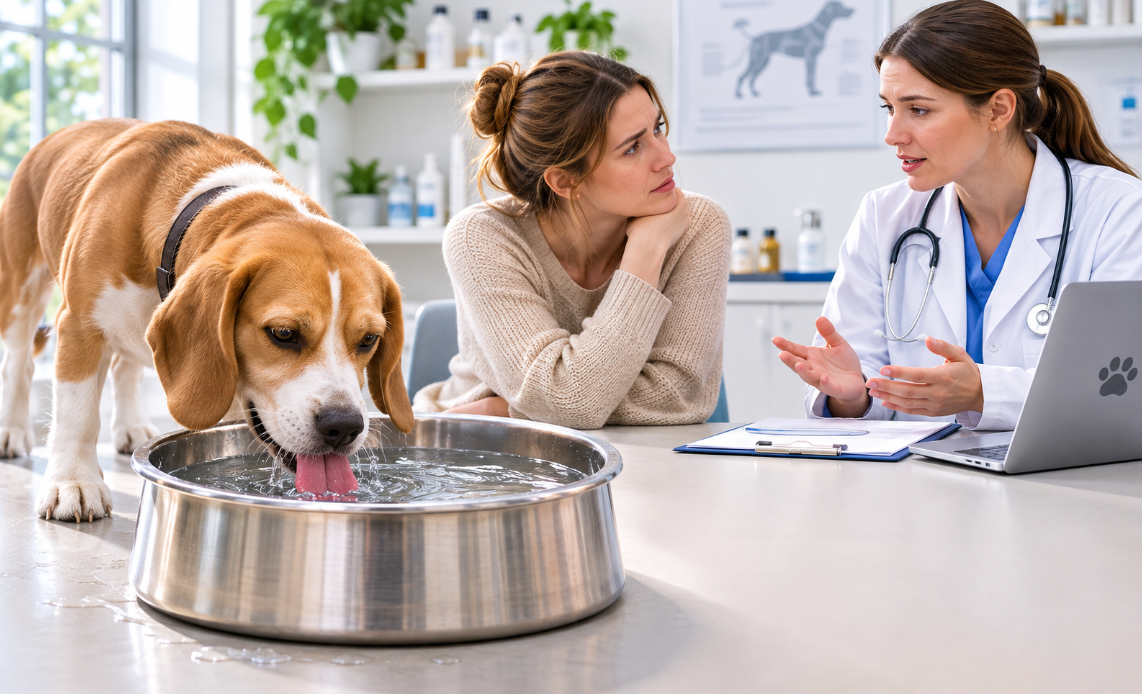
If your dog is drinking more water than usual, the first step is to look for changes in activity, weather, diet, medications, and overall behavior.
Some increases are expected, especially after exercise or during warm weather.
However, sudden or persistent excessive thirst can be an early sign of an underlying medical condition.
Pay particular attention when increased drinking occurs alongside:
Frequent urination
Unexplained weight loss
Changes in appetite
Vomiting
Reduced energy
Difficulty urinating
Other unusual symptoms
Keep fresh water available, measure consumption when practical, and contact your veterinarian if the change is unexplained.
For everyday drinking convenience, a suitable fountain such as the WOPET W600 or WOPET A08 may provide a practical water station.
But a fountain is not a substitute for identifying and treating the cause of excessive thirst.
The most useful thing you can do is recognize what's normal for your dog—and act when that pattern changes.
Label:
Popular Post
The Ultimate Guide to Tabby Cats: Patterns, Personalities, and More
Mar 27, 2025

Top 8 Reasons Why Does My Cat Sleep Between My Legs?
Mar 03, 2025

What to Do If My Dog's Poop Is Black But Not Tarry
Feb 04, 2023
Superfecundation Cats: When Kittens in One Litter Have Different Fathers
Jul 11, 2025

Can Cats Have Orange Eyes? Genetics, Breeds, and Care Guide
May 20, 2025
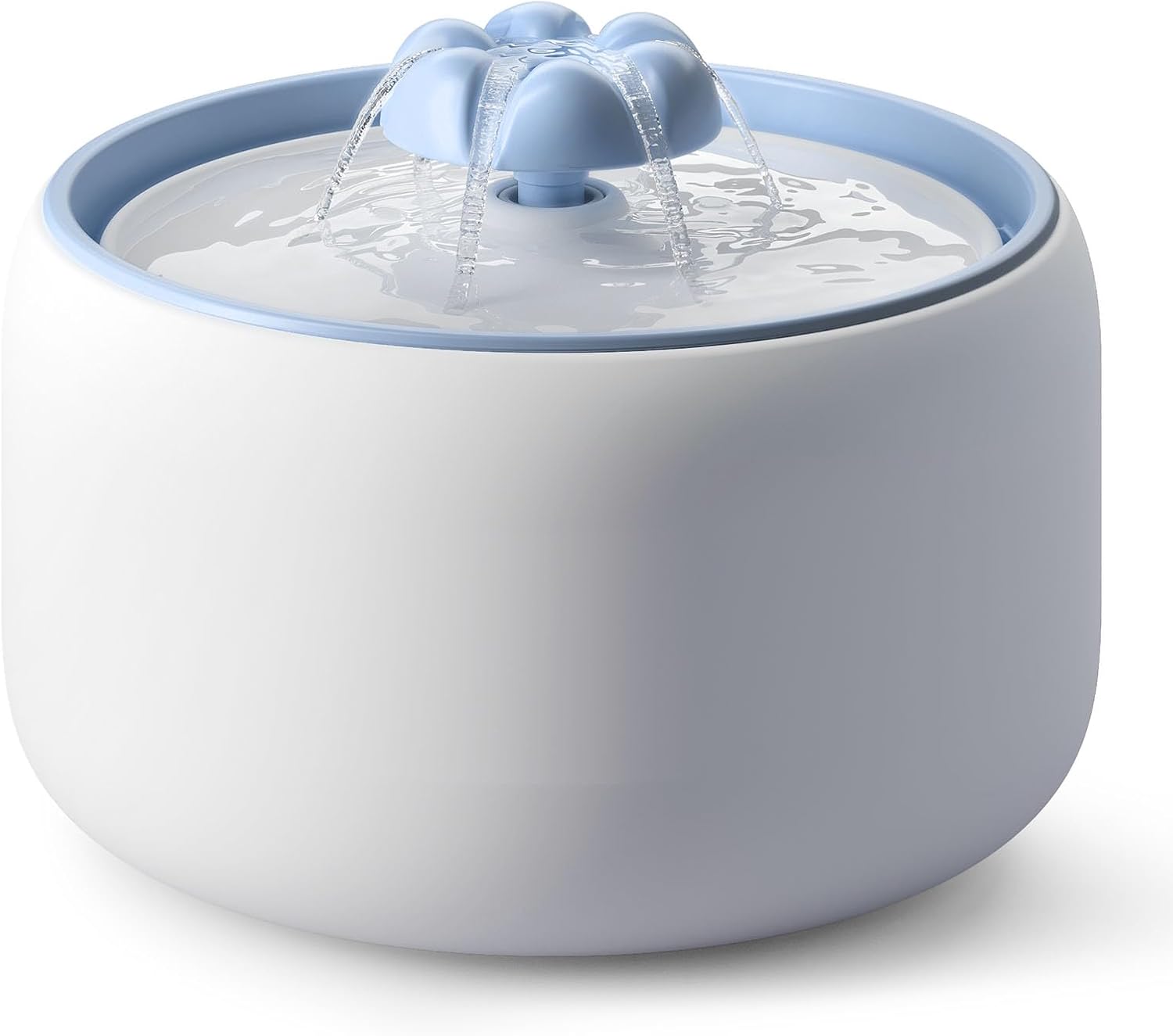
[Blue] W03L 3L Premium Ceramic Cat Water Fountain
Model: W03 LITE
$59.99
$69.99
Basin Pet Water Fountain-W600
Model: W600
$43.99
$69.99
[Basic] Ceramic Pet Water Fountain with Power Cable
Model: W03L
$59.99
$99.00
[Black] W03L 3L Premium Ceramic Cat Water Fountain
Model: W03L Black
$59.99
$69.99

WOPET 8L Pet Water Fountain For Multiple Cats or Large Dogs A08
Model: A08
$49.99
$59.99
WOPET A08 Dog Water Fountain Filters
Model: A08 Filter
$19.99
$29.99

DOWNLOAD APP

WOpet life




Copyright © 2026 WOPET. All Rights Reserved.