Nov 23, 2026
Author:Sam Wonder
Watch your dog finish breakfast. The first few bites are easy to reach. The last few pieces usually end up against the rim, where you can see whether your dog has to stretch or put a paw in the bowl to get them. That’s a good place to start when you’re shopping for an automatic feeder.
For a small dog, three things matter most: a bowl they can comfortably reach, a portion setting that comes close to their usual meal, and a dispenser that handles the kibble they already eat. Once those are in place, it’s easier to decide whether you want a camera or just a way to serve dinner on time.
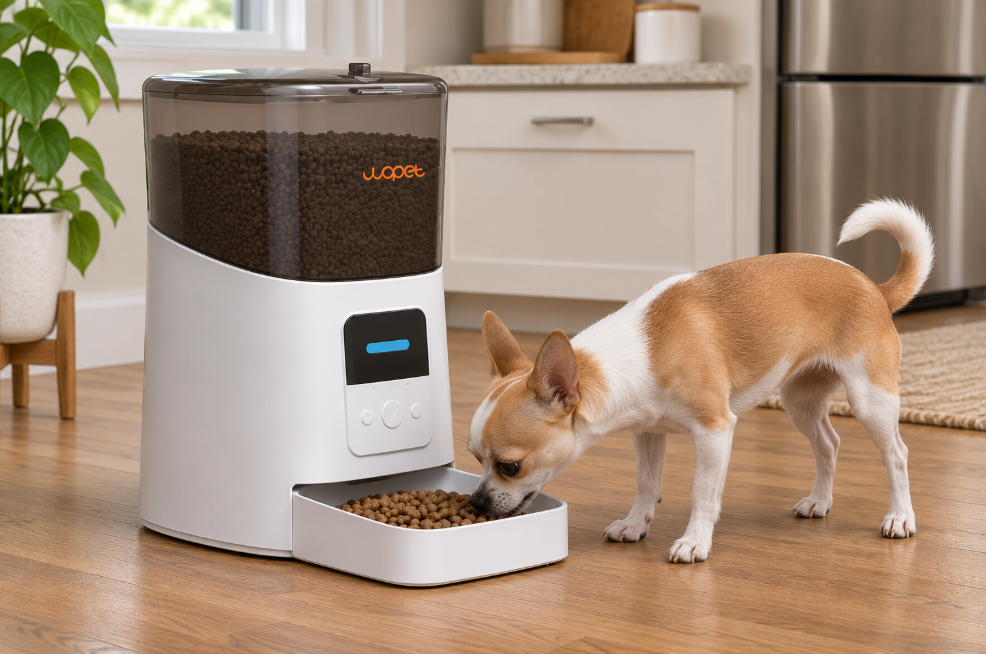
If your dog eats comfortably from their current bowl, measure from the floor to its rim. Then look at the depth and check how much room they have to reach the back. A feeder’s dish can sit low and still be awkward if the front lip is high or part of the bowl sits under the dispenser.
Side-view photos are helpful here, especially if your dog has a short muzzle. If the listing gives only the overall height of the feeder, ask for the bowl rim height and depth. Those measurements will tell you more about how the dish fits your dog than the height of the food hopper.
When the feeder arrives, try it in your dog’s usual spot. Stay for a meal and see whether they can finish comfortably, including the pieces that roll to the back.
If breakfast normally weighs 25 grams, a difference of 5 grams is already a fifth of the meal. That’s why it helps to compare the feeder’s smallest dispensing increment before looking at how many meals it can schedule.
The WOPET Patrol F07 Pro lists 5 g per portion. In the app, a portion is one dispensing increment, so five portions would be a starting setting for that 25 g breakfast. Try it two or three times with your usual kibble and weigh each serving. The published figure helps you choose a setting to test. The scale tells you what your dog will actually get.
If you usually scoop your dog’s food by volume, weigh one of those scoops before setting up the feeder. Everyone who handles breakfast can then work from the same number. If you’re unsure what daily amount to aim for, VCA Animal Hospitals’ guide to pet food serving sizes explains how to use the feeding guide on the bag as a starting point and when to ask your veterinarian.
Take a few pieces of kibble from the bag and measure them across their widest point. Pay particular attention to the largest pieces if the food comes in a mix of shapes. WOPET lists a 5–15 mm dry kibble range for the F07 Pro, so compare your food with that range before ordering.
If the feeder starts dropping less food than you expect, look for pieces hanging up in the chute before turning the portion setting up. Crumbs and unusually shaped pieces can affect how food flows. WOPET’s guide to kibble size and feeder jams shows what to look for when a serving repeatedly comes up short.
If your dog mostly eats wet food, look for a feeder designed to serve it and follow its storage instructions. If you’re using dry food, keep the original bag so you can find the lot number and best-by date later. See the FDA’s pet food storage guidance.
| Your priority | WOPET model to consider | What to check at home |
|---|---|---|
| Dinner needs to happen on time, and you want smaller adjustments to the serving. | Patrol F07 Pro | Weigh two or three servings at the intended setting and check that 2.4 GHz Wi‑Fi reaches the feeder’s location. |
| You want to see whether your dog comes over when food drops. | Heritage View HV10P | Set the feeder in its usual spot and check whether the camera can see your dog and the bowl during a meal. |
Maybe you’re buying a feeder because dinner is at six and you rarely get home before seven. The Patrol F07 Pro suits that routine if you want one bowl of dry food served on schedule and the option to make smaller portion adjustments. It uses 2.4 GHz Wi‑Fi, so check that your router offers that band where you plan to put it.
If you often wonder whether your dog actually came over when the food dropped, the single-bowl WOPET Heritage View HV10P adds a camera. Open the live view during a meal while you’re home. If your dog’s shoulders block the dish, try turning the feeder slightly or giving them more room to approach from the side.
Set the feeder to serve breakfast on a morning you’ll be home. Start with an empty dish, weigh the food it dispenses, then watch your dog approach. If the sound of the kibble dropping makes them back away, serve breakfast in their familiar bowl and try again during another supervised meal.
Once you’ve found a setting that works, write it down somewhere anyone feeding your dog can see it. A note like “Breakfast: five portions, checked at 25 g with the current kibble” gives the next person a clear starting point. If you switch foods or notice the bowl looks lighter than usual, weigh another serving. The WOPET feeder manuals are handy if you need to check the cleaning or reassembly steps before testing again.
Label:
Popular Post
The Ultimate Guide to Tabby Cats: Patterns, Personalities, and More
Mar 27, 2025

Top 8 Reasons Why Does My Cat Sleep Between My Legs?
Mar 03, 2025

What to Do If My Dog's Poop Is Black But Not Tarry
Feb 04, 2023

Superfecundation Cats: When Kittens in One Litter Have Different Fathers
Jul 11, 2025
Can Cats Have Orange Eyes? Genetics, Breeds, and Care Guide
May 20, 2025
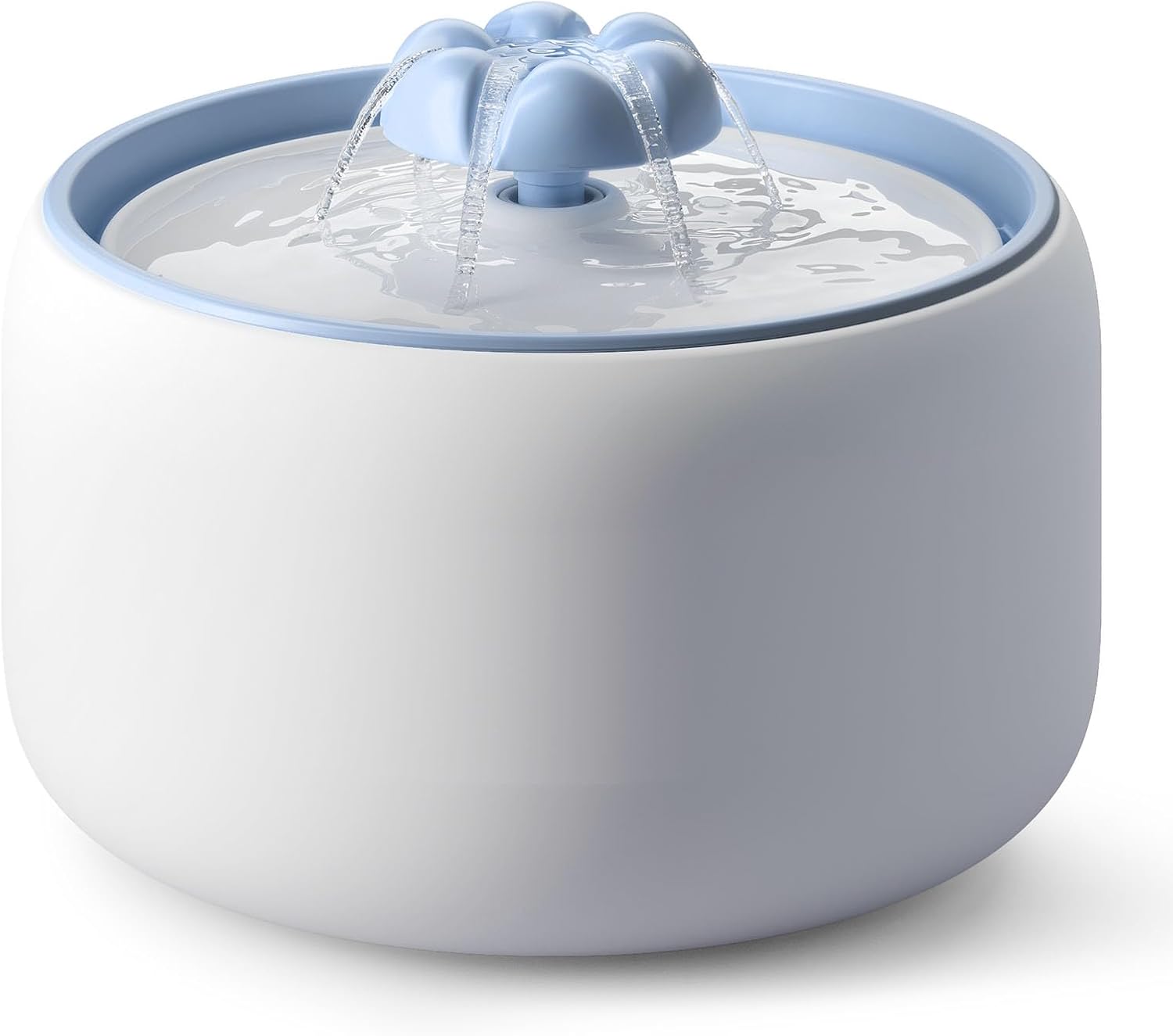
[Blue] W03L 3L Premium Ceramic Cat Water Fountain
Model: W03 LITE
$59.99
$69.99
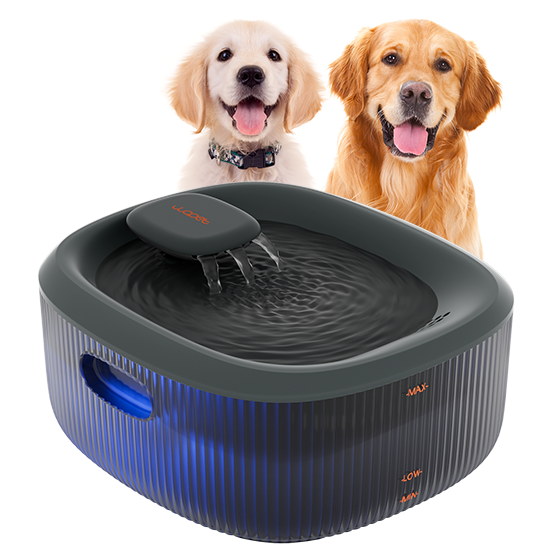
Basin Pet Water Fountain-W600
Model: W600
$43.99
$69.99
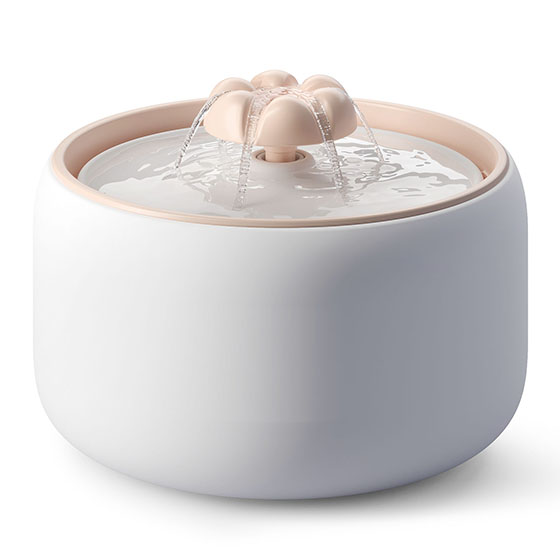
[Basic] Ceramic Pet Water Fountain with Power Cable
Model: W03L
$59.99
$99.00
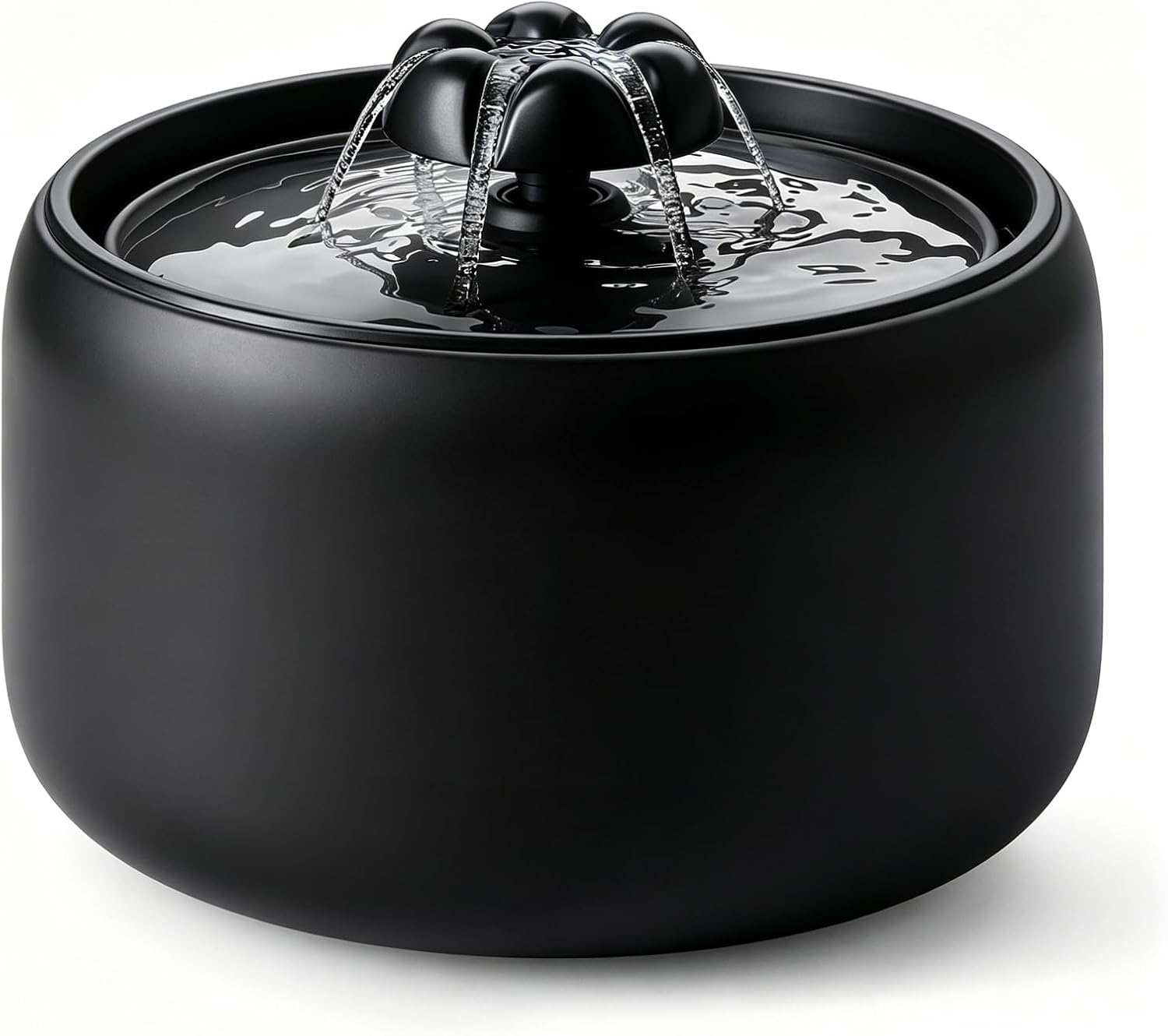
[Black] W03L 3L Premium Ceramic Cat Water Fountain
Model: W03L Black
$59.99
$69.99
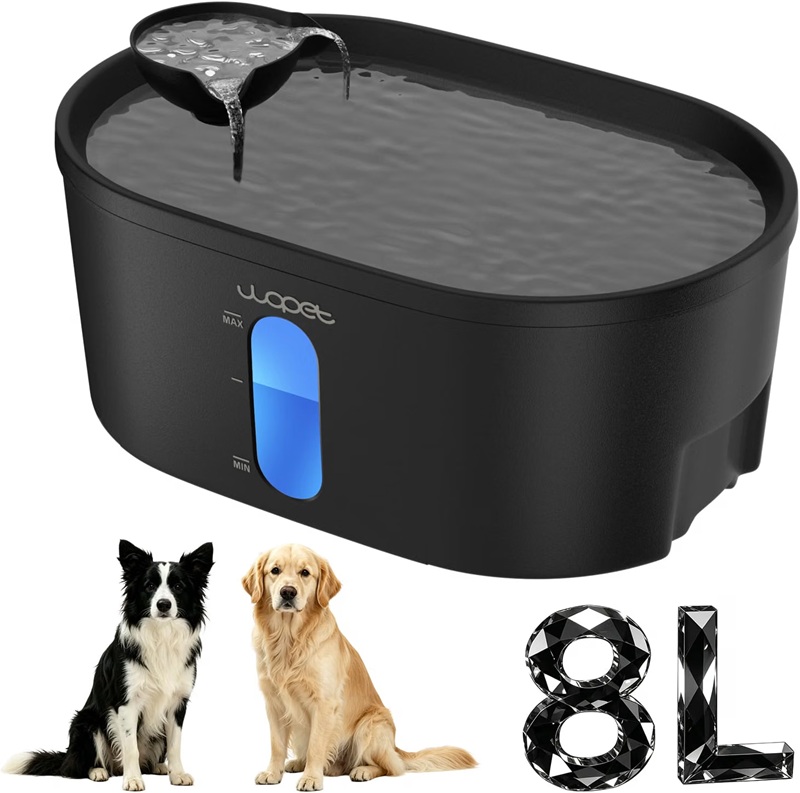
WOPET 8L Pet Water Fountain For Multiple Cats or Large Dogs A08
Model: A08
$49.99
$59.99
WOPET A08 Dog Water Fountain Filters
Model: A08 Filter
$19.99
$29.99

DOWNLOAD APP

WOpet life




Copyright © 2026 WOPET. All Rights Reserved.