Aug 28, 2026
Author:Jackson Watson
Quick Answer
There is no universal kibble size for every automatic feeder. Use dry, free-flowing kibble that falls within the size range listed for your exact model, measuring the widest part of several pieces. Shape, thickness, oiliness, and crumbs also matter. Even correctly sized kibble should be tested through multiple dispensing cycles before you rely on the feeder while away.
Current WOPET models have different published ranges. For example, the Heritage Air product page lists 2–15 mm kibble, while the Barn FT50D page lists 2–12 mm dry kibble. Always verify the current product page and the manual that came with your feeder.
How We Evaluated Kibble Compatibility
We reviewed current WOPET product pages and model-specific kibble information as of August 27, 2026. We uated the factors that can affect dispensing reliability: width, thickness, shape, surface coating, crumbs, and portion consistency.
This article does not report an independent laboratory test of every WOPET feeder or kibble brand. The 10-dispense procedure below is a practical household check that readers can perform with their own feeder and food.
Why Kibble Size Matters in an Automatic Feeder
An automatic feeder moves food through a narrow path that may include a hopper outlet, rotating impeller, divider, chute, and bowl opening. Kibble that does not move cleanly through those parts can cause:
• Incomplete portions
• Irregular meal sizes
• Bridging, where pieces lock together above the outlet
• Jams inside the impeller or chute
• Excess crumbs and dust
• Food residue that makes future dispensing less reliable
Kibble that is too large is an obvious risk, but small pieces are not automatically ideal. Very small, powdery, broken, or oily food may dispense inconsistently, collect around moving parts, or produce different weights per programmed portion.
What Size Kibble Can WOPET Automatic Feeders Use?
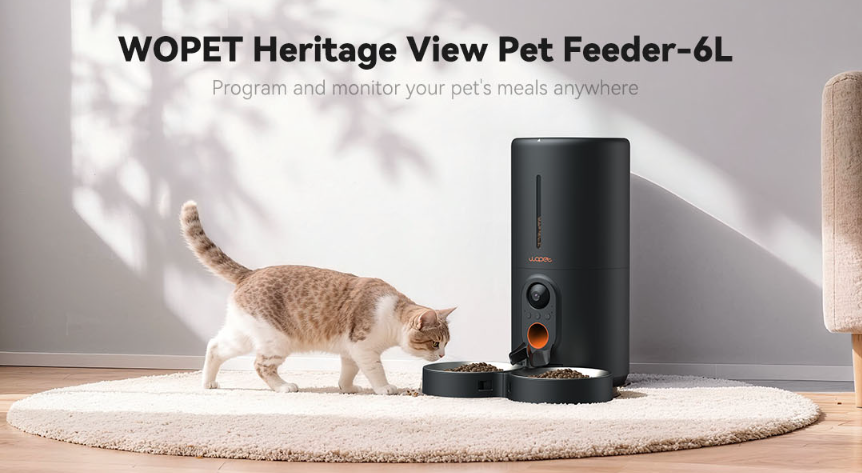
Buy Heritage View Pet Feeder on Amazon
Published specifications vary by model and product revision. The following examples were checked on August 27, 2026.
|
WOPET model |
Published dry-kibble range |
Bowl setup |
Important note |
|
2–15 mm |
Single or dual bowl |
Product page lists approximately 10 g per portion; actual weight varies with kibble |
|
|
2–12 mm |
Dual bowl |
Product page specifies dry food only |
|
|
Confirm before use |
Single bowl |
The current comparison table lists 5–15 mm, while the product description lists 2–15 mm |
Because the current Patrol F07 Pro page presents two different minimum sizes, check the WOPET automatic feeder manuals or confirm the range with WOPET Support before choosing food for that model. Do not select food for one feeder based on the specifications of another. Model names, revisions, and mechanisms can differ even when the hoppers look similar.
How to Measure Kibble for an Automatic Feeder
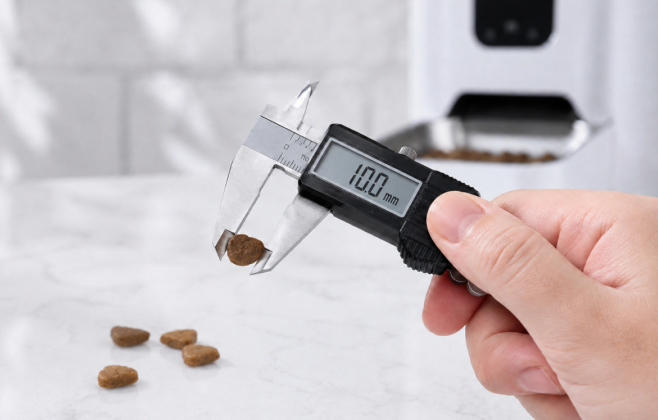
1. Sample More Than One Piece
Kibble pieces are rarely identical. Take at least 10 pieces from different parts of the bag, including several of the largest pieces you can find.
2. Measure the Widest Dimension
For round kibble, measure the diameter. For triangular, rectangular, flat, or irregular pieces, measure the longest or widest point that must pass through the feeder.
A ruler with millimeter markings can provide a quick estimate. A digital caliper is more precise, but it is not essential for most households.
3. Check Thickness, Not Just Length
A flat piece might be 14 mm across but only a few millimeters thick. Another may be shorter but much thicker. Either dimension can affect how pieces rotate, stack, and pass through the mechanism.
4. Examine the Entire Bag
Some foods contain mixed shapes or inclusions. A few oversized pieces can jam a feeder even when most of the kibble fits comfortably.
5. Compare With the Exact Model Specification
Stay inside the manufacturer's published range rather than choosing pieces that barely match the maximum. Leaving some margin is sensible because pieces within the same bag vary, and kibble near the stated maximum may not move consistently when several pieces reach the outlet together.
Kibble Shape Can Matter as Much as Size
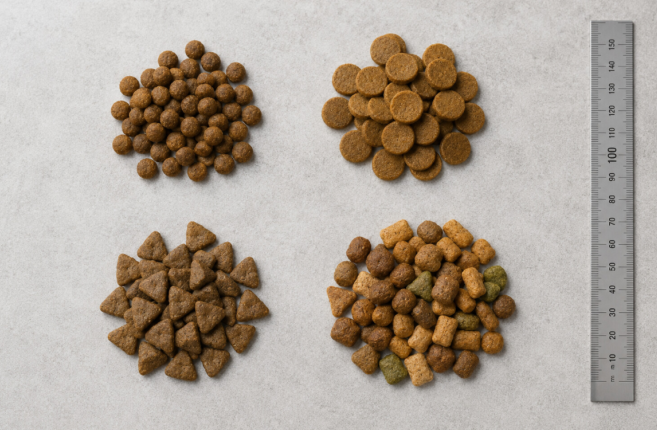
Round or Compact Kibble
Small, compact pieces often flow consistently because they roll and settle easily. They can still dispense unevenly if they are extremely small or dusty.
Flat Discs
Flat kibble can overlap like shingles and create a bridge above the outlet. Measure the full width and test multiple cycles.
Triangular or Star-Shaped Pieces
Corners may catch against neighboring pieces or the edge of the chute. A piece can fit through the opening by itself yet jam when several pieces arrive together.
Mixed Shapes and Sizes
Blended foods are more difficult to calibrate. Different pieces may have different weights and flow rates, causing the grams delivered per programmed portion to vary.
Oily or Coated Kibble
Surface oils can leave residue inside the hopper and chute. That residue may hold crumbs, reduce flow, and require more frequent cleaning. Do not add oil, broth, water, toppers, or supplements directly to kibble stored inside a dry-food hopper unless the manufacturer specifically permits it.
Freeze-Dried Pieces
Freeze-dried chunks may be light, irregular, and larger than conventional kibble. They can bridge or break into powder. Use them only when the feeder documentation explicitly supports their size and texture.
Does an Automatic Feeder Work With Wet or Semi-Moist Food?
Most hopper-style automatic feeders are designed for dry food. Wet food, fresh food, semi-moist pieces, and moistened kibble can stick to internal parts and create a food-safety and cleaning problem.
Only use wet food in a feeder specifically designed to store and serve it safely. A standard dry-food hopper should not be converted by adding ice packs or wet ingredients unless those methods are included in the manufacturer's instructions.
Why “One Portion” Does Not Always Equal the Same Weight
Many automatic feeders describe meal output in portions rather than cups. The actual grams in one portion can change when you switch food because kibble varies in:
• Piece size
• Shape
• Density
• Air space between pieces
• Surface coating
• Broken pieces and crumbs
A feeder's nominal portion value is a useful starting point, not a substitute for measuring your pet's actual food.
How to Calibrate a New Kibble
1. Start with a clean, dry feeder.
2. Add enough kibble for testing.
3. Dispense the same programmed portion 10 times into an empty bowl.
4. Weigh each output with a kitchen scale.
5. Calculate the average and note the variation.
6. Set the daily schedule based on the measured output and your pet's feeding plan.
7. Recheck after changing food, formula, or kibble shape.
The feeding chart on a pet-food package is a starting point. Individual needs vary with species, age, body condition, activity, health, and whether treats or other foods are provided. The WSAVA Global Nutrition Guidelines recommend an individualized nutrition plan. Ask your veterinarian to help establish an appropriate calorie target when needed.
A Practical Compatibility Test Before You Rely on the Feeder
Do not fill the hopper and leave for a trip immediately. Run a controlled test first.
Step 1: Inspect the Food
Check a representative sample, including several of the largest pieces. Do not load the food if the sample contains pieces above the listed maximum. Also look for clumps, excessive dust, moisture, or damaged packaging.
Step 2: Check Assembly
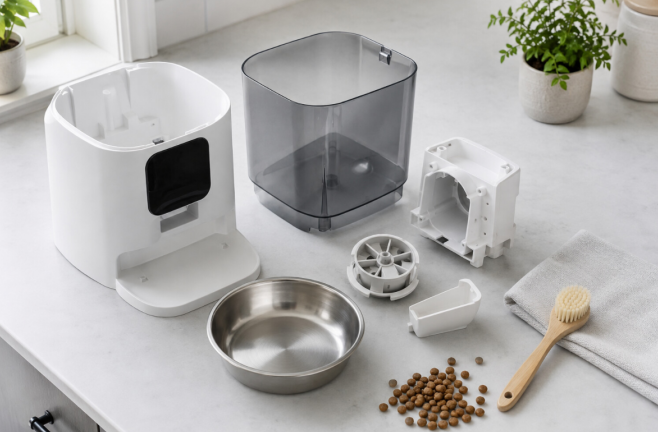
Confirm that the impeller, chute, bowl, splitter, lid, and hopper are seated according to the manual. A part that is slightly out of position can look like a kibble problem.
Step 3: Test Small and Large Portions
Run the minimum portion several times, followed by the typical meal size you plan to use. Watch the entire dispensing path.
Step 4: Test the Full Schedule
Use the feeder at home for several days. Confirm that scheduled meals dispense consistently and that your pet actually eats them.
Step 5: Check Alerts and Backup Power
If the feeder has app notifications or a blockage sensor, confirm that s reach your phone. Test the approved backup-power method before depending on it.
Step 6: Keep a Human Backup Plan
An automatic feeder does not replace daily pet care. Arrange a trusted person to check food, water, the feeder, and your pet during extended absences.
Why Does My Automatic Feeder Keep Jamming?
The Kibble Is Too Large
Measure the largest pieces, not just an average one. A single oversized piece can block the outlet.
The Shape Creates a Bridge
Flat, angular, or mixed pieces can interlock above the opening. Switching to a more compact, uniform kibble may improve flow.
Crumbs Have Built Up
Kibble dust can collect around moving parts. Empty and clean the removable components according to the manual. WOPET's guide explains how to clean an automatic pet feeder.
The Food Is Oily or Damp
Moisture and surface oils increase sticking. Keep the lid closed, use only the manufacturer-approved desiccant pack if one is included, and store food in a cool, dry place.
The American Veterinary Medical Association's pet-food handling guidance recommends storing dry pet food in a cool, dry location below 80°F and, when possible, keeping it in the original bag inside a clean, dedicated container.
The Hopper Is Overfilled or Packed Down
Do not force food into the hopper. Fill only to the indicated line and allow kibble to settle naturally.
A Component Is Misaligned
A loose impeller, incorrectly installed splitter, or bowl pushed too far under the chute may restrict flow. Reassemble the unit using the model manual.
The Problem Is Not the Food
Power loss, a depleted battery, motor obstruction, damaged parts, network settings, or an incorrect schedule can also cause missed meals. If cleaning and approved kibble do not fix the problem, follow the model's troubleshooting instructions or contact WOPET support.
How to Store Kibble Used in an Automatic Feeder
• Keep the bulk supply in its original bag so the lot number, expiration date, and manufacturer information remain available.
• Place the original bag inside a clean, dry storage container if extra protection is needed.
• Do not mix a new bag into old crumbs without cleaning the container first.
• Add only the amount your household can use while it remains fresh.
• Keep the feeder away from steam, direct splashes, excessive humidity, and strong heat.
• Wash and fully dry removable food-contact parts before refilling.
• Replace desiccant packs only with compatible products and keep them inaccessible to pets.
How to Choose Kibble for More Reliable Dispensing
The best option is not necessarily the smallest kibble. Look for food that is:
• Within the feeder's published size range
• Fairly uniform in shape and thickness
• Dry and free-flowing
• Low in loose crumbs and powder
• Not excessively oily
• Appropriate for your pet's nutritional needs
Do not change a medically appropriate diet solely to fit a feeder without discussing the change with your veterinarian. If the prescribed food is incompatible, a different feeding device may be the better solution.
Frequently Asked Questions
How do I know if kibble is too big for an automatic feeder?
Measure the widest part of several large pieces and compare it with the exact model's published range. Repeated hesitation, incomplete portions, grinding sounds, or blockage s can also indicate poor compatibility.
Can small kibble jam an automatic feeder?
Yes. Very small kibble can contain more dust, settle tightly, or produce inconsistent portion weights. Size is only one part of compatibility.
Should I measure kibble by length or width?
Measure the largest dimension that must pass through the mechanism. For irregular food, check length, width, and thickness.
Can I mix two types of kibble in an automatic feeder?
It is possible only if the manufacturer allows both foods and every piece fits, but mixed shapes and densities can dispense unevenly. Test and weigh the output before relying on the mixture.
Can I put treats in an automatic feeder?
Only if the treats meet the model's food requirements. Many treats are too large, soft, oily, or irregular for a dry-kibble dispenser.
How often should I recalibrate portions?
Recheck whenever you change brands, formulas, kibble shape, or feeder parts. Periodic weighing is also useful because crumbs and wear can affect output.
What should I do if my pet's required food does not fit?
Do not crush or alter a therapeutic diet without veterinary guidance. Use a feeder compatible with that food or choose another safe feeding method.
Bottom Line
The right kibble for an automatic feeder is dry, uniform, free-flowing, and comfortably within the size range specified for the exact model. Measure several of the largest pieces, consider their shape and texture, and weigh repeated dispensing cycles before relying on the feeder's schedule.
|
Editorial note: WOPET product specifications were checked against current product pages on August 27, 2026. This article provides general equipment and feeding information and is not a substitute for individualized veterinary advice. |
Popular Post
Persian Cat Size Guide: How Big Do Persian Cats Get?
Jul 21, 2025
Top 10 Most Expensive Cat Breeds in The World
May 07, 2025
The Ultimate Guide to Tabby Cats: Patterns, Personalities, and More
Mar 27, 2025
Can Cats Have Ice Cream? Dangers, Safe Flavors & Healthy Cat Treats
Sep 02, 2025

My Cat Only Eats A Little at A Time - What to Do?
Feb 27, 2023
Basin Pet Water Fountain-W600
Model: W600
$43.99
$69.99
[Basic] Ceramic Pet Water Fountain with Power Cable
Model: W03L
$59.99
$99.00
WOPET 8L Pet Water Fountain For Multiple Cats or Large Dogs A08
Model: A08
$49.99
$59.99
[Upgrade] Basin Wireless Pet Water Fountain
Model: W600 Pro
$69.99
$89.99
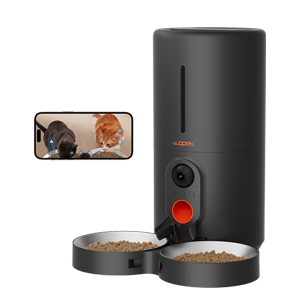
Heritage View Pet Feeder Dual Bowls For Two Cats
Model: HV10DP
$119.99
$149.99
[New] Ceramic Wireless Pet Water Fountain W03
Model: W03
$89.99
$129.00

DOWNLOAD APP

WOpet life




Copyright © 2026 WOPET. All Rights Reserved.