Sep 04, 2026
Author:Amanda Lyu

Dog paw burns can come from hot pavement, sand, artificial turf, fire or heating surfaces, friction, and chemicals such as some de-icers or cleaners. Because pads bear weight and touch the ground, even a small-looking burn can become painful or contaminated.
|
Immediate steps: Move your dog off the surface, prevent further walking, and cool a suspected thermal burn under cool—not icy—running water. Do not apply ice, butter, oils, human burn cream, or pain medication. Call a veterinarian promptly for guidance; blistering, peeling, discoloration, severe pain, or inability to walk requires urgent care. For chemical exposure, protect yourself, prevent licking, and call a veterinarian or pet poison service before adding any neutralizing product. |
What do burned dog paws look like?
Signs can appear during the walk or become clearer afterward. Check for:
• Limping, shortened steps, or refusing to walk
• Repeatedly lifting one or more feet
• Licking or chewing the pads
• Redness or tenderness
• Pads that look darker, paler, gray, or otherwise different from normal pigmentation
• Blisters, peeling, cracks, or loose pad tissue
• Swelling, moisture, discharge, or bleeding
• Crying, panting, restlessness, or pulling away from touch
Do not wait for a dramatic blister. A dog may keep moving while excited and show pain only after returning home. Compare all four paws, but avoid pressing, scraping, or peeling damaged tissue.
How do dog paw burns happen?

Hot pavement and other surfaces
Asphalt, concrete, sand, metal, rubberized surfaces, and artificial turf can become much hotter than the surrounding air. Sun, surface color, wind, shade, and time of day all affect the temperature, so a weather-app reading cannot confirm that the ground is safe.
Open flame and household heat
Fire pits, grills, fireplace embers, hot cookware, space heaters, and recently extinguished campfires can injure pads. Keep dogs away until the area is fully cool.
Chemicals
Strong cleaners, solvents, lawn products, and some ice-melting chemicals can irritate or burn skin. Chemical exposure also creates an ingestion risk when the dog licks the paws.
Friction
Long runs, abrupt increases in exercise, rough trails, and repeated sliding can abrade or burn the pad surface even when the ground is not hot. Conditioning should increase gradually.
What should you do immediately?
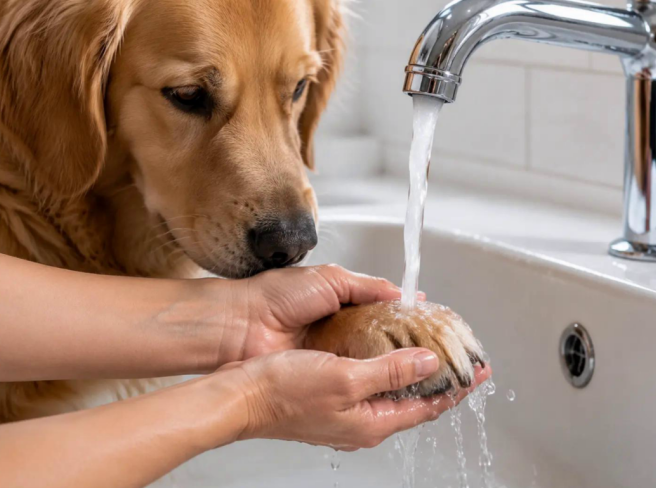
For a suspected thermal burn
1. Stop the exposure. Carry the dog or move them onto cool grass, a blanket, or another safe surface.
2. Limit walking. Continuing to bear weight can worsen damaged tissue.
3. Cool the paw. Use cool running water. Avoid ice and very cold water, which can further injure tissue and cause discomfort.
4. Remove loose debris only. Let water flush away surface dirt; do not scrub or pull attached skin.
5. Call a veterinarian. Describe the surface, exposure time, number of paws affected, appearance, and whether the dog can walk.
Veterinary first-aid guidance varies on the exact cooling duration, and chemical burns require substance-specific instructions. The safest approach is to begin gentle cooling for a heat injury while arranging professional advice, rather than delaying care to complete a fixed timer.
For suspected chemical exposure
Move the dog away, protect your own skin with gloves if available, and prevent licking. Call a veterinarian, emergency clinic, or pet poison service with the product label in hand. Do not mix chemicals or attempt to neutralize an acid or alkali unless a professional specifically instructs you; a reaction can generate heat or spread the substance.
What should you never put on a paw burn?
Do not apply:
• Ice directly to the pad
• Butter, cooking oil, or essential oil
• Human burn gel or numbing cream
• Hydrogen peroxide or rubbing alcohol
• Adhesive directly over the injured pad
• Leftover antibiotic or steroid cream
• Human pain relievers
These products can damage tissue, be toxic when licked, trap heat, or interfere with veterinary uation. Do not pop blisters, peel skin, cut a loose pad flap, or scrub the surface.
Should you bandage a burned paw?
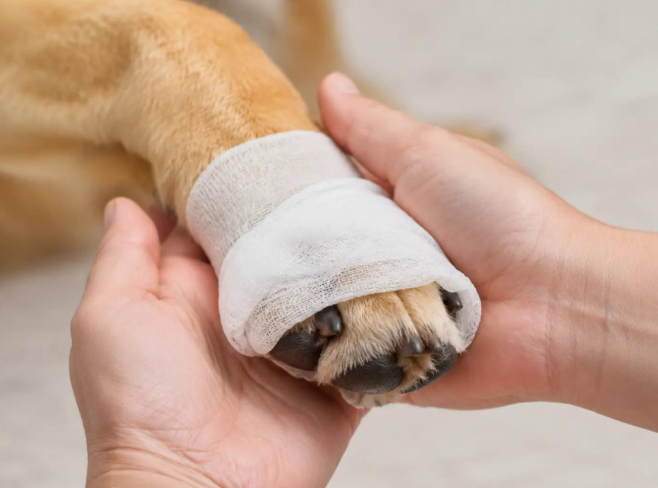
Bandages can protect a burn, but a tight or wet bandage can cause additional injury. Call the clinic for instructions. If advised, place a clean nonstick pad over the area and wrap it loosely for transport. Do not tape tightly around the leg, and keep the covering clean and dry.
Check that toes do not become swollen, cold, or discolored. A temporary transport dressing is not a home treatment plan and should not be left in place without veterinary direction.
When is a paw burn an emergency?
Seek urgent veterinary care when:
• The dog cannot bear weight or several paws are affected
• Pads are blistered, peeling, raw, or losing tissue
• There is marked swelling, bleeding, or severe pain
• Tissue appears pale, gray, blue, black, or deeply discolored
• The burn involves a chemical, electricity, open flame, or extensive heat exposure
• The dog shows weakness, collapse, breathing difficulty, vomiting, tremors, or other whole-body symptoms
• You cannot safely prevent licking or further trauma
Burn severity can be difficult to judge at home, and tissue damage may evolve. A veterinarian can provide pain relief, assess depth, clean the wound, apply an appropriate dressing, and monitor for infection.
How can you prevent dog paw burns?

• Walk in the early morning or later evening during hot weather.
• Choose shaded routes, grass, or cool natural ground.
• Treat a hand-to-surface check as a warning screen, not a guarantee; exposure time and the full route still matter.
• Keep walks shorter when surfaces are warm and check paws during breaks.
• Carry small dogs across unavoidable hot sections when it is safe to do so.
• Condition dogs gradually for distance and terrain.
• Introduce well-fitted booties before they are needed; confirm comfort, traction, and airflow.
• Inspect paws after every high-risk outing.
• Keep dogs away from fire pits, grills, embers, heaters, and hot metal.
• Store chemicals securely and keep dogs off recently cleaned or treated surfaces until they are safe and dry.
AVMA warm-weather guidance specifically advises avoiding hot surfaces such as asphalt that can burn paws. AAHA also notes that surface temperature can greatly exceed air temperature, reinforcing why route choice matters more than the forecast alone.
Can paw balm prevent a burn?
Paw balm may reduce dryness or provide a limited barrier against some environmental exposure, but it does not make hot pavement safe. A thin cosmetic coating cannot reliably block prolonged heat transfer. Use cooler timing, a safer route, or properly fitted booties instead.
Apply balm only to intact skin and choose a dog-safe product approved by your veterinarian. Do not place balm on a fresh burn unless your veterinarian directs it.
What happens during recovery?
Follow the clinic’s plan for bandage changes, activity restriction, medication, and rechecks. Keep dressings dry and prevent licking. Do not stop prescribed treatment because the surface looks better; paw pads can reopen when activity increases too quickly.
Provide clean, nonslip footing and use only brief bathroom walks if your veterinarian allows them. Contact the clinic if pain increases, the bandage slips or gets wet, toes swell, odor or discharge develops, or your dog becomes unwell.
For ongoing inspection and seasonal protection after recovery, use the complete dog paw care guide. If a pad is dry or split rather than burned, see cracked dog paw pads.
Frequently asked questions
How hot is too hot for dog paws?
There is no single safe air temperature. Ground material, sunlight, shade, wind, and exposure time all change risk, and surfaces can be far hotter than the air. Avoid a surface whenever it feels uncomfortably hot, the route lacks relief, or your dog changes gait.
Can I treat a mild paw burn at home?
Begin first aid and call your veterinarian. What looks mild may worsen, and the pad’s weight-bearing location increases contamination and reopening risk. The clinic can decide whether monitoring at home is appropriate.
How long do burned paw pads take to heal?
Healing time depends on burn depth, the number of paws, infection, bandage needs, and how well weight-bearing can be controlled. Do not use a general timeline to decide when to resume exercise; follow veterinary rechecks and activity guidance.
Are dog booties safe in summer?
Properly fitted, breathable booties can protect against surfaces, but they can also rub or trap heat and moisture. Introduce them gradually, check fit often, keep walks appropriate for the weather, and remove them after the outing.
What if my dog licks the burned paw?
Licking can contaminate and traumatize damaged tissue. Contact your veterinarian for a safe barrier or collar recommendation. Do not apply a bad-tasting chemical or tight homemade covering.
Final takeaway
For suspected dog paw burns, act in this order: stop exposure, limit walking, cool a thermal burn with cool water, prevent licking, and contact a veterinarian. Prevention depends on the surface and route—not air temperature alone. Shade, timing, gradual conditioning, inspection, and properly fitted booties provide more reliable protection than balm.
Editorial sources
• AVMA: Warm Weather Pet Safety
• AAHA: How to Protect Your Dog’s Paws from Hot Pavement
• VCA Animal Hospitals: First Aid for Torn or Injured Foot Pads in Dogs
This article provides general educational information and is not a substitute for an examination or individualized advice from your veterinarian.Label:
Popular Post

Top 10 Most Expensive Cat Breeds in The World
May 07, 2025
The Ultimate Guide to Tabby Cats: Patterns, Personalities, and More
Mar 27, 2025

Can Cats Have Ice Cream? Dangers, Safe Flavors & Healthy Cat Treats
Sep 02, 2025

My Cat Only Eats A Little at A Time - What to Do?
Feb 27, 2023

Top 8 Reasons Why Does My Cat Sleep Between My Legs?
Mar 03, 2025

[Blue] W03L 3L Premium Ceramic Cat Water Fountain
Model: W03 LITE
$59.99
$69.99
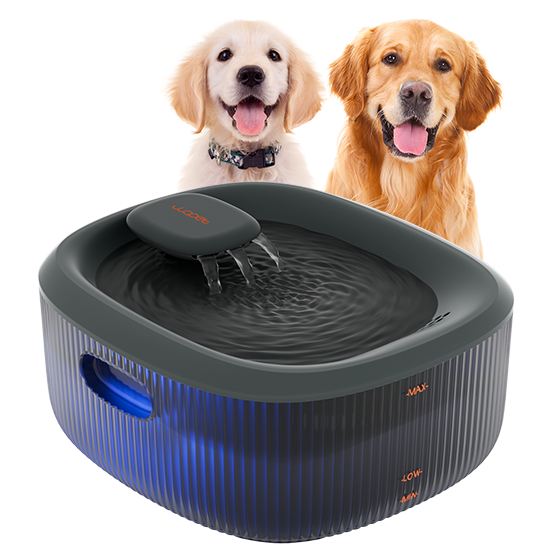
Basin Pet Water Fountain-W600
Model: W600
$43.99
$69.99

[Basic] Ceramic Pet Water Fountain with Power Cable
Model: W03L
$59.99
$99.00
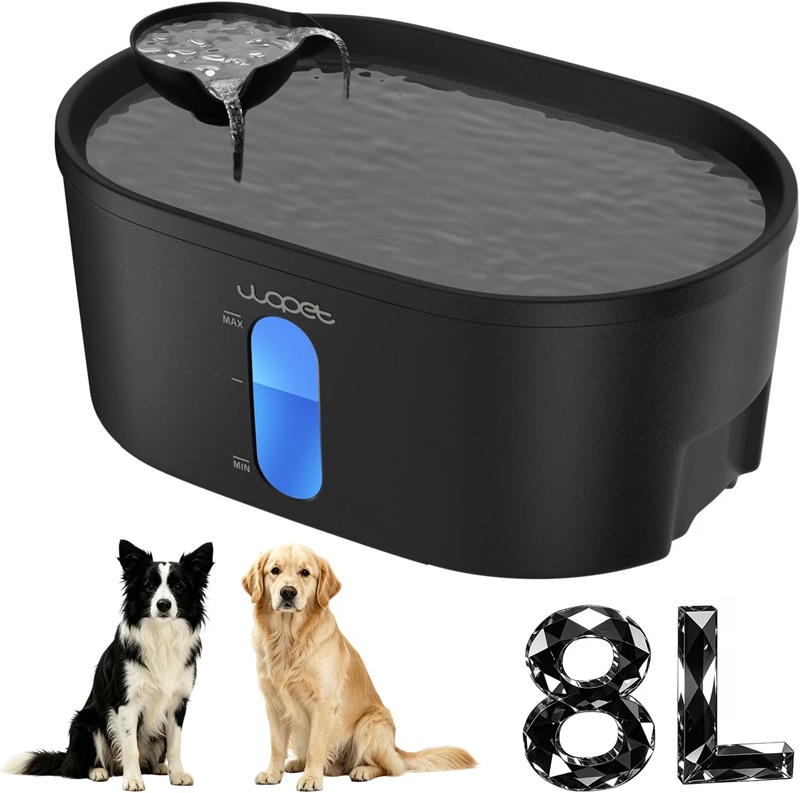
WOPET 8L Pet Water Fountain For Multiple Cats or Large Dogs A08
Model: A08
$49.99
$59.99
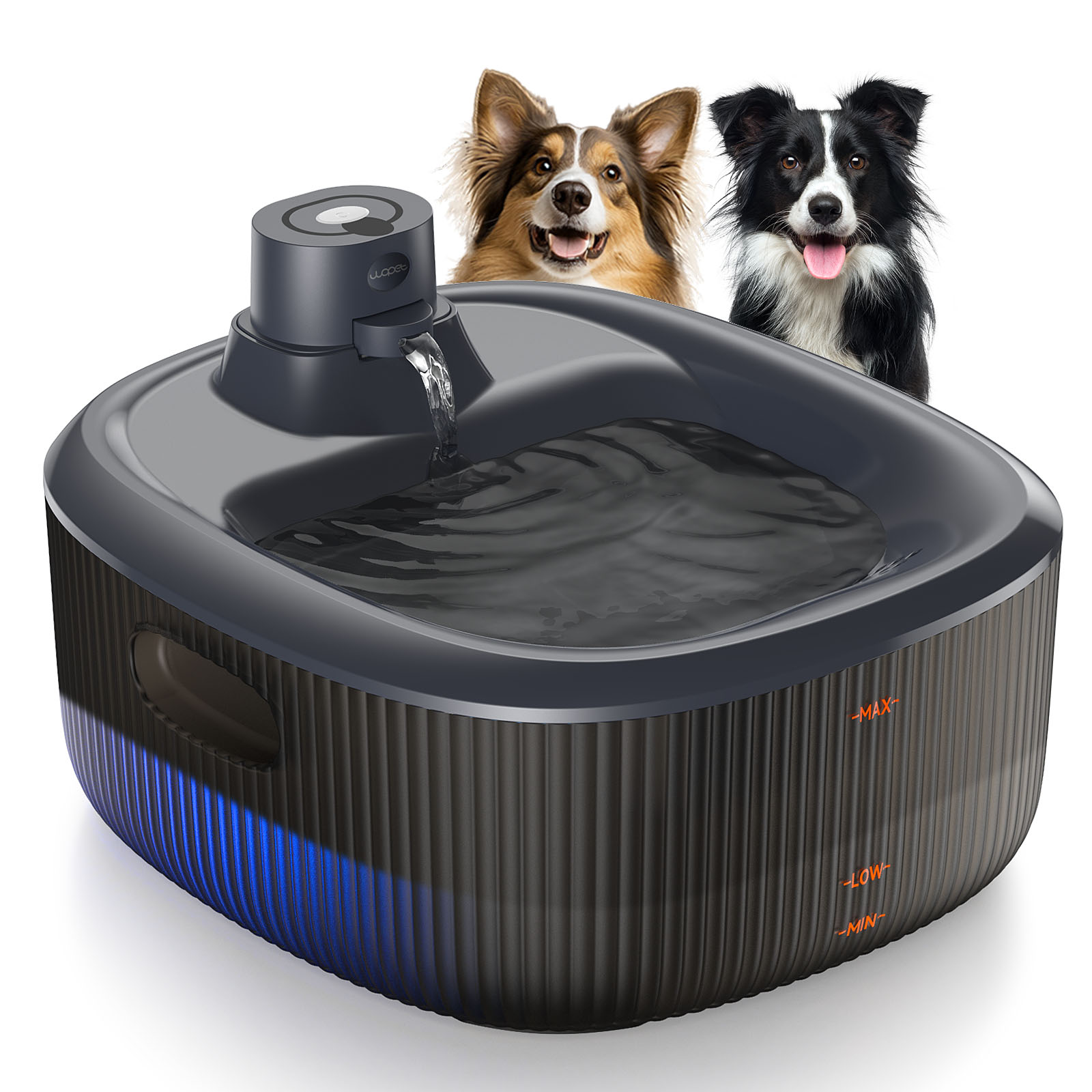
[Upgrade] Basin Wireless Pet Water Fountain
Model: W600 Pro
$69.99
$89.99
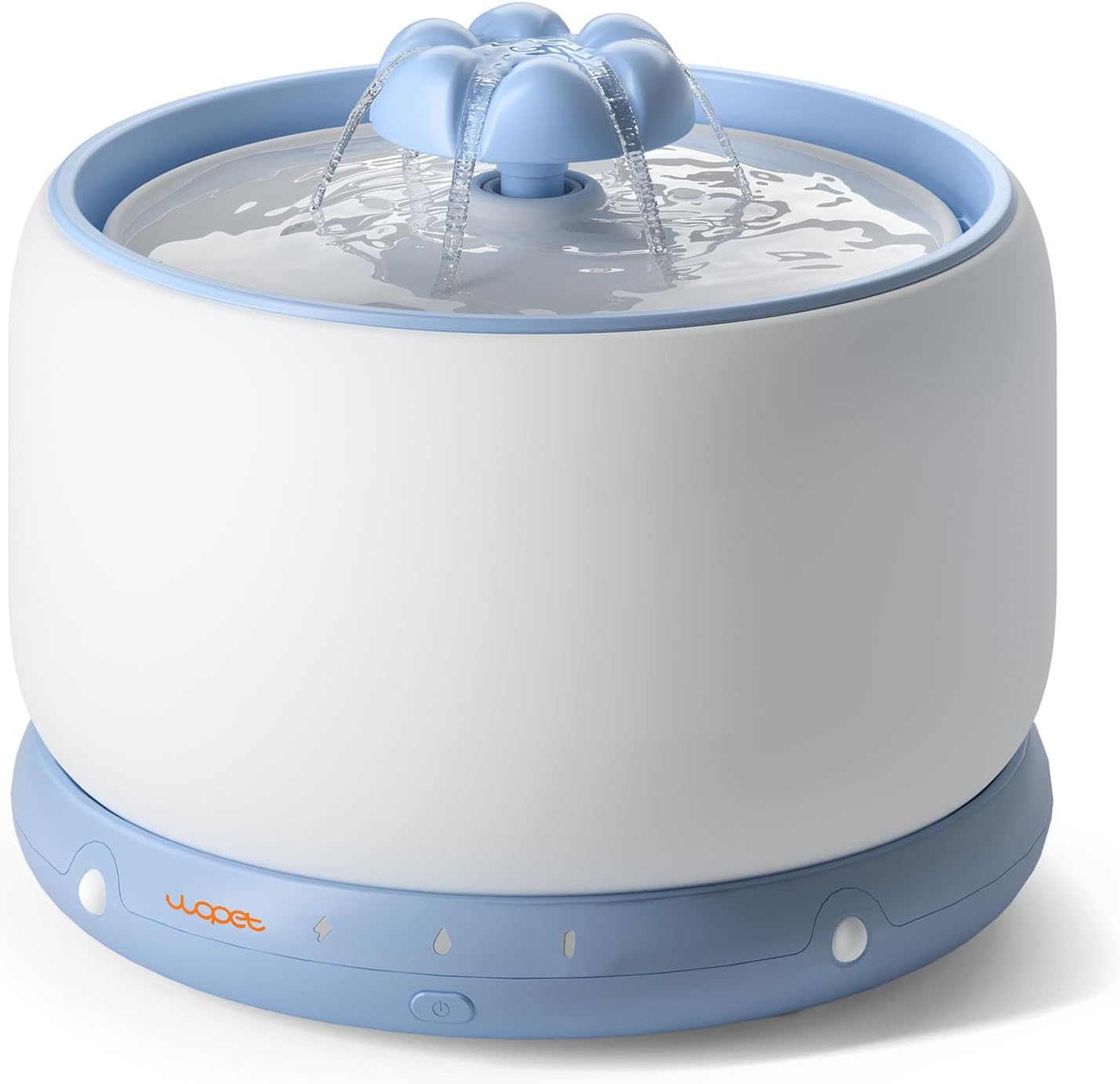
[Blue] W03 3L Ceramic Cordless Cat Water Fountain
Model: W03
$89.99
$99.99

DOWNLOAD APP

WOpet life




Copyright © 2026 WOPET. All Rights Reserved.