Sep 03, 2026
Author:Lisa Martinez
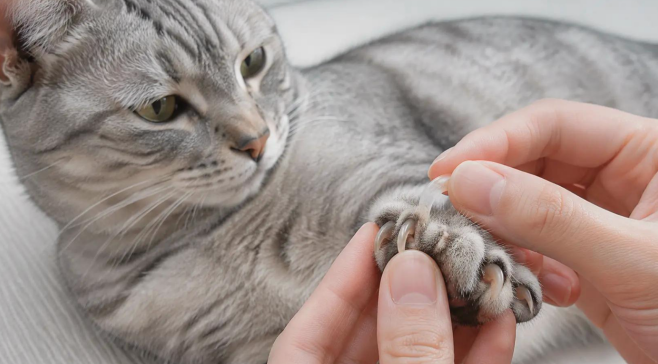
What looks like a peeling or split claw is often a normal part of feline nail growth. Cats regularly shed thin outer claw sheaths, especially while scratching. The discarded sheath is usually light, translucent, curved, and hollow—almost like a tiny copy of the claw.
A true split or broken claw is different. It may involve the solid living nail, cause pain or bleeding, leave a jagged section attached, or occur with swelling and repeated licking. Those changes should not be peeled or trimmed aggressively at home.
|
Quick answer: A dry, hollow claw shell found near a scratching post is usually normal. Contact your veterinarian if the actual claw is cracked toward the base, bleeding, painful, loose, discolored, surrounded by inflamed skin, or if several claws change at once. |
How cat claws grow
A cat claw is made of layers of keratin surrounding sensitive living tissue called the quick. New material grows beneath older outer layers. Normal scratching helps loosen and remove those worn sheaths, revealing a sharper claw underneath.
Because the outer layer can split lengthwise as it loosens, owners sometimes assume the nail is breaking apart. The shape and the cat’s comfort provide important clues.
Normal claw shedding: what it looks like
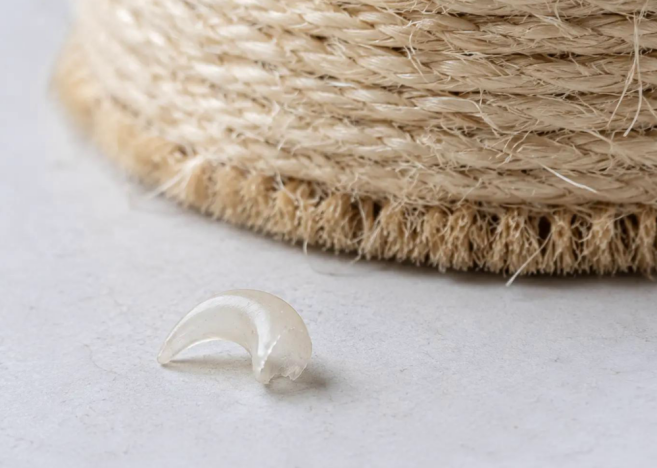
A normally shed sheath is typically:
• Thin and slightly translucent
• Dry rather than moist
• Curved and pointed
• Hollow or open on one side
• Found near a scratching surface or favorite resting area
• Not accompanied by limping, bleeding, swelling, or distress
Cats Protection explains that the claw-shaped pieces found around the home are usually sheaths removed through scratching, not whole claws. You may find them regularly without noticing any problem on the paw.
Do not pull at a partly loose sheath. Provide appropriate scratching surfaces and let normal movement loosen it. If the layer appears stuck, the claw is thick, or your cat is uncomfortable, ask your veterinarian or a cat-experienced groomer to inspect it.
Normal peeling versus a true nail injury
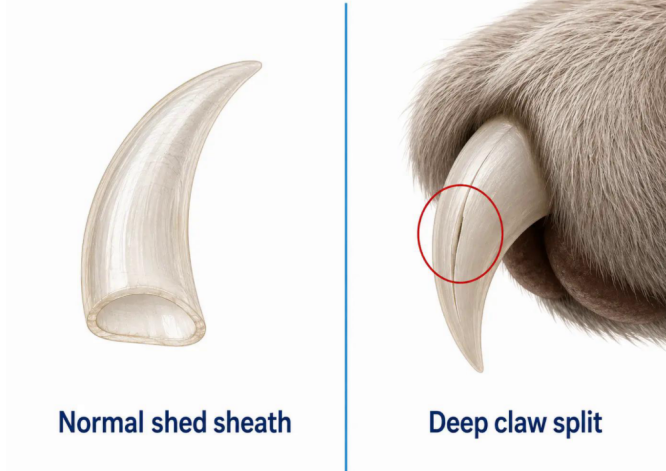
More consistent with normal shedding
• Only the thin outermost layer is flaking
• The exposed claw underneath looks smooth and intact
• Your cat walks, jumps, scratches, and grooms normally
• There is no blood, discharge, odor, or swollen skin
• The material you found is a hollow shell
More consistent with a split or broken claw
• A crack runs through the solid claw toward the quick or base
• A thick section is hanging or moving independently
• The nail bed or pink tissue is exposed
• Your cat suddenly pulls the paw away, cries, limps, or hides
• Bleeding or repeated licking is present
• The toe is red, warm, swollen, smelly, or draining fluid
VCA notes that broken claws can be very painful because the protected nerves and blood vessels may become exposed. Do not test a loose section by wiggling or pulling it.
Why cat claws may truly split or become brittle
1. Snagging and trauma
Long claws can catch carpet, upholstery, blankets, toys, or scratching material. A cat can also bend a claw during a jump or landing. Trauma usually affects one nail and may cause sudden pain, bleeding, or limping.
If a piece remains attached, leave it in place and contact your veterinarian. Removing damaged nail material can be painful and may require local pain control or sedation.
2. Trimming technique and dull tools
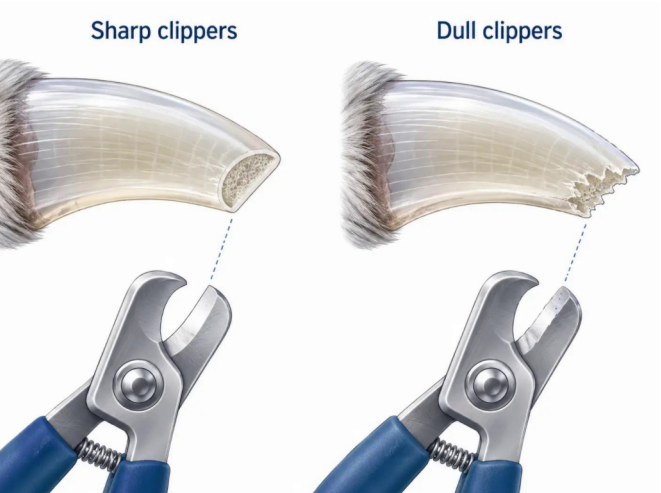
Dull or poorly positioned clippers may squeeze a claw, leaving rough layers instead of a clean edge. Side-to-side crushing pressure can also encourage splintering.
Use small, sharp feline nail clippers and take off only the narrow hooked tip. VCA recommends positioning the blades so pressure is applied from top to bottom and making conservative cuts. The WOPET cat nail care guide provides the complete trimming process.
If several nails split immediately after a trim, stop using the tool and check whether its blades are dull, damaged, or too large.
3. Overgrown claws
Long claws are more likely to snag and break. Dewclaws receive little natural wear and can curve toward the paw pad without being noticed.
Check all claws weekly. If a nail is substantially overgrown, do not remove a large section in one cut. The quick may extend farther forward, so a veterinarian may recommend several small trims over time.
4. Age and reduced scratching
Senior cats may scratch less because of arthritis, weakness, or reduced mobility. Older claws can become thicker, drier, and layered because outer sheaths are not removed normally. VCA advises weekly nail checks for senior cats to catch nails that could grow into the pads.
Place stable scratching surfaces near favorite sleeping areas and make them easy to reach. A horizontal scratcher may be more comfortable than a tall post for a cat with painful joints, but mobility changes still deserve a veterinary assessment.
5. Excessive chewing or grooming
Occasional nibbling around the claws can be part of normal grooming. Repetitive biting, licking, or chewing may indicate pain, itchiness, skin disease, stress, or irritation around the nail bed.
Look for hair loss, redness, debris, odor, swelling, or a wound. Avoid assuming the behavior is anxiety until medical causes have been considered.
6. Nail-bed or systemic disease
Infections, inflammatory skin disease, immune-mediated conditions, and other health problems can affect claws or the surrounding tissue. These problems are less common than normal sheath shedding, but they become more concerning when multiple nails are abnormal, the nail beds are inflamed, or changes recur.
PetMD describes nail-bed disorders that may cause excessive brittleness, peeling, or sloughing. Appearance alone cannot identify the cause, so veterinary testing may be needed.
7. Nutrition concerns
Keratin growth depends on overall health and balanced nutrition, but a split claw does not prove that a cat lacks a particular vitamin. Do not add biotin, fatty acids, or other supplements based only on nail appearance. Excessive supplementation can be unhelpful or unsafe, and some products are formulated for other species.
Feed a complete and balanced diet appropriate for your cat’s life stage and ask your veterinarian to assess recurring changes, weight loss, coat changes, appetite changes, or digestive signs.
What to do when you notice peeling
1. Look without pulling. Determine whether you are seeing a thin loose sheath or a crack in the solid claw.
2. Check the whole paw. Compare the other claws and inspect the skin around each nail.
3. Observe your cat. Watch for limping, licking, hiding, reduced jumping, or avoidance of the scratching post.
4. Remove snag hazards. Temporarily move loose-weave blankets or damaged scratching materials if a nail keeps catching.
5. Arrange professional care when needed. Pain, bleeding, deep splits, nail-bed changes, or abnormalities across several nails warrant a veterinary exam.
If minor bleeding began after a trim, follow the first-aid steps in what to do when a cat’s nail is cut too short.
How to support healthy claw maintenance
Provide different scratching surfaces
Offer stable vertical, horizontal, or angled scratchers in materials your cat prefers. Place them where scratching naturally occurs—near sleep areas, entrances, or furniture already being used.
Scratching supports normal sheath removal, but it does not replace weekly inspection or trimming when tips become overgrown.
Keep clippers sharp and clean
Replace clippers that crush, drag, or leave rough edges. Clean them according to the manufacturer’s instructions and dry them completely before storage. Do not share unclean tools between animals when a nail or skin infection is suspected.
Trim conservatively
Take off only the thin clear hook. Cutting farther back increases the risk of hitting the quick and does not prevent normal outer-layer shedding. If you are unsure whether a nail needs trimming, review how often to trim cat nails.
Make access easier for older cats
Use nonslip mats and low, stable scratchers. Ask your veterinarian about mobility changes, because pain management—not a different scratcher alone—may be necessary.
When to call your veterinarian
Schedule an examination if:
• The crack reaches toward the quick or nail base
• The claw is loose, hanging, or missing
• Bleeding continues or returns
• Your cat limps or repeatedly licks one toe
• The skin is swollen, red, warm, crusted, or producing discharge
• There is an unpleasant odor
• Several claws become brittle, distorted, discolored, or shed excessively
• A claw grows into or presses against the paw pad
• A senior cat develops thick claws or stops scratching normally
Seek urgent help for uncontrolled bleeding, major trauma, an exposed nail bed, or severe pain. Keep your cat indoors and limit activity during transport.
Frequently asked questions
Why do I find cat claws near the scratching post?
They are usually hollow outer sheaths removed during normal scratching. Check that the actual claws remain intact and that your cat shows no pain.
Should I peel a loose layer off my cat’s claw?
No. Pulling can tear material that is still attached and expose sensitive tissue. Let normal scratching loosen a harmless sheath or ask a professional to inspect a persistent layer.
Are split cat claws always caused by poor nutrition?
No. Normal sheath shedding, snagging, overgrowth, age, dull clippers, and medical conditions are all possible. Repeated changes across multiple claws require veterinary uation rather than guesswork or supplements.
Can a scratching post fix peeling claws?
It supports normal sheath shedding but cannot repair a broken claw or treat disease. Pain, bleeding, swelling, and nail-bed changes need professional care.
Will a broken cat claw grow back?
Many claws regrow, but the outcome depends on how deeply the nail and growth area were damaged. A veterinarian should assess a claw torn near the base or separated from the nail bed.
Final takeaway
A thin hollow sheath is usually normal; a painful crack through the solid claw is not. Do not pull peeling layers or trim deeply into a damaged nail. Check every paw, monitor comfort, maintain appropriate scratching surfaces, and seek veterinary care for bleeding, pain, swelling, discharge, deep splits, or changes affecting several claws.
Editorial sources
• Cats Protection: How to Trim Cat Claws
This article provides general educational information and is not a substitute for an examination or individualized advice from your veterinarian.Label:
Popular Post
Top 10 Most Expensive Cat Breeds in The World
May 07, 2025
The Ultimate Guide to Tabby Cats: Patterns, Personalities, and More
Mar 27, 2025
Can Cats Have Ice Cream? Dangers, Safe Flavors & Healthy Cat Treats
Sep 02, 2025
My Cat Only Eats A Little at A Time - What to Do?
Feb 27, 2023
Top 8 Reasons Why Does My Cat Sleep Between My Legs?
Mar 03, 2025

[Blue] W03L 3L Premium Ceramic Cat Water Fountain
Model: W03 LITE
$59.99
$69.99

Basin Pet Water Fountain-W600
Model: W600
$43.99
$69.99

[Basic] Ceramic Pet Water Fountain with Power Cable
Model: W03L
$59.99
$99.00

WOPET 8L Pet Water Fountain For Multiple Cats or Large Dogs A08
Model: A08
$49.99
$59.99

[Upgrade] Basin Wireless Pet Water Fountain
Model: W600 Pro
$69.99
$89.99

[Blue] W03 3L Ceramic Cordless Cat Water Fountain
Model: W03
$89.99
$99.99

DOWNLOAD APP

WOpet life




Copyright © 2026 WOPET. All Rights Reserved.