Sep 03, 2026
Author:Amanda Lyu
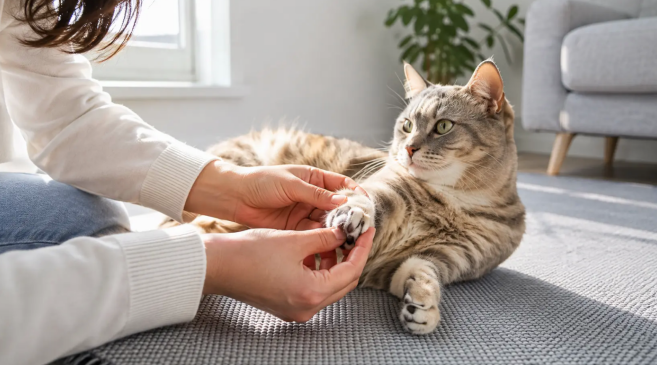
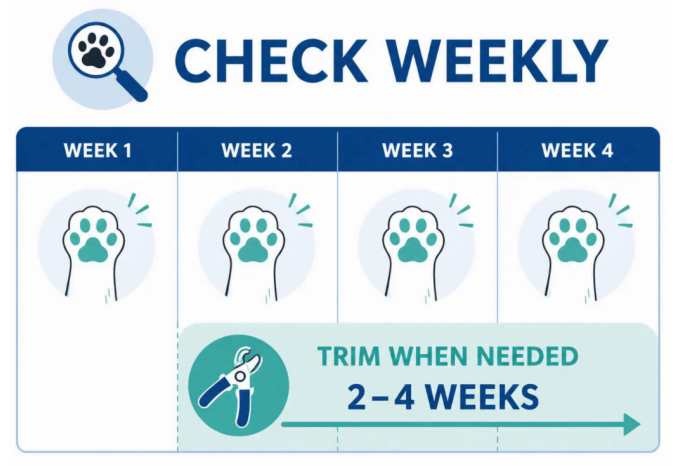
Most cats should have their paws checked every week, and many need a nail trim approximately every two to four weeks. That range is a starting point, not a deadline. The right interval depends on how quickly the claws grow, how much natural wear they receive, your cat’s age and mobility, and whether individual nails are becoming hooked or overgrown.
Some cats need a few front claws trimmed every two weeks. Others may go longer between trims. Senior cats and dewclaws often need the closest attention.
|
Quick answer: Check all claws weekly. Trim when you see a narrow, sharp hook extending beyond the main body of a claw, or when a nail repeatedly snags fabric. Remove only the clear tip and stay away from the quick. If a claw is thick, painful, deformed, or approaching the paw pad, contact your veterinarian. |
Why there is no universal trimming schedule
Claw growth is continuous, but wear and shedding vary. Cats scratch to stretch, communicate, and remove old outer claw sheaths. Activity on different surfaces can also affect how quickly the tips remain sharp or become long.
The Feline Veterinary Medical Association’s Cat Friendly Homes guidance notes that lifestyle influences frequency: indoor cats, kittens, and older cats commonly require more regular trims, while some outdoor cats naturally wear their claws down more.
A calendar can help you remember to check, but the condition of the claw should decide whether you actually cut it.
A practical schedule by life stage and lifestyle
Kittens
Kittens often develop very fine, needle-like claw tips. Weekly handling practice is more important than completing a perfect trim. Gently touch the legs and paws, briefly extend a claw, reward calm behavior, and stop.
When trimming is needed, remove only the tiniest hook. Short, positive sessions during kittenhood can make lifelong nail care easier. Do not continue if the kitten is frightened or struggling.
Starting routine: inspect weekly and expect that small tip trims may be needed every two to three weeks, depending on growth.
Healthy adult indoor cats
Many indoor adults fall within the general two-to-four-week range. Scratching posts support normal claw maintenance, but they do not always shorten the nails enough—particularly the dewclaws.
Starting routine: inspect weekly and trim only the claws that have developed a long, sharp hook. You do not need to trim every nail just because one is ready.
Active outdoor cats
Outdoor cats may wear their claws differently and rely on them for climbing, traction, and defense. Some require fewer trims; others can still develop overgrown dewclaws or damaged nails.
Starting routine: inspect weekly, but ask your veterinarian whether routine trimming is appropriate for your cat’s outdoor lifestyle. Never assume that outdoor activity protects every claw from overgrowth.
Senior and less-mobile cats
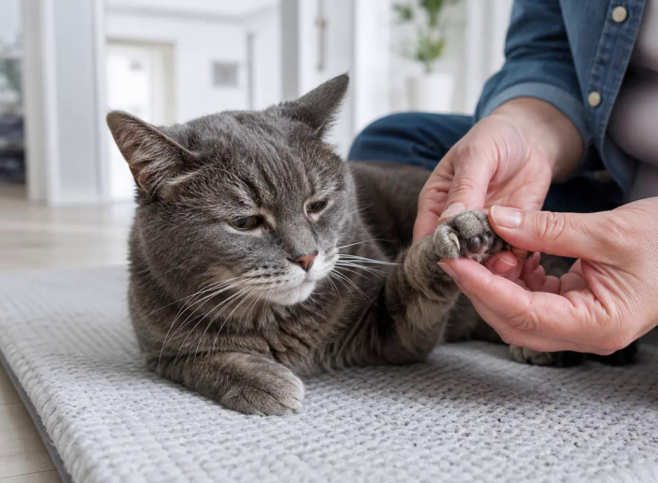
Older cats may scratch less because of arthritis, weakness, cognitive changes, or reduced interest in their usual scratching areas. Their claws can become thick and may not shed outer layers efficiently. VCA recommends weekly nail checks in senior cats because overgrown claws can curl into the paw pads.
Starting routine: inspect every claw weekly, including the underside and dewclaws. A senior cat may need smaller, more frequent trims instead of occasional large cuts.
If a cat suddenly stops scratching, resists a previously tolerated paw check, or struggles to reach favorite surfaces, schedule a veterinary exam. The problem may be pain rather than behavior.
Polydactyl cats
Polydactyl cats have extra toes, and some extra claws grow at unusual angles or receive little wear. Hidden nails between toes can be easy to miss.
Starting routine: count and inspect every toe weekly. Ask your veterinarian to show you any claws that require special attention.
Signs your cat’s nails need trimming now
Use visible and behavioral clues rather than waiting for a date on the calendar:
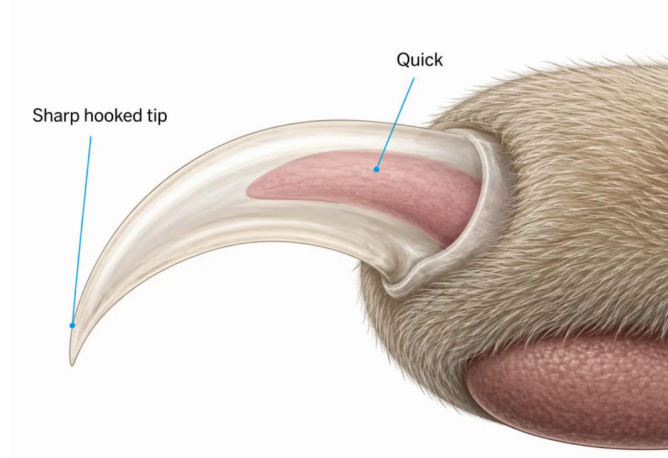
• A narrow point extends beyond the main triangular portion of the claw
• One or more claws repeatedly catch blankets, carpet, or upholstery
• A claw remains visible when the paw is relaxed because it is too long to retract normally
• The dewclaw is becoming strongly curved
• Your cat’s claws catch during play or kneading more than usual
• A senior cat’s nails look thick, layered, or neglected
• The tip is beginning to approach the paw pad
Snagging does not always mean the nail is simply long. A split or torn claw can also catch fibers. If your cat is limping, licking one toe, or reacting painfully, inspect the paw without forcing it and seek veterinary advice.
Why individual claws follow different schedules
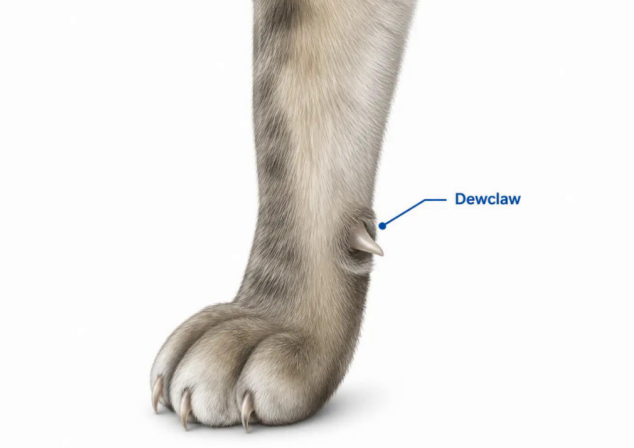
Front claws commonly need attention sooner than rear claws because cats use them differently. Dewclaws may grow faster from the owner’s perspective because they do not touch the ground and receive little wear.
This means a maintenance session might involve two front tips and one dewclaw—not all eighteen claws. Treating each claw individually keeps sessions shorter and reduces the temptation to cut nails that are not ready.
How much should you trim?
Remove only the narrow clear hook, leaving a generous gap before the pink quick. A cat’s quick contains nerves and blood vessels, so cutting into it is painful and causes bleeding.
For a complete technique, tool list, and safe positioning guidance, use the WOPET cat nail care guide. If you cannot see the quick clearly, clip less or ask a veterinary professional to demonstrate.
Avoid trying to “catch up” with one large cut when a claw has grown too long. The quick may extend farther into an overgrown nail, limiting how much can safely be removed. Your veterinarian may recommend a series of conservative trims.
A simple way to build the right schedule
Week 1: Create a baseline
Photograph or note the condition of the front claws, rear claws, and dewclaws. Record which tips you trimmed and whether your cat stayed relaxed.
Check weekly
Inspect the paws at roughly the same time each week. Look for changes in length, shape, thickness, color, and comfort. Frequent observation makes it easier to notice gradual overgrowth.
Adjust one week at a time
If the tips become hooked well before your planned trim, shorten the interval. If most claws remain comfortably short at four weeks, continue checking weekly but do not clip unnecessarily.
Track the difficult claws
One dewclaw or extra toe may consistently need attention sooner. Put that claw on its own reminder instead of forcing every paw into the same schedule.
What happens if cat nails are not trimmed?
Not every untrimmed claw becomes a problem, but neglected overgrowth can lead to snagging, breaks, altered use of the paw, and painful contact with the pad. A claw that penetrates the paw pad is not a routine grooming issue; it needs veterinary care.
Long claws can also make handling more difficult because each snag creates discomfort and may increase a cat’s fear of having the paw touched. Regular conservative maintenance is usually easier than waiting for severe overgrowth.
Can you trim too often?
Yes—if “often” means cutting nails that do not need it or repeatedly trimming close to the quick. Weekly checks are useful; weekly cutting is not automatically necessary.
Frequent handling practice without clipping is different. You can briefly touch a paw, extend one claw, reward, and finish. These no-cut sessions help keep the routine familiar without removing nail unnecessarily.
When not to trim at home
Skip the home trim and contact a veterinarian or qualified cat groomer if:
• A claw is embedded in or touching the paw pad
• The nail is torn, bleeding, loose, or broken near the base
• The toe is swollen, warm, red, or producing discharge
• Your cat limps or reacts sharply when one claw is touched
• Several nails have suddenly become brittle, deformed, or discolored
• The nails are severely overgrown and the quick is difficult to judge
• Your cat becomes panicked or aggressive during handling
Pain can look like “bad behavior.” A cat that suddenly refuses nail care may have arthritis, a paw injury, or a previous painful experience. Our guide to why cats hate nail trims explains how to distinguish fear from simple restlessness and rebuild tolerance gradually.
Frequently asked questions
Is every two weeks too often to trim cat nails?
Not necessarily. Fast-growing front tips may need a conservative trim every two weeks, particularly in kittens or indoor cats. Inspect first and cut only the clear hook that is safely beyond the quick.
Can I trim one paw per day?
Yes. Splitting the task across days is often better for cats that dislike long handling sessions. You can also trim one or two claws at a time.
Do rear cat claws need trimming?
Sometimes, but often less frequently than front claws. Check them weekly and trim according to their actual length and condition.
Why do my cat’s nails seem thick even after trimming?
Several outer claw sheaths may be layered together, especially in older cats that scratch less. Do not peel them away by hand. Use the guide to splitting or peeling cat claws to compare normal sheath shedding with injury. Thick, painful, deformed, or discolored nails should be examined by a veterinarian.
Do scratching posts eliminate the need for trimming?
Not always. Scratching helps remove worn outer sheaths and supports normal behavior, but some tips—especially dewclaws—may still become overgrown. Keep checking all claws weekly even when your cat uses scratchers every day.
Final takeaway
For most cats, weekly inspection plus trimming every two to four weeks as needed is a sensible starting routine. Kittens, indoor cats, seniors, polydactyl cats, and individual dewclaws may require closer attention. Let nail shape and your cat’s comfort—not a rigid date—determine when it is time to clip.
Editorial sources
• Cat Friendly Homes: Trimming Your Cat’s Nails
• VCA Animal Hospitals: Successful Nail Trims—Training for Happy Handling
• VCA Animal Hospitals: Helping Our Senior Cats Age Gracefully
This article provides general educational information and is not a substitute for an examination or individualized advice from your veterinarian.
Label:
Popular Post

The Ultimate Guide to Tabby Cats: Patterns, Personalities, and More
Mar 27, 2025

Top 10 Most Expensive Cat Breeds in The World
May 07, 2025

Can Cats Have Ice Cream? Dangers, Safe Flavors & Healthy Cat Treats
Sep 02, 2025

My Cat Only Eats A Little at A Time - What to Do?
Feb 27, 2023

Top 8 Reasons Why Does My Cat Sleep Between My Legs?
Mar 03, 2025

[Blue] W03L 3L Premium Ceramic Cat Water Fountain
Model: W03 LITE
$59.99
$69.99

Basin Pet Water Fountain-W600
Model: W600
$43.99
$69.99

[Basic] Ceramic Pet Water Fountain with Power Cable
Model: W03L
$59.99
$99.00

WOPET 8L Pet Water Fountain For Multiple Cats or Large Dogs A08
Model: A08
$49.99
$59.99

[Upgrade] Basin Wireless Pet Water Fountain
Model: W600 Pro
$69.99
$89.99

[Blue] W03 3L Ceramic Cordless Cat Water Fountain
Model: W03
$89.99
$99.99

DOWNLOAD APP

WOpet life




Copyright © 2026 WOPET. All Rights Reserved.