Sep 01, 2026
Author:Jackson Watson
Quick Answer
You cannot prevent every strand of cat hair from reaching an open fountain, but you can reduce it substantially. Place the fountain away from beds, grooming spots, open windows, and HVAC vents; brush your cat regularly; remove floating hair each day; and clean the filter housing, intake, and pump on the schedule in the product manual.
A filter helps capture debris, but it is not a substitute for fresh water and routine cleaning.
Why Does Cat Hair Collect in a Fountain?
Loose fur travels through a home on air currents, clothing, paws, and nearby surfaces. It can land directly in the basin or enter when a cat leans over the water. Long-haired cats, seasonal shedding, multi-pet homes, and fountains located near favorite sleeping areas may create more visible buildup.
Hair may float at first, then collect around:
• the filter tray;
• a prefilter sponge;
• the pump intake;
• narrow channels and corners;
• the underside of the lid;
• seams where water slows down.
The visible strand is usually easy to remove. The bigger maintenance concern is hair mixed with saliva, dust, food particles, and biofilm in hidden areas.
Start With Better Fountain Placement
Move the fountain away from the main sources of airborne debris. Avoid placing it directly beside:
• a cat bed or blanket that collects fur;
• a grooming table or brushing area;
• a litter box;
• a heating or air-conditioning vent;
• an open window with dust or pollen;
• a fabric sofa where pets sleep;
• a food bowl that drops crumbs into the water.
A quiet, easy-to-clean area with gentle airflow is usually better than a tight corner. WOPET’s guide to where to put a cat water fountain explains how to balance cleanliness with access and comfort.
Do not hide the fountain simply to avoid hair. Your cat still needs to find and approach it comfortably.
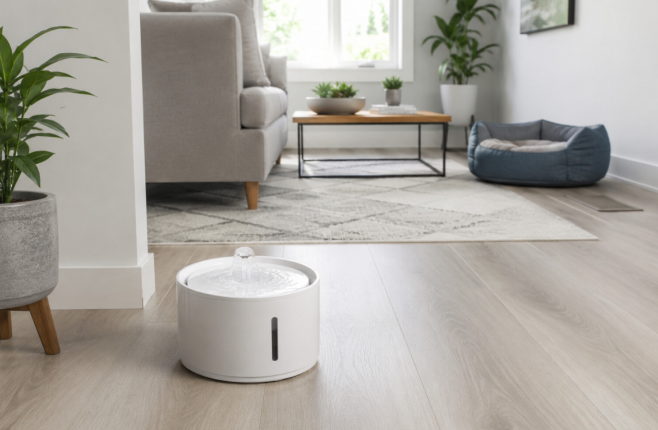
Reduce Loose Fur Around the Fountain
Regular grooming can reduce the loose hair that reaches floors, furniture, and water stations. Use a brush appropriate for your cat’s coat, and keep grooming sessions calm and brief if your cat is sensitive.
Focus on consistency rather than aggressive brushing. Pulling through mats or irritating the skin can make grooming unpleasant and may require professional help. If shedding is sudden, patchy, or accompanied by itching, sores, weight change, or unusual behavior, contact a veterinarian rather than treating it as a housekeeping problem.
Wash pet bedding and clean nearby floors regularly. Cover, move, or empty the fountain before vacuuming or shaking out bedding so disturbed hair does not land in fresh water.
What Should You Do Each Day?
A short daily check prevents a few strands from becoming a clogged water path.
1. Look at the water surface and intake area.
2. Remove visible hair with clean hands or a clean dedicated utensil.
3. Wipe hair from the outside rim and the mat beneath the fountain.
4. Confirm that the water is flowing normally.
5. Refill or replace the water as required by the model and your cleaning routine.
If the water looks cloudy, smells unusual, feels slimy, or contains more than a few loose strands, empty and clean the fountain instead of skimming the surface. WOPET’s guide to cloudy cat fountain water can help distinguish trapped air from contamination or debris.
How Do Filters Help With Cat Hair?
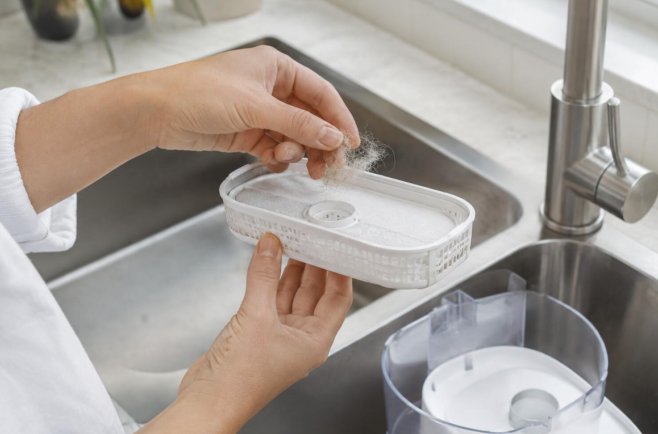
Many fountains use more than one layer. A sponge or mesh layer may catch larger particles and fur, while activated carbon is typically intended for odor and taste-related filtration. The exact design varies, so use only the filter made for your model.
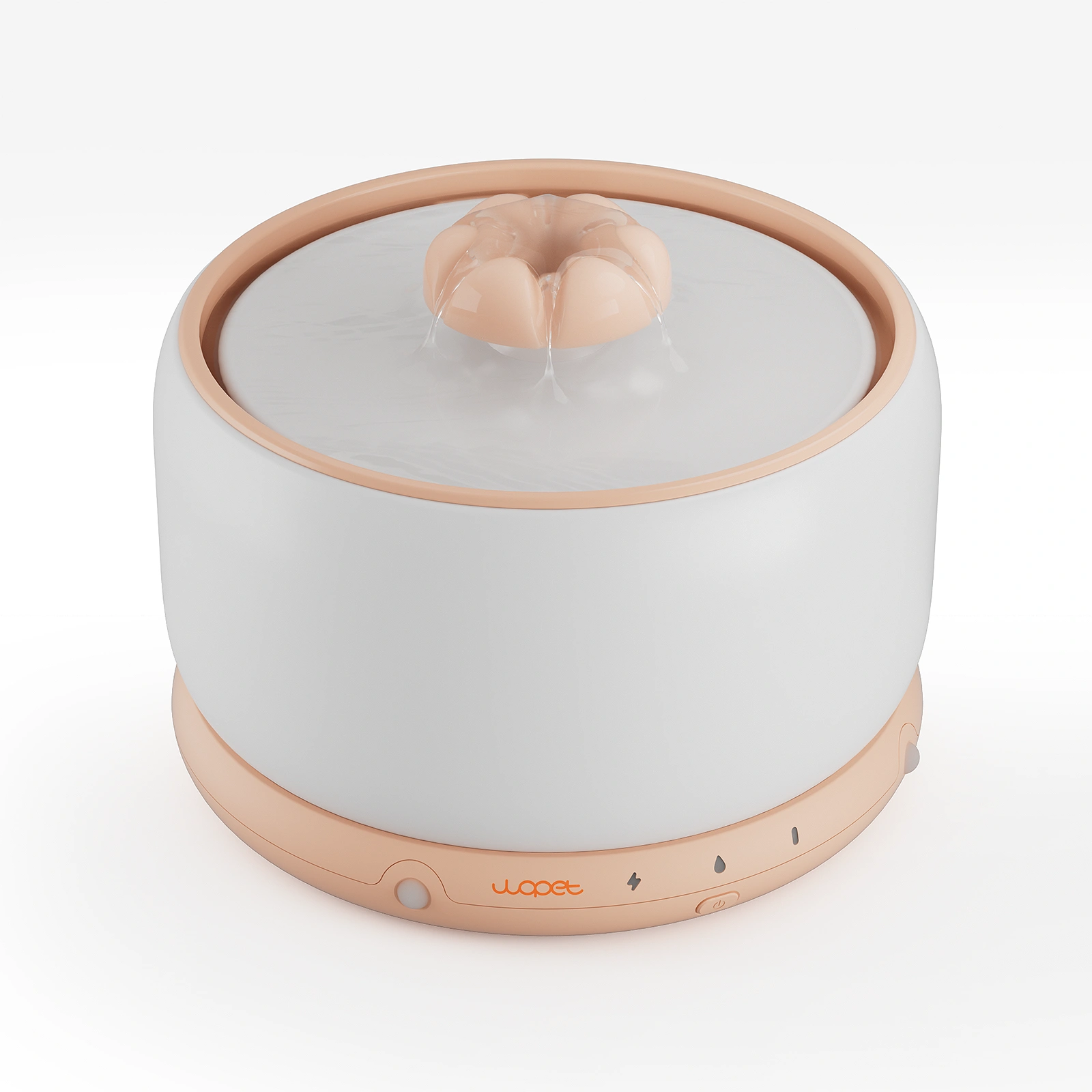
The WOPET W03 Ceramic Wireless Pet Water Fountain uses a sponge filtration system with an activated-carbon filter. WOPET instructs owners to rinse the compatible filter before use and replace it on the product-specific schedule.
Do not assume that a filter full of hair is still working because water passes through it. Check it regularly and replace disposable media rather than washing it indefinitely. WOPET’s guide to changing pet fountain filters covers the factors that can shorten filter life.
How Do You Remove Hair From the Pump Area?
Turn off and disconnect the fountain as directed before taking it apart. Remove only the serviceable parts shown in the manual. Hair often wraps around an intake cover or settles inside the impeller chamber, where it may reduce flow or create noise.
For an approved removable pump:
1. Lift away loose hair before rinsing so it does not move deeper into the chamber.
2. Remove the pump cover and impeller only if the manual permits it.
3. Clean the intake slots, cavity, and impeller with the recommended small brush.
4. Rinse the compatible parts thoroughly.
5. Reassemble the pump correctly before refilling the fountain.
Do not pull on the cord to remove a pump, poke sharp tools into sealed areas, or immerse a battery base or adapter. WOPET has a separate guide on how to clean a cat water fountain pump for the full process.
Can You Cover a Cat Fountain to Keep Hair Out?
Do not place a cloth, plastic sheet, improvised lid, or fine mesh over an operating fountain unless it is a manufacturer-approved part. A cover can block airflow, interfere with the water path, fall into the basin, or make the fountain harder for a cat to use.
Use the model’s original lid, filter housing, and splash-control components. If the design leaves the water too exposed for your home, consider a model with a smaller drinking opening or more protected return channel rather than modifying the pump system.
What Should You Avoid Adding to the Water?
Do not add soap, disinfectant, fragrance, essential oils, fabric-softener sheets, or household water treatments to catch or repel hair. A fountain is a drinking source, not an air purifier or cleaning bath.
Use safe drinking water and clean the unit with a method compatible with its materials. Rinse until no cleaner residue or smell remains. If a cat may have consumed cleaning solution or another chemical from the fountain, contact a veterinarian or pet poison service promptly.
When Does Hair Mean the Fountain Needs a Full Clean?
Perform more than a surface skim when:
• hair has reached the filter or pump intake;
• water flow is weaker or uneven;
• hair is mixed with slime or food debris;
• the basin has an odor;
• the filter is discolored, damaged, or overdue for replacement;
• the fountain was exposed to heavy shedding, vacuum dust, or grooming debris.
The cleaning interval depends on the number of pets, coat type, environment, fountain design, and manufacturer instructions. A long-haired cat in a small home may require more frequent checks than the calendar suggests.

Frequently Asked Questions
Is cat hair in fountain water dangerous?
One loose strand is not usually an emergency, but visible hair means debris is entering the water. Remove it and inspect the filter and pump area. Clean the fountain if the water is dirty, slimy, cloudy, or smelly.
Will a filter catch all pet hair?
No. A compatible filter may capture much of the hair that enters the circulation path, but some strands remain in the bowl or settle in corners. Daily checks are still necessary.
Should I move the fountain during shedding season?
Move it if the current location receives hair from a bed, vent, window, or grooming area. Keep the new location easy for your cat to access and change one part of the routine at a time.
Can I vacuum around a cat fountain?
Yes, but turn off or move the fountain first so dust and hair are not blown into the water. Keep the vacuum and electrical connections away from spills.
Why is water flow slow even after I remove the hair?
The filter may be saturated, the water level may be low, or debris may remain in the pump or channel. Follow the model troubleshooting instructions and replace damaged or overdue components.
Editorial Method and Sources
This guide separates debris prevention from filtration and pump maintenance. It uses WOPET’s current W03 product and filter instructions for model-specific examples while directing readers to the manual for every other design.
• CDC: Cleaning and Disinfecting Pet Supplies
Label:
Popular Post
Top 10 Most Expensive Cat Breeds in The World
May 07, 2025
The Ultimate Guide to Tabby Cats: Patterns, Personalities, and More
Mar 27, 2025
Can Cats Have Ice Cream? Dangers, Safe Flavors & Healthy Cat Treats
Sep 02, 2025
My Cat Only Eats A Little at A Time - What to Do?
Feb 27, 2023
Top 8 Reasons Why Does My Cat Sleep Between My Legs?
Mar 03, 2025
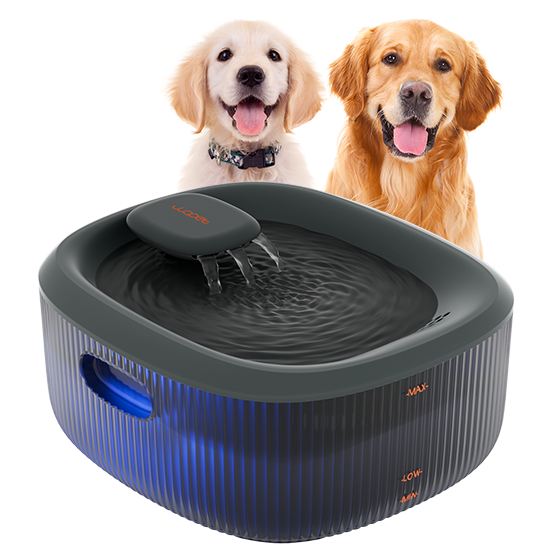
Basin Pet Water Fountain-W600
Model: W600
$43.99
$69.99
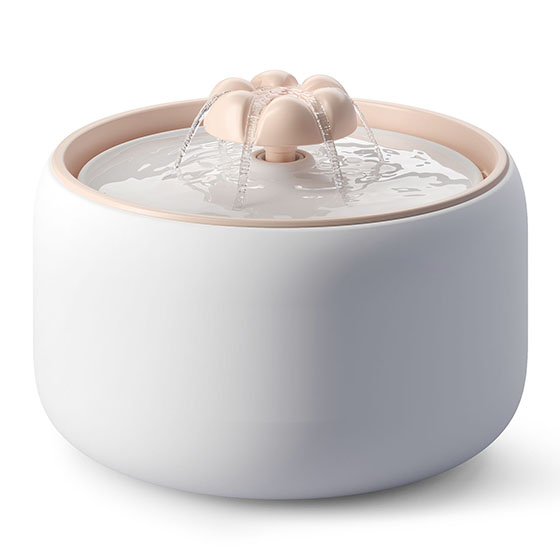
[Basic] Ceramic Pet Water Fountain with Power Cable
Model: W03L
$59.99
$99.00
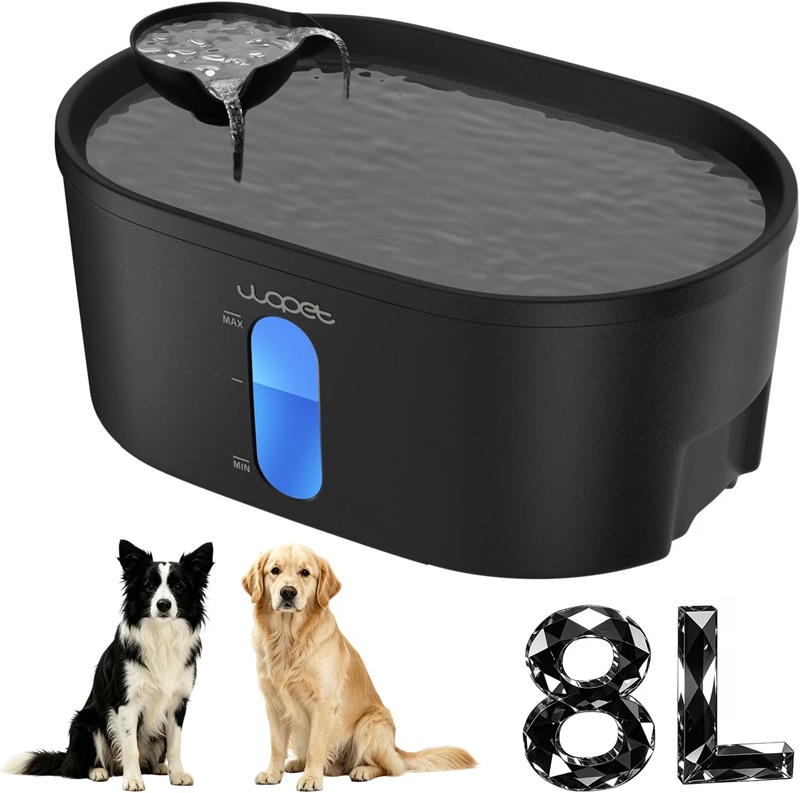
WOPET 8L Pet Water Fountain For Multiple Cats or Large Dogs A08
Model: A08
$49.99
$59.99
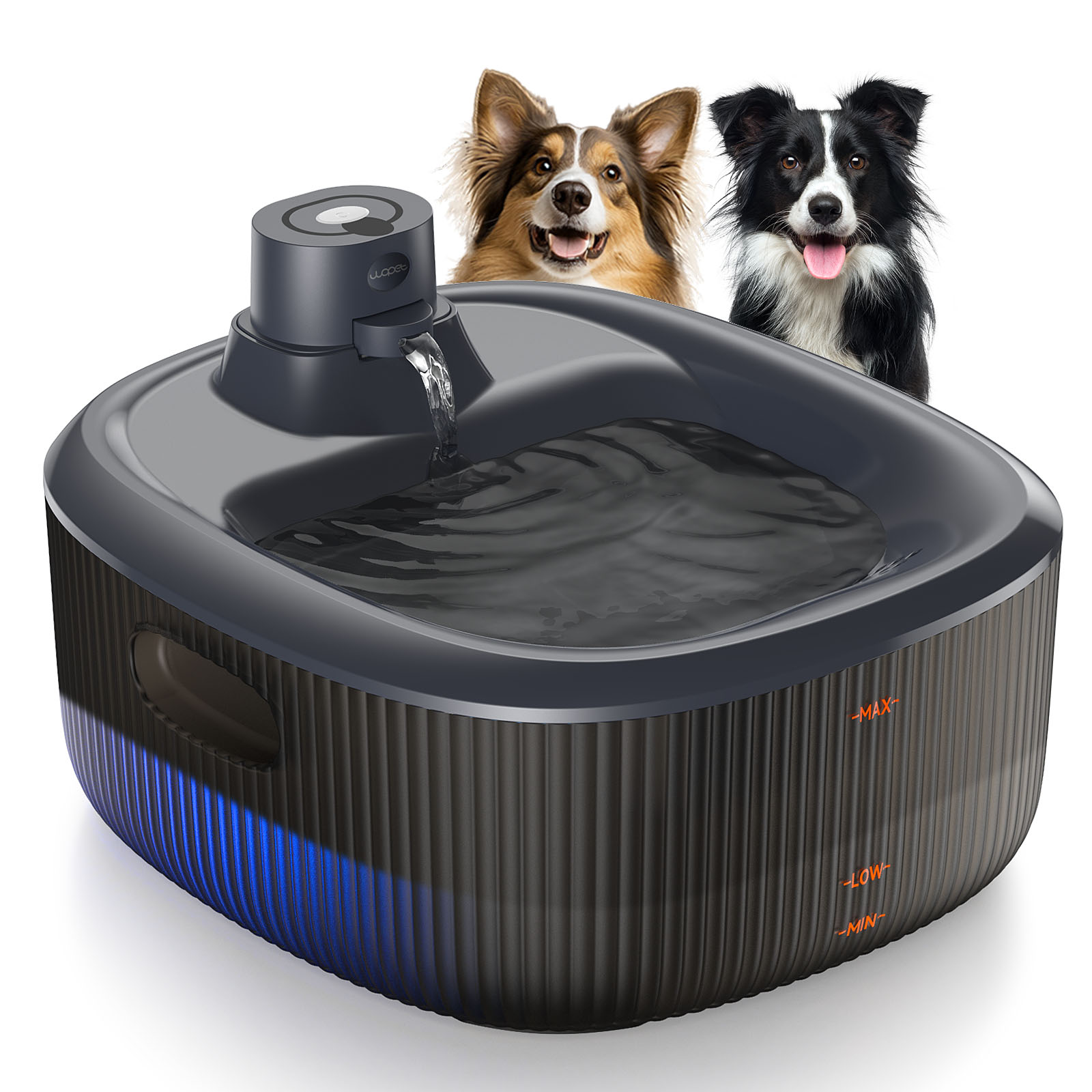
[Upgrade] Basin Wireless Pet Water Fountain
Model: W600 Pro
$69.99
$89.99
Heritage View Pet Feeder Dual Bowls For Two Cats
Model: HV10DP
$119.99
$149.99
[New] Ceramic Wireless Pet Water Fountain W03
Model: W03
$89.99
$129.00

DOWNLOAD APP

WOpet life




Copyright © 2026 WOPET. All Rights Reserved.