Oct 07, 2026
Author:Sam Wonder
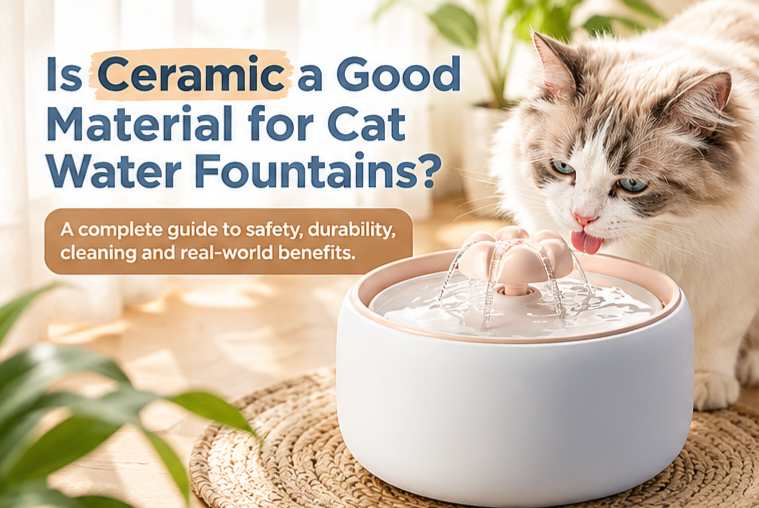
Yes. Ceramic can be a good cat water fountain material when it is made for drinking-water contact, covered with a smooth, intact glaze, and designed for complete cleaning. Its weight can discourage tipping, and a light glazed surface makes residue easy to see. The tradeoffs are higher weight, breakage risk, and the need to retire chipped or cracked water-contact parts.
What Makes a Ceramic Fountain a Good Choice?
A smooth, inspectable drinking surface
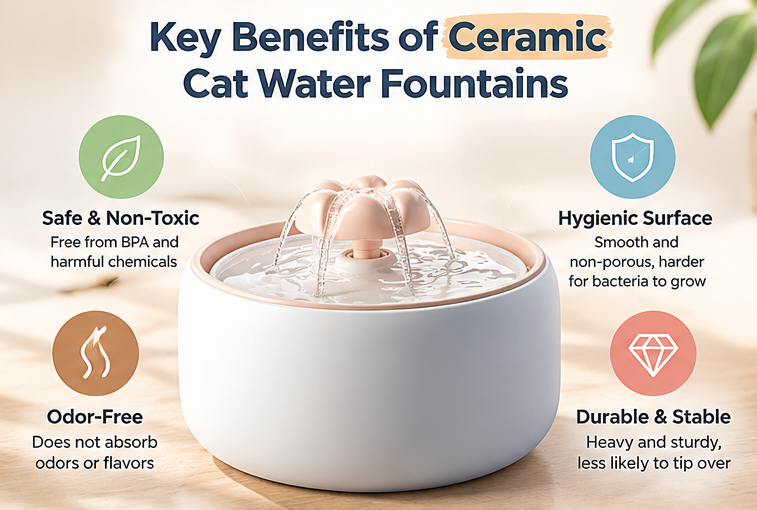
Quality glazed ceramic has a hard, smooth surface. Hair, residue, and mineral film are usually visible, especially on a pale basin. That makes it easier to notice when the drinking area needs attention.
Smooth does not mean self-cleaning. Saliva and environmental debris still enter the water, and biofilm can develop on the pump, tubing, filter housing, or underside of the tray. Ceramic improves surface visibility; it does not sterilize the system.
Weight that helps resist movement
Ceramic fountains are usually heavier than plastic models. The additional mass can help with cats that paw at the stream or push the unit while drinking. It may also reduce some vibration when the fountain sits level on a suitable mat.
Consider the filled weight before buying. A large ceramic reservoir may be awkward to carry safely. If lifting it increases the chance of dropping it, choose a smaller capacity or a lighter material.
A substantial look and feel
Many owners prefer ceramic because it resembles household tableware rather than an appliance. That is an aesthetic advantage, not a safety guarantee. Construction, glaze condition, pump access, and care instructions still deserve priority.
The Key Ceramic-Specific Safety Issue: The Glaze
Ceramic itself and the finished glaze should be uated together. Glazes and decorations can contain metals, and poor formulation or firing can allow lead or cadmium to leach from some ceramicware. The FDA maintains action levels and monitoring programs for ceramic foodware.
For a cat fountain, use these safeguards:
• Buy a product specifically intended for pet drinking water.
• Look for clear information about the ceramic and glaze, not only decorative language.
• Avoid decorative pottery or planters repurposed as water bowls.
• Do not use antique, handmade, damaged, or imported traditional pottery unless it is verified for the intended food-contact use.
• Stop using a water-contact part if its glaze chips, cracks, flakes, or develops suspicious crazing.
“Lead-free” wording is useful only when it relates to the finished product and applicable requirements. A marketplace title alone is not a substitute for traceable manufacturer information.
Pros and Cons of Ceramic Cat Fountains
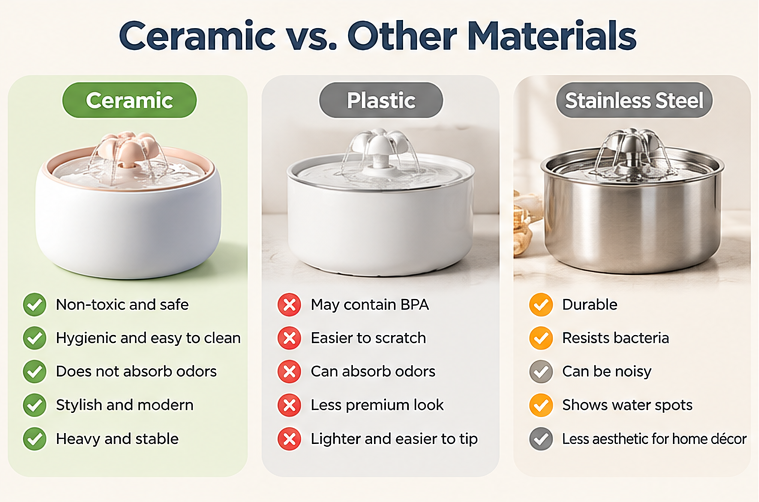
|
Benefits |
Limitations |
|
Heavy and generally stable |
Can chip, crack, or shatter |
|
Smooth glaze is easy to inspect |
Heavier to carry and wash |
|
Often dampens some vibration |
Quality and glaze compliance vary by product |
|
Does not develop plastic-style surface scratches |
Damaged glaze may create hard-to-clean areas |
|
Premium appearance |
Often costs more than plastic |
The best ceramic fountain preserves these advantages without adding narrow channels, glued decorations, or inaccessible pump areas.
What Ceramic Does Not Guarantee
It does not guarantee cleaner water
Water quality depends on the source water, water-change schedule, fountain design, filter condition, pump cleaning, room conditions, and how many pets use the fountain. Ceramic is only one part of that system.
It does not guarantee silence
The heavy body may reduce vibration, but a worn pump, low water level, loose top, or high falling stream can still be noisy. Check assembly and pump maintenance before deciding the ceramic body is responsible.
It does not guarantee that every cat will use it
Cats may care more about basin width, flow style, location, water freshness, or noise than material. Keep another clean water option available while introducing a new fountain, especially if your cat is cautious about change.
How to Inspect a Ceramic Fountain
Inspect it when new, after every drop or impact, and during routine deep cleaning.
1. Dry the part completely. Water can hide fine lines and surface changes.
2. Use bright, neutral light. Rotate the basin and look across the glaze at a shallow angle.
3. Check rims and openings. Chips often begin where parts meet or where the pump tube passes through.
4. Look for cracks through the body. A line that continues around an edge is more concerning than a removable mineral streak.
5. Feel cautiously for roughness. Do not run a finger over a visibly sharp chip.
6. Retire damaged wet-zone parts. Do not cover cracks with household glue, paint, or sealant.
If the manufacturer is uncertain whether a mark is cosmetic, send clear photos and stop using the part until you receive guidance.
How to Clean Ceramic Correctly
Follow the model’s instructions first. In general:
• unplug and disassemble the fountain before cleaning;
• remove the filter rather than washing it with the basin;
• use a soft cloth or nonabrasive sponge;
• clean the pump and impeller chamber separately as directed;
• rinse away all cleaner residue;
• dry and inspect parts before reassembly;
• keep electrical connectors and non-submersible bases dry.
Avoid steel wool, abrasive powder, sudden temperature changes, and any cleaner the manufacturer does not approve. Thermal shock can damage ceramic, and abrasive tools can mar the glaze.
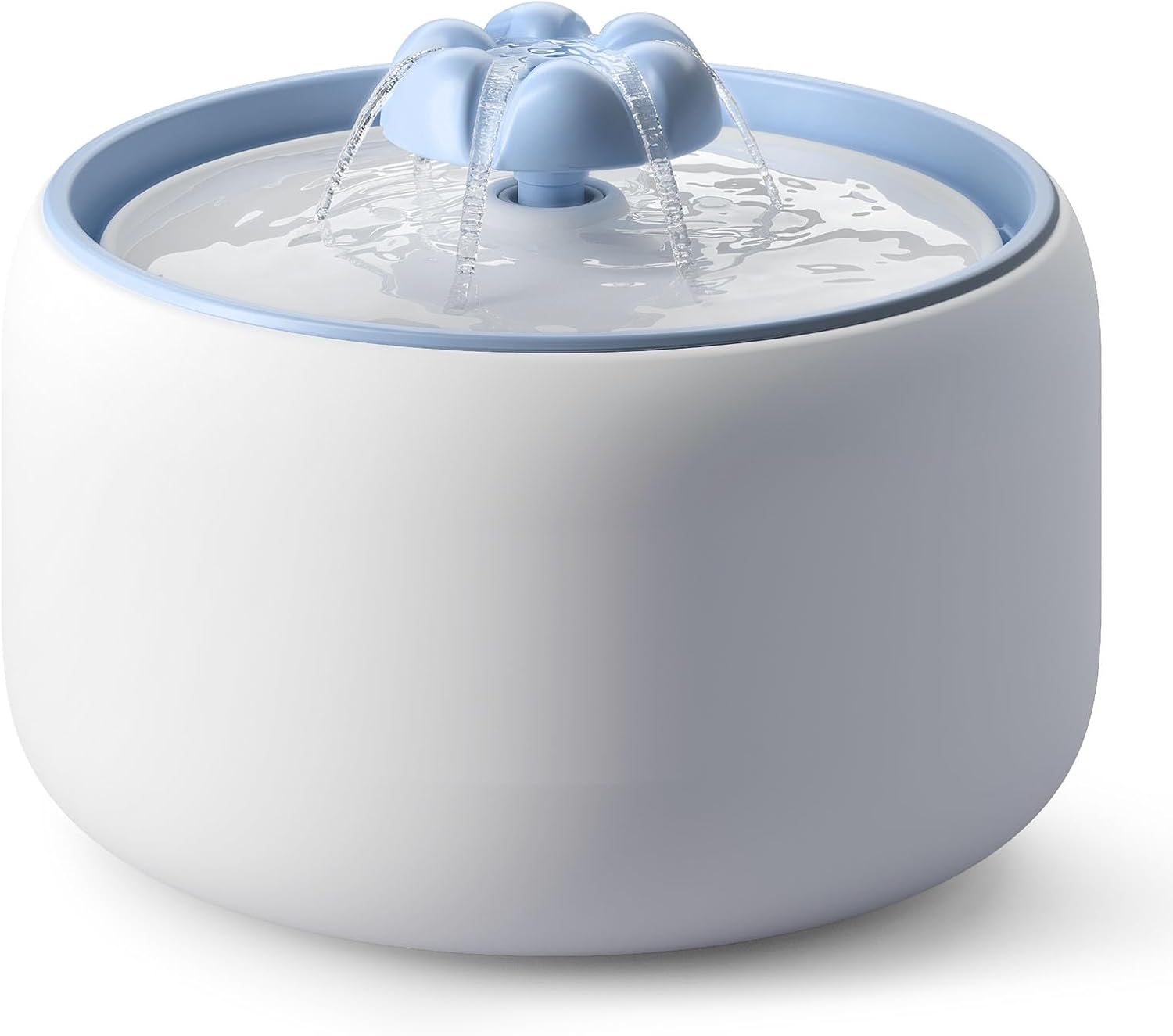
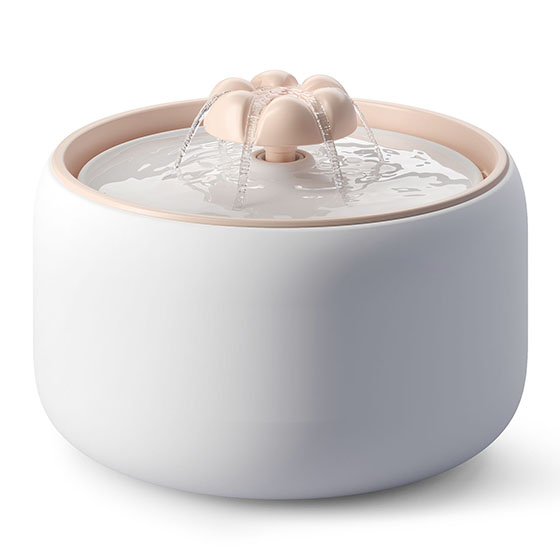
WOPET’s ceramic pet water fountain W03 Lite is one example of a model-specific ceramic option. Use its own manual and care directions rather than applying generic dishwasher or cleaning assumptions.
Who Should Choose Ceramic?
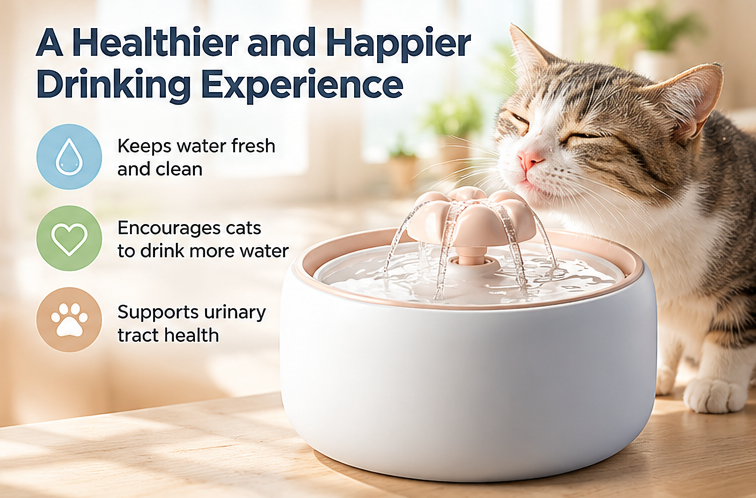
A ceramic fountain is a strong fit if:
• your cat pushes lightweight bowls or fountains;
• you want a visible, smooth drinking surface;
• you prefer a substantial design;
• you can safely lift the fountain for cleaning;
• you will inspect it for damage after impacts.
Choose another material if:
• the fountain must be moved often;
• children, pets, or sink conditions make drops likely;
• you need the lightest possible unit;
• replacement ceramic components are difficult to obtain.
Frequently Asked Questions
Are ceramic cat fountains safe?
They can be safe when made for drinking-water contact, properly glazed, intact, and used as directed. Avoid damaged or decorative ceramicware that lacks clear intended-use information.
Can bacteria grow on ceramic?
Yes. A smooth glaze is easy to clean, but residue and biofilm can still develop, especially in hidden pump areas. Ceramic does not replace routine washing and water changes.
Is glaze crazing the same as a crack?
Crazing describes a network of fine lines in the glaze. Because owners cannot reliably determine at home whether lines affect cleanability or expose the underlying body, stop using the part and ask the manufacturer when crazing appears in the water-contact zone.
Can I repair a chipped ceramic fountain?
Do not apply an unverified household adhesive, paint, or sealant to a drinking-water surface. Replace the damaged component or follow a repair procedure specifically provided by the manufacturer.
Is ceramic better than stainless steel?
Ceramic is heavier and may look more like tableware; stainless steel is less likely to break when dropped. Both can provide a smooth, durable surface when well made and maintained.
Bottom Line
Ceramic is a good cat fountain material when the finished product is intended for water contact and the glaze remains smooth and intact. Choose it for stability and visibility, not because of claims that it prevents germs or automatically improves water quality. Inspect it carefully, clean the whole water path, and replace damaged parts.
Editorial Method and Sources
The ceramic-specific safety discussion is based on FDA ceramicware guidance. The article does not assume that guidance for traditional pottery proves a defect in commercially manufactured pet fountains; it uses the guidance to explain why intended use, glaze quality, traceability, and surface condition matter.
• FDA: Guidance on Imported Traditional Pottery Intended for Food Use
• FDA: Questions and Answers on Lead-Glazed Traditional Pottery
Label:
Popular Post
The Ultimate Guide to Tabby Cats: Patterns, Personalities, and More
Mar 27, 2025
Top 10 Most Expensive Cat Breeds in The World
May 07, 2025
Can Cats Have Ice Cream? Dangers, Safe Flavors & Healthy Cat Treats
Sep 02, 2025
My Cat Only Eats A Little at A Time - What to Do?
Feb 27, 2023
Top 8 Reasons Why Does My Cat Sleep Between My Legs?
Mar 03, 2025
[Blue] W03L 3L Premium Ceramic Cat Water Fountain
Model: W03 LITE
$59.99
$69.99
Basin Pet Water Fountain-W600
Model: W600
$43.99
$69.99
[Basic] Ceramic Pet Water Fountain with Power Cable
Model: W03L
$59.99
$99.00
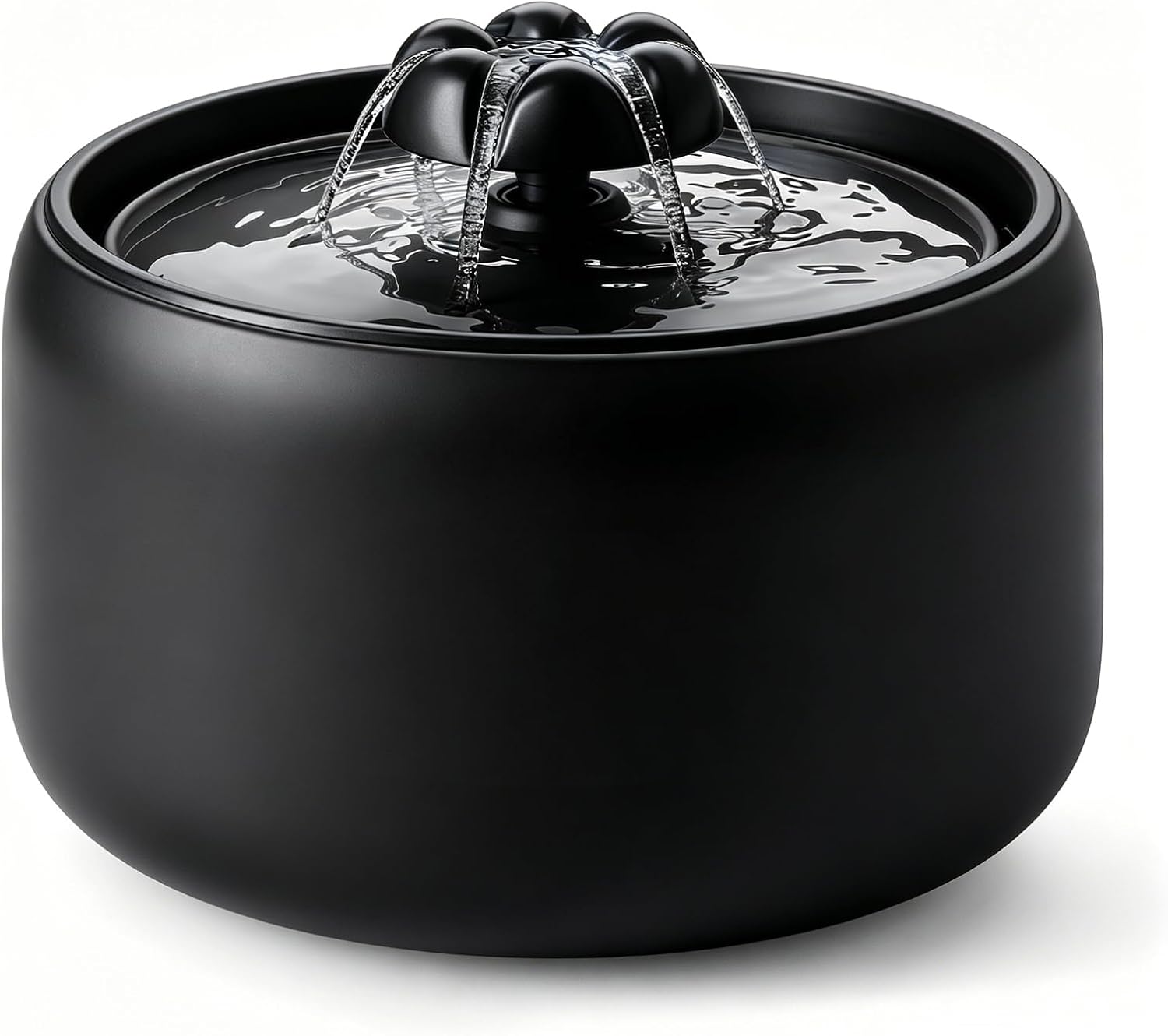
[Black] W03L 3L Premium Ceramic Cat Water Fountain
Model: W03L Black
$59.99
$69.99
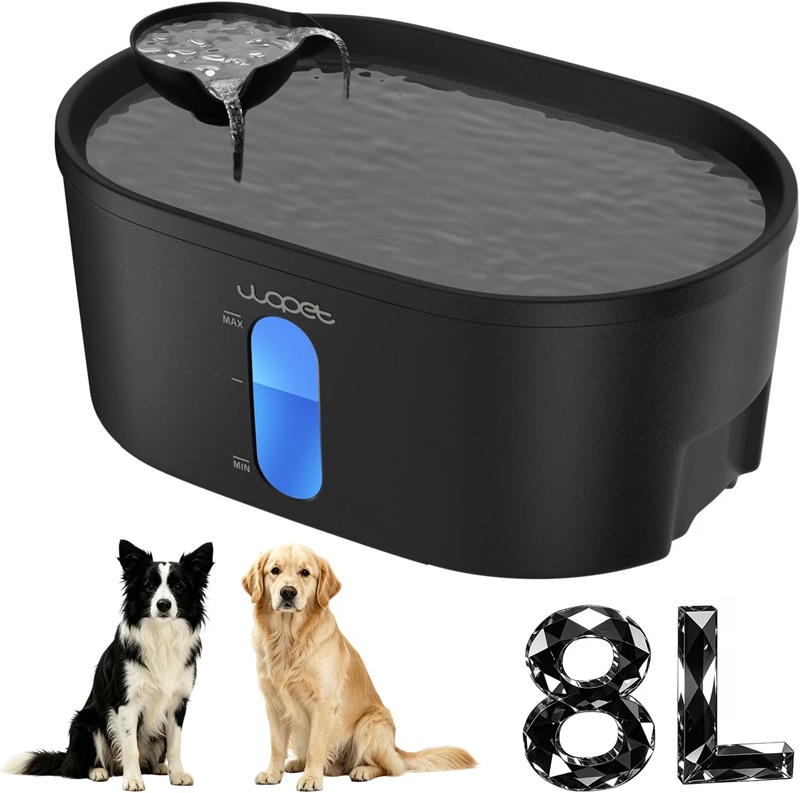
WOPET 8L Pet Water Fountain For Multiple Cats or Large Dogs A08
Model: A08
$49.99
$59.99
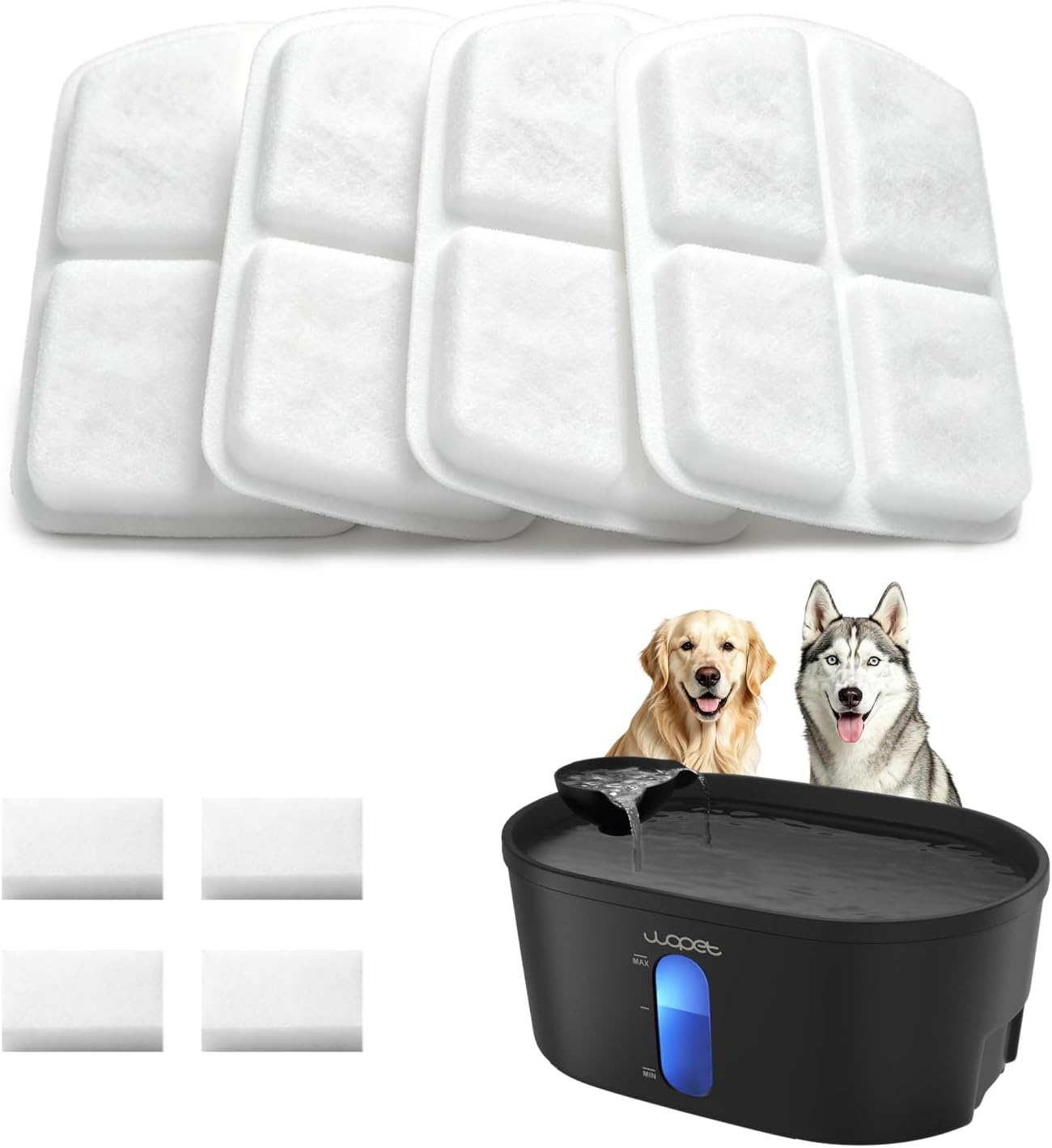
WOPET A08 Dog Water Fountain Filters
Model: A08 Filter
$19.99
$29.99

DOWNLOAD APP

WOpet life




Copyright © 2026 WOPET. All Rights Reserved.