Sep 03, 2026
Author:Sam Wonder
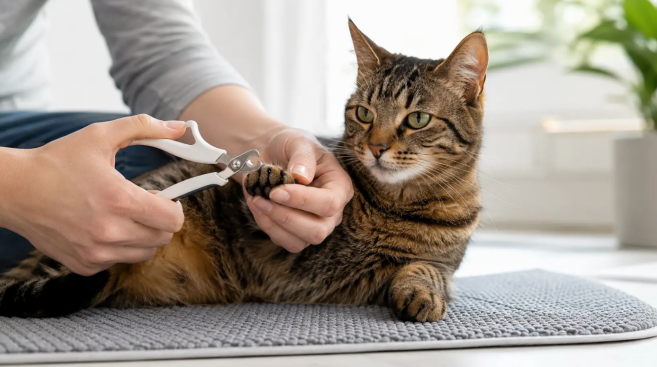
Cat nail care is not about making every claw as short as possible. The goal is to keep the nails comfortable, prevent snagging and overgrowth, and notice injuries early—while preserving your cat’s trust.
Many cats only need the thin, hooked tip removed. Some naturally wear the tips more than others, while indoor cats, kittens, older cats, and cats with limited mobility may need closer monitoring. Scratching helps remove old claw sheaths, but it does not guarantee that every nail stays short. A useful starting point is to check the paws weekly and trim only when the tips become long or sharply hooked.
|
Quick answer: Use sharp cat nail clippers in a well-lit, quiet room. Gently extend one claw and remove only the narrow, clear tip, staying well away from the pink quick. Stop if your cat becomes tense or tries to leave. One successful claw is better than a forced full trim. |
Why regular cat nail care matters
Claws help cats climb, balance, grip, stretch, play, and protect themselves. Scratching also removes old outer claw sheaths and helps keep the claws functional. Nail care should support these normal behaviors rather than prevent them.
Regular checks can help you catch:
• Tips that repeatedly snag blankets or carpet
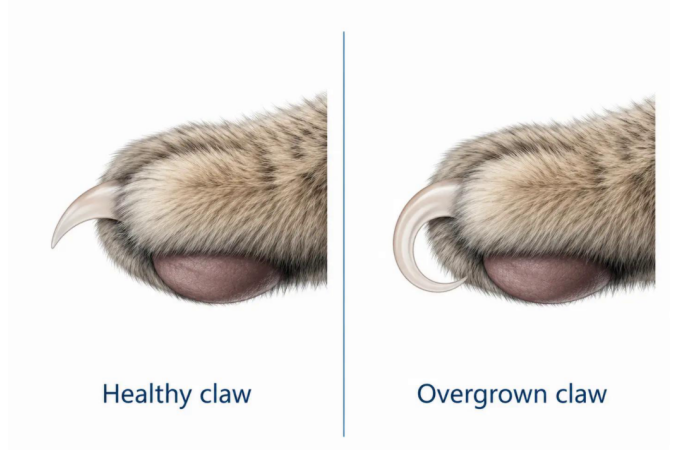
• Claws beginning to curve toward the paw pad
• A dewclaw that is growing faster than the other nails
• A split, torn, swollen, or bleeding nail
• Thick claws that are not shedding normally
• Redness, discharge, odor, or pain around the nail bed
Older cats deserve special attention. Arthritis, reduced activity, or difficulty using a scratching post can allow the claws to become thick and overgrown. VCA advises checking a senior cat’s nails weekly because neglected claws can eventually grow into the paw pads.
Know the basic anatomy of a cat claw
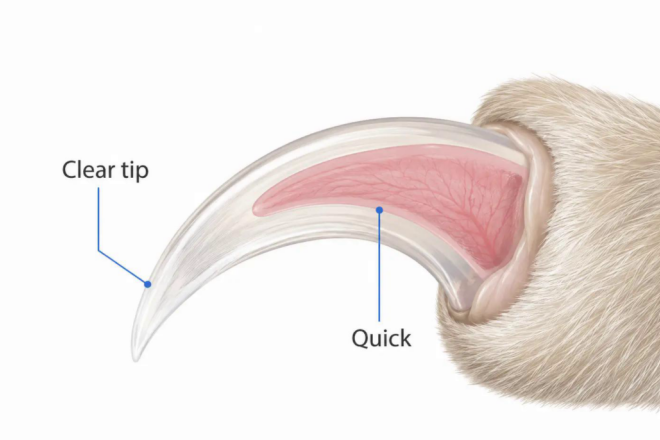
A cat’s claw has a hard outer layer made primarily of keratin. Inside is living tissue commonly called the quick, which contains blood vessels and nerves. Cutting the clear tip should not hurt. Cutting into the quick causes pain and bleeding.
On a light, translucent claw, the quick often appears as a pink center. Your safe cutting area is the narrow tip beyond it. If lighting is poor or you cannot confidently identify the quick, remove less—not more—or ask a veterinarian or experienced groomer for a demonstration.
Cats also shed thin outer claw sheaths. Finding a hollow, claw-shaped shell near a scratching post is usually normal and does not mean the entire claw fell out. A painful exposed nail bed, active bleeding, limping, or the loss of the actual claw is different and needs veterinary attention. See why cat claws split or peel for a visual checklist of normal shedding versus injury.
Does every cat need nail trims?
No single schedule works for every cat. Some active cats maintain much of their claw length through normal scratching and movement. Others need routine trimming.
Indoor cats often need more help because household surfaces may not create much natural wear. Kittens can develop needle-sharp tips quickly, while older or less-mobile cats may not scratch effectively. Outdoor cats may use their claws for climbing and defense, so discuss trimming with your veterinarian if your cat regularly goes outside.
The better question is not “Has it been exactly two weeks?” but “Are the claws becoming long, hooked, or difficult for this cat to manage?” Our guide to how often to trim a cat’s nails explains how age and lifestyle change the answer.
What you need before you start
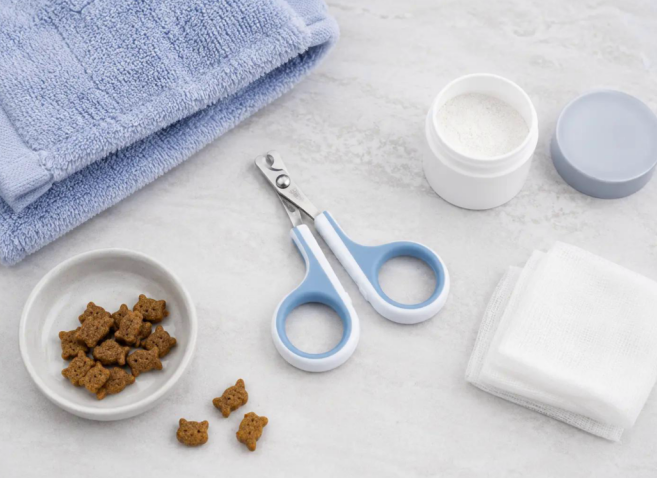
Prepare everything before bringing your cat into position:
• Small, sharp clippers made for feline claws
• Bright, direct lighting
• A stable, nonslip surface or comfortable lap position
• High-value treats or another reward your cat genuinely enjoys
• Styptic powder and clean gauze in case you nick the quick
• A towel, used only if your cat already feels comfortable with gentle wrapping
Dull blades may crush or splinter a claw instead of making a clean cut. Replace clippers that drag, squeeze, or require excessive force. Do not begin with a noisy grinder unless your cat has been gradually conditioned to its sound and vibration.
How to trim a cat’s nails safely
1. Choose the right moment
Wait until your cat is calm—perhaps after a meal, play session, or nap. Work in a familiar room without children, other pets, or sudden noise. Avoid chasing your cat or pulling them from a hiding place.
2. Use minimal restraint
Let your cat sit beside you, face away on your lap, or rest on a nonslip surface. Use only enough contact to keep the paw steady. Many cats object more strongly to tight restraint than to the clipping itself.
If your cat already dislikes being held, spend several short sessions building comfort before attempting a cut. The WOPET guide to holding a cat safely can help you avoid positions that make a cat feel trapped.
3. Extend one claw
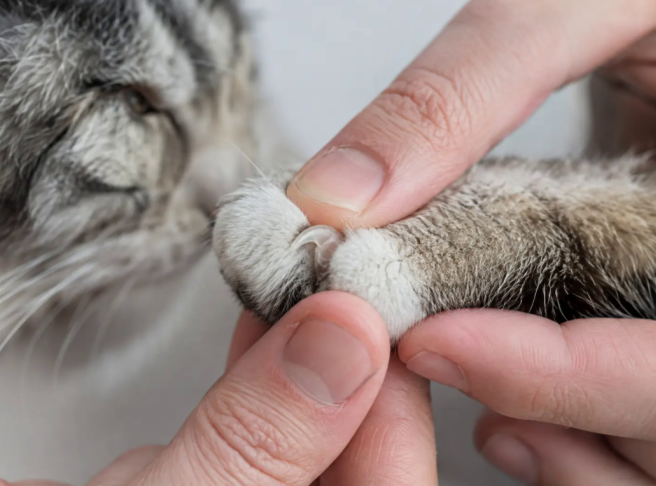
Support the paw without squeezing it. Place a finger beneath one toe and a thumb above it, then apply light pressure so the claw extends. Release immediately if your cat pulls away.
Check the nail from the side under strong light. Locate the quick and identify the thin hooked tip that can be removed safely.
4. Clip only the sharp tip
Position the blades to cut from top to bottom rather than crushing the claw from side to side. Make one small, confident cut. If you are uncertain, take off less than you think you need.
You do not need to create a blunt, short nail. Removing the needle-like hook is enough for most maintenance trims.
5. Reward and reassess
Give your cat a reward immediately after the clip. If their body remains loose and they voluntarily stay, you may try another nail. If they tense, flatten their ears, flick their tail, pull the paw away, stop taking treats, or try to leave, end the session.
The Feline Veterinary Medical Association’s Cat Friendly Homes program recommends a calm setting, positive reinforcement, and breaks when a cat dislikes trimming. A complete trim can be spread across several days.
6. Remember the dewclaws
The dewclaws sit higher on the inner side of the front legs and do not contact the ground. Because they receive little natural wear, they can become overgrown before the other claws. Check them whenever you inspect the paws.
What if you cut the quick?
Stop trimming and stay calm. Press clean gauze against the nail. Apply a small amount of styptic powder to the tip if needed. Flour or cornstarch may serve as a temporary alternative when styptic powder is unavailable, but persistent bleeding needs veterinary advice.
Do not continue trimming simply because the other nails are unfinished. Comfort your cat and monitor the toe. The complete first-aid steps are covered in what to do when a cat’s nail is cut too short.
Scratching posts still matter
Trimming does not replace scratching. Give your cat stable scratching options in different orientations and materials. A tall vertical post should allow a full-body stretch; some cats prefer horizontal cardboard or angled scratchers.
Place scratchers near sleeping areas, room entrances, or furniture your cat already targets. Reward appropriate use rather than punishing natural scratching behavior. Scratching helps remove old claw sheaths, but it may not keep every nail short enough—especially the dewclaws.
When to call your veterinarian
Arrange veterinary care if you notice:
• A claw growing into or touching the paw pad
• A nail torn near the base or hanging by tissue
• Bleeding that continues despite steady pressure
• Limping, persistent licking, hiding, or obvious pain
• Swelling, heat, discharge, odor, or redness around the nail
• Multiple claws becoming brittle, deformed, or discolored
• A senior cat suddenly resisting paw handling or no longer scratching
Do not pull off a loose broken section yourself. A damaged nail can be extremely painful, and safely removing it may require pain control or sedation. Sudden changes across several claws may also point to a nail-bed, skin, nutritional, or systemic health problem that cannot be diagnosed from appearance alone.
Nail trimming should never become a battle
If your cat panics, growls, swats, bites, or cannot recover between attempts, pause home trimming. A veterinarian or cat-friendly groomer can address urgent overgrowth while you work on gradual handling practice. Your veterinarian can also check for arthritis, a damaged claw, or another source of pain.
Never punish resistance. Your cat is communicating discomfort or fear, not being difficult. The training process in why cats hate nail trims can help rebuild cooperation one small step at a time.
Frequently asked questions
Can I use human nail clippers on my cat?
Use small clippers designed for cats whenever possible. Their shape makes it easier to see and cut a curved claw without crushing it. Guidance on human nail clippers varies, but an ill-fitting or dull tool can split the claw. If the nail bends, crushes, or splinters, stop and replace the tool.
Should I trim the front and back claws?
Check all four paws, but do not assume they need equal trimming. Front claws and dewclaws often become sharp or long sooner. Rear claws may need less frequent attention.
Is a scratching post enough?
It helps cats shed outer claw sheaths and express normal scratching behavior, but it does not guarantee safe nail length. Continue checking each claw, especially in kittens, seniors, and cats with limited mobility.
How short should cat nails be?
There is no ideal millimeter length for every cat. Remove only the narrow hooked tip and leave a generous margin before the quick. A conservative trim is safer than trying to make the claw uniformly short.
Is nail trimming the same as declawing?
No. A routine trim removes only the nonliving sharp tip. Declawing is a surgical procedure that removes part of each affected toe and is not a grooming method. Nail care should preserve normal scratching, climbing, stretching, and paw use.
Final takeaway
Good cat nail care is a routine of observe, trim conservatively, reward, and stop early. Check the paws every week, use sharp feline clippers, remove only the clear hooked tip, and let your cat’s comfort determine the pace. When a claw is painful, deformed, infected, or growing toward the pad, professional care is safer than attempting a more aggressive trim at home.
Editorial sources
• Cat Friendly Homes: Trimming Your Cat’s Nails
• VCA Animal Hospitals: How to Trim a Cat’s Nails
• Humane World for Animals: Why Declawing Is Bad for Your Cat
This article provides general educational information and is not a substitute for an examination or individualized advice from your veterinarian.Label:
Popular Post
Top 10 Most Expensive Cat Breeds in The World
May 07, 2025
The Ultimate Guide to Tabby Cats: Patterns, Personalities, and More
Mar 27, 2025

Can Cats Have Ice Cream? Dangers, Safe Flavors & Healthy Cat Treats
Sep 02, 2025

My Cat Only Eats A Little at A Time - What to Do?
Feb 27, 2023

Top 8 Reasons Why Does My Cat Sleep Between My Legs?
Mar 03, 2025

[Blue] W03L 3L Premium Ceramic Cat Water Fountain
Model: W03 LITE
$59.99
$69.99

Basin Pet Water Fountain-W600
Model: W600
$43.99
$69.99

[Basic] Ceramic Pet Water Fountain with Power Cable
Model: W03L
$59.99
$99.00

WOPET 8L Pet Water Fountain For Multiple Cats or Large Dogs A08
Model: A08
$49.99
$59.99

[Upgrade] Basin Wireless Pet Water Fountain
Model: W600 Pro
$69.99
$89.99

[Blue] W03 3L Ceramic Cordless Cat Water Fountain
Model: W03
$89.99
$99.99

DOWNLOAD APP

WOpet life




Copyright © 2026 WOPET. All Rights Reserved.