Aug 31, 2026
Author:Lisa Martinez
Quick Answer
A slimy film in a cat fountain is often consistent with biofilm or organic buildup, but you cannot identify the microorganisms by sight. Stop using the fountain, scrub every washable surface in the water path, rinse well, and check the pump and filter housing—not just the visible bowl.
What Is the Slime in a Cat Water Fountain?
The slippery film is often consistent with biofilm. The U.S. Centers for Disease Control and Prevention describes biofilm as a slimy, glue-like substance that helps microorganisms stick to wet surfaces. In a pet fountain, those surfaces may include the basin, pump housing, tubing, spout, filter compartment, seams, and rubber fittings.
Biofilm is not automatically the same thing as visible mold. It may appear clear, cloudy, pink, tan, or another color, but color alone cannot identify the organism. Do not diagnose a specific bacterium or fungus by looking at a photograph.
Why Does Biofilm Develop So Quickly?
Several everyday factors can supply moisture or nutrients:
• saliva introduced when a cat drinks;
• food crumbs carried from the mouth or paws;
• loose hair, dander, and household dust;
• a filter that is overdue for maintenance;
• water left in place too long;
• low-flow pockets inside corners or channels;
• buildup inside the pump or intake;
• warm room temperatures or direct sunlight;
• contaminated brushes, sponges, or towels used during cleaning.
A fountain can continue circulating while biofilm develops in a hidden area. The visible drinking surface may look clean even when the pump cavity or underside of the lid is slippery.
Is Pink Slime in a Cat Fountain Mold?
Not necessarily. Pink or reddish buildup is often casually called “pink mold,” but appearance is not enough to determine whether it is mold, bacteria, mineral staining, food residue, or a mixture.
Treat any unexplained slippery discoloration as a reason to stop using the fountain and clean it thoroughly. If the material returns immediately after correct cleaning, contact the manufacturer and consider having your household water uated if other fixtures show similar buildup.
If the buildup is dry, chalky, or crusty rather than slippery, it may be hard-water residue instead of biofilm.
How Do You Remove Slime From a Cat Water Fountain?
1. Take the fountain out of service
Turn it off, give your cat a clean bowl of water, and remove only the parts identified as washable. Keep the powered base, charging port, adapter, and cord dry unless the manual says otherwise.
2. Inspect the full water path
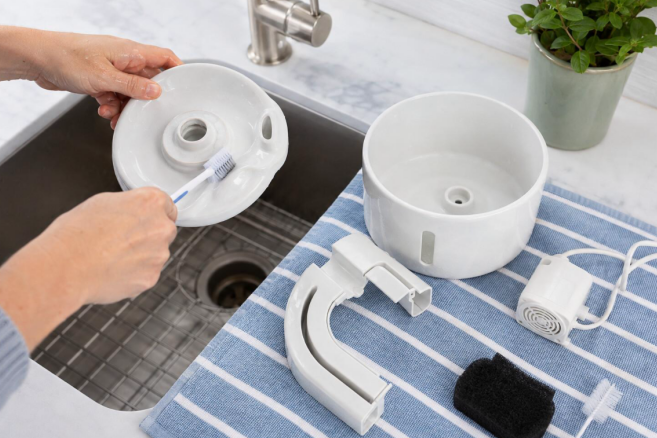
Check the basin, lid, spout, narrow channels, filter housing, intake, impeller area, tubing, seals, and the undersides of removable pieces. Slime left in one area can quickly spread through the recirculating water.
3. Scrub the washable surfaces
Biofilm adheres to surfaces, so a quick rinse may not remove it. Use brushes reserved for pet equipment and sized for the fountain's crevices. Follow the manual for approved soap, dishwasher use, temperature limits, and cleaning solutions.
4. Rinse and check the filter
Rinse every drinking-water surface until no cleaner remains. Do not wash a disposable activated-carbon filter with soap; rinse or replace it only as directed. Replace a filter that is overdue, damaged, unusually odorous, or still slimy after the permitted maintenance.
5. Refill and test the fountain
Use fresh drinking water and fill to the correct level. Confirm that the flow looks normal and no residue reappears after startup.
For more detailed maintenance steps, see WOPET's guide on how to clean a cat water fountain and its separate instructions for cleaning a cat water fountain pump.
How Can You Keep Slime From Coming Back?
Replace the water daily
Fresh water reduces the time available for saliva and debris to accumulate. Empty the old water instead of repeatedly topping it off. See how often to change cat fountain water for a simple daily routine.
Clean beyond the visible bowl
Rotate through a complete inspection of the pump, intake, spout, filter compartment, and seals. Use the cat water fountain care guide as a maintenance reference, then follow the manual for your exact model.
Keep the fountain away from heat and food debris
Choose a quiet indoor area away from direct sun, cooking grease, and litter scatter. Do not place wet food where pieces can fall into the fountain.
Use clean, dedicated tools
A kitchen sponge used for multiple jobs can reintroduce residue. Keep a small brush set for the fountain, rinse it after use, and let it dry completely.
Avoid adding food or supplements to the fountain
Broth, oils, food toppers, and medications can add nutrients or damage filters and pumps. Unless the fountain manufacturer explicitly permits an additive, offer it in a separate washable bowl and follow veterinary guidance.
Inspect the material for damage
Cracks, chips, deep scratches, and worn seals can be difficult to clean. Replace a damaged component rather than trying to sanitize a surface that can no longer be maintained properly.
Does a Ceramic Fountain Prevent Biofilm?
No material makes routine cleaning unnecessary. Smooth, intact ceramic can be easy to wipe and inspect, but biofilm can still form on the pump, filter housing, seams, and other wet components.
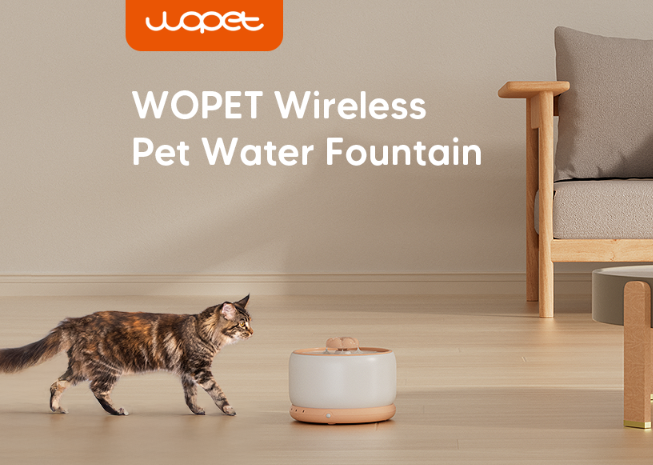
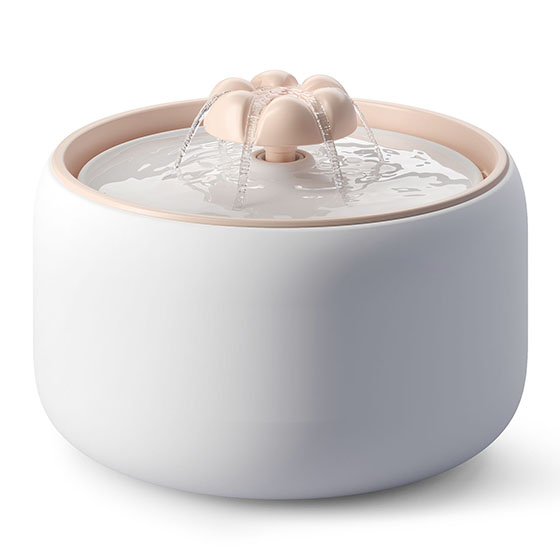
The WOPET W03 Ceramic Wireless Pet Water Fountain has a removable ceramic bowl that the product page identifies as dishwasher safe. That statement applies to the ceramic bowl—not automatically to the pump, filter, battery base, or every removable component. Use the supplied manual for each part.
When Should You Stop Using the Fountain?
Stop and inspect the fountain when:
• slime returns immediately after a complete cleaning;
• the pump or cord is damaged;
• the fountain contains fuzzy growth, insects, larvae, or an oily film;
• the water has a chemical, sewage-like, or strong musty odor;
• the material is cracked, chipped, or deeply scratched;
• your cat refuses the water after the fountain is cleaned and refilled.
Contact your veterinarian promptly if your cat develops vomiting, diarrhea, drooling, weakness, refuses water, or shows another concerning sign. Do not wait for a fountain troubleshooting step to resolve a possible medical problem.
Frequently Asked Questions
Can a filter remove biofilm?
No. A filter may capture debris or reduce certain tastes and odors, but attached biofilm requires physical cleaning of the surfaces where it grows.
Why is the fountain slimy after only a few days?
Check for hidden residue, an overdue filter, food contamination, warm placement, dirty cleaning tools, and incomplete pump cleaning. Increase the cleaning frequency based on what you observe and the manual.
Can I use vinegar to remove slime?
Only if the manufacturer approves it for the specific material and component. Never mix vinegar with bleach or another cleaner, and rinse every drinking-water surface thoroughly.
Should I throw away a slimy filter?
If the filter is disposable, overdue, damaged, odorous, or cannot be maintained exactly as directed, replace it. Never clean a disposable carbon filter with soap.
Is clear slime harmless?
Its appearance cannot establish safety. Treat any slippery buildup as a maintenance warning and clean the system before your cat drinks from it again.
Editorial Method and Sources
This article uses the CDC's general definition of biofilm and applies it conservatively to fountain maintenance. It does not identify microorganisms by color or claim that one fountain material prevents microbial growth.
• CDC: Preventing Waterborne Germs at Home
Label:
Popular Post
Top 10 Most Expensive Cat Breeds in The World
May 07, 2025
The Ultimate Guide to Tabby Cats: Patterns, Personalities, and More
Mar 27, 2025
Can Cats Have Ice Cream? Dangers, Safe Flavors & Healthy Cat Treats
Sep 02, 2025
My Cat Only Eats A Little at A Time - What to Do?
Feb 27, 2023

Top 8 Reasons Why Does My Cat Sleep Between My Legs?
Mar 03, 2025
Basin Pet Water Fountain-W600
Model: W600
$43.99
$69.99
[Basic] Ceramic Pet Water Fountain with Power Cable
Model: W03L
$59.99
$99.00
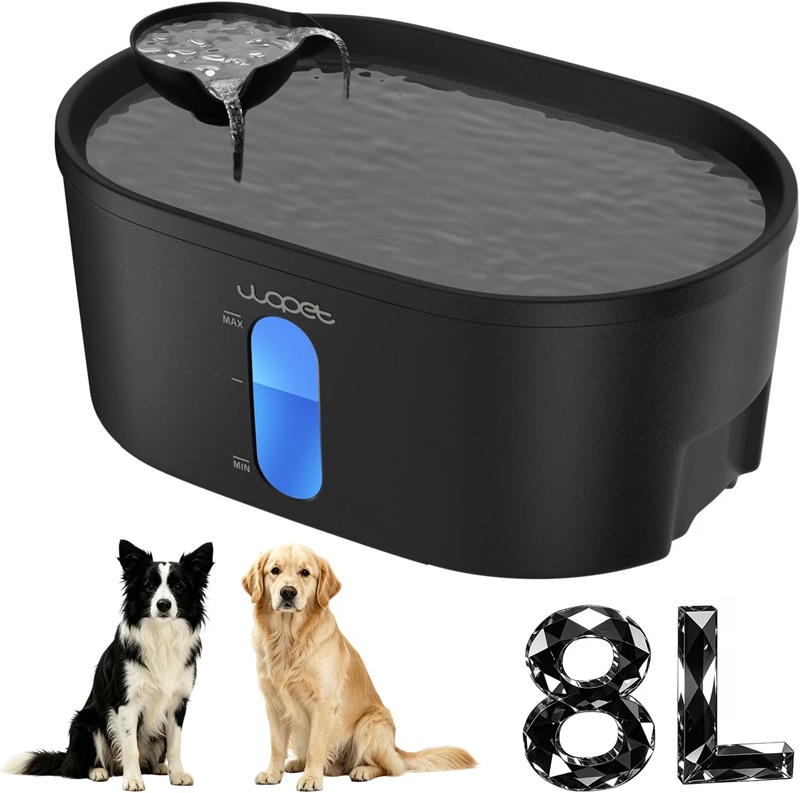
WOPET 8L Pet Water Fountain For Multiple Cats or Large Dogs A08
Model: A08
$49.99
$59.99
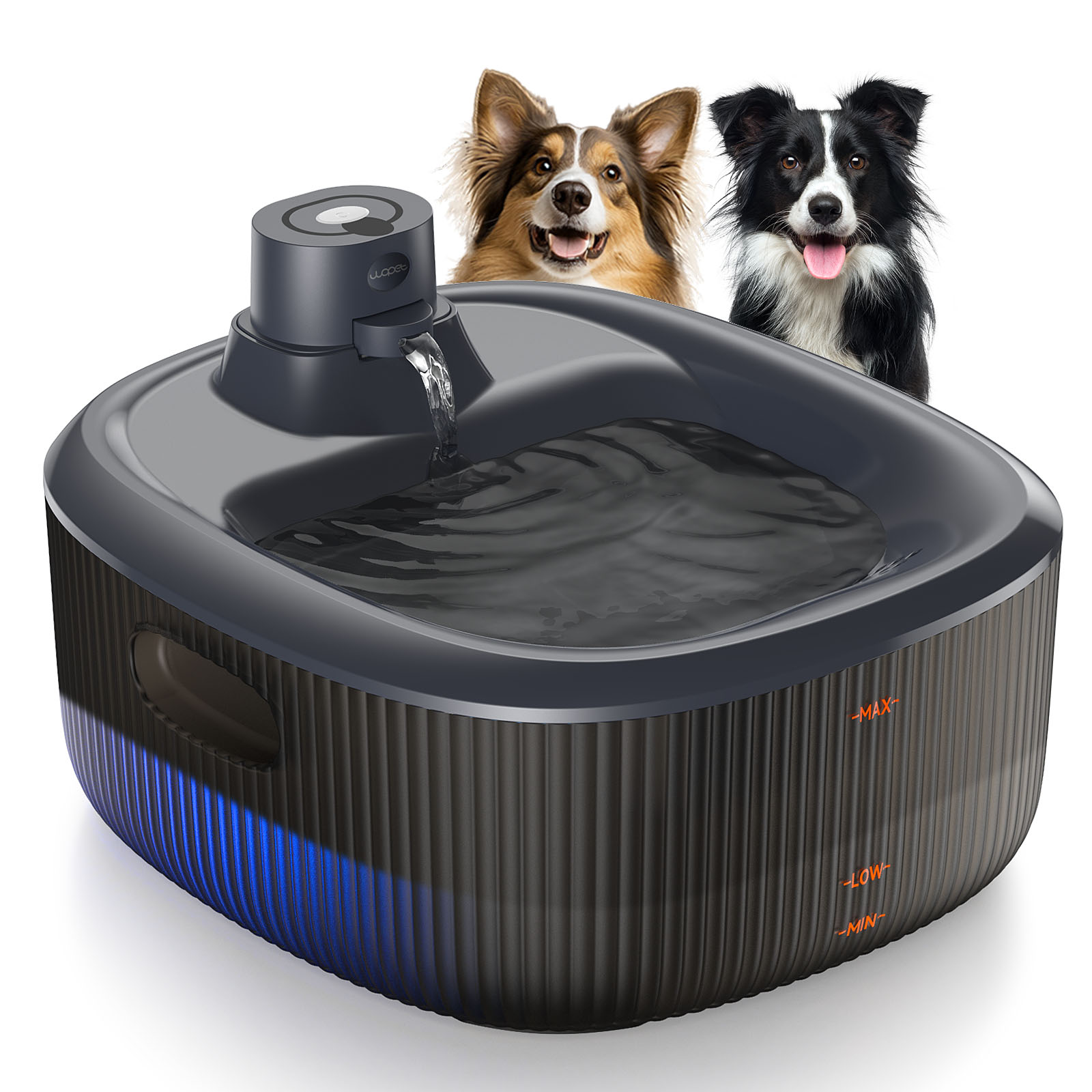
[Upgrade] Basin Wireless Pet Water Fountain
Model: W600 Pro
$69.99
$89.99
Heritage View Pet Feeder Dual Bowls For Two Cats
Model: HV10DP
$119.99
$149.99
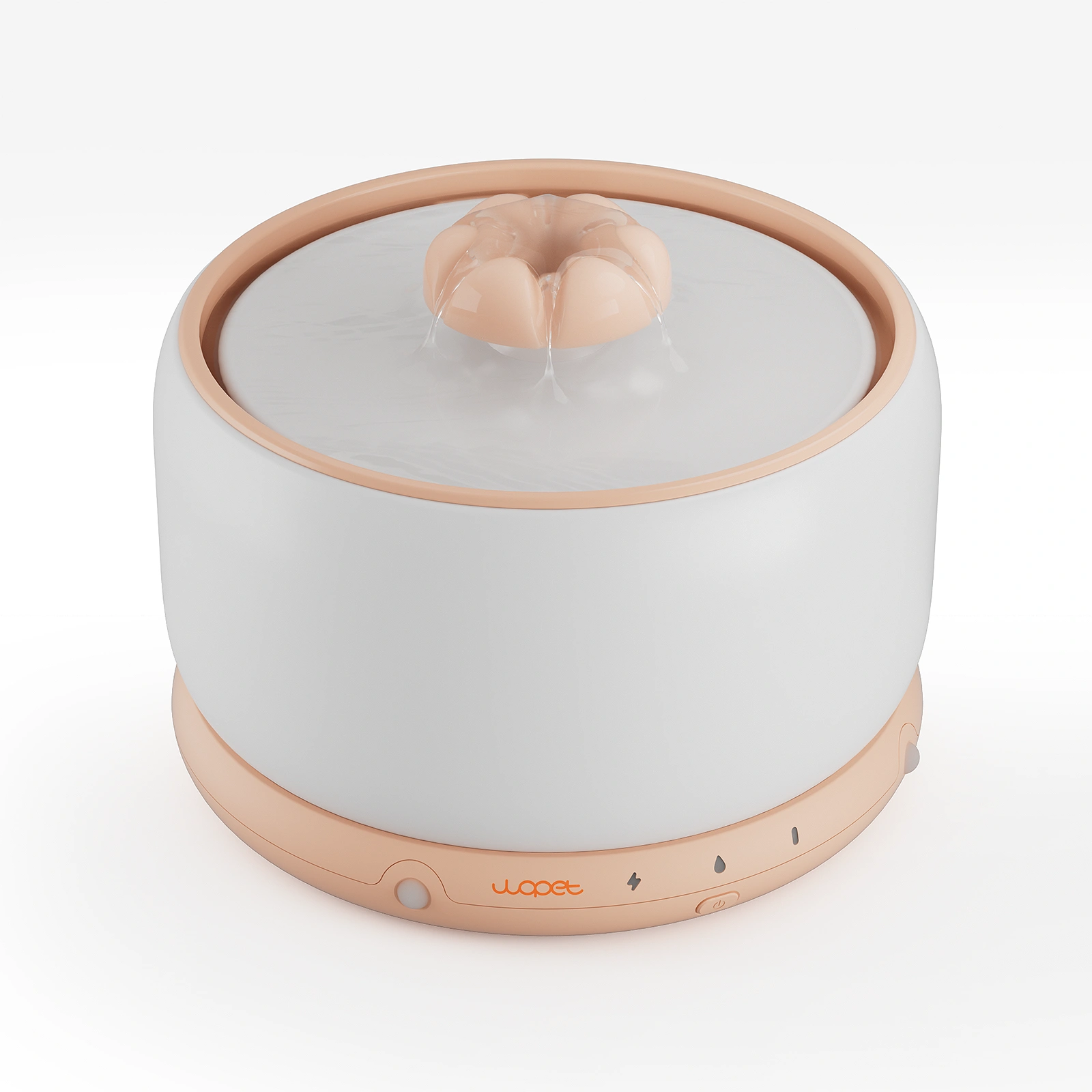
[New] Ceramic Wireless Pet Water Fountain W03
Model: W03
$89.99
$129.00

DOWNLOAD APP

WOpet life




Copyright © 2026 WOPET. All Rights Reserved.