Sep 22, 2026
Author:Lisa Martinez
The real cost of a cat water fountain includes the unit, replacement filters, electricity or charging, cleaning supplies, and occasional replacement parts. For many low-wattage fountains, filters can cost more each year than electricity—but the exact total depends on the model, local power rate, number of pets, water quality, and maintenance schedule.
In the worked example below, a $60 fountain with one included filter requires an estimated $137.73 in first-year cash outlay. Its annualized recurring cost is about $81.73, including a planning allowance for parts. These are illustrative inputs, not market averages or WOPET price quotes.
Use the calculator in this guide before buying. Do not rely on a generic annual figure when filter packs and replacement intervals vary widely.
The Complete Cost Formula
Use this formula:
First-year cost = purchase price + annual filter cost + annual electricity cost + cleaning supplies + replacement parts purchased that year
For later years, remove the original purchase price unless you expect to replace the whole unit.
|
Cost category |
What to check |
|
Fountain |
Actual checkout price, tax, and shipping |
|
Filters |
Price per compatible filter × filters used per year |
|
Electricity |
Pump watts × operating hours ÷ 1,000 × utility rate |
|
Charging |
Battery input or charger consumption and charging frequency |
|
Cleaning |
Brushes, mild dish soap, descaling supplies approved by the manual |
|
Parts |
Pump, adapter, cable, seals, lids, trays, or manufacturer-specific pieces |
|
Replacement |
Expected service life and warranty coverage |
1. Upfront Fountain Price
The sticker price varies with material, capacity, pump design, power source, and included accessories. Compare what is actually in the box:
• number of filters included;
• power adapter or charging cable;
• cleaning brush;
• warranty term;
• availability of replacement pumps and small parts;
• shipping or subscription requirements.
A lower purchase price can become expensive if proprietary filters are costly or unavailable. A higher-priced fountain is not automatically cheaper over time, either. Calculate at least one full year.
You can compare current models in WOPET’s pet water fountain collection, then use each product page or manual for model-specific numbers.
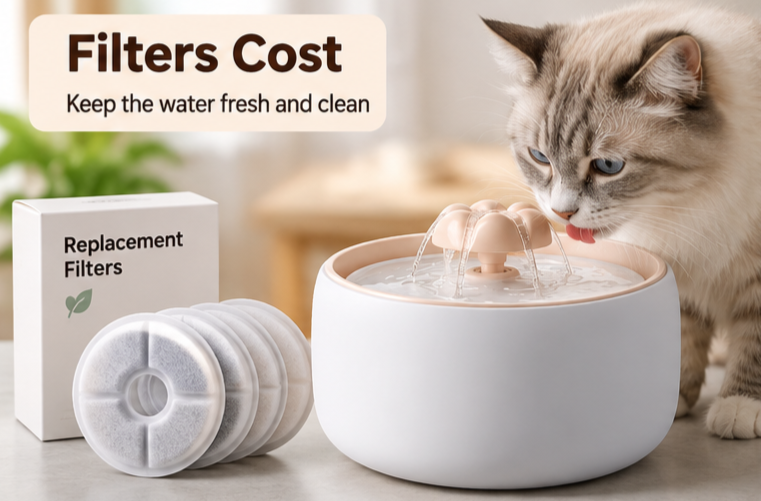
2. Annual Filter Cost
This is often the largest recurring expense. Calculate it in three steps:
1. Find the cost per filter. Divide the pack price by the number of filters.
2. Find the replacement interval. Use the model manual, not a universal schedule.
3. Estimate filters used per year. Divide 52 weeks by the number of weeks between changes.
4. Convert use into pack purchases. Account for any starter filters and round up to whole packs.
Worked Filter Example
Suppose a compatible six-pack costs $24, the fountain includes one starter filter, and the manual calls for replacement every four weeks under your conditions.
• Cost per filter: $24 ÷ 6 = $4
• Filters used per year: 52 ÷ 4 = about 13
• Replacement filters to buy in year one: 13 − 1 included filter = 12
• Packs to buy: 12 ÷ 6 = 2 packs
• First-year cash spent on filters: 2 × $24 = $48
This is an illustration, not a WOPET price quote or replacement instruction. If no starter filter were included, buying 13 filters in six-packs would require three packs and leave five filters for the next year. That is why a cost-of-ownership calculation should distinguish filters consumed from cash spent on whole packs. Multi-pet use, visible debris, hard water, or reduced flow may also change the practical schedule. See WOPET’s guide on how often to change a cat fountain filter for the factors to track.
Do not assume an off-brand filter is compatible because it looks similar. Dimensions, media, fit, and flow resistance can differ.
3. Electricity Cost
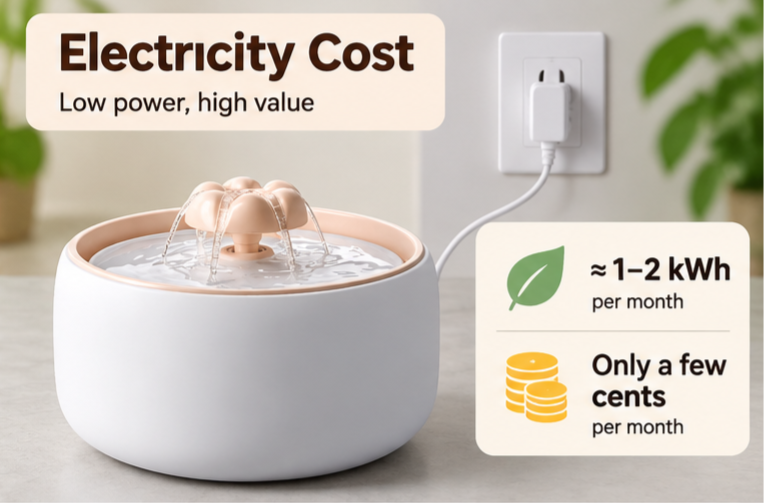
For a plug-in fountain that runs continuously:
Annual kWh = pump watts × 24 × 365 ÷ 1,000
Annual electricity cost = annual kWh × your electricity price per kWh
Worked Electricity Example
Assume a 3-watt pump runs 24 hours a day and your all-in electricity rate is $0.18 per kWh.
• Annual energy: 3 × 24 × 365 ÷ 1,000 = 26.28 kWh
• Annual cost: 26.28 × $0.18 = $4.73
This example shows the method; it does not claim that every pump draws exactly three watts or that every household pays the same rate. Check the pump or adapter label, model specifications, and your utility bill. For the most accurate measurement, a plug-in energy meter can capture actual consumption. The U.S. Department of Energy explains that plugged-in devices can use power in operating and standby modes.
For rechargeable fountains, use the charger’s measured energy per full charge multiplied by annual charging cycles. Battery capacity in milliamp-hours alone is not enough to calculate wall electricity accurately because voltage and charging losses also matter.
4. Cleaning and Descaling Supplies
Routine cleaning may use supplies already in your home, so the incremental cost can be small. Still, budget for:
• a dedicated soft brush or narrow pump brush;
• mild, unscented dish soap if approved;
• manufacturer-approved descaling materials where mineral buildup is a problem;
• clean cloths or paper towels;
• a waterproof mat if the floor needs protection.
Do not count filters as a substitute for cleaning. WOPET’s cat water fountain care guide and pump-cleaning guide cover different parts of the routine.
5. Pumps and Replacement Parts
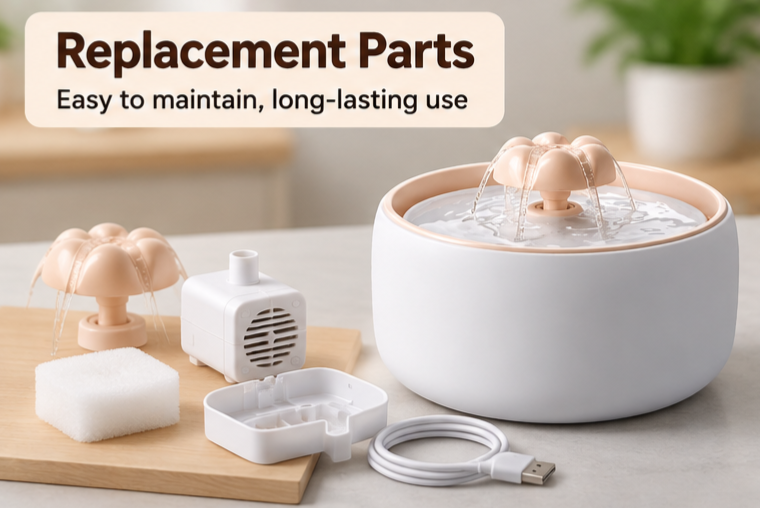
Pumps are wear components, but there is no responsible universal replacement schedule. Lifespan depends on design, water level, debris, mineral buildup, cleaning, and whether the pump is allowed to run dry.
Before buying, check whether the manufacturer sells:
• the correct replacement pump;
• matching power components;
• seals, tubes, trays, or lids;
• replacement reservoirs;
• filters that are likely to remain available.
Create a replacement-parts allowance based on current listed prices. If a compatible pump costs $15 today, for example, you might include that amount in a contingency column without assuming you will definitely buy one every year.
A Transparent First-Year Example
The table below combines the earlier hypothetical inputs.
|
Item |
Example assumption |
First-year amount |
|
Fountain |
One-time purchase |
$60.00 |
|
Filters |
Two six-packs at $24; one starter filter included |
$48.00 |
|
Electricity |
3 W × 24/7 at $0.18/kWh |
$4.73 |
|
Cleaning supplies |
Incremental estimate |
$10.00 |
|
Parts allowance |
Planning amount, not guaranteed spend |
$15.00 |
|
Illustrative first-year total |
|
$137.73 |
|
Annualized recurring cost |
Uses 13 filters at $4 each; excludes a new fountain |
$81.73 |
The first-year figure reflects two whole filter packs because one starter filter is included. The annualized figure uses the value of 13 filters consumed, even though actual pack purchases may shift cash spending between years. These figures are not a price promise, average, or product recommendation. Replace every assumption with your model’s current price, manual, measured wattage, and local utility rate.
How to Lower Ownership Cost Without Cutting Maintenance
• Compare cost per compatible filter, not pack price alone.
• Follow the manual rather than replacing filters automatically too early or stretching them beyond acceptable condition.
• Keep the correct water level so the pump does not run dry.
• Remove hair and debris before it reaches the pump.
• Clean mineral buildup using only approved methods.
• Confirm part availability before the return window closes.
• Use multiple water sources for reliability, but do not buy a second powered fountain unless it solves a real access need.
Avoid washing disposable filters for reuse unless the manufacturer explicitly instructs you to do so. A damaged or saturated filter is not made economical by keeping it in service.
Fountain vs. Gravity Dispenser Cost
A gravity dispenser usually has no pump, electricity, or fountain filter, so its recurring component costs may be lower. It still requires cleaning, water replacement, and occasional valve or reservoir replacement. A fountain adds operating parts and may add filter costs in exchange for circulating water that some pets prefer.
A lower-cost gravity dispenser may be the practical choice when quiet, pump-free operation matters more than circulation. A fountain may justify its added operating parts when a pet reliably prefers moving water and the owner can maintain it.
Frequently Asked Questions
Are cat water fountains expensive to run?
Electricity can be modest for a low-wattage pump, but filters may create a larger recurring cost. Use the formulas above with the model’s wattage, filter price, replacement interval, and your utility rate.
How often should I buy replacement filters?
Follow the fountain manual and check conditions such as number of pets, debris, water quality, and flow. There is no single schedule that applies to every filter.
Is a filter subscription cheaper?
Only if the cost per compatible filter is lower and the delivery interval matches actual use. Compare unit price, shipping, cancellation terms, and the number of unused filters you may accumulate.
Should I replace the pump every year?
Not automatically. Clean and inspect it as directed, maintain the proper water level, and replace it when it is faulty or when the manufacturer’s instructions require it. Never continue using a hot, damaged, leaking, or electrically unsafe unit.
The Bottom Line
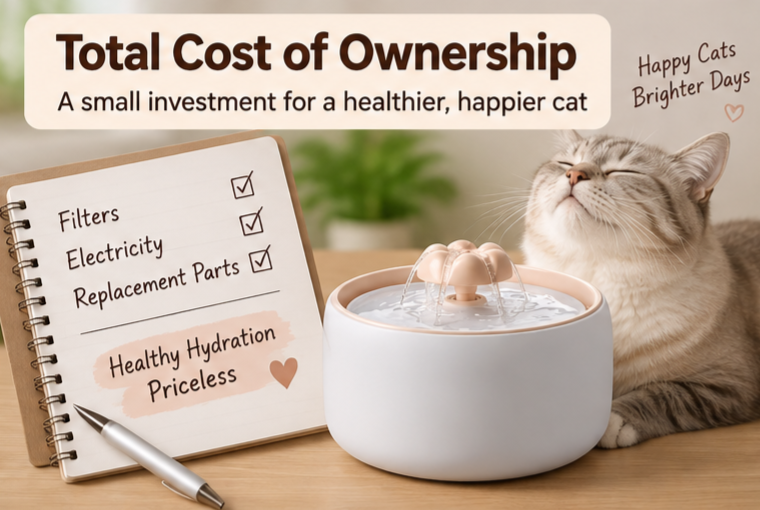
To estimate cat water fountain cost of ownership, add the unit price, compatible filters, measured electricity, realistic cleaning expenses, and model-specific parts. A transparent calculation using your own inputs is more useful than a generic “cheap to run” claim—and it makes comparing fountains much easier.
Editorial Sources
Label:
Popular Post
Top 10 Most Expensive Cat Breeds in The World
May 07, 2025

The Ultimate Guide to Tabby Cats: Patterns, Personalities, and More
Mar 27, 2025
Can Cats Have Ice Cream? Dangers, Safe Flavors & Healthy Cat Treats
Sep 02, 2025

My Cat Only Eats A Little at A Time - What to Do?
Feb 27, 2023

Top 8 Reasons Why Does My Cat Sleep Between My Legs?
Mar 03, 2025
Basin Pet Water Fountain-W600
Model: W600
$43.99
$69.99
[Basic] Ceramic Pet Water Fountain with Power Cable
Model: W03L
$59.99
$99.00
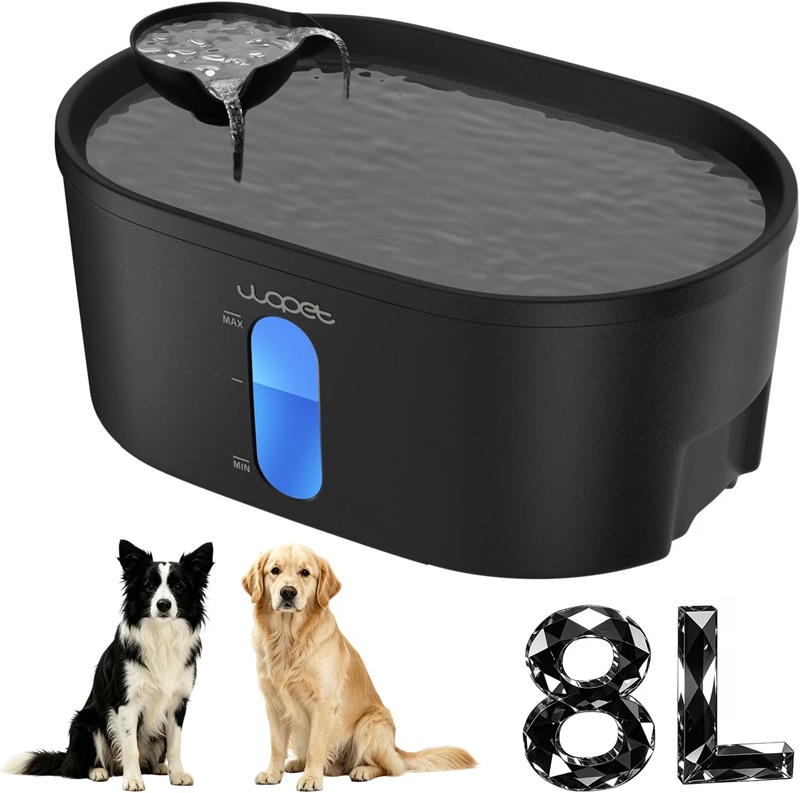
WOPET 8L Pet Water Fountain For Multiple Cats or Large Dogs A08
Model: A08
$49.99
$59.99
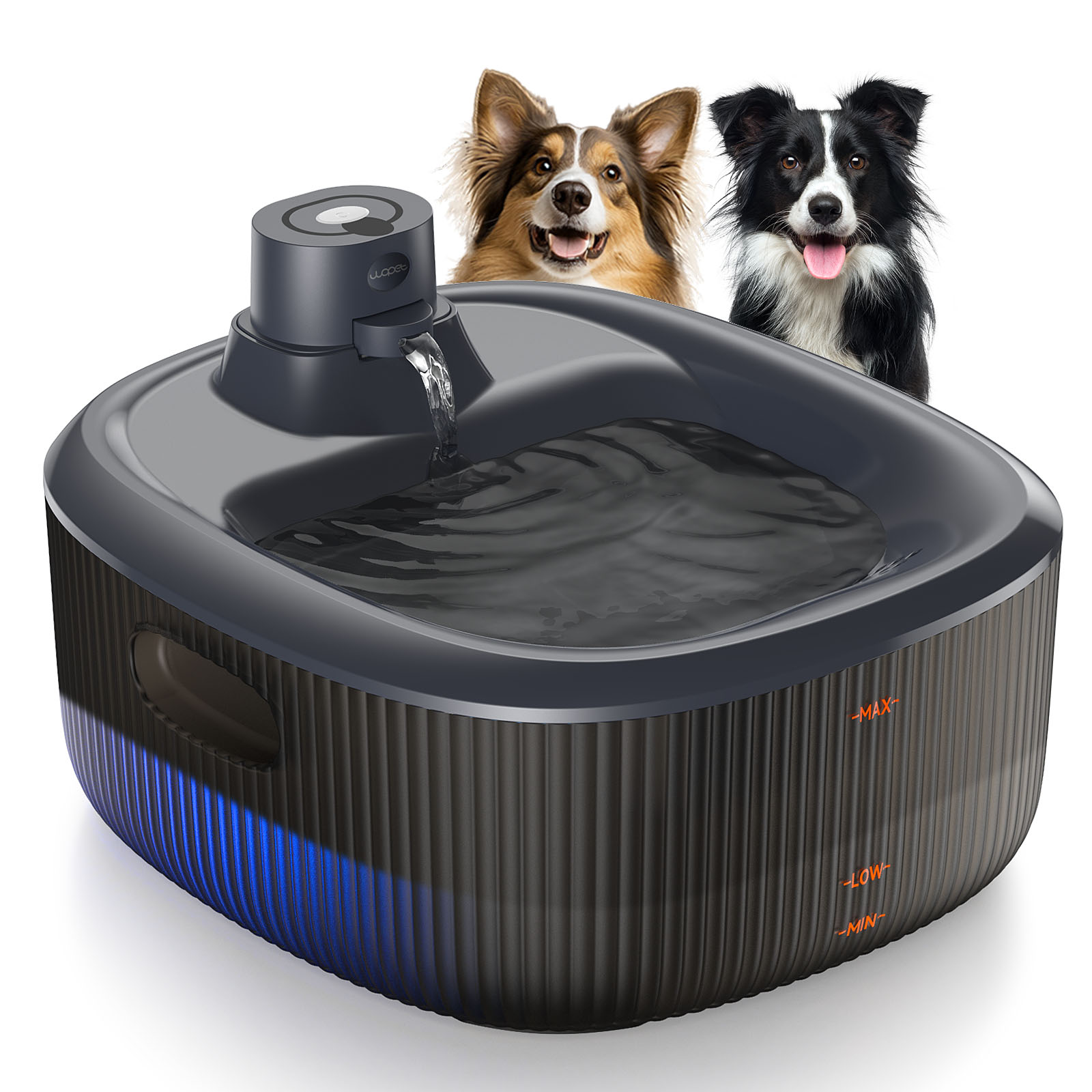
[Upgrade] Basin Wireless Pet Water Fountain
Model: W600 Pro
$69.99
$89.99
Heritage View Pet Feeder Dual Bowls For Two Cats
Model: HV10DP
$119.99
$149.99
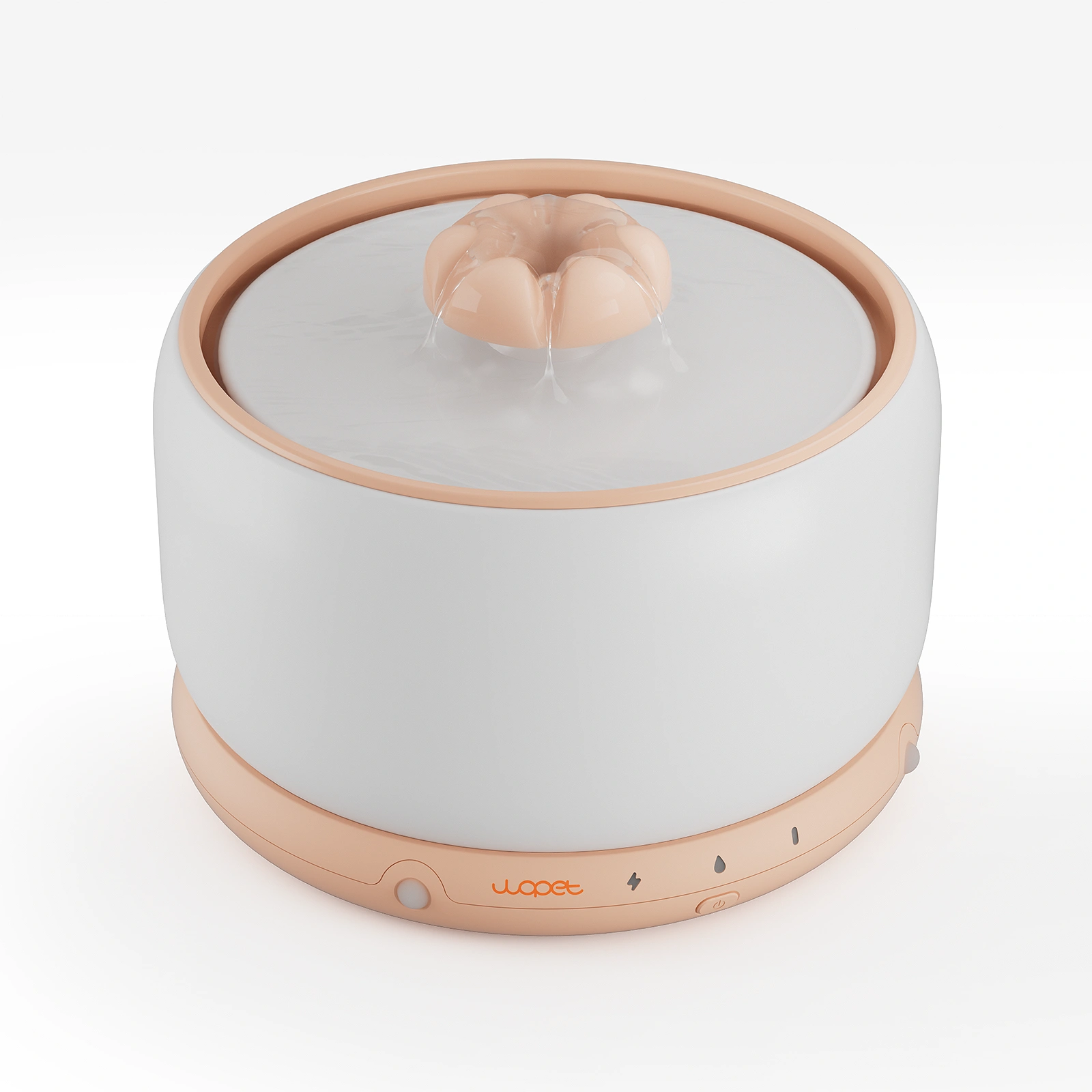
[New] Ceramic Wireless Pet Water Fountain W03
Model: W03
$89.99
$129.00

DOWNLOAD APP

WOpet life




Copyright © 2026 WOPET. All Rights Reserved.