Sep 04, 2026
Author:Amanda Lyu
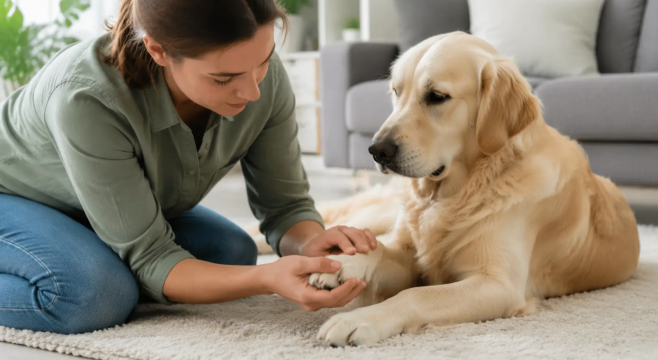
If your dog’s paws smell faintly like corn chips, the scent may come from the normal mix of moisture, skin oils, and microorganisms living on the feet. Odor alone does not diagnose an infection.
|
Quick answer: A light, familiar corn-chip smell on clean, comfortable paws can be normal. Concern rises when the odor becomes strong or changes suddenly, especially with redness, itching, licking, greasy skin, discharge, swelling, sores, or pain. Clean and dry the paws gently, but do not start antifungal or antibiotic treatment without a veterinary diagnosis. |
Why can normal dog paws have an odor?
A dog’s skin is not sterile. Bacteria and yeast can live on healthy skin without causing disease. Paws also contact soil, grass, floors, water, and outdoor debris, while the spaces between the toes can retain warmth and moisture. Together, those factors can create a recognizable scent.
The popular “Frito feet” explanation is often reduced to one or two named bacteria. That is too simple. A smell cannot identify a specific organism, and microorganisms found on healthy skin can also appear during skin disease. What matters clinically is whether the odor occurs with inflammation, discomfort, excess moisture, or other change.
When is corn-chip paw odor usually harmless?
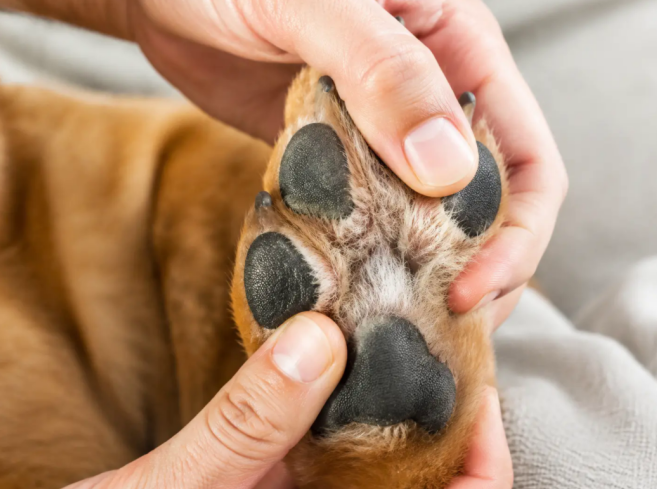
A mild odor is less concerning when:
• It is faint and familiar rather than overpowering
• All four paws look like their normal baseline
• The skin between the toes is dry and not red or swollen
• The pads are intact, without sores, cracks, or discharge
• Your dog walks normally and allows gentle handling
• There is no persistent licking, chewing, or rubbing
• The smell improves after ordinary cleaning and drying
Avoid repeatedly deodorizing healthy paws. Fragrance can mask change, and frequent cleansers may irritate the skin barrier.
When can paw odor signal a problem?
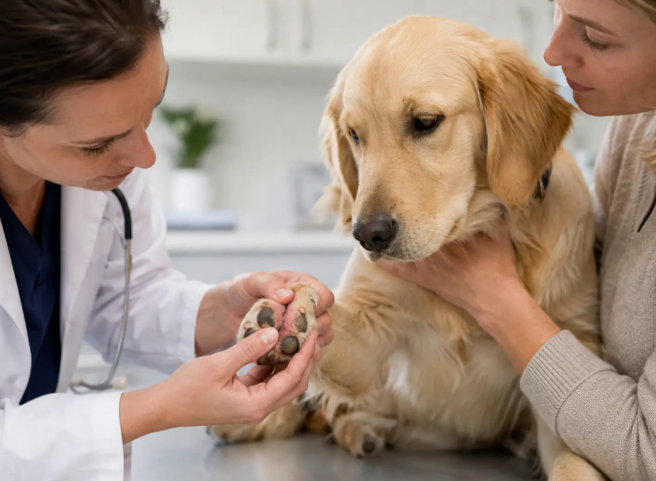
Odor becomes more meaningful when it arrives with other symptoms. Watch for:
• Strong, musty, sour, rancid, or rapidly worsening smell
• Redness or swelling between the toes
• Greasy, damp, thickened, flaky, or crusted skin
• Brown saliva staining from repeated licking
• Discharge, pustules, sores, or hair loss
• Pain, limping, or sensitivity to touch
• A damaged nail or inflamed nail fold
• Symptoms that recur after cleaning
Veterinary sources list odor, itching, redness, scaling, crusting, and skin thickening among possible signs of yeast dermatitis. Bacterial skin infection can also produce odor or moist lesions. Allergies, trapped foreign material, parasites, moisture, trauma, and other disorders can change the skin environment and allow secondary infection.
This is why “corn-chip smell equals yeast” is not a safe diagnosis. Yeast and bacteria require different treatment, and an underlying allergy or foreign body may also need attention.
Does a corn-chip smell mean a yeast infection?
Not by itself. A yeast infection becomes more plausible when odor occurs with itchiness, redness, greasy skin, scaling, thickening, or recurrent ear and skin problems. Even then, appearance and smell cannot confirm it.
Veterinarians commonly examine the skin and may collect a surface sample for cytology. Looking at cells and microorganisms under a microscope helps determine whether yeast or bacteria are present in abnormal numbers and whether another test is needed.
Do not use leftover antifungal cream, athlete’s-foot medication, medicated shampoo, or oral medicine. The product may be unsafe to lick, the concentration may be wrong, and treating without identifying the cause can delay useful care.
What should you do about smelly dog paws?
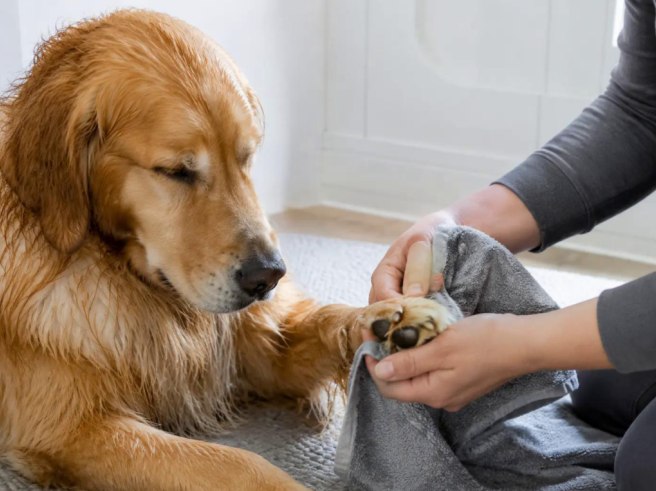
If the paws look comfortable and normal
1. Inspect pads, nails, and spaces between the toes.
2. Remove loose debris.
3. Rinse with lukewarm water if the paws are dirty.
4. Pat completely dry, especially between the toes.
5. Recheck over the next day or two without adding fragrance.
Use the residue-specific steps in how to clean dog paws after a walk. If the faint baseline smell returns but the skin remains normal, routine cleaning—not aggressive treatment—is usually enough.
If the paws are red, itchy, wet, or painful
Stop home experimentation and contact your veterinarian. Keep the feet clean and dry, prevent chewing if you can do so safely, and avoid tight homemade bandages. Take clear photos and note whether one paw or several are affected, when the odor started, recent walks, swimming, grooming products, diet changes, and any ear or skin symptoms.
Can too much cleaning make paw odor worse?
It can contribute to irritation. Repeated soap, disinfectant, fragrance, or long soaks can disrupt the skin barrier. Incomplete drying can leave the toe webbing damp. A cycle of washing, moisture, licking, and more washing may make an irritated paw harder to interpret.
For ordinary hygiene, start with a damp cloth or lukewarm water and dry well. Use a medicated product only when a veterinarian has selected it for a diagnosed problem and given instructions for frequency and contact time.
How does a veterinarian diagnose smelly paws?
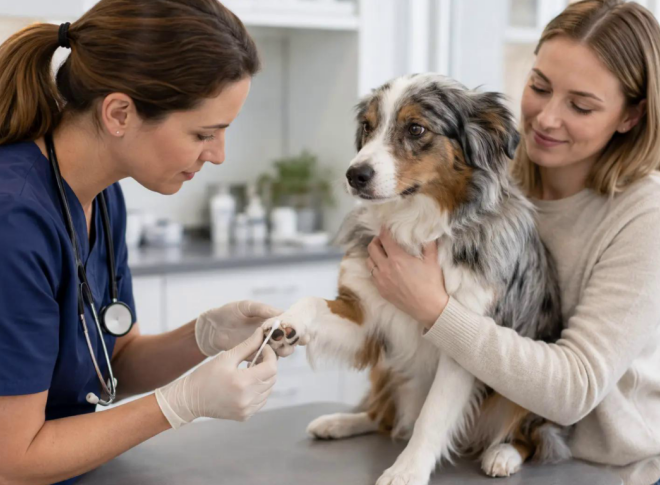
The veterinarian will look beyond the smell. The workup may include:
• Examining all paws, nails, ears, and other skin areas
• Asking whether symptoms are seasonal or recurrent
• Checking for a foreign object, wound, parasite, or contact irritant
• Cytology using tape, a swab, or an impression sample
• Skin scraping, culture, or other tests when indicated
• Evaluating allergies or an underlying disease in recurrent cases
Treatment depends on the findings. It may involve a topical or oral medication, management of moisture, removal of a foreign object, allergy control, or care for a nail or pad injury. Finish prescribed treatment as directed even if the odor improves early.
How can you reduce unhealthy paw odor?
• Inspect paws after walks and once weekly in good light.
• Rinse off mud, pollen, road salt, and other residue when needed.
• Dry between the toes after rain, swimming, snow, bathing, and bootie use.
• Wash damp dog bedding and paw towels regularly.
• Keep nails and excess paw fur maintained without cutting skin.
• Check booties for fit, friction, and trapped moisture.
• Follow a veterinary plan for allergies or recurring skin disease.
• Do not mask odor with perfume or essential oils.
See the complete dog paw care guide for a routine that covers cleaning, nails, seasonal protection, and warning signs.
When should you call the veterinarian?
Book an appointment for a persistent strong odor or any odor accompanied by redness, itching, licking, discharge, greasy skin, swelling, sores, or recurrent symptoms. Seek more urgent care for severe pain, sudden inability to bear weight, rapidly spreading swelling, uncontrolled bleeding, major trauma, or suspected chemical exposure.
If licking is the main symptom, the separate guide Why Is My Dog Licking His Paws? covers that broader search intent.
Frequently asked questions
Why do my dog’s paws smell like Fritos after sleeping?
Warmth and a small amount of moisture between the toes can make a normal paw scent easier to notice after rest. Inspect the skin rather than judging smell alone. Redness, greasy residue, itching, or a stronger new odor changes the recommendation.
Are corn-chip paws contagious?
A mild normal paw odor is not a contagious condition. Some skin infections or parasites can have implications for other animals or people, but smell cannot determine the cause. Ask your veterinarian about precautions if an infection is diagnosed.
Can I use vinegar on smelly paws?
Do not use undiluted vinegar, and do not apply any acidic solution to cracked, raw, or inflamed skin. Because odor has several possible causes, ask your veterinarian before using a soak or medicated rinse.
Why does only one paw smell?
One affected paw raises suspicion for a local issue such as trapped material, a nail problem, injury, or localized infection. Inspect carefully and arrange an exam if odor persists or the paw is painful or inflamed.
Will trimming paw fur stop the smell?
Trimming excess fur may help wet paws dry, but it will not cure infection or inflammation. Do not clip close to irritated skin, and seek care when other symptoms are present.
Final takeaway
A faint corn-chip smell can be part of a dog’s normal paw scent. The useful question is not “Which germ causes this smell?” but “Has the odor changed, and does the paw look or feel abnormal?” Clean gently, dry completely, and let redness, itching, discharge, swelling, and pain—not a nickname—guide the decision to see a veterinarian.
Editorial sources
• VCA Animal Hospitals: Yeast Dermatitis in Dogs
• VCA Animal Hospitals: Pododermatitis in Dogs
• VCA Animal Hospitals: Pyoderma in Dogs
• Merck Veterinary Manual: Dermatitis and Dermatologic Problems in Dogs
This article provides general educational information and is not a substitute for an examination or individualized advice from your veterinarian.
Label:
Popular Post
Top 10 Most Expensive Cat Breeds in The World
May 07, 2025
The Ultimate Guide to Tabby Cats: Patterns, Personalities, and More
Mar 27, 2025
Can Cats Have Ice Cream? Dangers, Safe Flavors & Healthy Cat Treats
Sep 02, 2025
My Cat Only Eats A Little at A Time - What to Do?
Feb 27, 2023
Top 8 Reasons Why Does My Cat Sleep Between My Legs?
Mar 03, 2025
[Blue] W03L 3L Premium Ceramic Cat Water Fountain
Model: W03 LITE
$59.99
$69.99
Basin Pet Water Fountain-W600
Model: W600
$43.99
$69.99
[Basic] Ceramic Pet Water Fountain with Power Cable
Model: W03L
$59.99
$99.00
WOPET 8L Pet Water Fountain For Multiple Cats or Large Dogs A08
Model: A08
$49.99
$59.99
[Upgrade] Basin Wireless Pet Water Fountain
Model: W600 Pro
$69.99
$89.99
[Blue] W03 3L Ceramic Cordless Cat Water Fountain
Model: W03
$89.99
$99.99

DOWNLOAD APP

WOpet life




Copyright © 2026 WOPET. All Rights Reserved.