Sep 16, 2026
Author:Jackson Watson
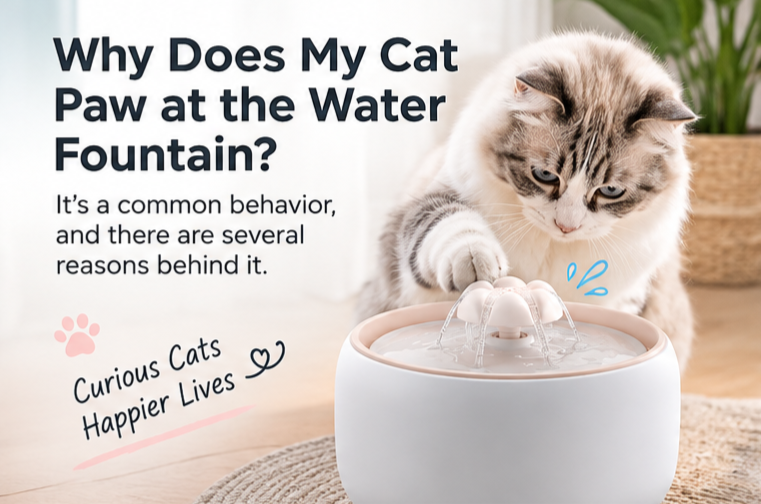
Cats commonly paw at a water fountain to investigate moving water, locate the surface, catch droplets, or play. The fountain itself may encourage the behavior when the stream is strong, the surface reflects light, the pump vibrates, the rim feels awkward, or the unit moves under pressure. Occasional pawing by an otherwise comfortable cat is usually a management issue, not an emergency.
|
Quick answer: Watch what happens immediately before and after the paw touch. If your cat then drinks normally, the pawing may be exploration or play. Reduce the flow, stabilize the fountain, move it to a quiet open location, clean away residue, use a waterproof mat, and offer a separate wide bowl. Do not punish the behavior. Contact a veterinarian if pawing begins suddenly alongside marked thirst, increased urination, appetite or weight changes, confusion, weakness, vision concerns, or difficulty drinking. |
Start by observing the exact behavior
“Pawing at the fountain” can describe several different actions. Record a short video and look for a repeatable sequence:
• One gentle tap, then drinking: Your cat may be locating the surface or checking the moving water.
• Swatting at the stream: The falling water or droplets may function like a moving toy.
• Scraping beside the unit: The cat may be performing a broader pawing or covering motion, not touching the water itself.
• Hooking the rim or moving the fountain: The unit may be too light, unstable, or difficult to approach comfortably.
• Repeated splashing without drinking: The flow, water condition, location, or enrichment needs may deserve attention.
• Hovering, pawing, and seeming unable to drink: Pain, nausea, dental discomfort, vision changes, or another health problem cannot be ruled out by behavior alone.
Note the time, flow mode, water level, sound, light reflections, and whether another pet is nearby. A cat who paws only when a strong stream starts has a different trigger from one who repeatedly checks still water after the pump stops.
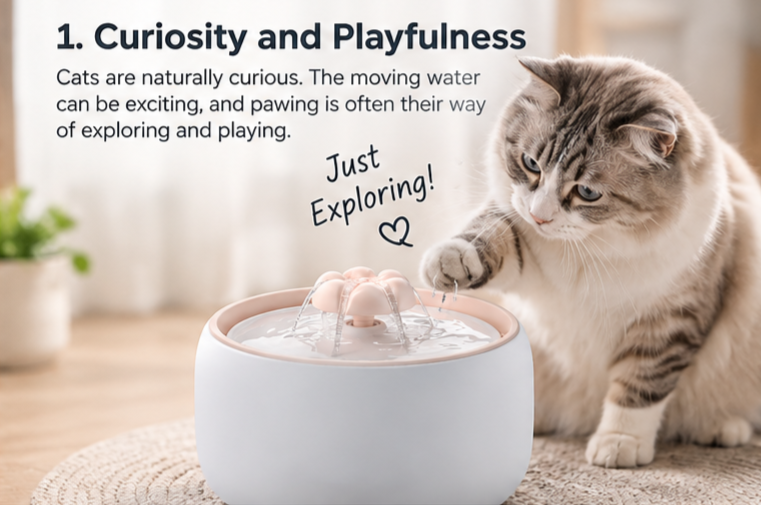
Seven reasons cats paw at a water fountain
1. Moving water invites investigation
Cats use paws to examine novel movement. A stream, ripple, bubble, or returning droplet changes continuously and may be more interesting than a still bowl. Kittens and playful adults are especially likely to swat and watch the result.
2. Your cat is locating the water surface
Clear water can be difficult to judge under some lighting. Touching the surface creates ripples that reveal depth and position. Reflections from windows or overhead lights can make the effect stronger.
3. The cat prefers droplets to the drinking area
Some cats lick water from a wet paw or chase droplets at the outlet. That does not necessarily mean the fountain is unsuitable, but it may tell you the stream shape is more engaging than the basin.
4. The flow is too strong, weak, or inconsistent
A forceful stream may splash the face; a very weak or pulsing stream may encourage checking. Low water, a clogged filter, trapped air, or a dirty pump can make flow irregular. Use the low-flow troubleshooting guide if the stream has changed.
5. Pump sound or vibration attracts attention
A new hum, gurgle, or rattle can draw a cat's paw toward the housing. Check water level, assembly, and pump cleanliness using the guide to cat fountain noise.
6. The surface, rim, or location feels awkward
A narrow drinking zone, high rim, slippery approach, or dead-end corner may change how a cat reaches the water. Some cats prefer to approach from the side or drink from a broad surface where they can see the room.
7. Pawing has become a rewarding game
Water moves when touched, people react, and droplets slide across the floor. Those outcomes can reinforce repetition. Scolding often adds attention without teaching a better option.
The fountain design may be encouraging pawing
Look at the setup from cat height. The question is not whether a design looks attractive to a person, but whether the cat can reach stable water without stretching, crowding, or putting its face directly under a stream.
Check these features:
• Drinking surface: Is there a calm, accessible area as well as moving water?
• Flow strength: Can it be reduced using an approved setting or attachment?
• Stability: Does the unit slide, rock, or rotate when touched?
• Rim and approach: Can your cat stand naturally without leaning into an obstacle?
• Sound: Has the pump become louder as water drops or debris accumulates?
• Lighting: Do strong reflections or moving shadows appear on the water?
• Placement: Can the cat see the room and leave easily without passing another pet?
The popular phrase “whisker fatigue” is sometimes used for bowl avoidance, but it is not a diagnosis and should not be assumed from pawing alone. Still, individual cats can have clear preferences about rim contact, depth, and drinking posture. Treat the behavior as feedback and test one environmental change at a time.
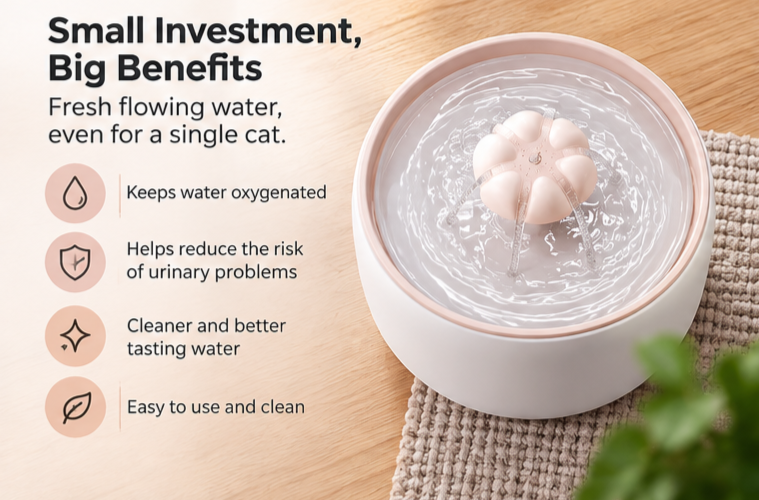
How to reduce pawing and splashing
Lower the flow correctly
Use the model's flow control or an approved alternative spout. Do not tape over an outlet or stuff material into the pump path. If flow is surging, correct the water level, filter, assembly, and pump cleanliness first.
Stabilize and protect the area
Place the fountain on a level waterproof non-slip mat. The mat should extend beyond the splash zone, but it must not block ventilation or hold water around a connector. Lift and dry it regularly. Avoid towels beneath electrical fountains because wet fabric can keep moisture against the floor and power area.
Change the light, not only the fountain
Move the unit away from direct moving sunlight or a bright reflection and observe for several days. Do not keep relocating it every few hours; cats need time to investigate a new setup.
Choose a quieter, more open location
Place water away from litter and busy appliances, with a clear approach and exit. Cats Protection recommends providing water in different locations and keeping it separate from food and litter. A corner can feel calm to a person yet trap a cat when another animal enters.
Clean away odor and residue
Slime, hair, food particles, or cleaner residue may change the fountain's smell and flow. Follow the exact cleaning instructions, rinse thoroughly, and replace the filter at the model's interval. The CDC's pet-supply guidance advises following manufacturer directions.
Add a better play outlet
Schedule brief interactive play away from the water station. Wand toys, chase games, food puzzles, and safe enrichment can make the fountain less valuable as entertainment. Never punish, spray, or startle a cat at its water source.
Keep another water option available
A fountain should not be the only choice while you change settings or troubleshoot behavior. Offer a clean, wide bowl in another quiet location. Keep food and litter separate from the water station when space allows.
This simple comparison can also clarify preference:
1. Keep the fountain clean and unchanged for several days.
2. Add a bowl in a separate suitable location.
3. Observe drinking—not only pawing—without forcing either option.
4. Change one fountain variable, such as flow or location.
5. Compare again over several days.
Do not restrict water to make the fountain more appealing. The goal is reliable access and comfortable drinking, not winning a preference test.
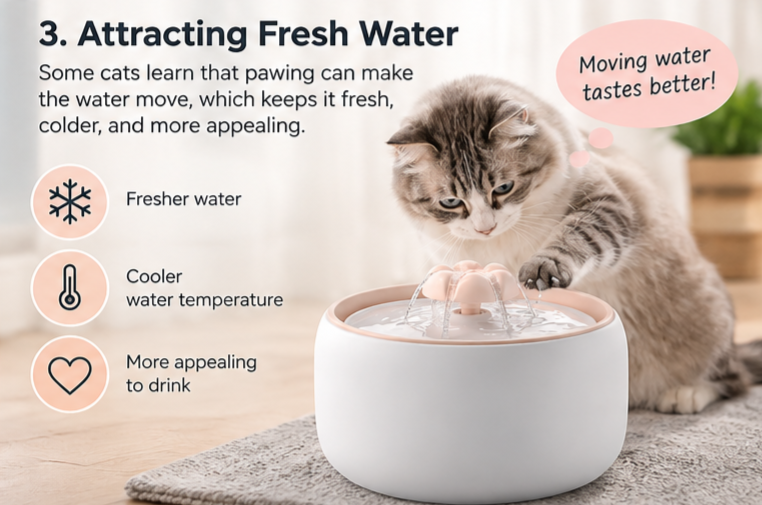
Could a different fountain help?
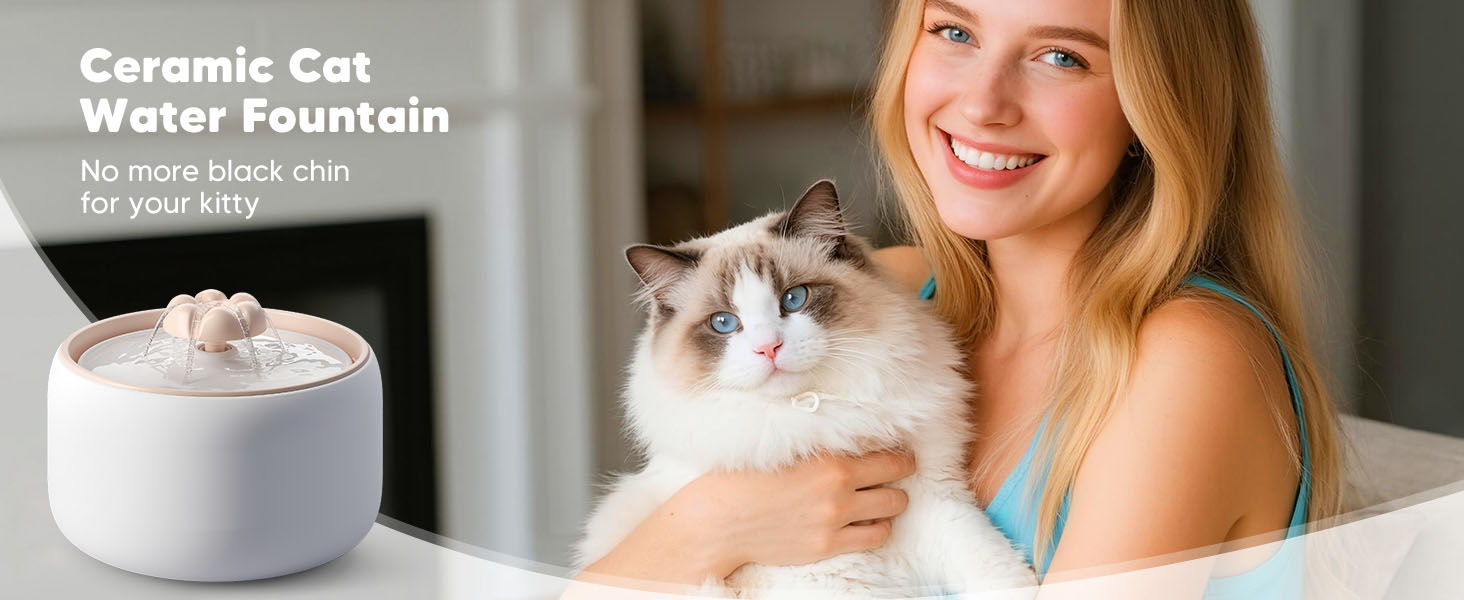
Sometimes. A heavier base may resist sliding; a wider surface may provide another place to drink; quieter operation may reduce interest in the housing; and cordless placement may help move water to a better location. None of these features guarantees that a cat will stop pawing.
Based on current published specifications—not hands-on testing—the WOPET W03 Ceramic Wireless Pet Water Fountain has a 3-liter ceramic bowl, a rechargeable battery, and a published operating noise below 25 dB. Its ceramic construction may suit owners seeking a substantial bowl and flexible placement, but individual cats may still touch or play with the stream. Keep the product connection honest: the right test is whether the cat drinks comfortably and the owner can maintain the unit.
When pawing may need veterinary attention
Pawing itself is not a diagnosis. Contact a veterinarian when it is new, intense, or accompanied by:
• noticeably increased or decreased drinking;
• larger urine clumps, more frequent urination, or accidents;
• reduced appetite, vomiting, weight change, or low energy;
• drooling, mouth sensitivity, difficulty chewing, or difficulty drinking;
• bumping into objects, hesitation at steps, or other vision concerns;
• weakness, tremors, poor balance, confusion, or collapse;
• signs of pain or distress.
Cornell's feline hydration overview explains that total water intake includes both drinking water and moisture from food. Do not diagnose hydration by counting fountain visits or watching the reservoir alone.
For a broader discussion of cats touching bowls and still water, see why cats paw at water. This article remains intentionally focused on fountain-specific triggers such as flow, pump sound, reflections, assembly, and stability.
Frequently asked questions
Is it normal for a cat to touch water before drinking?
It can be normal exploratory behavior, especially when the cat then drinks comfortably. Watch for sudden change, repeated difficulty, or other symptoms rather than treating one paw tap as a diagnosis.
How do I stop my cat from splashing the fountain?
Reduce the flow using approved controls, stabilize the unit on a waterproof non-slip mat, change strong reflections, clean the water path, move the fountain to a quiet open location, and provide play elsewhere. Keep a backup bowl available.
Is the water dirty after my cat puts a paw in it?
Paws can introduce litter, dust, or other debris. Remove visible contamination and refresh the fountain according to its instructions. Clean sooner when the water, surface, or filter becomes visibly dirty.
Why does my cat paw only when the pump turns on?
The moving stream, new sound, vibration, or sensor cycle may be the trigger. Confirm that the mode is normal, then try a lower approved flow and check for unusual pump noise.
Should I turn the fountain off to stop the behavior?
You can temporarily disconnect it while cleaning or testing, provided a clean bowl remains available. For routine use, first determine whether the behavior is harmless play or a sign that flow, placement, stability, or maintenance needs adjustment.
Final answer
Most cats paw at a water fountain because moving water is interesting, easier to locate after a touch, or fun to manipulate. The fountain may intensify the behavior through strong or irregular flow, vibration, reflections, an awkward surface, or instability. Observe the sequence, adjust one variable at a time, protect the floor, provide another water option, and avoid punishment. Seek veterinary advice when the behavior changes suddenly or appears with abnormal thirst, urination, pain, confusion, or difficulty drinking.
Sources and editorial methodology
This article distinguishes fountain-specific triggers from broad bowl-pawing behavior, uses conservative health language, and identifies product statements as manufacturer-published specifications rather than independent test results.
• Cats Protection: How to Encourage Your Cat to Drink More Water
• Cornell Feline Health Center: Hydration
This article provides general behavior and maintenance information, not a diagnosis. Contact your veterinarian if your cat's drinking, urination, appetite, coordination, or behavior changes meaningfully.Label:
Popular Post
The Ultimate Guide to Tabby Cats: Patterns, Personalities, and More
Mar 27, 2025
Top 10 Most Expensive Cat Breeds in The World
May 07, 2025
Can Cats Have Ice Cream? Dangers, Safe Flavors & Healthy Cat Treats
Sep 02, 2025
My Cat Only Eats A Little at A Time - What to Do?
Feb 27, 2023
Top 8 Reasons Why Does My Cat Sleep Between My Legs?
Mar 03, 2025
[Blue] W03L 3L Premium Ceramic Cat Water Fountain
Model: W03 LITE
$59.99
$69.99
Basin Pet Water Fountain-W600
Model: W600
$43.99
$69.99
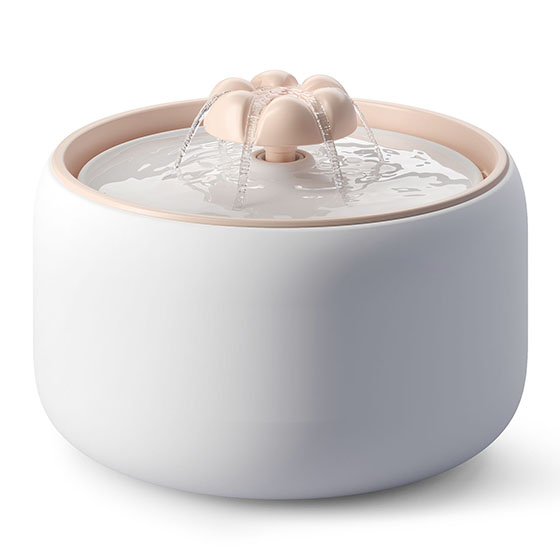
[Basic] Ceramic Pet Water Fountain with Power Cable
Model: W03L
$59.99
$99.00
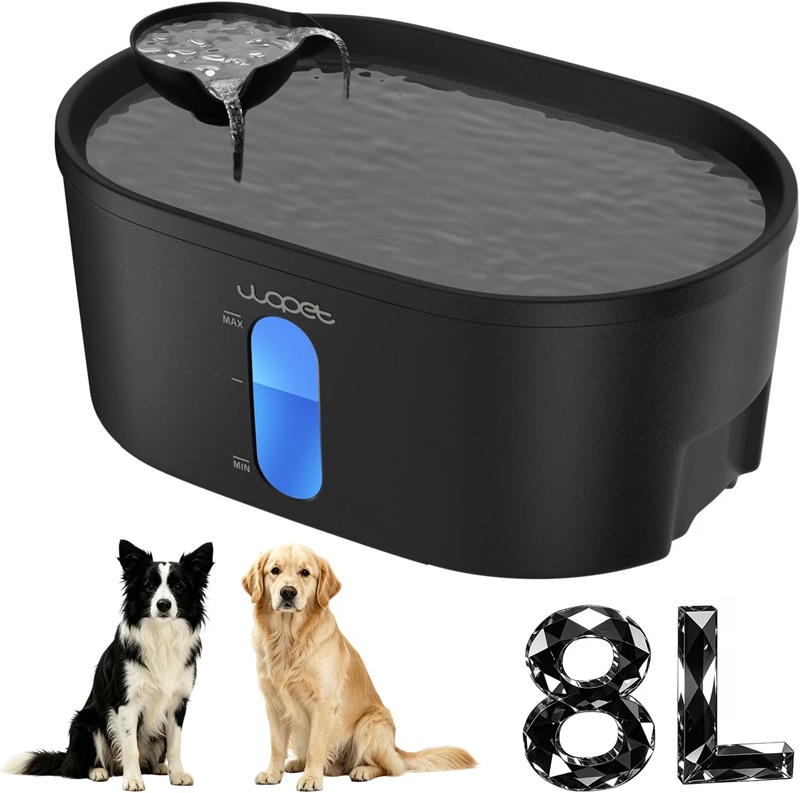
WOPET 8L Pet Water Fountain For Multiple Cats or Large Dogs A08
Model: A08
$49.99
$59.99
WOPET A08 Dog Water Fountain Filters
Model: A08 Filter
$19.99
$29.99
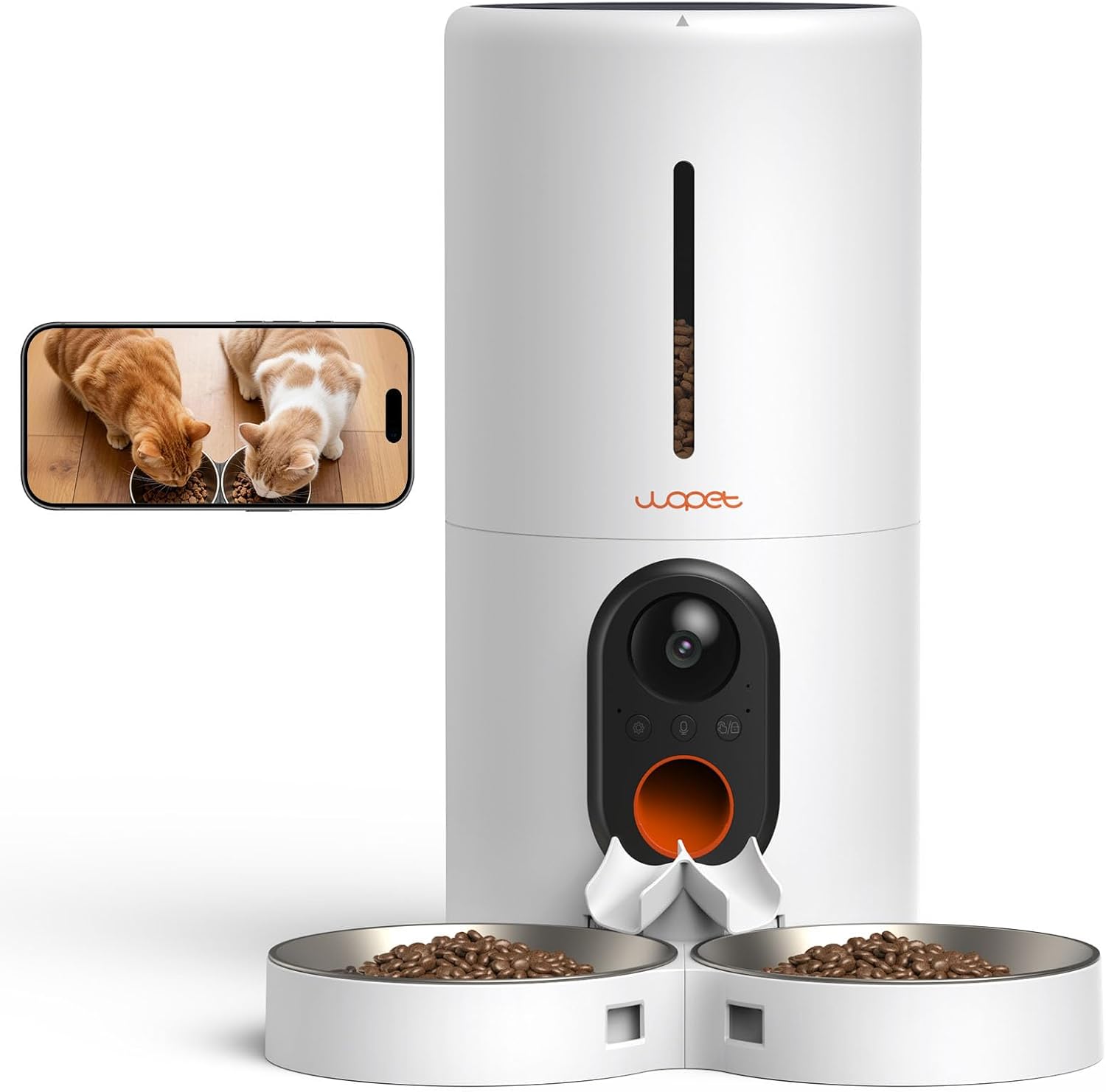
[WHITE] Heritage View 6L Cat Feeder Dual Bowls For Two Cats
Model: HV10DP-white
$114.99
$134.99

DOWNLOAD APP

WOpet life




Copyright © 2026 WOPET. All Rights Reserved.