Oct 09, 2026
Author:Lisa Martinez
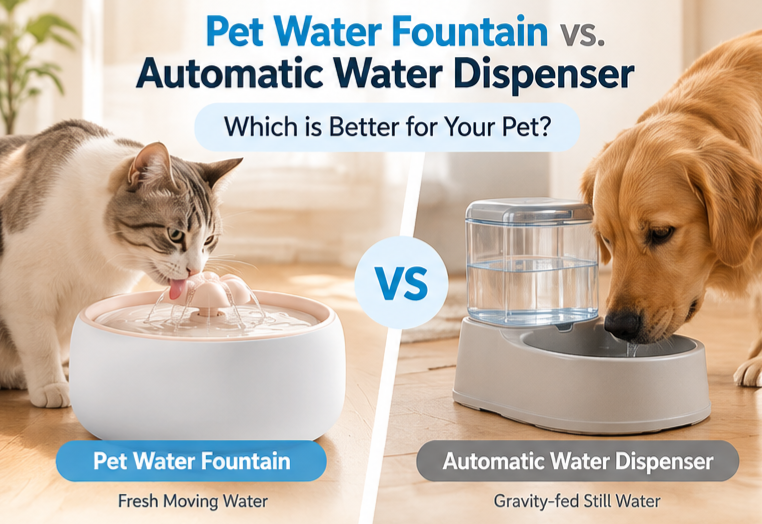
A pet water fountain circulates water with a powered pump, often through a model-specific filter. A basic automatic water dispenser—usually a gravity waterer—stores water in a reservoir and releases more as the bowl level drops. It does not normally circulate the water.
The labels are not perfectly standardized. Some retailers call fountains “automatic dispensers,” so check the mechanism rather than relying on the product name.
Quick Comparison
|
Feature |
Pet water fountain |
Gravity water dispenser |
|
How it works |
A pump circulates water |
Gravity refills the bowl from a reservoir |
|
Water movement |
Continuous or intermittent, depending on model |
Mostly still |
|
Power |
Outlet, rechargeable battery, or model-specific power source |
Usually none |
|
Filter |
Common, but design and purpose vary |
Less common |
|
Noise |
Pump and water sound |
Usually silent |
|
Cleaning |
Basin, pump, channels, spout, and filter area |
Bowl, reservoir, cap, and valve |
|
Capacity |
Varies; usable volume may be below total size |
Often designed for bulk storage |
|
During an outage |
Model-dependent; some retain an accessible basin |
Continues dispensing if the reservoir and valve work correctly |
|
Recurring costs |
Filters, electricity or charging, possible pump replacement |
Usually fewer powered parts; cleaning and possible valve replacement |
|
Best fit |
Pets attracted to moving water; owners comfortable with maintenance |
Simple, silent backup or higher stored capacity |
How a Pet Water Fountain Works
A pump draws water from a basin or reservoir and sends it through a channel, spout, or drinking surface. Many fountains include filters designed to catch hair and debris; some also use activated carbon or other media. Use only filters specified for the model.
Moving water can be easier for some pets to notice and may be more appealing to cats that seek faucets. The tradeoff is a more complex water path. Hair and residue can collect around the pump, impeller, intake, seams, and filter housing.
A fountain therefore works best for an owner willing to refill, disassemble, rinse, and clean it on schedule. Browse WOPET’s pet water fountain collection to see how capacity, material, and power style vary across models.
How an Automatic Gravity Dispenser Works
A gravity dispenser holds water above or behind the bowl. As the pet drinks and the bowl level falls, air enters the reservoir and more water flows down until the opening is covered again.
This design needs no pump and is usually quiet. It can hold more water than a standard bowl, but stored volume does not eliminate daily checks or water changes. The exposed bowl can still collect saliva, hair, food, and dust, while the reservoir and valve can develop residue.
A gravity waterer also does not create genuinely fresh water on demand; it replenishes the bowl from water already stored in the container.
Which Keeps Water Fresher?
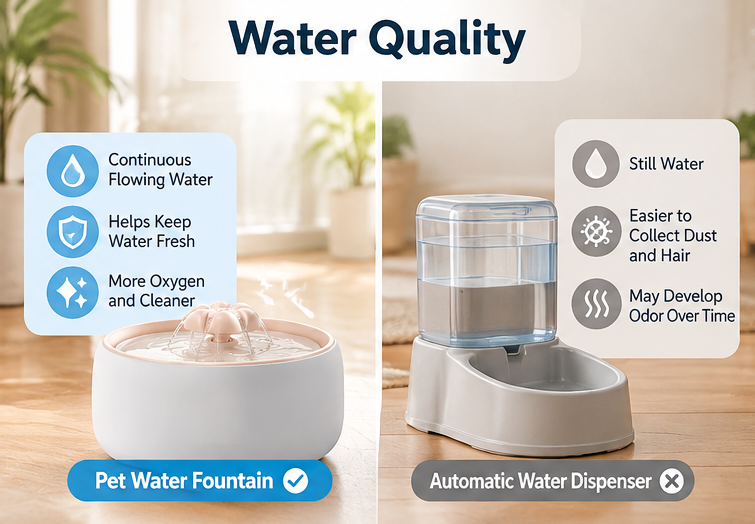
Neither design stays fresh without maintenance.
A fountain’s circulation and compatible filter can help capture debris and may influence taste or odor. However, a filter does not remove every contaminant and does not clean the pump or basin. WOPET’s cat water fountain care guide explains the routine tasks involved.
A gravity dispenser has fewer internal pump parts, but water can remain stored for longer and the bowl is still exposed. Choose a reservoir you can reach and scrub rather than one with inaccessible corners.
Which Is Easier to Clean?
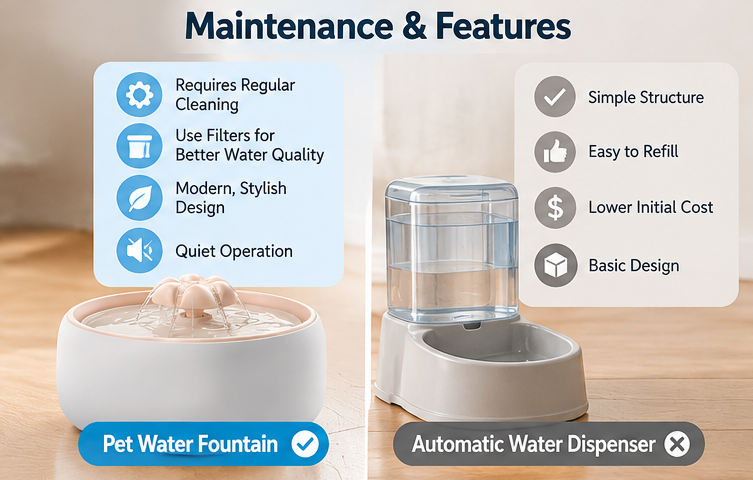
A gravity dispenser is mechanically simpler, but its reservoir neck and valve can be awkward. A fountain has more components and may require small brushes for the pump and channels.
Before buying either type, ask:
• Can every water-contact surface be reached?
• Can the pump be opened as the manual directs?
• Are replacement filters and parts clearly identified?
• Are any components dishwasher-safe according to the manufacturer?
• Can you reassemble it correctly without forcing seals or tubes?
If convenience determines whether cleaning actually happens, choose the design you can maintain consistently.
Noise, Cords, and Placement
Gravity dispensers are usually silent and need no outlet. Fountains may produce a quiet hum or water sound, and that sound can change when the water level drops or the pump needs cleaning.
Corded fountains need a safe route to an outlet with electrical connections kept dry. Rechargeable or battery-powered models add placement flexibility but still require charging and dry ports. In all cases, use a level, water-resistant surface where the pet cannot be trapped or blocked. WOPET’s fountain placement guide covers common room and cord hazards.
Capacity and Time Away From Home
Compare usable capacity, not just the largest number printed on the listing. Some fountain water sits below the drinking tray, while a dispenser’s full reservoir may not all be available if a valve sticks or the unit tips.
Neither device should be treated as permission to leave a pet without checks. Pumps can stop, reservoirs can leak, bowls can become dirty, and one pet can block another. For longer absences, arrange a responsible person to verify water access and provide more than one source.
Which Is Better for Cats?
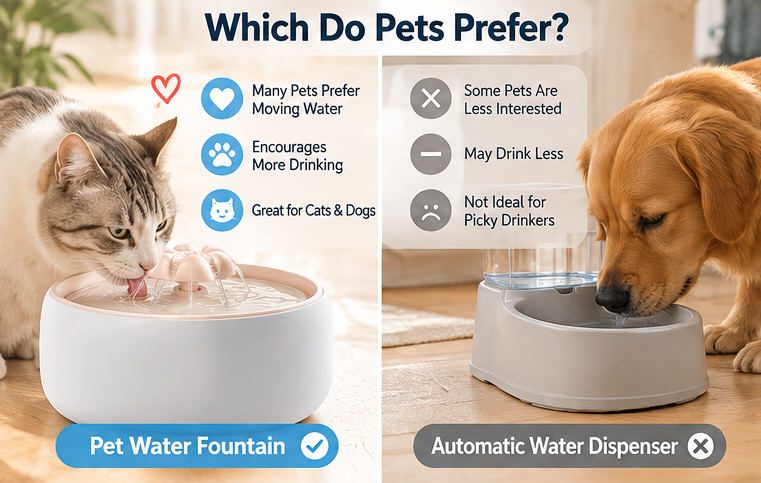
A fountain may suit a cat that consistently approaches moving water. A gravity dispenser may suit a cat that prefers still water or is wary of pump noise. Many cats benefit from having choices in separate locations.
Cat Friendly Homes and VCA both describe fountains as an option for cats that like moving water, not as a requirement for every cat. Freshness, accessibility, cleaning, and the cat’s actual preference matter more than the category label.
Which Is Better for Dogs or Multi-Pet Homes?
Capacity, drinking-area size, stability, and access are especially important for dogs and shared households. A fountain or dispenser that is large on paper may still be difficult for a broad-muzzled dog or easy for an energetic pet to tip.
In a multi-pet home, one large reservoir is not always better than multiple stations. Separate sources reduce the risk that a dominant pet, empty unit, or mechanical problem leaves everyone without water.
Decision Guide
Choose a pet water fountain if:
• your pet shows a clear preference for moving water;
• you are comfortable cleaning a pump and replacing model-specific filters;
• a safe outlet or charging routine is available;
• low operating noise and accessible parts can be verified.
Choose a gravity water dispenser if:
• you want a quiet, pump-free water station;
• stored capacity is more important than circulation;
• you can clean the reservoir and valve thoroughly;
• you still plan to refresh the water and inspect the bowl daily.
Use both or add a separate bowl if:
• several pets share the home;
• you want backup during a power or pump problem;
• pets have different preferences;
• one station cannot be reached from every part of the home.
Buy WOPET W03 LITE CAT FOUNTAIN ON AMAZON
Frequently Asked Questions
Is a water dispenser the same as a water fountain?
Not always. A fountain uses a pump to circulate water. A gravity dispenser releases stored water as the bowl empties. Because sellers use “automatic dispenser” for both, check whether the product actually has a pump.
Does a gravity waterer keep water fresh?
It maintains the bowl level, but the stored and exposed water still needs regular replacement and the full unit needs cleaning. Higher capacity should not mean longer neglect.
Can a fountain work without a filter?
That depends on the model. Do not remove, substitute, rinse, or reuse a filter unless the manufacturer explicitly allows it. Incorrect operation can affect flow and water quality.
The Bottom Line
The main difference is circulation: fountains actively move water; gravity dispensers passively refill a still bowl. Choose based on your pet’s preference, your cleaning routine, safe power access, usable capacity, and the need for backup—not on the word “automatic” alone.
Editorial Sources
• VCA Animal Hospitals: How to Get Your Cat to Drink More Water
• Cat Friendly Homes: How to Increase Your Cat’s Water Intake
Popular Post
Top 10 Most Expensive Cat Breeds in The World
May 07, 2025
The Ultimate Guide to Tabby Cats: Patterns, Personalities, and More
Mar 27, 2025
Can Cats Have Ice Cream? Dangers, Safe Flavors & Healthy Cat Treats
Sep 02, 2025
My Cat Only Eats A Little at A Time - What to Do?
Feb 27, 2023
Top 8 Reasons Why Does My Cat Sleep Between My Legs?
Mar 03, 2025
Basin Pet Water Fountain-W600
Model: W600
$43.99
$69.99
[Basic] Ceramic Pet Water Fountain with Power Cable
Model: W03L
$59.99
$99.00
WOPET 8L Pet Water Fountain For Multiple Cats or Large Dogs A08
Model: A08
$49.99
$59.99
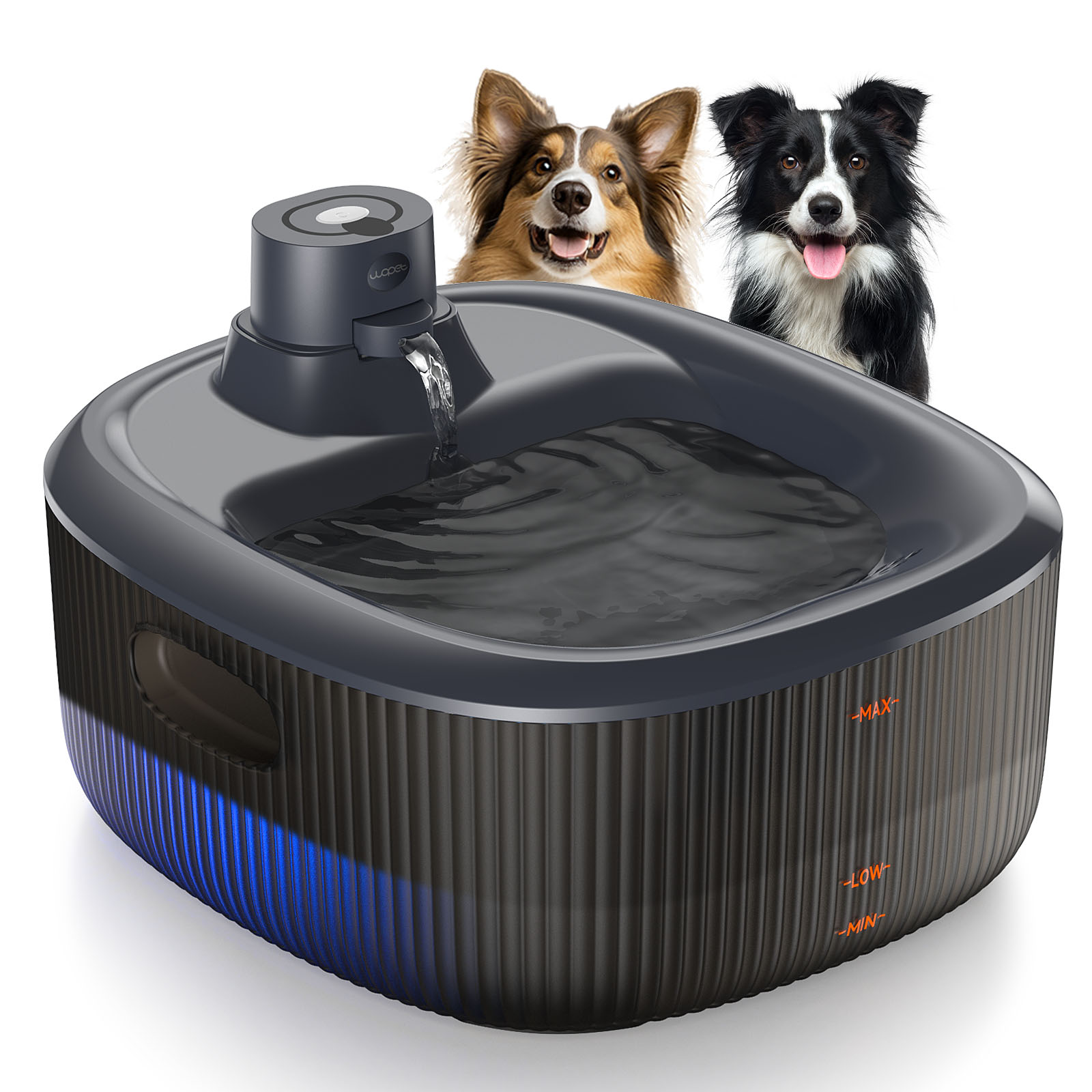
[Upgrade] Basin Wireless Pet Water Fountain
Model: W600 Pro
$69.99
$89.99
Heritage View Pet Feeder Dual Bowls For Two Cats
Model: HV10DP
$119.99
$149.99
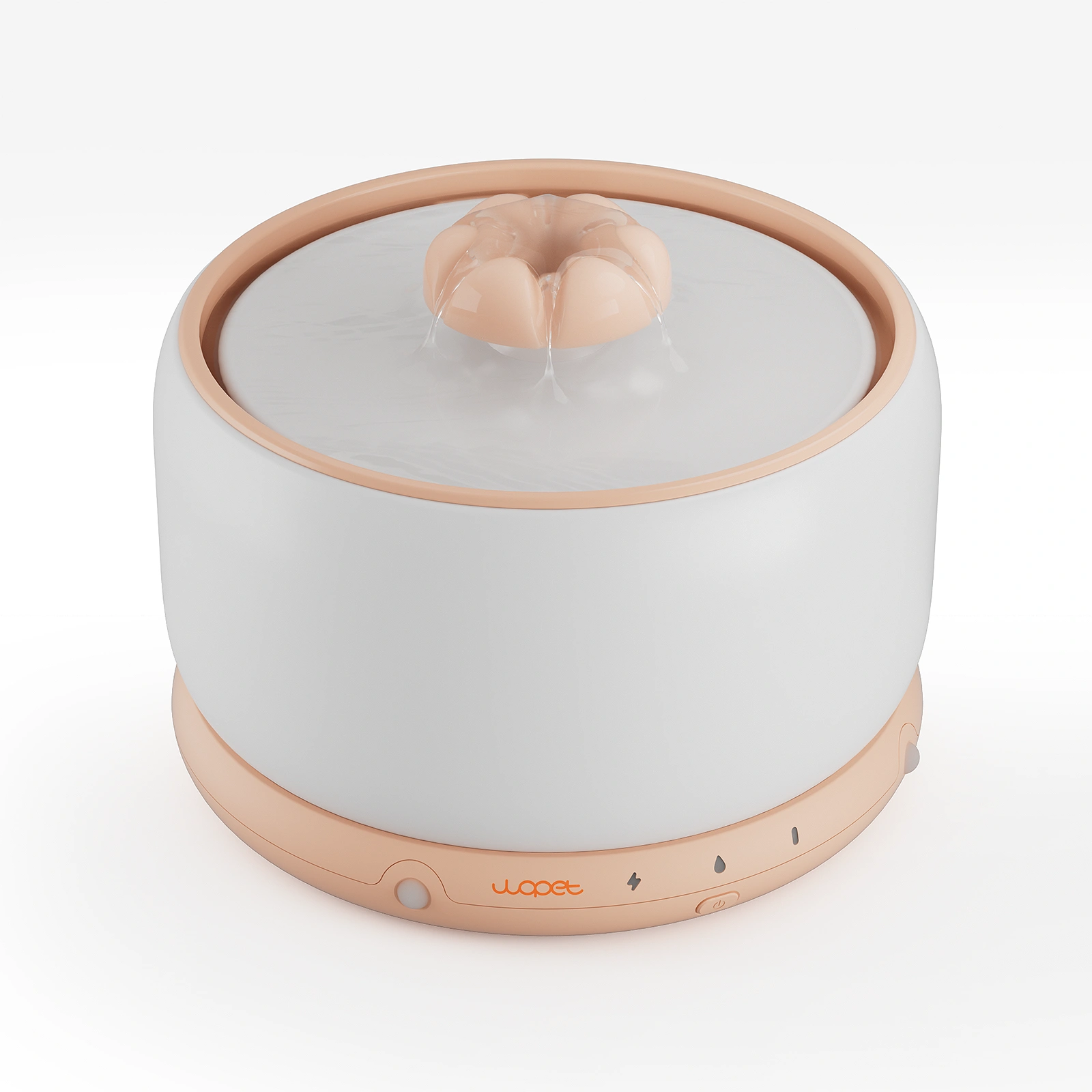
[New] Ceramic Wireless Pet Water Fountain W03
Model: W03
$89.99
$129.00

DOWNLOAD APP

WOpet life




Copyright © 2026 WOPET. All Rights Reserved.