Sep 10, 2026
Author:Lisa Martinez
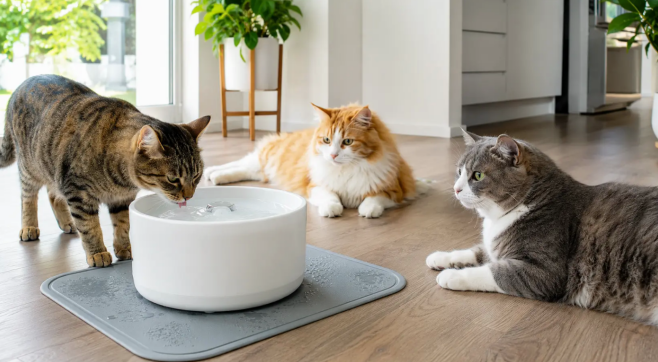
The best cat water fountain for a multi-cat household combines generous usable capacity with a broad drinking area, stable construction, serviceable filtration, and easy cleaning. More importantly, it should be part of a network of separated water sources—not the only place every cat must visit.
|
Quick answer: Choose a fountain that several cats can approach without crowding, that you can inspect and clean frequently, and that has readily available filters and pump parts. A 3- to 6-liter model may reduce refill pressure, but household size alone does not determine capacity. Keep at least one additional water station in another location so a confident cat, a power outage, or a dirty fountain cannot block access for everyone. Best fit from WOPET: Based on current published specifications—not hands-on testing—the 6-liter WOPET W600 is the strongest high-capacity main-station option discussed here, while the 3-liter cordless W03 can serve as a separated secondary station. Confirm that the W600 drinking height is comfortable for the household's smallest or least mobile cat. |
What matters most in a multi-cat fountain?
Marketing often treats capacity as the deciding feature. In real homes, access is just as important. A large tank does not help a shy cat if another cat guards the route, and a wide top does not solve the problem if every water source sits in the same busy room.
Prioritize these factors:
• Multiple approach paths: A cat should not have to pass closely by another cat or enter a dead-end space.
• A broad, open drinking surface: This can reduce face-to-face crowding when compatible cats drink near each other.
• Stable construction: The unit should resist sliding when a large cat leans, paws, or bumps it.
• Visible water and flow: You need to notice falling levels, hair, food particles, foam, or reduced circulation quickly.
• Simple pump access: More pets generally mean more hair and debris reaching the intake.
• Replacement-part availability: Filters and pumps should match the exact model.
• Manageable filled weight: A larger reservoir must still be safe for the caregiver to lift, empty, and wash.
The best fountain is not the one that lets you ignore the station longest. It is the one that supports reliable daily checks without creating competition.
One large fountain is not always enough
Cats living together do not automatically want to share every resource. Some tolerate close drinking, while others wait until a dominant cat leaves. That waiting may be subtle: one cat approaches, pauses, watches the room, and walks away without a fight.
The AAFP and ISFM Feline Environmental Needs Guidelines recommend multiple, separated key resources in multi-cat homes. For water, that means offering choices in more than one location. Two bowls beside the same fountain count as one resource area from the cat's perspective; they do not provide meaningful separation.
Use the main fountain where the household naturally spends time, then place a clean bowl or second fountain elsewhere. Choose locations with more than one exit route and enough visibility for a cautious cat to drink without being surprised from behind.
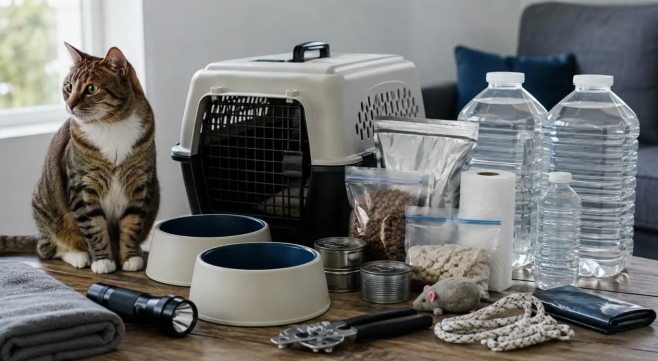
Watch actual behavior rather than assuming everyone shares comfortably. Signs of a resource problem include hovering, staring, blocking a doorway, chasing after a cat drinks, one cat using the station only at night, or a cat drinking from sinks and plant saucers instead.
Choose access before capacity
A good multi-cat fountain should allow a natural head and neck position. Look for a drinking area wide enough that whiskers are not pressed tightly against a narrow opening. If two cats regularly drink together, a shape that allows approach from different sides is usually more flexible than one narrow spout.
However, simultaneous drinking is not a requirement. Cats may prefer to take turns. The goal is to prevent one animal from controlling the only water supply.
Consider height as well as width. Kittens, senior cats, and cats with mobility limitations may find a tall lip awkward. A large fountain designed primarily for dogs may hold plenty of water but still be uncomfortable for a small cat. Check the height of the usable drinking surface, not only the overall product dimensions.
How much capacity do multiple cats need?
There is no responsible one-size-fits-all equation based only on the number of cats. Total water intake varies with body size, diet moisture, temperature, activity, pregnancy or lactation, and health. Cats eating wet food may drink less from the fountain because much of their water comes from food. Cornell's hydration overview explains that daily fluid needs include both drinking water and moisture in food.
For shopping purposes, use capacity as a workflow question:
1. Estimate how much the household currently drinks from all water sources in 24 hours.
2. Add a practical reserve for evaporation and normal variation.
3. Confirm that the pump remains submerged above its minimum line.
4. Choose a filled weight and basin size you can wash comfortably.
5. Continue checking the station every day regardless of tank size.
A 3-liter fountain may work well for a pair of cats when it is paired with another water source and refilled routinely. A 6-liter model offers more buffer for a larger household, but it also becomes heavier and requires enough sink or shower space for cleaning.
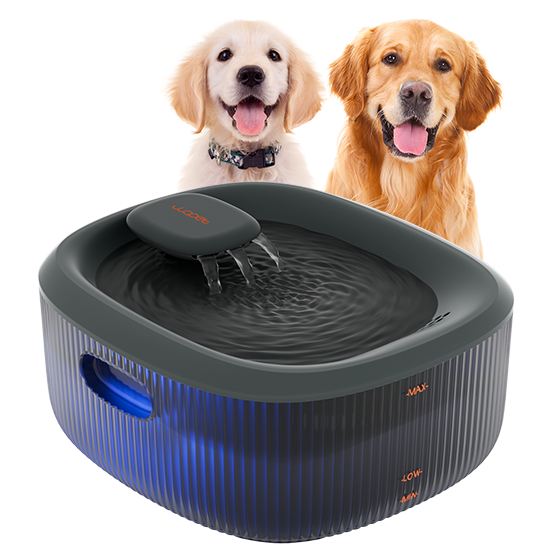
Based on current WOPET specifications, the WOPET Basin W600 holds 6 liters and provides a wide drinking area, visible water-level window, multiple-stage filtration, and a 600 ml emergency basin reserve during a power outage. Those features make it a plausible high-capacity shared station for compatible cats and mixed-size pets. They do not eliminate the need for separated backup water.
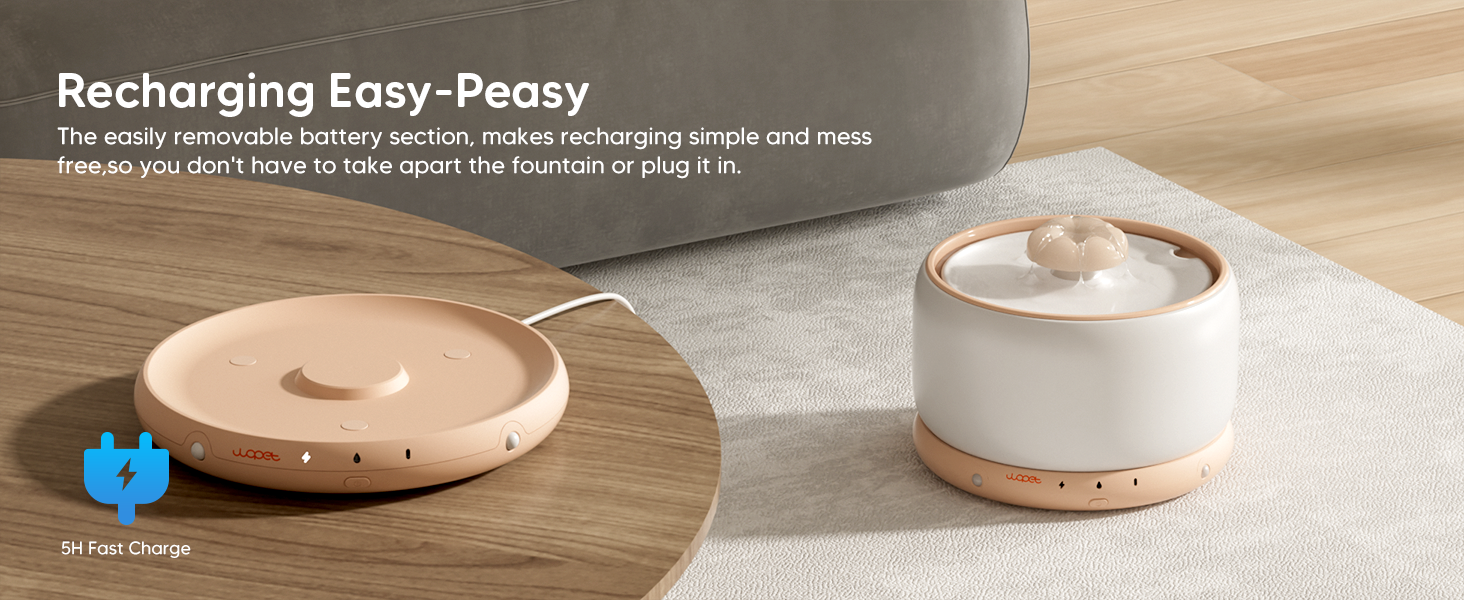
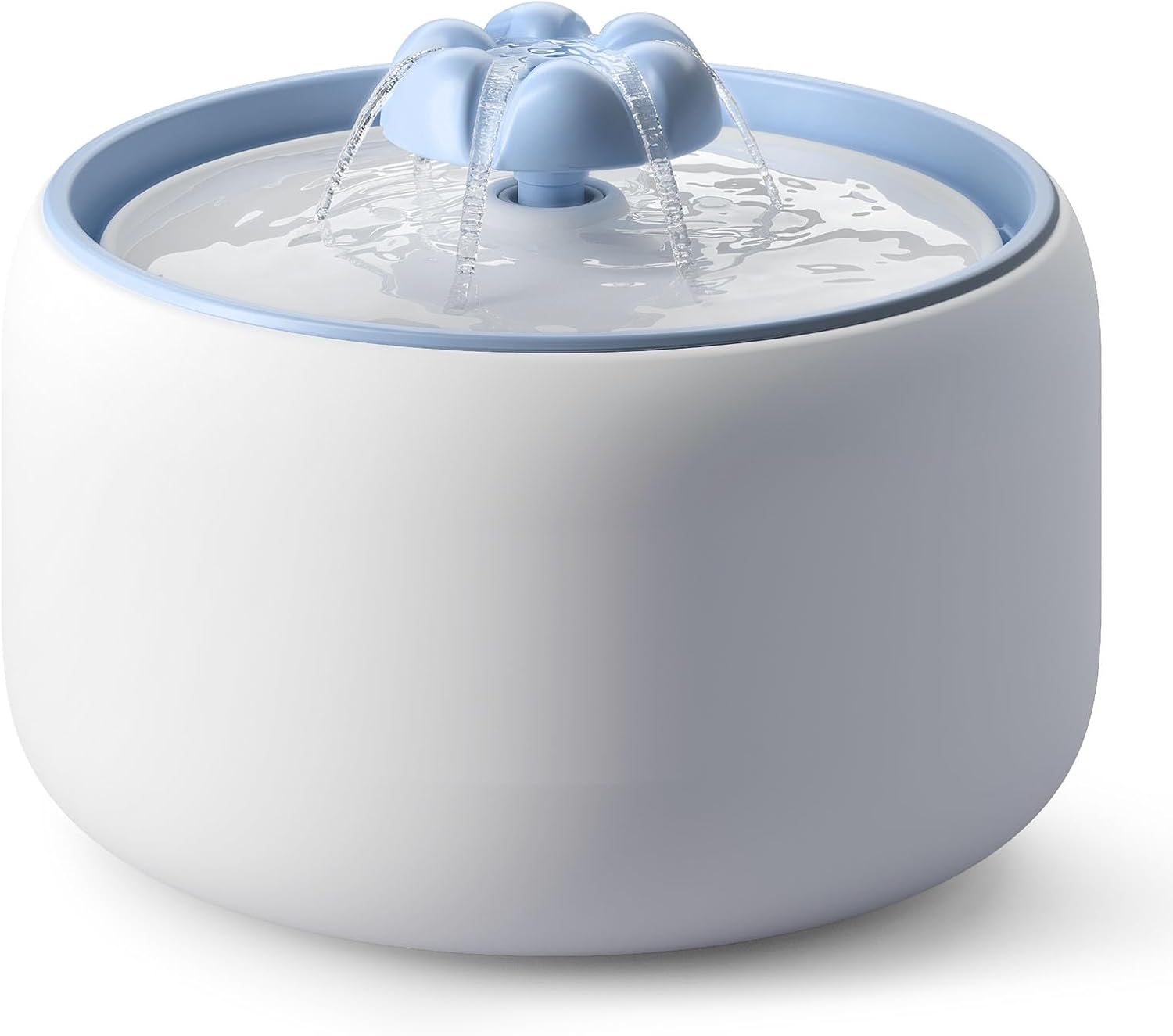
For a smaller secondary station, the WOPET W03 Ceramic Wireless Fountain has a 3-liter basin and cordless placement, which can help create distance between water resources when an outlet is not available.
Which material is best for several cats?
The practical answer is the intact, pet-safe material you can clean thoroughly and frequently.
Stainless steel
Stainless steel is durable and often dishwasher-safe when the manufacturer says so. It is a strong option for heavy daily use, but thin components can amplify vibration. Check whether the drinking tray locks securely and whether the pump is isolated from the housing.
Ceramic
Ceramic offers weight and stability. A smooth glazed surface is easy to inspect, but the bowl must be checked for chips and cracks. A large ceramic reservoir can be heavy when full, so consider who will lift it.
Plastic
Plastic keeps a high-capacity fountain lighter and may offer shapes that reduce splashing. It needs attentive cleaning, and heavily scratched, warped, or damaged parts should be replaced.
Material does not compensate for a poor design. Examine seams, corners, intake openings, and pump chambers because those are the areas most likely to trap hair and residue.
Multi-cat fountains need a realistic cleaning routine
More cats introduce more saliva, hair, food particles, and environmental debris. Filtration can capture some material, but a filter does not sanitize the fountain and cannot replace washing.
Check the station at least daily. Look for normal flow, sufficient water, loose hair, food pieces, cloudy water, surface film, odor, and slime. Refresh the water and clean sooner whenever you notice contamination or reduced performance.
For a full wash:
1. Follow the manufacturer's power-off and disassembly instructions.
2. Remove the filter rather than washing around it.
3. Wash the basin, lid, drinking tray, and other washable parts.
4. Open the pump housing as instructed and remove hair from the intake and impeller area.
5. Rinse every surface thoroughly.
6. Inspect parts for cracks, chewing, frayed cables, or worn seals.
7. Reassemble, refill, and confirm normal flow before walking away.
The CDC recommends following manufacturer directions when cleaning pet supplies and using the dishwasher only for items labeled dishwasher-safe. Replace the filter on the model-specific schedule, adjusting sooner when several pets create faster buildup.
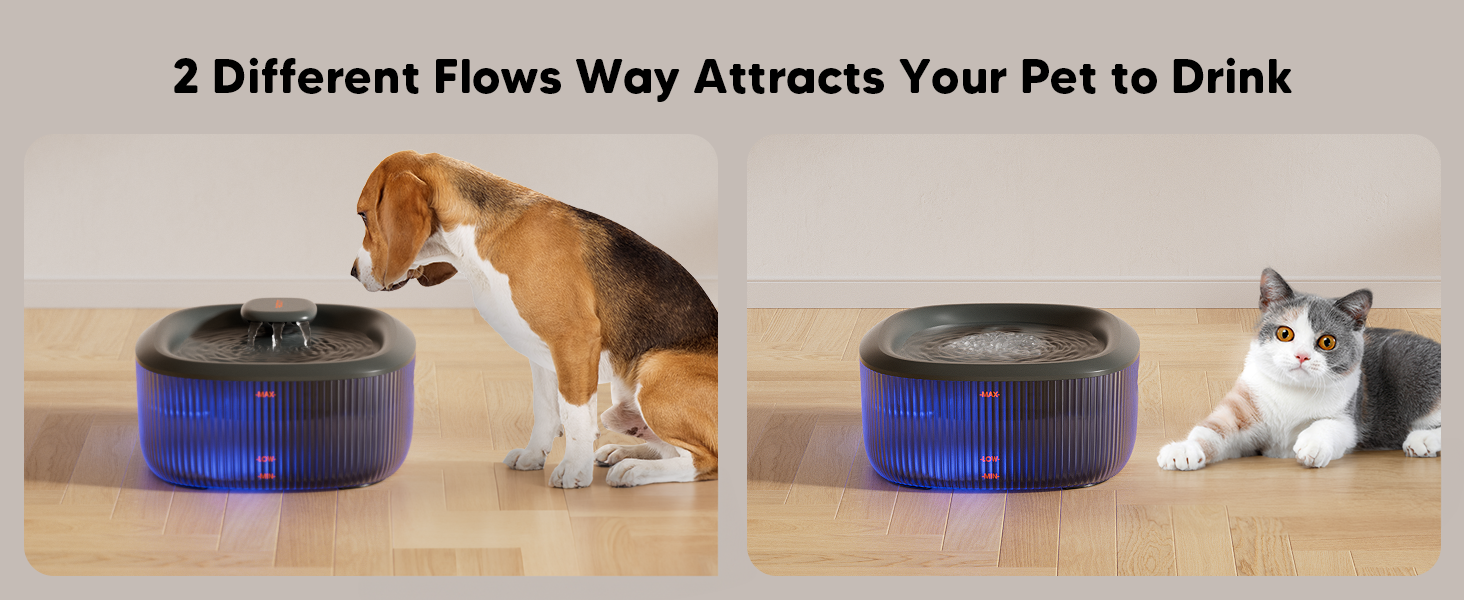
See the WOPET cat water fountain care guide for a maintenance framework.
How to tell whether every cat is drinking
A shared reservoir makes individual intake hard to measure. Do not assume that a falling water line proves every cat is drinking adequately.
Use observation:
• Note which cats visit each station and at what times.
• Check whether one cat waits at the edge of the room.
• Watch for splashing or pawing that may account for water loss.
• Track changes in wet-food intake, urine clump size, urination frequency, appetite, and behavior.
• Use a temporary measured bowl in a separate space if your veterinarian asks you to monitor one cat more closely.
A sudden increase or decrease in drinking can be medically important. Contact a veterinarian when an individual cat's drinking or urination changes, especially with weight loss, vomiting, appetite changes, lethargy, straining, or inappropriate urination.
Introducing a new fountain without disrupting the group
Do not remove every familiar bowl on day one. Place the assembled, filled fountain near—but not directly beside—an established water area and let the cats investigate while it is off. Then operate it for short periods if any cat is cautious.
Keep the old sources available until every cat uses the new station comfortably. Even after the transition, retain separated water options. Avoid lifting a cat to the fountain, pushing the face toward the water, or using food that spoils in the reservoir.
The WOPET guide on training a pet to use a water fountain provides gradual introduction steps.
Multi-cat fountain buying checklist
Choose a model only after confirming:
• the drinking height works for the smallest and least mobile cat;
• the surface is broad enough for comfortable access;
• the reservoir is large enough for your refill routine but light enough to clean;
• the water level and pump performance are easy to see;
• the pump can be opened and serviced;
• replacement filters and pumps are available;
• the unit is stable and the floor can be protected;
• the cord or charging routine is safe;
• there will still be another water station in a separate location.
Frequently asked questions
Is one water fountain enough for three cats?
It may hold enough water, but capacity is not the same as access. Provide at least one additional water source in another location so no cat can control the only station and water remains available during cleaning or power loss.
What size water fountain is best for two cats?
A well-designed 3-liter model may be practical for two cats, while a larger unit can reduce refill pressure. Base the decision on measured household use, cleaning space, filled weight, and the presence of another water source—not cat count alone.
Can multiple cats safely share the same fountain?
Compatible cats can share a well-maintained fountain, but it must be cleaned regularly and should not be the household's only water resource. A veterinarian may recommend separate management if one cat has an infectious illness or needs monitored intake.
Do I need two fountains?
Not always. One fountain plus a clean bowl in a different location may provide meaningful choice. Two fountains can be useful when cats prefer flowing water or the home has multiple levels, but both require full maintenance.
Which WOPET fountain is suited to a multi-pet home?
Based on published specifications, the 6-liter WOPET W600 offers the greatest capacity and a broad drinking area among the models discussed here. The 3-liter cordless W03 may work as a separated secondary station. Match drinking height and access to the individual animals.
Final verdict
The best cat water fountain for a multi-cat household is easy to share, but it never forces sharing. Start with access: a stable fountain with an open drinking surface, serviceable pump, and enough usable capacity for your routine. Then protect the group with another water source in a separate location. Daily observation and frequent cleaning matter more than buying the largest possible tank.
Sources and editorial methodology
This guide uates multi-cat fountain fit using feline resource-placement guidance, published hydration information, manufacturer specifications, and routine-maintenance demands. It does not represent hands-on product testing. Product specifications and replacement schedules should be confirmed before publication.
• AAFP and ISFM Feline Environmental Needs Guidelines
• International Cat Care: How to Encourage Your Cat to Drink
• Cornell Feline Health Center: Hydration
• CDC: Cleaning and Disinfecting Pet Supplies
• WOPET W600 product specifications
• WOPET W03 product specifications
This article provides general consumer and pet-care information. Contact your veterinarian if any cat's drinking, urination, appetite, weight, or behavior changes.
Label:
Popular Post
The Ultimate Guide to Tabby Cats: Patterns, Personalities, and More
Mar 27, 2025
Top 10 Most Expensive Cat Breeds in The World
May 07, 2025
Can Cats Have Ice Cream? Dangers, Safe Flavors & Healthy Cat Treats
Sep 02, 2025
My Cat Only Eats A Little at A Time - What to Do?
Feb 27, 2023
Top 8 Reasons Why Does My Cat Sleep Between My Legs?
Mar 03, 2025
[Blue] W03L 3L Premium Ceramic Cat Water Fountain
Model: W03 LITE
$59.99
$69.99
Basin Pet Water Fountain-W600
Model: W600
$43.99
$69.99
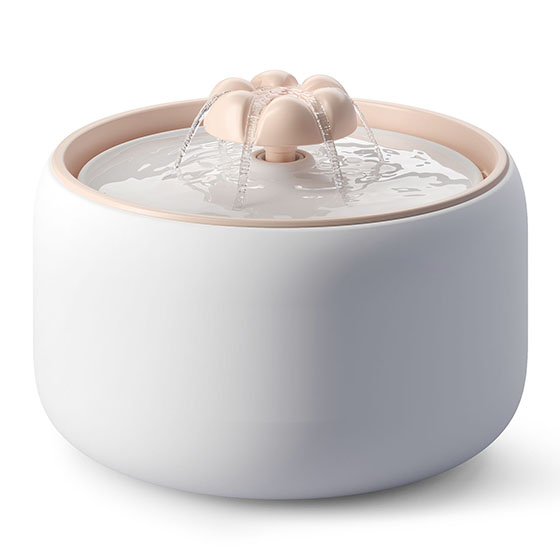
[Basic] Ceramic Pet Water Fountain with Power Cable
Model: W03L
$59.99
$99.00
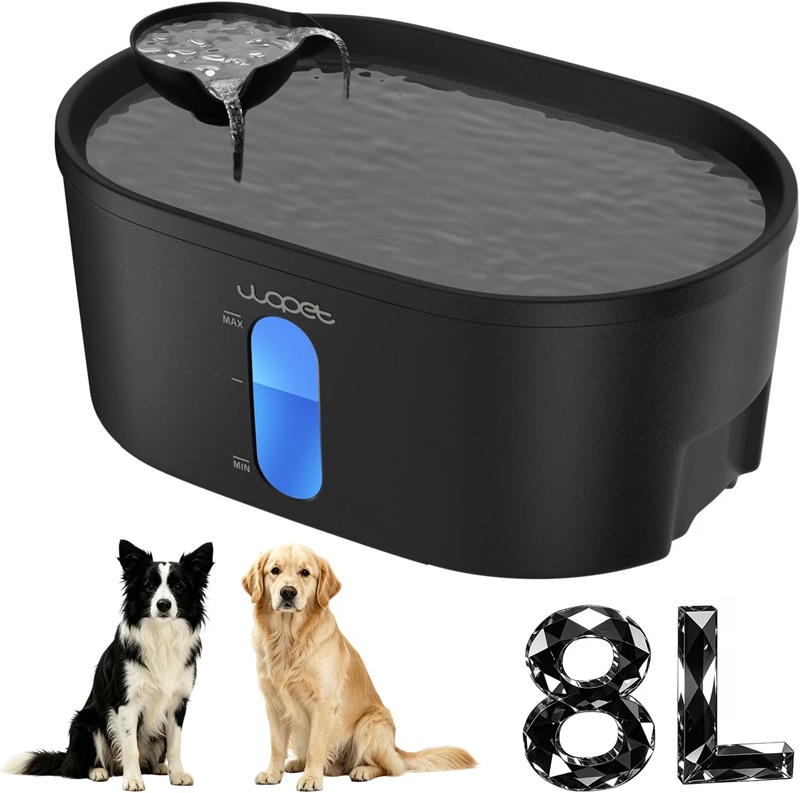
WOPET 8L Pet Water Fountain For Multiple Cats or Large Dogs A08
Model: A08
$49.99
$59.99
WOPET A08 Dog Water Fountain Filters
Model: A08 Filter
$19.99
$29.99
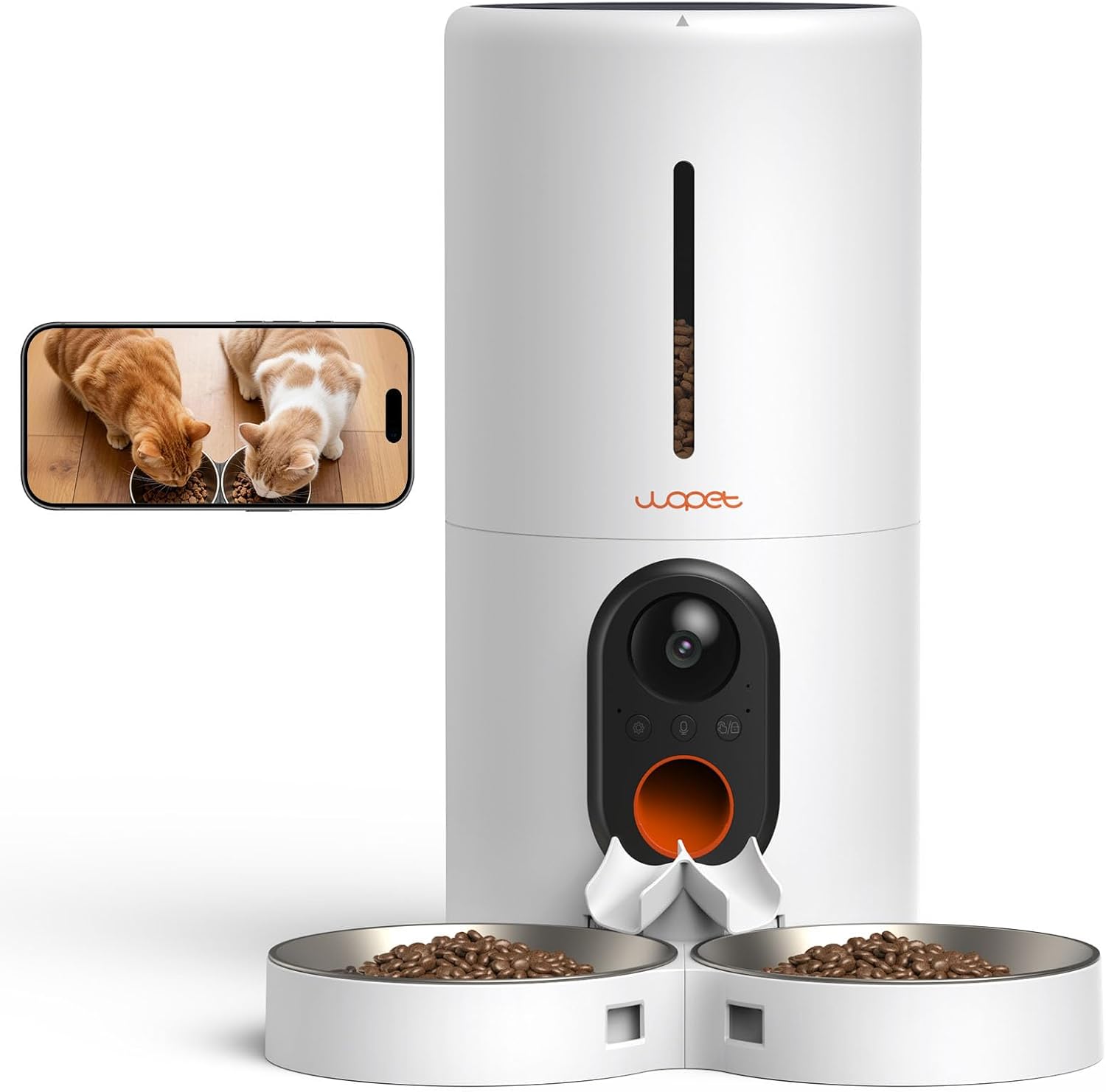
[WHITE] Heritage View 6L Cat Feeder Dual Bowls For Two Cats
Model: HV10DP-white
$114.99
$134.99

DOWNLOAD APP

WOpet life




Copyright © 2026 WOPET. All Rights Reserved.