Nov 18, 2026
Author:Sam Wonder
Choose a fountain for a cat that rarely drinks by looking at its diet, habits, and access to water. Compare the corded WOPET W03L with the rechargeable W03, learn how to introduce either model, and distinguish comfortable fountain use from proof of adequate hydration.
For a cat that drinks very little from its bowl, look for a fountain it can approach easily and drink from comfortably. Among WOPET models, consider the corded W03L for a spot near an outlet or the rechargeable W03 when a better location is farther away. A fountain may appeal to a cat that prefers moving water, but neither model guarantees higher intake. A sudden change in drinking or suspected dehydration needs veterinary attention.
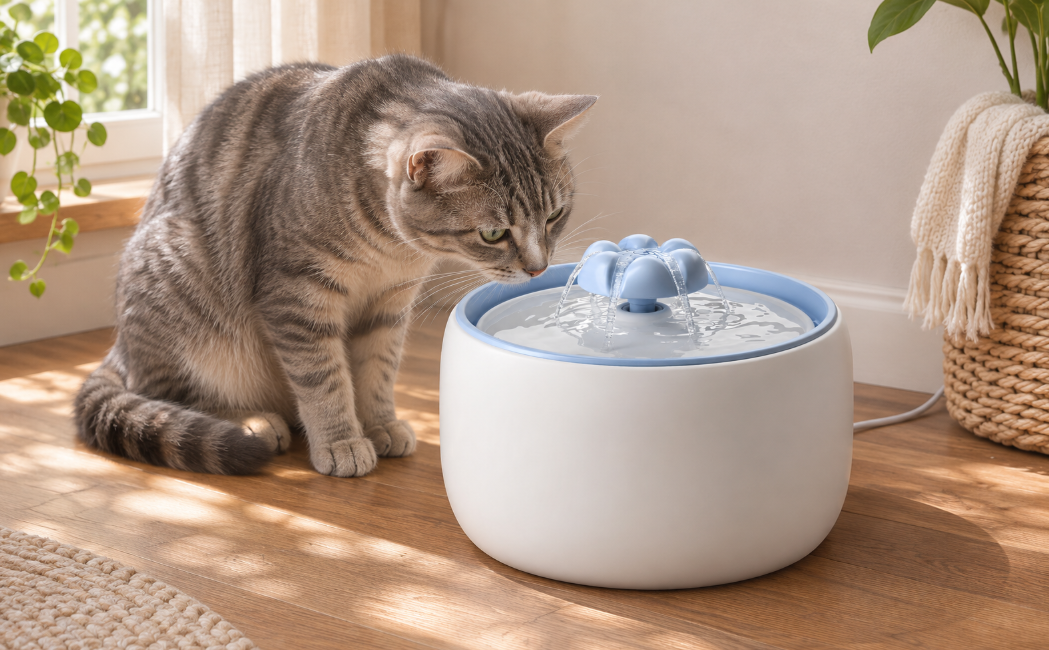
If you rarely see your cat at the water bowl, start with its usual habits and diet. Has it always drunk this way, or is something different? That distinction helps you decide whether to try another drinking setup or call your veterinarian. The WOPET recommendations below are based on product specifications, without hands-on drinking trials.
Does Drinking Very Little Mean a Cat Is Dehydrated?
A cat gets water from both food and drinking. As Cornell's feline hydration guidance explains, cats eating wet food may drink less than cats eating dry food. A nearly untouched bowl therefore does not, by itself, tell you whether your cat is dehydrated. Consider the usual diet and whether anything has changed.
If reduced drinking accompanies weakness, low energy, poor appetite, or difficulty drinking, contact your veterinarian promptly. If you suspect dehydration, seek advice before trying a new fountain. For an otherwise well cat with a familiar pattern of infrequent bowl visits, you can review the water setup while keeping its regular sources available. Your veterinarian can help assess intake concerns even when the signs are less clear.
Which Fountain Features Matter for a Reluctant Drinker?
Watch your cat approach its current water source without calling it over. Does it hesitate near another pet, stretch over a high edge, or leave when the washing machine starts? Putting a fountain in that same spot may leave the problem unchanged. Moving a clean bowl to a calmer location is a useful first step and helps you decide what a new fountain needs to do.
Cats Protection's drinking advice includes offering water in different places and trying a fountain for cats that prefer running water. Try the location and water style that fit what you have observed; a stronger stream is not necessarily more appealing. Keep the approach spacious enough for your cat to drink and leave comfortably. If another cat is blocking the route, an additional location matters more than extra tank capacity.
|
What you notice |
A useful next step |
What to watch for |
|
Your cat seeks out running water |
Offer a fountain with a suitable operating mode |
Actual drinking, rather than just watching or pawing |
|
Your cat avoids the current location |
Try fresh water in a quieter, accessible spot |
Whether the cat approaches more readily |
|
Your cat reaches awkwardly over the rim |
Compare drinking height and clearance with a familiar bowl |
A relaxed posture without stretching or climbing |
|
You rarely see drinking, but the pattern is unchanged |
Consider water from food and other sources |
Changes from the cat's usual habits |
|
Drinking suddenly changes or your cat seems unwell |
Contact your veterinarian |
Other changes in appetite, energy, or ability to drink |
WOPET W03L vs. W03: Which Fits the Drinking Location?
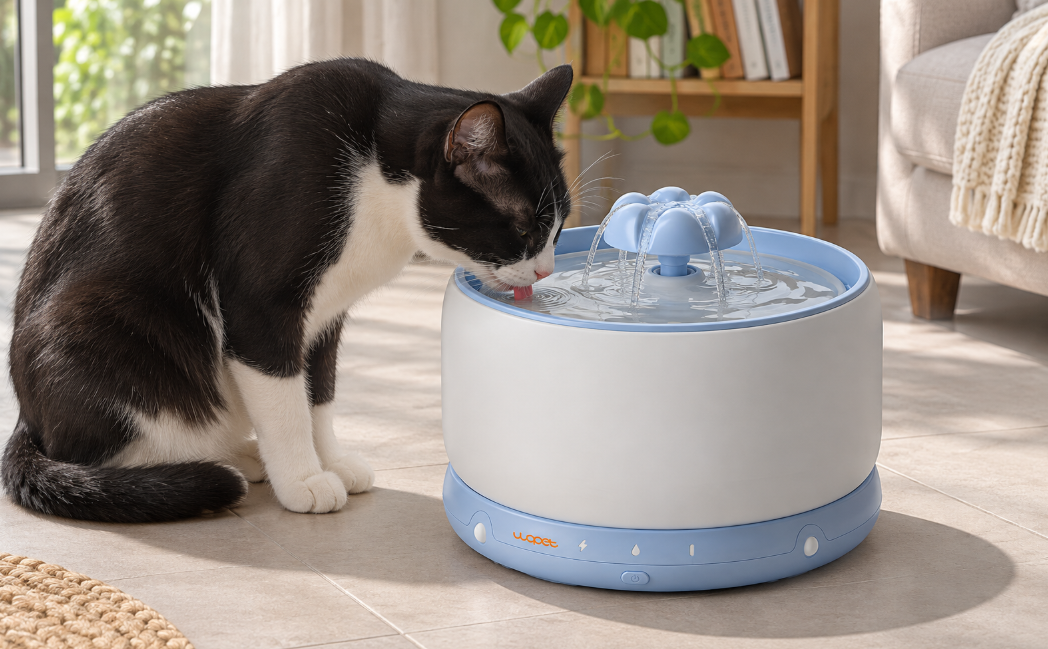
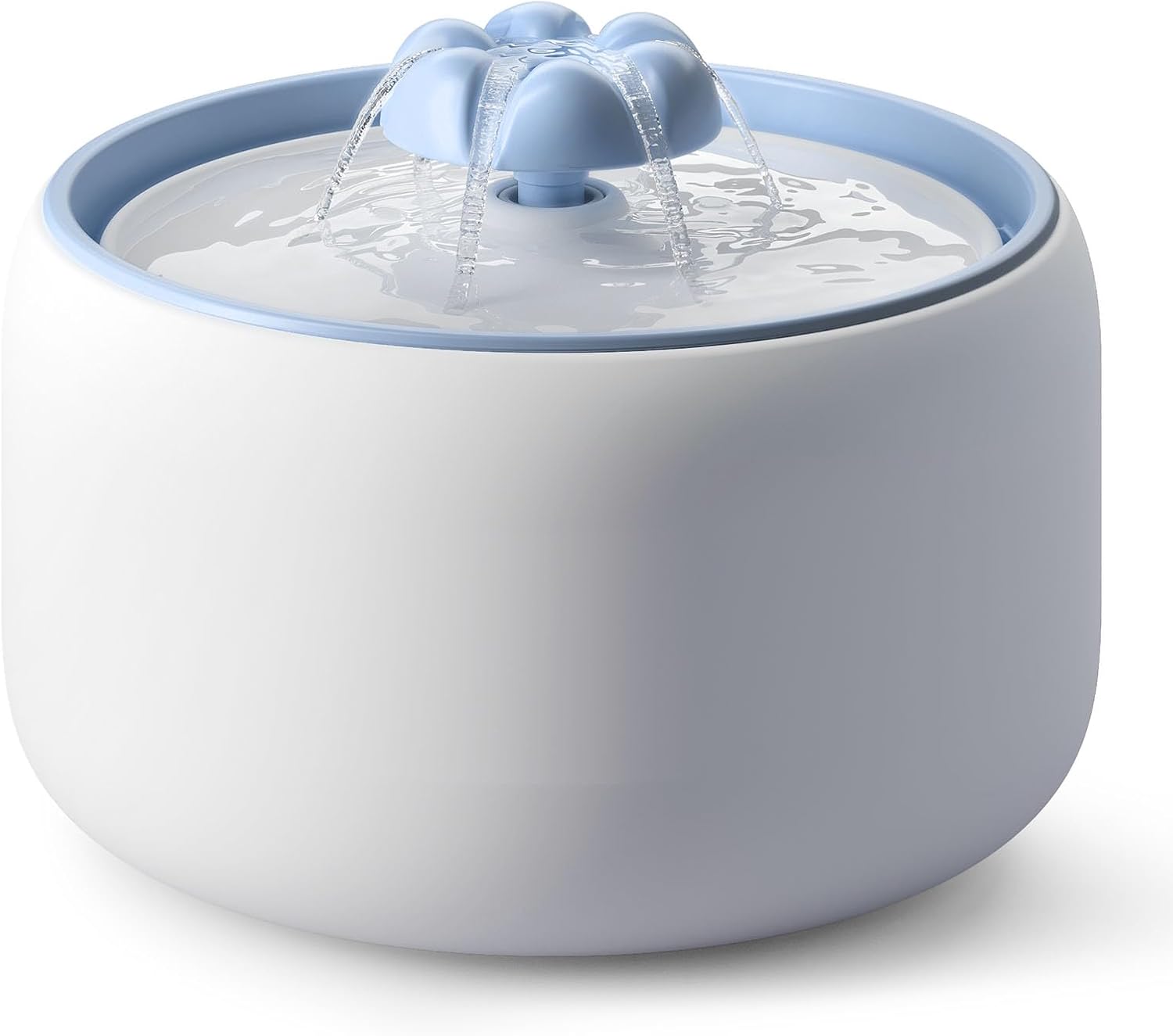
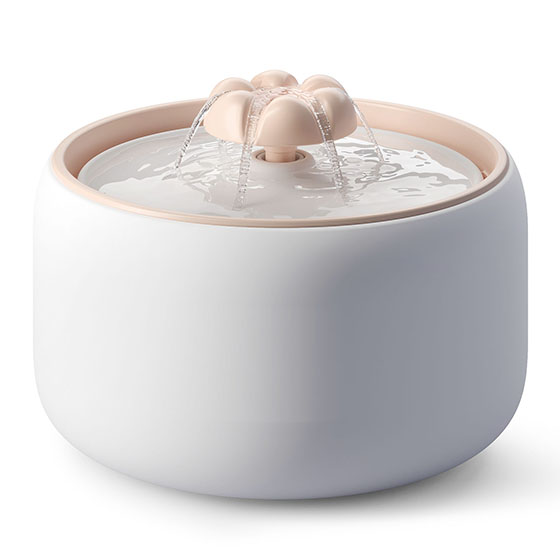
Both models are ceramic fountains. Power is the clearest difference for this decision: W03L uses a cable, while W03 can run on its rechargeable battery. Choose the location your cat approaches comfortably first, then compare the equipment that can work there.
|
Model |
Consider it when |
Check before ordering |
|
WOPET W03L |
A suitable drinking spot is near an outlet |
Drinking height, rim clearance, and cable placement |
|
WOPET W03 |
The more useful spot is away from an outlet |
Drinking height, supported operating modes, and charging routine |
WOPET W03L: A Starting Point for a Fixed Location
The WOPET W03L is a corded ceramic fountain with a listed 3-liter capacity. It suits the shortlist when the drinking spot is already near an outlet and you want to avoid charging. Before ordering, compare its drinking surface with a bowl your cat uses comfortably. Ask about the rim-to-water distance if the listing does not show it clearly.
Leave space around the fountain and keep its cable out of the walking path. Once it is running, listen for pump noise and splashing where your cat will drink. If the sound seems to make your cat hesitate, check the installation and water level against the manual. Its response in your room matters more than a quiet-operation claim on a product page.
WOPET W03: When a Better Location Is Away From an Outlet
The WOPET W03 offers battery-powered operation in a ceramic model. It can bring moving water to a room your cat already uses, even when there is no convenient outlet. Include charging in your routine before relying on it there. Check the exact operating modes before buying, particularly if your cat only drinks while water is moving.
Battery runtime and continuous water flow are different specifications. A long advertised runtime in a timer mode does not mean a stream runs continuously for that entire period. Ask how the chosen mode behaves between pumping cycles and what water remains reachable when the pump stops. Keep a familiar bowl available whenever charging or cleaning interrupts fountain use.
Introduce It Without Removing the Familiar Water
Set up the fountain according to its instructions, then give your cat room to investigate on its own. Keep the old bowl available and avoid changing the diet, bowl location, and fountain settings all at once. With fewer changes, it is easier to notice what your cat actually accepts. A cat that watches the water or paws at it has shown interest, but has not necessarily taken a drink.
Once your cat begins drinking, watch whether it returns on its own and uses the same comfortable position. Use only manufacturer-supported adjustments, and reconsider the position if splash or the outlet gets in the way. For a home with another cat, our guide to how many fountains two cats need explains how to provide separate options.
How Can You Tell Whether the Fountain Is Helping?
Regular, comfortable drinking shows that your cat accepts the fountain; it does not establish total daily intake. A falling reservoir level is not a precise measure of one cat's intake. Water may be spilled, another pet may drink, and evaporation also contributes. Note which sources your cat uses and whether its behavior has changed; if a veterinarian needs measured intake, ask how to collect that information in your household. Do not restrict access to water just to make the numbers easier to track.
Keep the water and drinking surface clean as your cat gets used to the fountain. The CDC recommends daily cleaning of water bowls; follow the fountain's component-specific instructions for the basin, pump, and filter. Put fresh water in a separate bowl while parts are being cleaned. A new filter does not replace washing the surfaces your cat uses.
FAQ
Will a fountain make my cat drink more?
Some cats prefer fountains, but the response varies. Choose one as another drinking option and watch whether your cat actually uses it; do not assume that a fountain guarantees adequate intake.
Is it normal for a cat eating wet food to drink less?
Wet food contributes water, so fewer bowl visits can be consistent with that diet. A change from your cat's normal pattern, especially with other symptoms, still deserves veterinary attention.
What if my cat watches the stream but does not drink?
Watching or pawing at water does not confirm drinking. Keep the familiar bowl, check whether the outlet or splash makes the approach awkward, and observe whether your cat eventually settles into a comfortable drink.
Should I remove the bowl to encourage fountain use?
No. Keep a familiar water source available while your cat explores the fountain. Removing an accepted source is not a useful way to test a new one.
Can a fountain treat dehydration or kidney disease?
A cat water fountain cannot treat dehydration or kidney disease. It can be part of a drinking arrangement, but it does not replace diagnosis, treatment, or an individual hydration plan from your veterinarian.
What if my cat ignores both the fountain and the bowl?
If this is a new change, your cat seems unwell, or you suspect dehydration, contact your veterinarian promptly. Further product trials should wait until that concern has been addressed.
Choose an Easier Way to Drink
Choose the W03L if the drinking spot is near power and you want to avoid charging; choose the W03 if battery operation lets you put water where your cat prefers it. Keep the familiar bowl and judge success by comfortable, voluntary drinking. If the concern is a change in health rather than the water setup, address that with your veterinarian first.
Label:
Popular Post
The Ultimate Guide to Tabby Cats: Patterns, Personalities, and More
Mar 27, 2025
Top 8 Reasons Why Does My Cat Sleep Between My Legs?
Mar 03, 2025

What to Do If My Dog's Poop Is Black But Not Tarry
Feb 04, 2023
Superfecundation Cats: When Kittens in One Litter Have Different Fathers
Jul 11, 2025

Can Cats Have Orange Eyes? Genetics, Breeds, and Care Guide
May 20, 2025
[Blue] W03L 3L Premium Ceramic Cat Water Fountain
Model: W03 LITE
$59.99
$69.99
Basin Pet Water Fountain-W600
Model: W600
$43.99
$69.99
[Basic] Ceramic Pet Water Fountain with Power Cable
Model: W03L
$59.99
$99.00
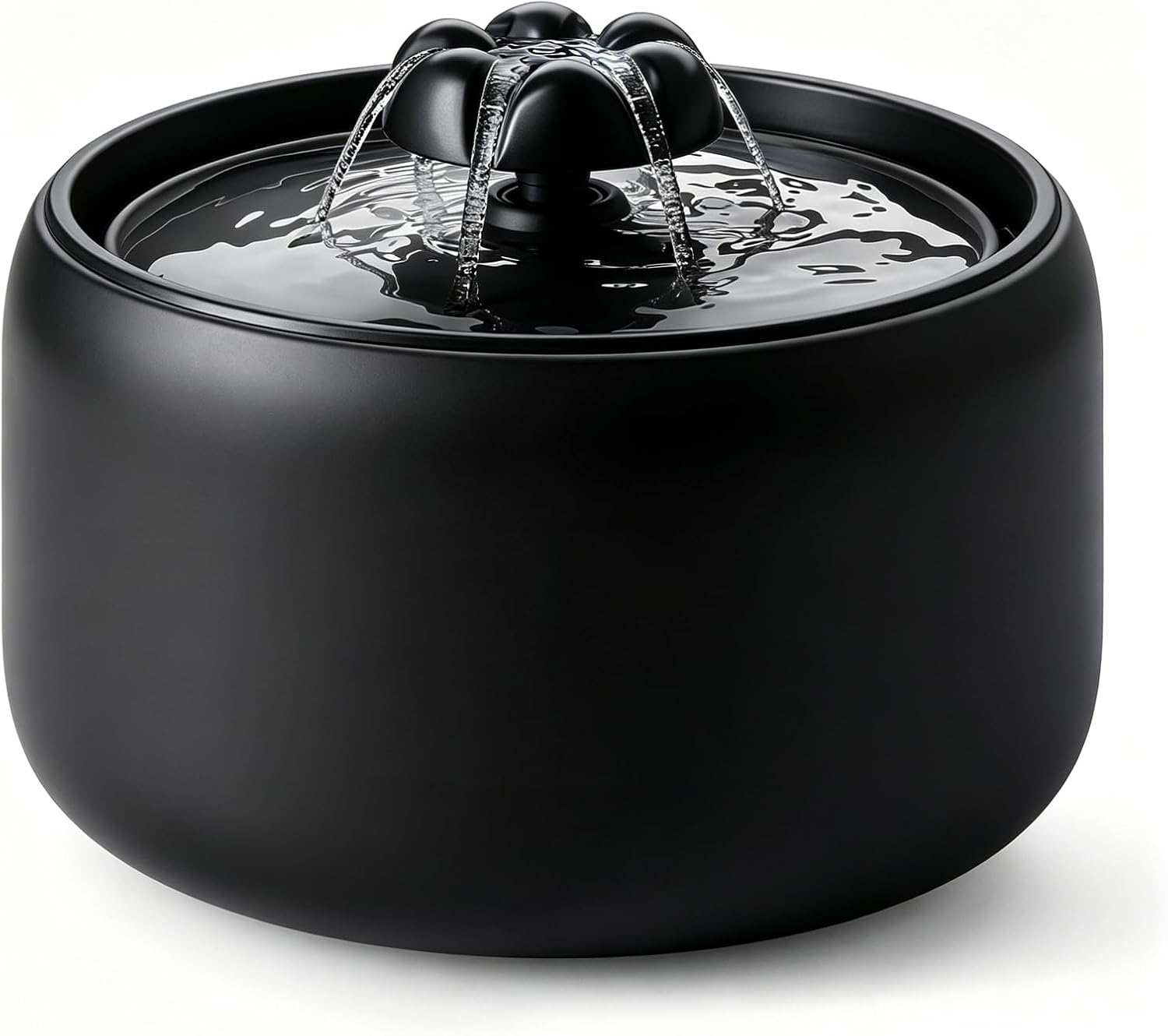
[Black] W03L 3L Premium Ceramic Cat Water Fountain
Model: W03L Black
$59.99
$69.99
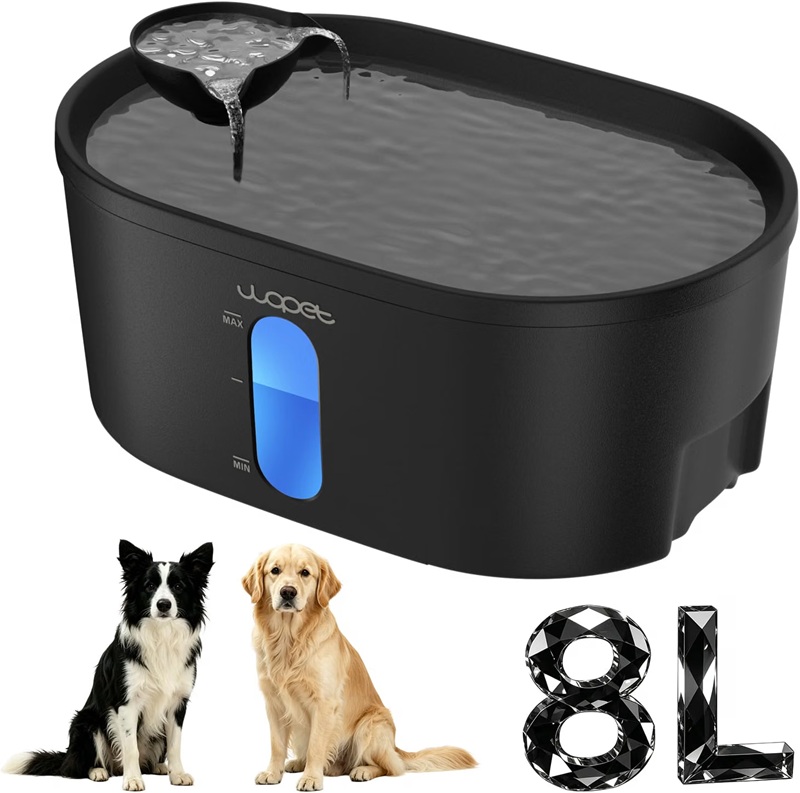
WOPET 8L Pet Water Fountain For Multiple Cats or Large Dogs A08
Model: A08
$49.99
$59.99
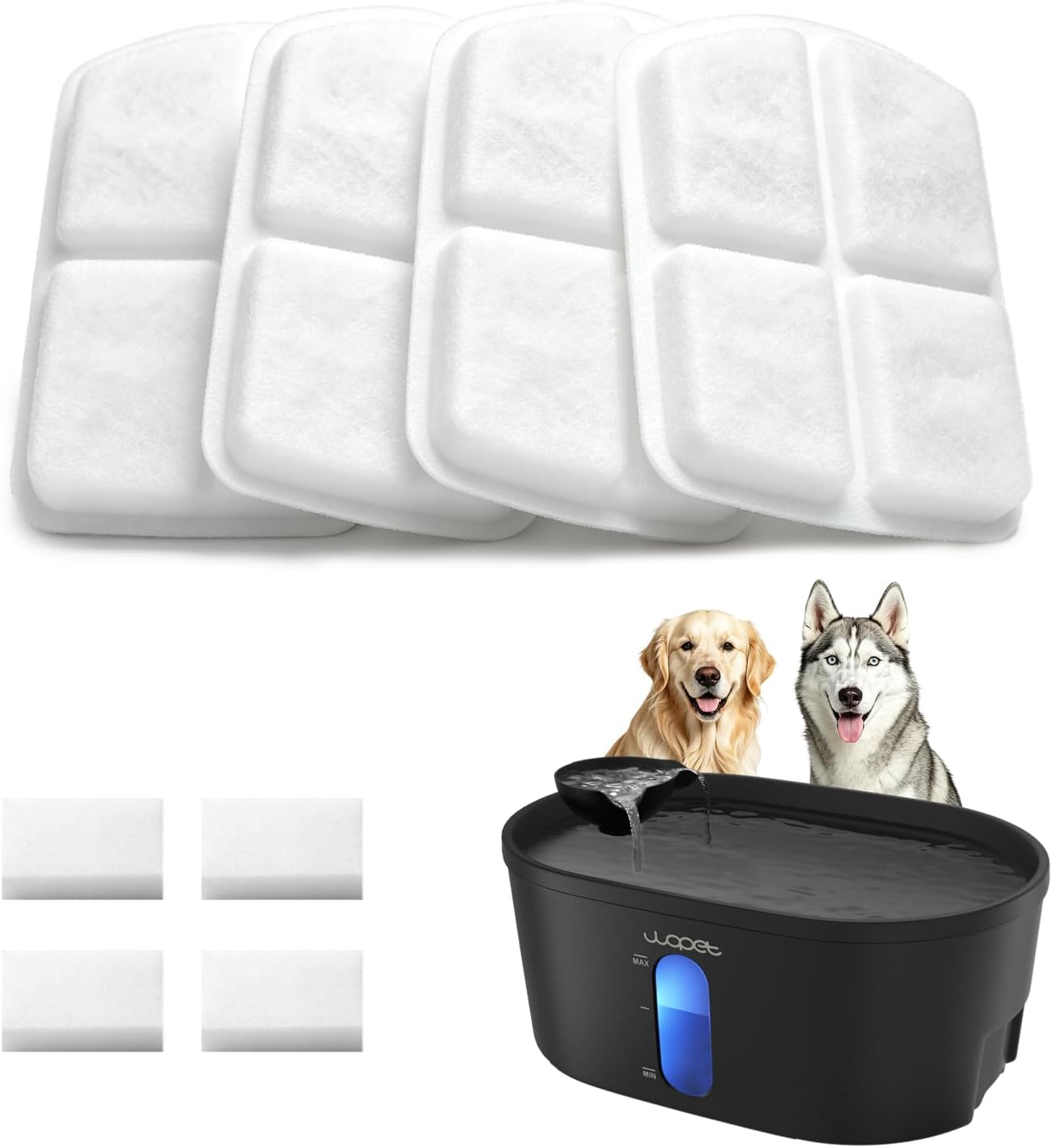
WOPET A08 Dog Water Fountain Filters
Model: A08 Filter
$19.99
$29.99

DOWNLOAD APP

WOpet life




Copyright © 2026 WOPET. All Rights Reserved.