Sep 09, 2026
Author:Sam Wonder
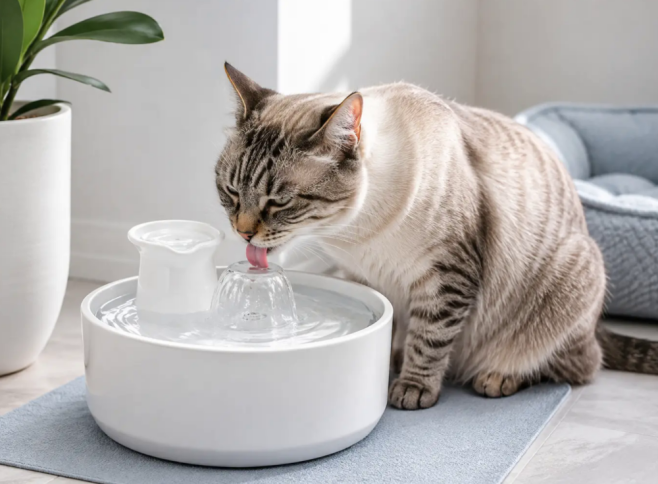
The best cat water fountain for an apartment is compact without being cramped, quiet enough for shared living space, stable on a waterproof surface, and simple enough to clean at the sink you actually have. Cordless placement can be valuable when outlets are limited, but easy daily access and a realistic cleaning routine matter more than any single feature.
|
Quick answer: For most apartments, prioritize a small footprint, low operating noise, a broad and comfortable drinking surface, removable washable parts, accessible replacement filters, and either a protected power cord or rechargeable operation. Measure the intended location before buying, keep the fountain away from litter, and retain a separate bowl as a backup water source. Best fit from WOPET: Based on current published specifications—not hands-on testing—the 3-liter WOPET W03 is the strongest match in this guide for apartments that benefit from quiet operation, a weighted ceramic bowl, and cordless placement. Choose a lighter or continuously powered model instead if lifting ceramic or maintaining a charging routine would be inconvenient. |
What makes a cat fountain apartment-friendly?
An apartment does not necessarily require the smallest fountain on the market. It requires a fountain that uses limited space well and does not create a daily nuisance. A good fit should:
• leave enough room for your cat to approach and turn around comfortably;
• avoid blocking a walkway, cabinet, door, or robot vacuum route;
• operate quietly enough for a studio, bedroom, or home office;
• sit securely on a level, water-resistant surface;
• come apart without taking over the entire sink;
• hold enough water for normal household use without becoming too heavy to move;
• make the water level easy to check;
• keep cords, charging points, and electrical connections away from splashes.
The best choice is the fountain you can inspect, refill, and clean consistently. A beautiful unit in an awkward corner often becomes harder to maintain than a simpler model placed where both you and your cat naturally pass it.
Start with the space, not the product listing
Before comparing materials or flow patterns, choose two possible locations and measure them. Record the available width, depth, and overhead clearance. Then allow extra space around the fountain for your cat's head, shoulders, and preferred drinking posture.
Do not plan to squeeze a fountain tightly between a wall and furniture. Cats generally benefit from being able to see their surroundings and leave without feeling trapped. International Cat Care's drinking guidance recommends quiet locations away from food and litter, with different water options when possible.
Also check the human traffic pattern. A narrow hallway, the swing path of a door, and the area beside a litter mat may look efficient on paper but create noise, contamination, or repeated disturbance. In a small home, zoning matters more than distance measured in feet.
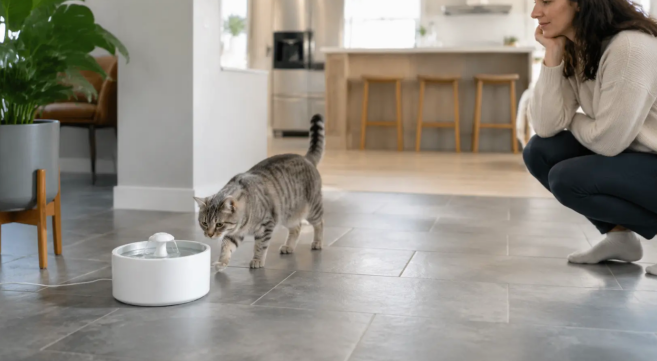
For more placement detail, see where to put a cat water fountain.
How quiet should an apartment cat fountain be?
Noise is more noticeable when the kitchen, living room, and bedroom share one compact floor plan. The published decibel figure can help, but it does not describe every sound you will hear. A fountain may also produce:
• water trickling onto a low reservoir;
• pump vibration against the housing or floor;
• rattling from a loose lid;
• louder operation as the water level falls;
• periodic motor noise in an intermittent mode.
Look for a pump that is designed for quiet operation, a stable housing, and a water-level indicator that helps prevent the pump from running low. A silicone or waterproof non-slip mat can reduce vibration and contain minor splashes, provided you lift and dry beneath it regularly.
If you are especially sensitive to sound, place the fountain outside the direct line between your bed and the room's hard reflective surfaces. A quiet corner can work, but it should still feel open and safe to the cat.
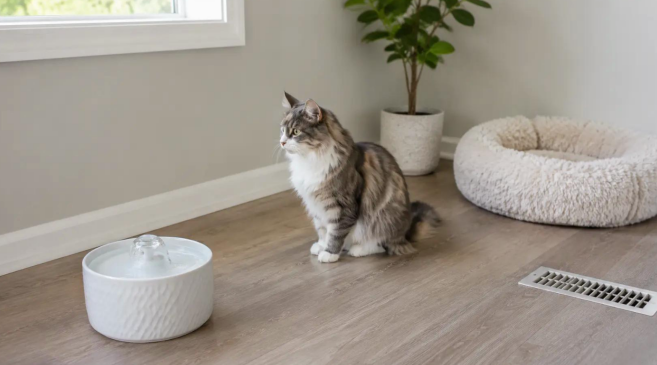
Corded or cordless: which works better in an apartment?
Both can work. The decision depends on the location and your tolerance for charging or cord management.
A corded fountain may suit you when:
• there is a nearby outlet in a dry, protected position;
• the cord can run without crossing a walkway;
• your cat does not chew cords;
• you prefer continuous operation without remembering to charge a battery.
A cordless fountain may suit you when:
• the best drinking location is not beside an outlet;
• your lease or layout limits cable routing;
• you want to avoid a visible cord in a bedroom or living area;
• you can add charging to a reliable household routine.
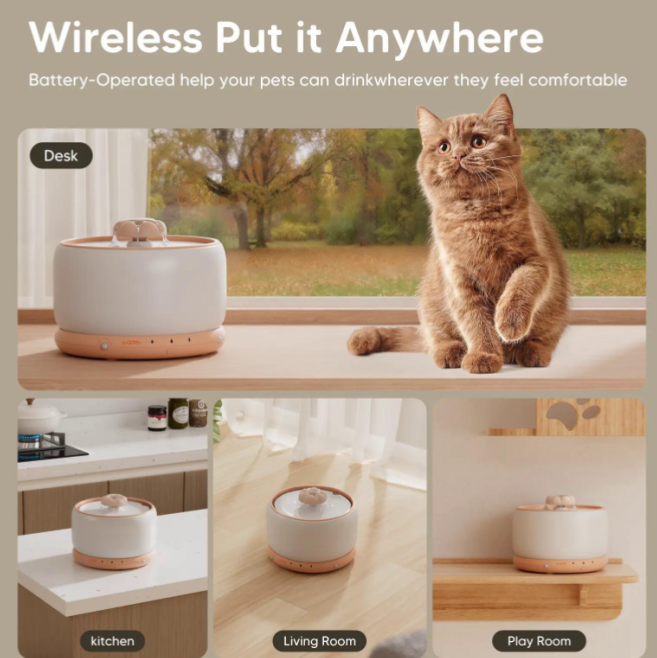
Wireless does not mean maintenance-free. Battery life depends on the operating mode and usage, and the unit still needs daily water checks and regular cleaning. Confirm whether a model provides continuous, timed, or motion-activated flow; those experiences are not interchangeable.
Based on its current product specifications, the WOPET W03 Ceramic Wireless Pet Water Fountain combines a 3-liter ceramic basin, rechargeable 5000 mAh battery, published operating noise below 25 dB, and a dishwasher-safe ceramic bowl. WOPET states that it can operate for up to 30 days per charge in timer mode. Treat that figure as a mode-dependent maximum, not permission to leave water unchecked.
Which fountain material works best in a small home?
Material changes the weight, cleaning experience, durability, and sound of a fountain.
Ceramic
Ceramic feels substantial and can resist sliding. A smooth, intact glazed surface is straightforward to wash, and the weight can help around cats that push or paw at water. The tradeoffs are weight and breakage. Inspect ceramic regularly and stop using a bowl that is chipped or cracked.
Stainless steel
Stainless steel is durable, relatively light, and often easy to clean when the relevant parts are dishwasher-safe. Thin metal panels may transmit vibration, so build quality and pump isolation still matter.
Plastic
Plastic fountains can be lightweight and affordable, which is convenient in a small sink. They require careful cleaning, and deeply scratched or damaged parts should be replaced because worn surfaces are harder to keep clean.
There is no universally best material for every cat. Choose a surface your cat accepts and a construction you will maintain. The WOPET guide to cat fountain materials and features offers a broader comparison.
How much capacity does one apartment cat need?
Capacity should provide a practical reserve, not encourage infrequent attention. A cat's total water intake varies with body size, food moisture, activity, health, and environment. Cornell's feline hydration guide notes that food can contribute substantially to total intake, especially when a cat eats wet food.
For one cat, a 2- to 3-liter fountain is often a manageable household size, but capacity alone cannot tell you how long water should remain untouched. Check the level and condition every day. Refresh water according to the manufacturer's instructions and sooner when you see food, hair, dust, saliva residue, or reduced flow.
A very large reservoir can be awkward in an apartment because it becomes heavier to carry and may not fit comfortably under the faucet. Balance reserve capacity against lifting, sink clearance, and cleaning frequency.
Cleaning convenience matters more in a small home
A fountain with many narrow channels or inaccessible pump parts may be frustrating when counter space is limited. Before buying, look at the manual or exploded product images and ask:
• Can the basin fit flat in my sink?
• Can I remove the pump without tools?
• Can I open the pump cover and reach the impeller area?
• Are the dishwasher-safe parts clearly identified?
• Are replacement filters and pumps available?
• Does the unit have crevices that trap hair or mineral residue?
The CDC's guidance for pet supplies advises following manufacturer instructions and notes that dishwasher-safe bowls can be cleaned in a dishwasher. For any fountain, unplug it or follow its power-off procedure before disassembly, keep electrical components dry, rinse away cleaning residue, and reassemble only after checking that the pump and intake are clear.
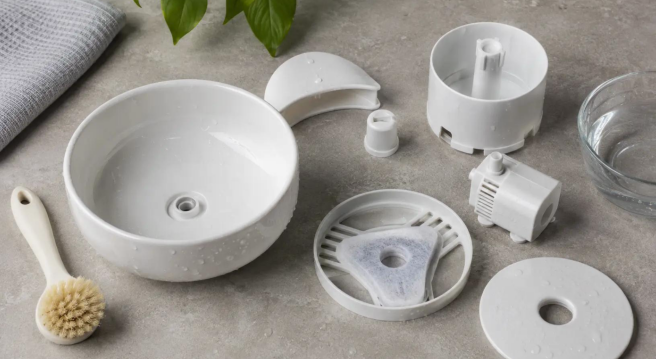
Use the detailed cat water fountain care guide to build a repeatable routine.
What about spills, floors, and downstairs neighbors?
No fountain is completely mess-proof when a cat enjoys playing with water. Look for a stable base, a drinking surface that does not invite easy tipping, and a design that returns normal splashes to the reservoir.
Place the unit on a waterproof, non-slip mat with a raised edge. Wipe visible water promptly and lift the mat to check underneath. This is especially important on laminate, engineered wood, or flooring with seams. Do not put towels under an electrical fountain; wet fabric can keep moisture against the floor and connection area.
For a fuller setup, see how to protect the floor under a cat fountain.
A simple apartment buying checklist
Before ordering, confirm all of the following:
1. The location works for the cat. It is quiet, accessible, separate from litter, and not a dead-end corner.
2. The dimensions work for the home. You measured the unit, approach space, and sink clearance.
3. The sound profile fits your routine. You considered pump, water, and low-level noise—not only a marketing number.
4. The power setup is safe. A cord is protected or a battery schedule is realistic.
5. The material is maintainable. You can inspect it for scratches, chips, or damage.
6. The pump is serviceable. You can reach the intake and impeller area.
7. Replacement supplies are available. Filters and pumps are sold for the specific model.
8. A backup bowl remains available. The cat still has water during cleaning, charging, outages, or mechanical problems.
Frequently asked questions
Is a cat water fountain too noisy for a studio apartment?
Not necessarily. Choose a quiet pump, keep the water above the minimum level, seat the lid correctly, and isolate vibration with a non-slip waterproof mat. Sound often increases when water is low or the pump needs cleaning.
Can I place a cat fountain in the bedroom?
Yes, if the room is accessible, the cat feels safe there, the surface is protected, and the unit does not disturb sleep. Keep it away from litter and protect any cord or charging connection from water and chewing.
Is a cordless fountain better for renters?
It can be more flexible because it does not tie the drinking station to an outlet. The tradeoff is charging. Check the operating modes and make sure a backup bowl is available whenever the fountain is charging.
Should a cat fountain sit next to the food bowl?
Many cats prefer water separated from food. If space is limited, create distinct zones rather than crowding food, water, and litter together. Observe which location your cat uses comfortably.
Do I still need a regular water bowl?
Yes. A clean backup bowl protects access during cleaning, charging, a power outage, or a pump failure. Some cats also prefer having more than one water option.
Final verdict
The best cat water fountain for an apartment is not simply the smallest. It is the model that fits the measured space, stays unobtrusive in daily life, gives the cat a comfortable approach, and can be cleaned without friction. For many renters and small-space households, a quiet 2- to 3-liter fountain with straightforward disassembly is a practical starting point. Choose corded or cordless operation based on the safest location, then keep a separate bowl available and check both water sources every day.
Sources and editorial methodology
This guide compares apartment use cases using published product specifications, feline environmental guidance, cleaning requirements, and practical space constraints. It does not represent hands-on product testing, and manufacturer specifications should be rechecked before publication.
• International Cat Care: How to Encourage Your Cat to Drink
• Cornell Feline Health Center: Hydration
• CDC: Cleaning and Disinfecting Pet Supplies
• WOPET W03 product specifications
This article provides general consumer and pet-care information. A fountain does not diagnose, prevent, or treat disease. Contact your veterinarian if your cat's drinking or urination changes noticeably or if you are concerned about hydration.
Label:
Popular Post
The Ultimate Guide to Tabby Cats: Patterns, Personalities, and More
Mar 27, 2025
Top 10 Most Expensive Cat Breeds in The World
May 07, 2025
Can Cats Have Ice Cream? Dangers, Safe Flavors & Healthy Cat Treats
Sep 02, 2025
My Cat Only Eats A Little at A Time - What to Do?
Feb 27, 2023
Top 8 Reasons Why Does My Cat Sleep Between My Legs?
Mar 03, 2025
[Blue] W03L 3L Premium Ceramic Cat Water Fountain
Model: W03 LITE
$59.99
$69.99
Basin Pet Water Fountain-W600
Model: W600
$43.99
$69.99
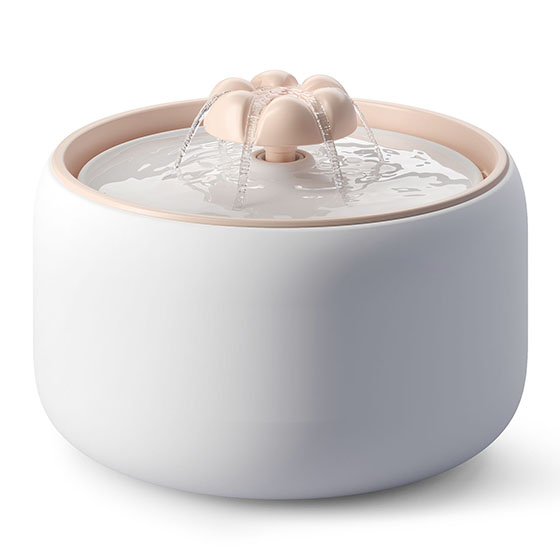
[Basic] Ceramic Pet Water Fountain with Power Cable
Model: W03L
$59.99
$99.00
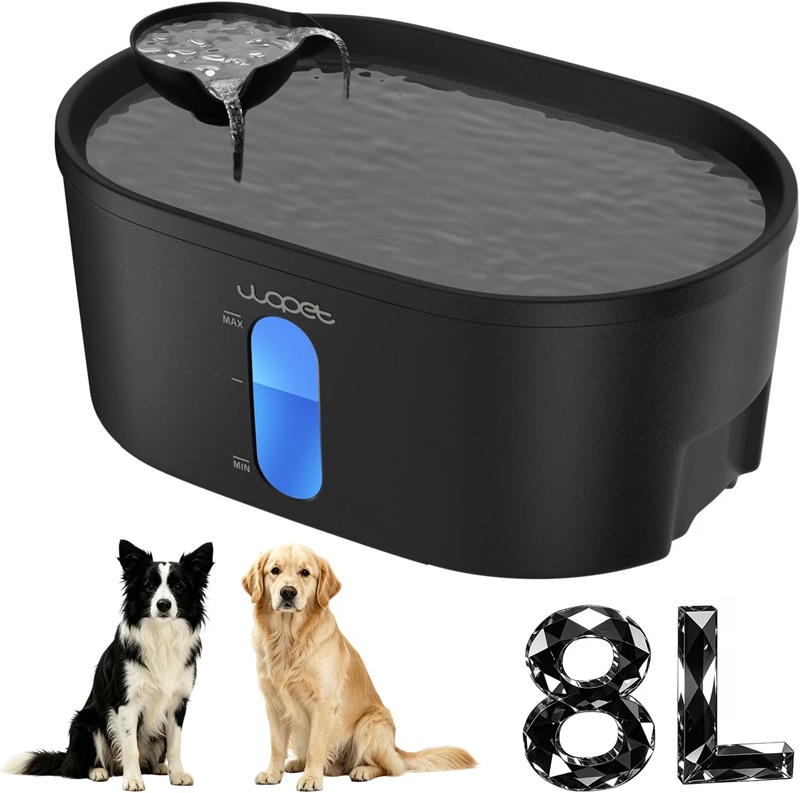
WOPET 8L Pet Water Fountain For Multiple Cats or Large Dogs A08
Model: A08
$49.99
$59.99
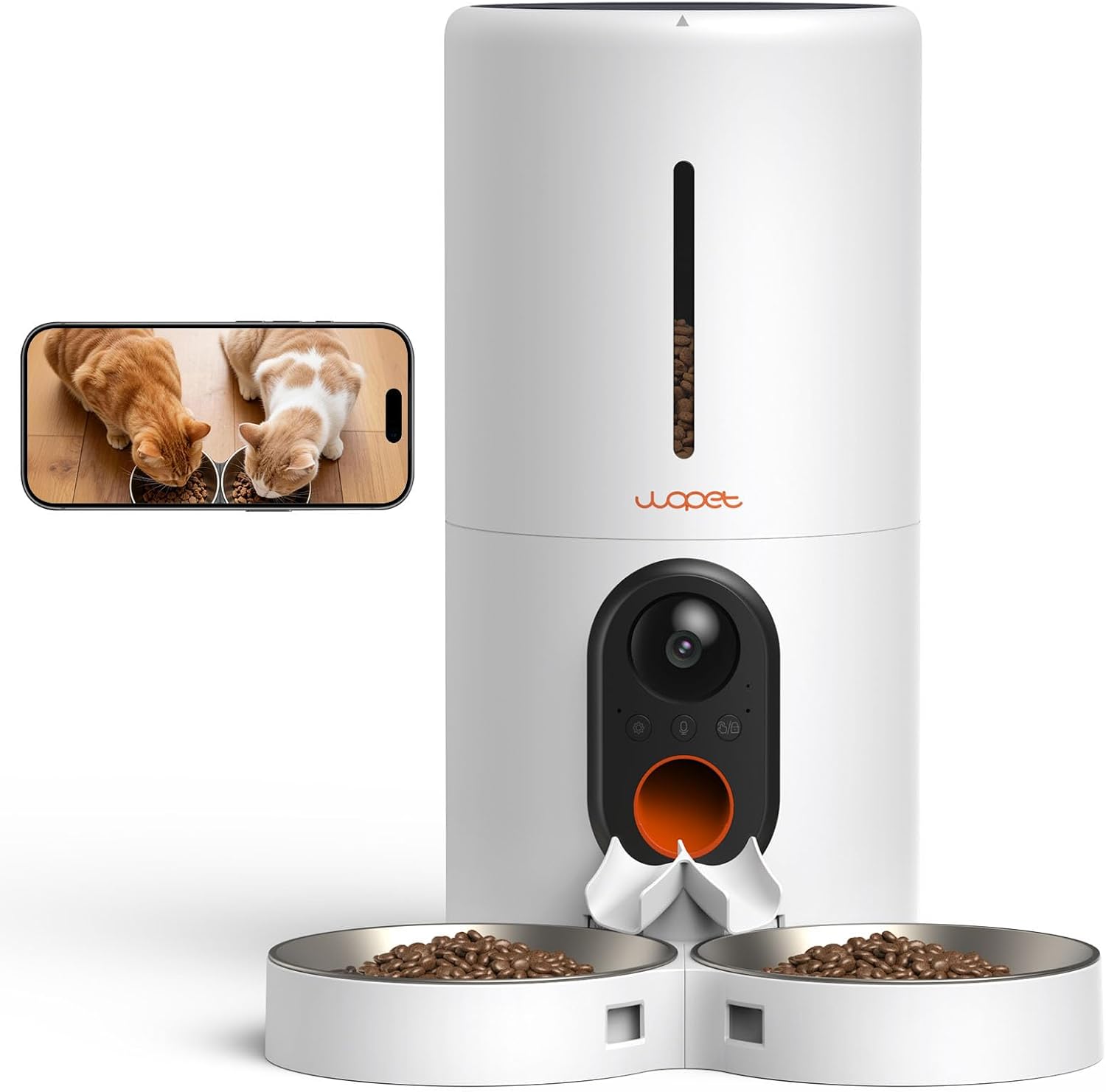
[WHITE] Heritage View 6L Cat Feeder Dual Bowls For Two Cats
Model: HV10DP-white
$114.99
$134.99
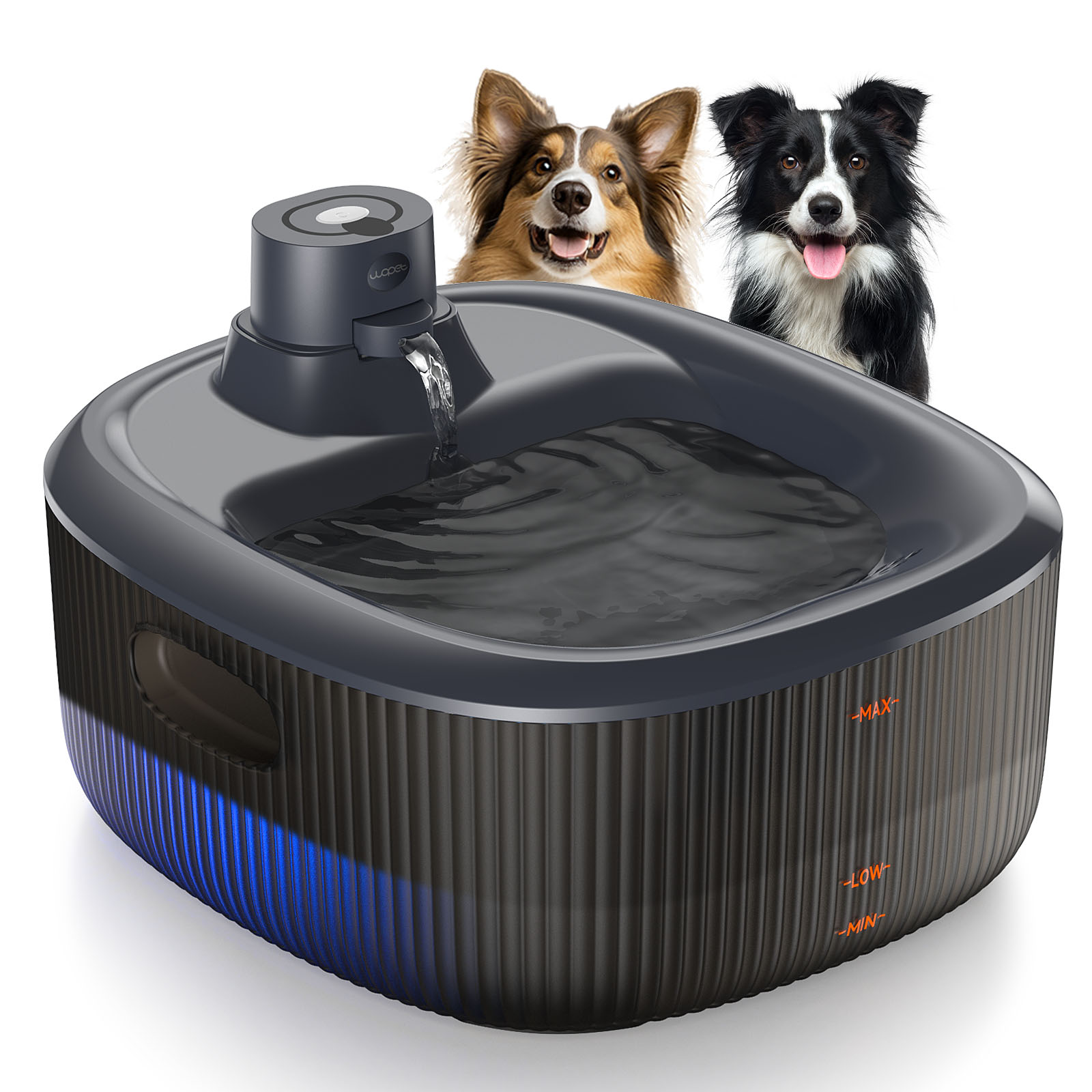
[Upgrade] Basin Wireless Pet Water Fountain
Model: W600 Pro
$69.99
$89.99

DOWNLOAD APP

WOpet life




Copyright © 2026 WOPET. All Rights Reserved.